Ham and Cheese Quiche Recipe

A buttery, flaky pastry crust filled with savory ham, melted cheese, and a silky egg custard that creates the perfect harmony of textures and rich flavors in every slice.
Difficulty:
Intermediate
Prep Time:
40 mins
Cook Time:
45 mins
Serves:
1 quiche (8 slices)
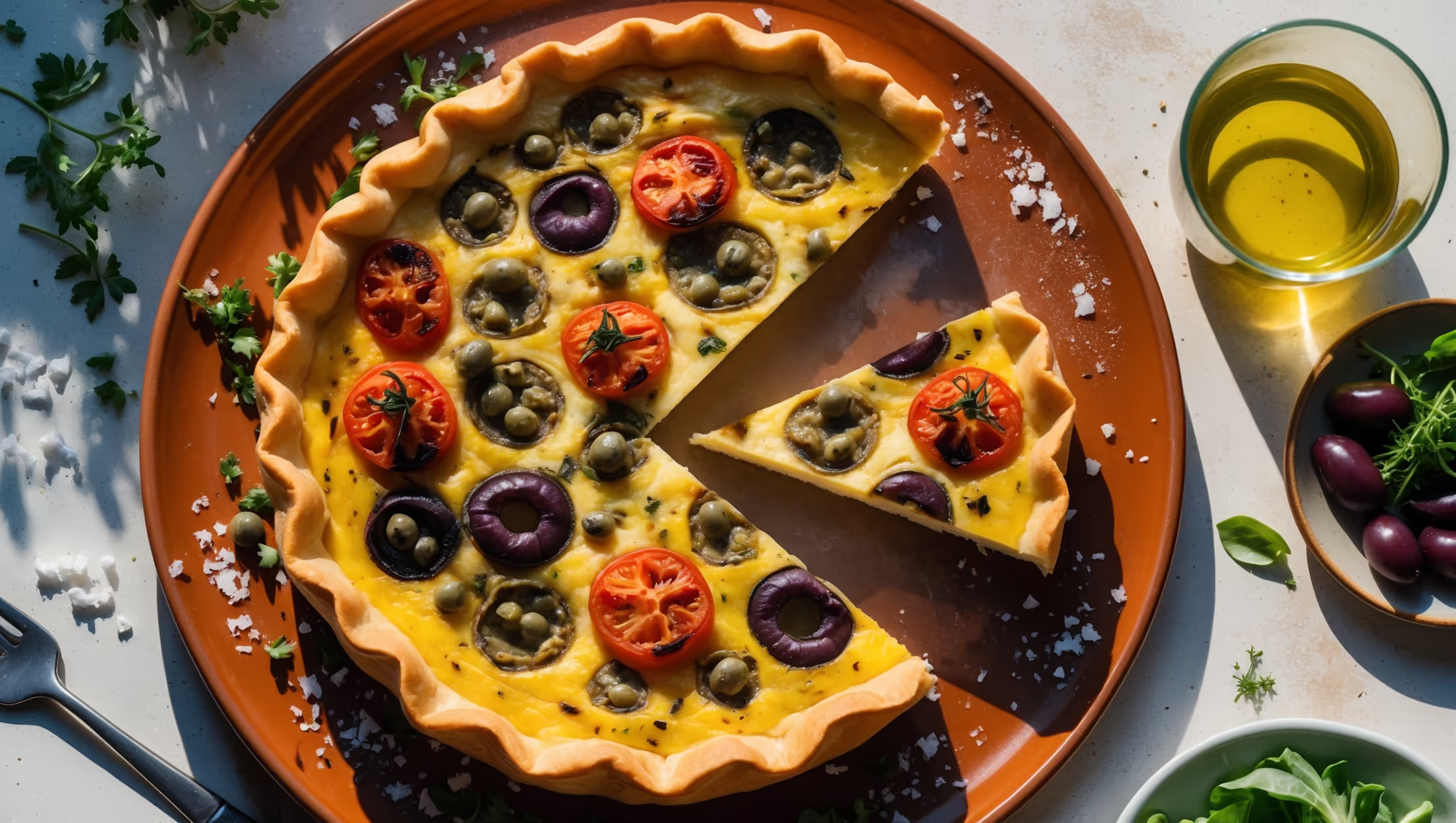
An overhead shot of the golden-brown Ham and Cheese Quiche showcasing its perfectly set custard filling with visible pieces of pink ham and pockets of melted cheese. A slice has been removed, revealing the quiche's creamy interior and flaky crust layers. The quiche sits on a rustic wooden board, photographed in soft natural light streaming through a nearby window. Fresh herbs are scattered around the board, alongside a small bowl of crème fraîche and a vintage cake server. Steam gently rises from the warm slice, emphasizing the quiche's freshly baked quality and inviting aroma.

Ingredients

<ul class="ingredients-main-list"> <li class="ingredients-single-item">For the pastry:</li> <li class="ingredients-single-item">200g plain flour</li> <li class="ingredients-single-item">100g cold unsalted butter, cubed</li> <li class="ingredients-single-item">1/4 tsp salt</li> <li class="ingredients-single-item">3-4 tbsp ice-cold water</li> <li class="ingredients-single-item">For the filling:</li> <li class="ingredients-single-item">200g good quality ham, diced</li> <li class="ingredients-single-item">150g Gruyère cheese, grated (or Emmental)</li> <li class="ingredients-single-item">4 large eggs</li> <li class="ingredients-single-item">250ml double cream</li> <li class="ingredients-single-item">100ml whole milk</li> <li class="ingredients-single-item">1/4 tsp freshly grated nutmeg</li> <li class="ingredients-single-item">1/2 tsp salt</li> <li class="ingredients-single-item">1/4 tsp freshly ground black pepper</li> <li class="ingredients-single-item">1 tbsp fresh chives, finely chopped</li> </ul>

Equipment

<ul class="equipment-main-list"> <li class="equipment-single-item">23cm (9-inch) loose-bottomed tart tin</li> <li class="equipment-single-item">Baking beans or dried rice (for blind baking)</li> <li class="equipment-single-item">Baking paper</li> <li class="equipment-single-item">Rolling pin</li> <li class="equipment-single-item">Pie weights or dried beans</li> </ul>
BAKE SMARTER

Kitchen Converter

Quickly switch between common baking units without leaving the recipe.

Convert
Result—

Volume uses US cups, tablespoons, and teaspoons. Converting weight to volume depends on the ingredient.

Directions

<ol class="no-list-style"> <li class="MethodStepper"> <h4 class="step-title">Step 1</h4> Make the pastry by placing the flour and salt in a large bowl. Add the cold cubed butter and rub it into the flour using your fingertips until the mixture resembles breadcrumbs. Working with cold ingredients prevents the butter from melting, which is crucial for a flaky pastry texture. </li> <li class="MethodStepper"> <h4 class="step-title">Step 2</h4> Add the ice-cold water a tablespoon at a time, mixing with a knife until the dough just comes together. Be careful not to overwork the dough or add too much water as this will develop the gluten and result in a tough crust. When the dough forms a ball that's not sticky but holds together, wrap it in cling film and chill in the refrigerator for at least 30 minutes. Chilling relaxes the gluten and firms up the butter, preventing shrinkage during baking. </li> <li class="MethodStepper"> <h4 class="step-title">Step 3</h4> Preheat your oven to 190°C (170°C fan/Gas 5). On a lightly floured surface, roll out the pastry to about 3mm thickness, making sure it's large enough to line your tart tin with some overhang. Carefully lift the pastry over the tin, pressing it gently into the corners without stretching it. Trim the excess leaving a slight overhang to allow for shrinkage. </li> <li class="MethodStepper"> <h4 class="step-title">Step 4</h4> Line the pastry case with baking paper and fill with baking beans or dried rice. Blind bake for 15 minutes. This prevents the dreaded "soggy bottom" by partially cooking the base before adding the wet filling. Then remove the paper and beans and return to the oven for another 5-7 minutes until the base is pale golden. If you notice any small cracks, lightly brush with beaten egg to seal. </li> <li class="MethodStepper"> <h4 class="step-title">Step 5</h4> Reduce the oven temperature to 180°C (160°C fan/Gas 4). Scatter the diced ham and two-thirds of the grated cheese evenly over the base of the pastry case. Placing solid ingredients directly on the base helps create a barrier between the custard and pastry, further preventing sogginess. </li> <li class="MethodStepper"> <h4 class="step-title">Step 6</h4> In a jug, whisk together the eggs, cream, milk, nutmeg, salt, pepper, and chives until completely combined. Whisking incorporates air into the custard mixture which helps create that silky texture we're looking for. Carefully pour this mixture over the ham and cheese in the pastry case, making sure not to overfill. </li> <li class="MethodStepper"> <h4 class="step-title">Step 7</h4> Sprinkle the remaining cheese over the top of the quiche and carefully transfer to the oven. Bake for 30-35 minutes until the filling is set but still has a slight wobble in the center - it will continue to set as it cools. The custard should be golden on top but not browned or cracked, which would indicate it's overcooked. </li> <li class="MethodStepper"> <h4 class="step-title">Step 8</h4> Once baked, allow the quiche to cool in the tin for at least 30 minutes before removing. This resting time allows the custard to fully set and makes slicing much neater. Serve warm or at room temperature with a crisp green salad. The quiche can be stored in the refrigerator for up to 3 days and reheated gently in the oven, or frozen for up to 1 month. </li> </ol>


Nutrition Facts (per serving)

🍽️ Serving Size: 1 slice
🔥 Calories: 385 calories
🥑 Fat: 28 g
🧈 Saturated Fat: 16 g
🍞 Carbohydrates: 18 g
🍭 Sugar: 2 g
🍗 Protein: 16 g
🫀 Cholesterol: 225 mg
🧂 Sodium: 650 mg

Chef’s Notes

A few helpful details for making this recipe.

What's the secret to preventing a soggy bottom on a quiche?

The key is blind baking the pastry case first (lining with baking paper and weights), creating a barrier by sprinkling cheese and ham directly on the base before adding custard, and ensuring your oven is properly preheated. Baking at the right temperature is also crucial.

Can I substitute Gruyère for another cheese in my quiche?

Absolutely! While Gruyère offers ideal melting properties and nutty flavour, good alternatives include Emmental, mature Cheddar, Comté, or Swiss cheese. For a more budget-friendly option, a mixture of mozzarella and mature Cheddar works well too.

How do I know when my quiche is perfectly cooked?

A properly cooked quiche should have a slight wobble in the centre when gently shaken - it will continue setting as it cools. The top should be golden but not browned or cracked. Insert a knife into the edge - it should come out clean while the centre remains slightly jiggly.

Want to try something else in ...

More recipes you might like

Keep exploring with more recipes from What's Baking.