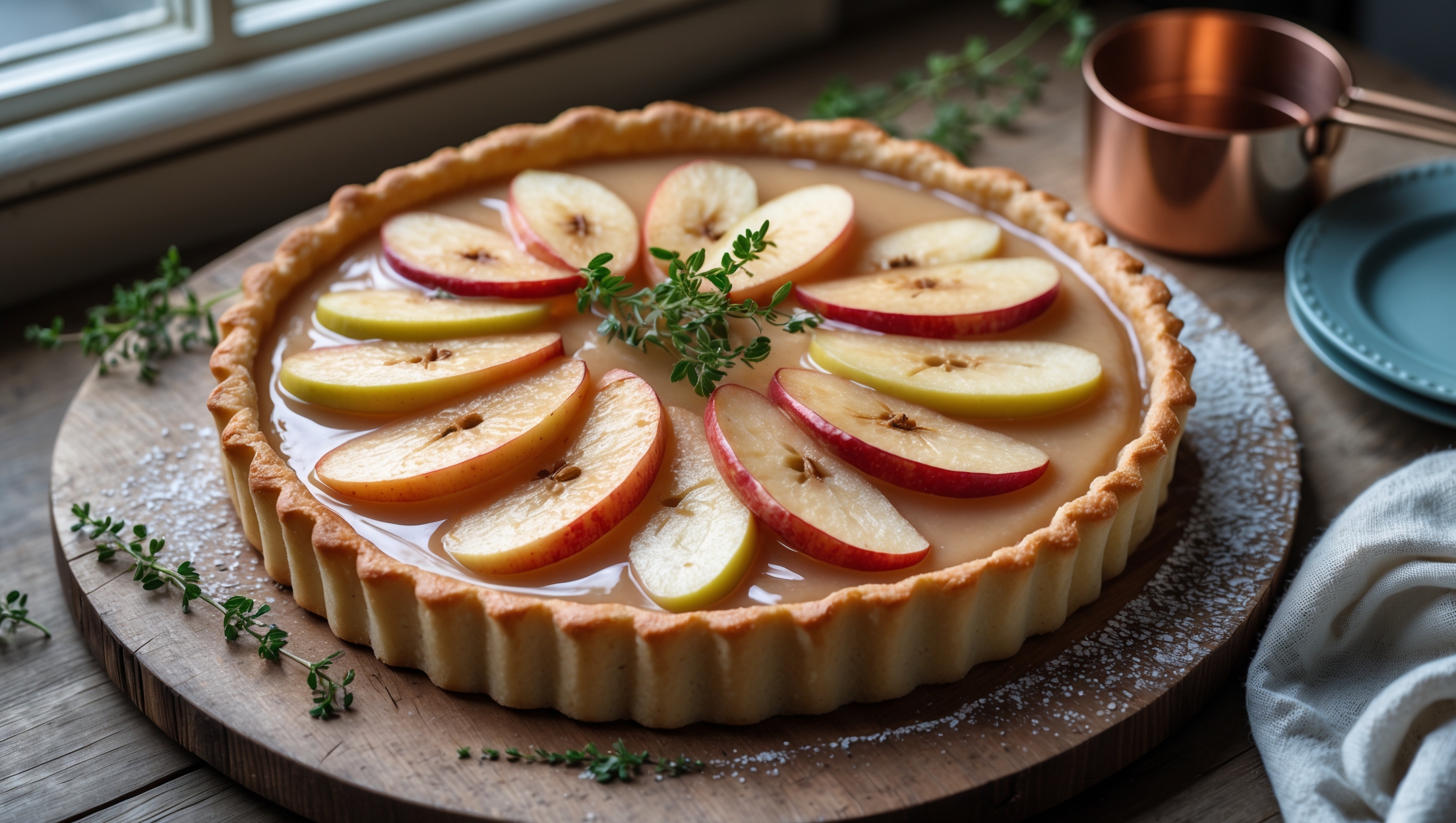
Directions
<ol class="no-list-style"><li class="MethodStepper"><h4 class="step-title">Step 1</h4>Begin by toasting your hazelnuts (if not already toasted). Spread them on a baking tray and bake at 180°C for 8-10 minutes until fragrant and skins begin to split. Rub in a clean tea towel to remove most of the skins, then cool completely before grinding 100g in a food processor to a fine consistency, being careful not to turn them into butter.</li><li class="MethodStepper"><h4 class="step-title">Step 2</h4>For the pastry, combine the flour, salt and icing sugar in a large bowl. Add the cold cubed butter and rub in with your fingertips until the mixture resembles breadcrumbs (cold butter creates pockets of steam during baking, resulting in flaky pastry). Add the egg yolk and just enough ice water to bring the dough together. Form into a disc, wrap in cling film and chill for at least 30 minutes to relax the gluten.</li><li class="MethodStepper"><h4 class="step-title">Step 3</h4>Preheat your oven to 190°C. Roll out the chilled pastry on a lightly floured surface to about 3mm thickness and use it to line your tart tin, pressing gently into the corners. Trim the excess but leave a small overhang to allow for shrinkage. Prick the base with a fork, then chill for another 15 minutes (this prevents shrinking during baking).</li><li class="MethodStepper"><h4 class="step-title">Step 4</h4>Line the pastry case with baking parchment and fill with baking beans or rice. Blind bake for 15 minutes, then remove the beans and parchment and bake for another 5-8 minutes until the base is lightly golden and set. The blind baking ensures your tart shell will be completely cooked and crisp, preventing a soggy bottom once filled. Trim any excess pastry for a neat edge, then set aside to cool.</li><li class="MethodStepper"><h4 class="step-title">Step 5</h4>For the custard, whisk the egg yolks, whole egg, caster sugar, and cornflour in a large bowl until pale and thick. The cornflour acts as a stabilizing agent, helping your custard maintain its structure once set. Heat the milk in a medium saucepan until it just reaches the boiling point (small bubbles around the edge).</li><li class="MethodStepper"><h4 class="step-title">Step 6</h4>Gradually pour the hot milk into the egg mixture, whisking continuously to prevent the eggs from scrambling (this technique is called tempering). Return the mixture to the saucepan and cook over medium-low heat, stirring constantly with a silicone spatula, until thickened enough to coat the back of a spoon and reaches 82°C on a thermometer.</li><li class="MethodStepper"><h4 class="step-title">Step 7</h4>Remove from heat and immediately stir in the ground hazelnuts, Frangelico, vanilla extract, and salt. The residual heat will help infuse the flavors together. Continue stirring for about 2 minutes to prevent a skin forming and help cool the mixture slightly. The alcohol in the Frangelico will cut through the richness of the custard while providing that distinctive hazelnut flavor.</li><li class="MethodStepper"><h4 class="step-title">Step 8</h4>Pour the warm custard into the cooled tart shell and smooth the surface with a spatula. Allow to cool at room temperature for 30 minutes, then refrigerate for at least 4 hours or preferably overnight to fully set the custard. The slow cooling helps develop flavor and ensures a perfectly set filling without cracks.</li><li class="MethodStepper"><h4 class="step-title">Step 9</h4>Before serving, decorate the top of the tart with whole or chopped toasted hazelnuts arranged in a pattern of your choice. For an extra touch of elegance, you could dust very lightly with icing sugar or brush with a little warmed apricot jam thinned with Frangelico for a subtle shine. Serve chilled but remove from the refrigerator 20-30 minutes before serving to allow the flavors to fully develop.</li></ol>