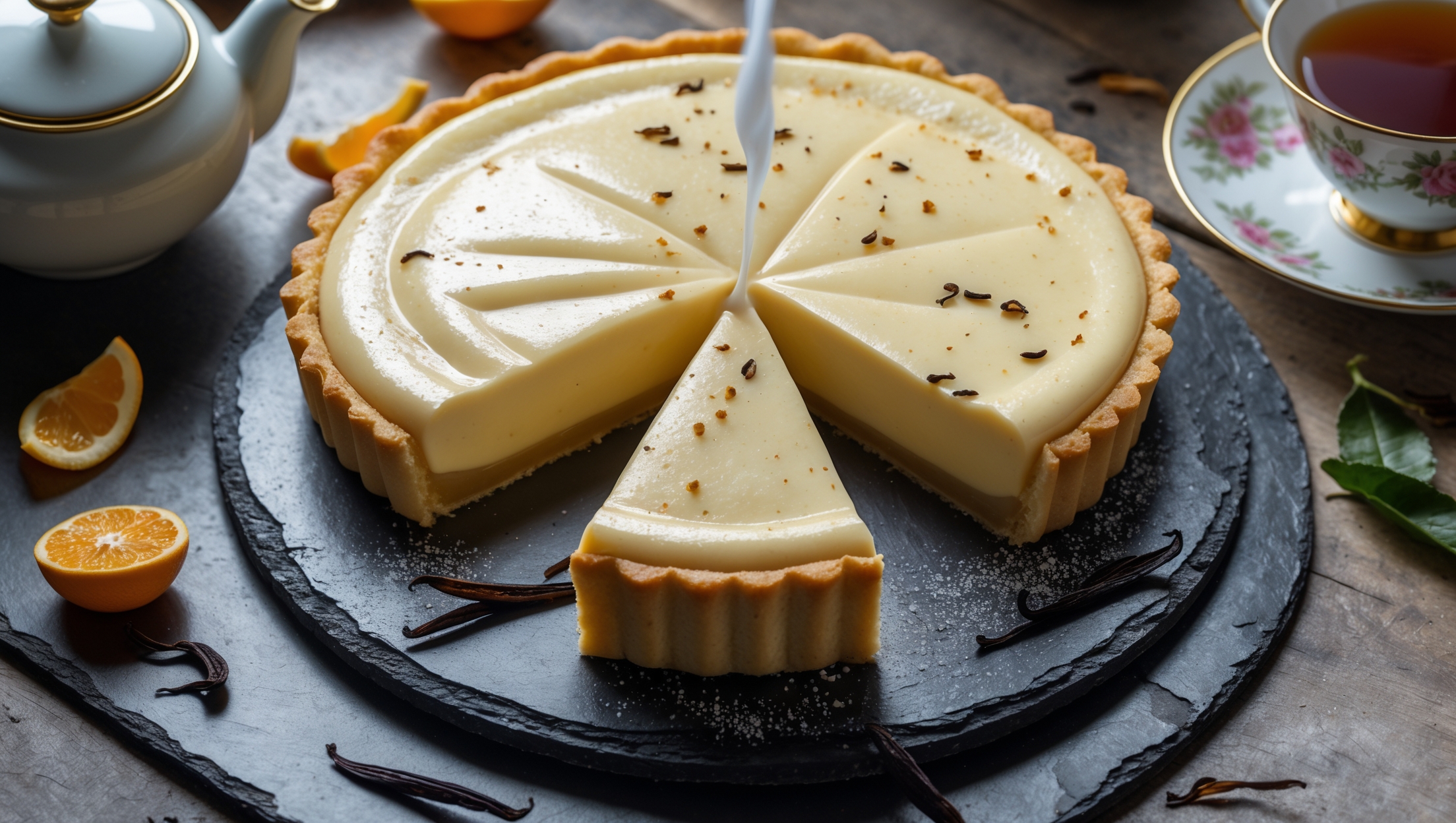
<ol class="no-list-style"><li class="MethodStepper"><h4 class="step-title">Step 1</h4>Begin with the pastry. Place the flour, salt and cold cubed butter in a food processor and pulse until the mixture resembles fine breadcrumbs. The cold butter creates pockets of fat that will evaporate during baking, creating flaky layers. Alternatively, rub the butter into the flour using your fingertips, working quickly to avoid warming the butter.</li><li class="MethodStepper"><h4 class="step-title">Step 2</h4>Add the icing sugar and pulse briefly to combine. Mix the egg yolk with 2 tablespoons of ice-cold water, then gradually add to the flour mixture while pulsing until the dough just begins to come together. If needed, add the remaining tablespoon of water, but be careful not to overhydrate the dough.</li><li class="MethodStepper"><h4 class="step-title">Step 3</h4>Turn the dough onto a lightly floured surface and gently bring it together with your hands, being careful not to overwork it (overworking develops gluten, making the pastry tough). Form into a disc, wrap in cling film and refrigerate for at least 30 minutes. This resting period allows the gluten to relax and the butter to firm up, preventing shrinkage during baking.</li><li class="MethodStepper"><h4 class="step-title">Step 4</h4>While the pastry chills, prepare the Earl Grey infusion. In a medium saucepan, combine the milk, cream, and vanilla seeds along with the pod. Heat until steaming but not boiling. Remove from heat, add the tea bags or loose tea, cover and allow to infuse for 20 minutes. The covered infusion traps the aromatic compounds, creating a more potent tea flavor.</li><li class="MethodStepper"><h4 class="step-title">Step 5</h4>Preheat your oven to 180°C (160°C fan/gas mark 4). Remove the pastry from the refrigerator and roll it out on a lightly floured surface to about 3mm thickness, making it large enough to line your tart tin with a slight overhang. Roll the pastry over your rolling pin to help transfer it to the tin without stretching or tearing.</li><li class="MethodStepper"><h4 class="step-title">Step 6</h4>Gently press the pastry into the corners of the tin without stretching it. Trim the excess leaving a slight overhang (about 1cm) to allow for shrinkage. Prick the base all over with a fork to prevent air bubbles, then chill for another 15 minutes to relax the gluten further and firm up the butter.</li><li class="MethodStepper"><h4 class="step-title">Step 7</h4>Line the chilled pastry case with baking parchment and fill with baking beans or uncooked rice. Blind bake for 15 minutes, then remove the beans and parchment and bake for a further 5-10 minutes until the pastry is golden and crisp. The initial blind bake with weights prevents the pastry from puffing up, while the second bake without weights ensures the base is fully cooked.</li><li class="MethodStepper"><h4 class="step-title">Step 8</h4>While the pastry finishes baking, complete your custard. Strain the infused milk mixture through a fine mesh sieve to remove the tea and vanilla pod. In a large bowl, whisk together the egg yolks, caster sugar, cornflour, and lemon zest until pale and slightly thickened.</li><li class="MethodStepper"><h4 class="step-title">Step 9</h4>Gradually pour the warm, strained milk mixture into the egg mixture, whisking constantly to prevent the eggs from curdling. Return the entire mixture to the saucepan and cook over medium-low heat, stirring continuously with a wooden spoon or heat-resistant spatula.</li><li class="MethodStepper"><h4 class="step-title">Step 10</h4>Continue cooking and stirring until the custard thickens enough to coat the back of a spoon - when you run your finger through the coating, it should leave a clear path. This typically takes 5-7 minutes. Don't rush this process by using high heat, as the eggs can scramble. Look for a silky, smooth texture that's thick but still pourable.</li><li class="MethodStepper"><h4 class="step-title">Step 11</h4>Once the custard has thickened, remove from heat immediately to prevent overcooking. If you notice any lumps, quickly strain through a fine sieve. Allow to cool slightly for about 5 minutes, stirring occasionally to prevent a skin from forming.</li><li class="MethodStepper"><h4 class="step-title">Step 12</h4>Reduce the oven temperature to 160°C (140°C fan/gas mark 3). Pour the warm custard into the baked pastry case, filling it nearly to the top. Carefully transfer to the oven and bake for 20-25 minutes until the custard is just set with a slight wobble in the center - it will continue to set as it cools. The custard should not brown or puff up; if it starts to, your oven may be too hot.</li><li class="MethodStepper"><h4 class="step-title">Step 13</h4>When done, remove from the oven and allow to cool completely in the tin on a wire rack. As the tart cools, the custard will set fully and develop its silky texture. Once cooled to room temperature, refrigerate for at least 2 hours or overnight to fully set the custard and develop the flavors.</li><li class="MethodStepper"><h4 class="step-title">Step 14</h4>To serve, carefully remove the tart from the tin and transfer to a serving plate. For the cleanest slices, use a sharp knife dipped in hot water and wiped clean between each cut. The tart is delicious on its own but can be served with a light dusting of icing sugar, fresh seasonal berries, or a dollop of softly whipped cream.</li></ol>