Crab Quiche Recipe

A savory seafood quiche with delicate chunks of sweet crab meat nestled in a velvety custard filling, all encased in a buttery, flaky crust.
Difficulty:
Intermediate
Prep Time:
40 mins
Cook Time:
45 mins
Serves:
1 quiche (8 slices)
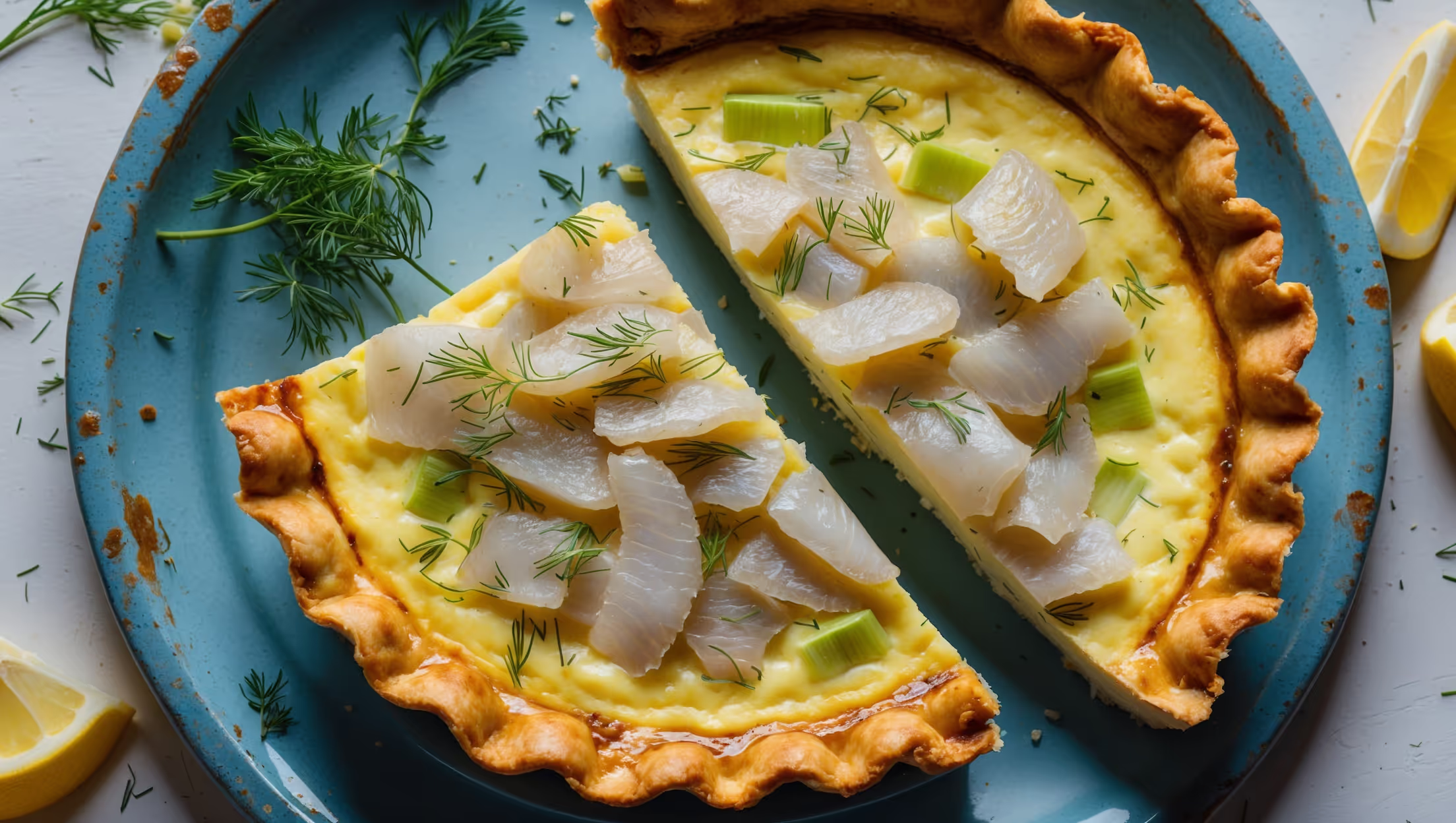
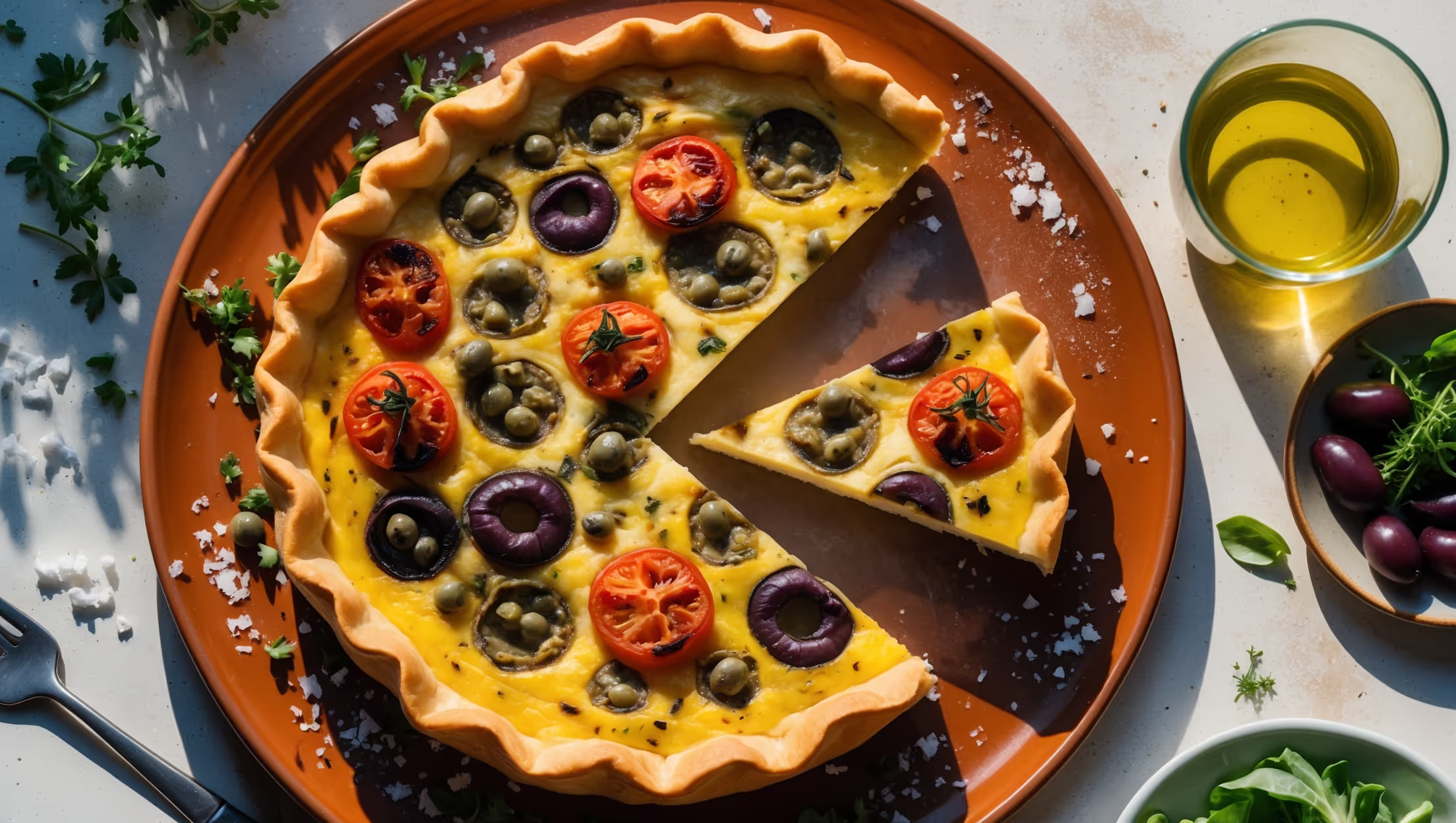
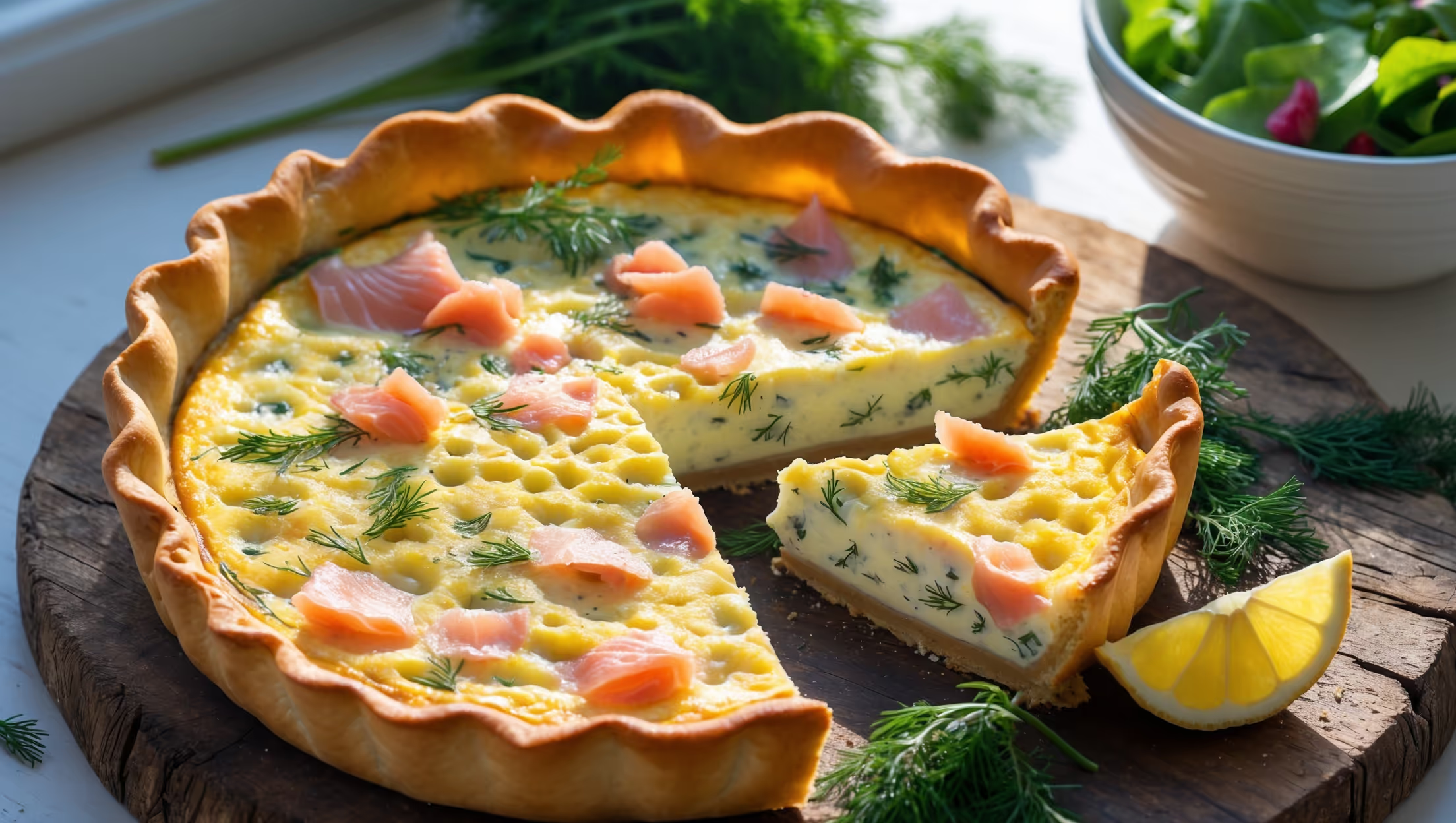
Overhead shot of a golden-brown crab quiche with a perfectly crimped edge, served on a weathered wooden serving board. Natural window light casts gentle shadows highlighting the flaky pastry layers. A slice has been removed, revealing the creamy custard filling studded with chunks of pink crab meat and flecks of fresh herbs. Surrounding the quiche are scattered fresh dill sprigs, lemon wedges, and a small bowl of crème fraîche. The richness of the golden crust contrasts beautifully with the pale yellow custard and delicate pink crab meat, while the cross-section shows the clean, perfect cut revealing distinct layers of the perfectly set filling.

Ingredients

<ul class="ingredients-main-list"><li class="ingredients-single-item">For the pastry crust:</li><li class="ingredients-single-item">200g plain flour</li><li class="ingredients-single-item">100g cold unsalted butter, cubed</li><li class="ingredients-single-item">1/4 tsp salt</li><li class="ingredients-single-item">3-4 tbsp ice-cold water</li><li class="ingredients-single-item">For the filling:</li><li class="ingredients-single-item">250g fresh crab meat (mixture of white and brown meat)</li><li class="ingredients-single-item">4 large eggs</li><li class="ingredients-single-item">250ml double cream</li><li class="ingredients-single-item">100ml whole milk</li><li class="ingredients-single-item">2 shallots, finely diced</li><li class="ingredients-single-item">2 tbsp fresh dill, chopped</li><li class="ingredients-single-item">1 tbsp fresh chives, chopped</li><li class="ingredients-single-item">1 tsp Dijon mustard</li><li class="ingredients-single-item">1/4 tsp cayenne pepper</li><li class="ingredients-single-item">100g Gruyère cheese, grated (or Emmental)</li><li class="ingredients-single-item">1/2 lemon, zested</li><li class="ingredients-single-item">Salt and freshly ground black pepper, to taste</li></ul>

Equipment

<ul class="equipment-main-list"><li class="equipment-single-item">23cm (9-inch) loose-bottomed tart tin</li><li class="equipment-single-item">Baking beans or dried rice</li><li class="equipment-single-item">Baking parchment</li><li class="equipment-single-item">Rolling pin</li><li class="equipment-single-item">Pie weights or baking beans</li></ul>
BAKE SMARTER

Kitchen Converter

Quickly switch between common baking units without leaving the recipe.

Convert
Result—

Volume uses US cups, tablespoons, and teaspoons. Converting weight to volume depends on the ingredient.

Directions

<ol class="no-list-style"><li class="MethodStepper"><h4 class="step-title">Step 1</h4>Begin by making the pastry. Place the flour and salt in a large bowl, then add the cold cubed butter. Using your fingertips, rub the butter into the flour until the mixture resembles breadcrumbs (keeping everything as cool as possible helps achieve flakiness). Add the ice-cold water a tablespoon at a time, mixing with a knife until the dough just comes together - avoid overworking as this develops gluten and toughens the pastry.</li><li class="MethodStepper"><h4 class="step-title">Step 2</h4>Form the dough into a disc, wrap in cling film, and chill in the refrigerator for at least 30 minutes. This resting period allows the gluten to relax and the butter to firm up, resulting in a more tender crust.</li><li class="MethodStepper"><h4 class="step-title">Step 3</h4>Preheat your oven to 190°C (170°C fan). Roll out the chilled pastry on a lightly floured surface to about 3-4mm thickness, creating a circle large enough to line your tart tin with some overhang. Carefully drape the pastry over your rolling pin to transfer it to the tin, then gently press it into the corners without stretching. Trim the excess, leaving a small overhang to account for shrinkage.</li><li class="MethodStepper"><h4 class="step-title">Step 4</h4>Line the pastry case with baking parchment and fill with baking beans or dried rice. Blind bake for 15 minutes, then remove the beans and parchment and bake for another 5-7 minutes until the base is just starting to color but not fully cooked. This partial blind bake ensures your crust won't develop a soggy bottom when filled with the custard.</li><li class="MethodStepper"><h4 class="step-title">Step 5</h4>While the pastry is baking, prepare your filling. In a frying pan over medium-low heat, gently sauté the shallots in a little butter until soft and translucent but not browned, about 5 minutes. Allow to cool slightly.</li><li class="MethodStepper"><h4 class="step-title">Step 6</h4>In a large bowl, whisk together the eggs, double cream, milk, Dijon mustard, cayenne pepper, lemon zest, salt, and black pepper until well combined. Stir in the cooled shallots, fresh herbs, and 75g of the grated cheese.</li><li class="MethodStepper"><h4 class="step-title">Step 7</h4>Check your crab meat carefully for any pieces of shell (nobody wants that surprise!), then gently fold it into the egg mixture, being careful not to break up the crab chunks too much - those visible pieces of crab make the finished quiche extra special.</li><li class="MethodStepper"><h4 class="step-title">Step 8</h4>With the blind-baked crust still hot, brush the inside lightly with a small amount of beaten egg (this creates a seal to help prevent a soggy bottom). Reduce the oven temperature to 170°C (150°C fan).</li><li class="MethodStepper"><h4 class="step-title">Step 9</h4>Pour the crab mixture into the pastry case, making sure the crab meat is evenly distributed. Sprinkle the remaining cheese over the top. Bake in the center of the oven for 30-35 minutes until the filling is just set with a slight wobble in the center - it will continue to firm up as it cools. The custard should reach an internal temperature of about 75°C if you're using a thermometer.</li><li class="MethodStepper"><h4 class="step-title">Step 10</h4>Allow the quiche to cool in the tin for at least 15 minutes before removing - this resting period helps the custard to set completely. Serve warm or at room temperature with a crisp green salad. Your crab quiche can be refrigerated for up to 3 days or frozen for up to a month. If freezing, cool completely first, then wrap well in foil and plastic wrap to prevent freezer burn.</li></ol>

Nutrition Facts (per serving)

🍽️ Serving Size: 1 slice
🔥 Calories: 385 calories
🥑 Fat: 28 g
🧈 Saturated Fat: 16 g
🍞 Carbohydrates: 18 g
🍭 Sugar: 2 g
🍗 Protein: 15 g
🫀 Cholesterol: 185 mg
🧂 Sodium: 480 mg

Chef’s Notes

A few helpful details for making this recipe.

Can I use tinned crab instead of fresh crab meat in a seafood quiche?

Yes, you can use tinned crab when fresh isn't available. Drain it thoroughly and gently pat dry with kitchen paper to remove excess moisture. While fresh crab offers superior flavour and texture, good quality tinned crab can still produce a delicious quiche with proper seasoning.

How do I prevent a soggy bottom on my quiche crust?

Prevent a soggy quiche bottom by blind baking the crust first, then brushing with beaten egg to create a moisture barrier. Ensure fillings aren't too wet (pat seafood dry) and bake on a preheated baking sheet. Using a metal tart tin conducts heat better than ceramic, helping achieve that perfectly crisp base.

What's the best cheese to pair with seafood in a savoury tart?

Gruyère is ideal for seafood tarts as it offers nutty flavour without overpowering delicate crab. Other excellent options include Emmental, mild Cheddar, or goat's cheese. Avoid strongly flavoured cheeses like blue cheese or mature Cheddar that might mask the seafood's subtle sweetness.

Want to try something else in ...

More recipes you might like

Keep exploring with more recipes from What's Baking.