Carrot Custard Tart Recipe

A silky smooth custard infused with sweet carrot essence nestled in a buttery shortcrust pastry, creating a uniquely elegant dessert that balances earthy sweetness with creamy richness.
Difficulty:
Intermediate
Prep Time:
45 mins
Cook Time:
55 mins
Serves:
1 tart (8 slices)
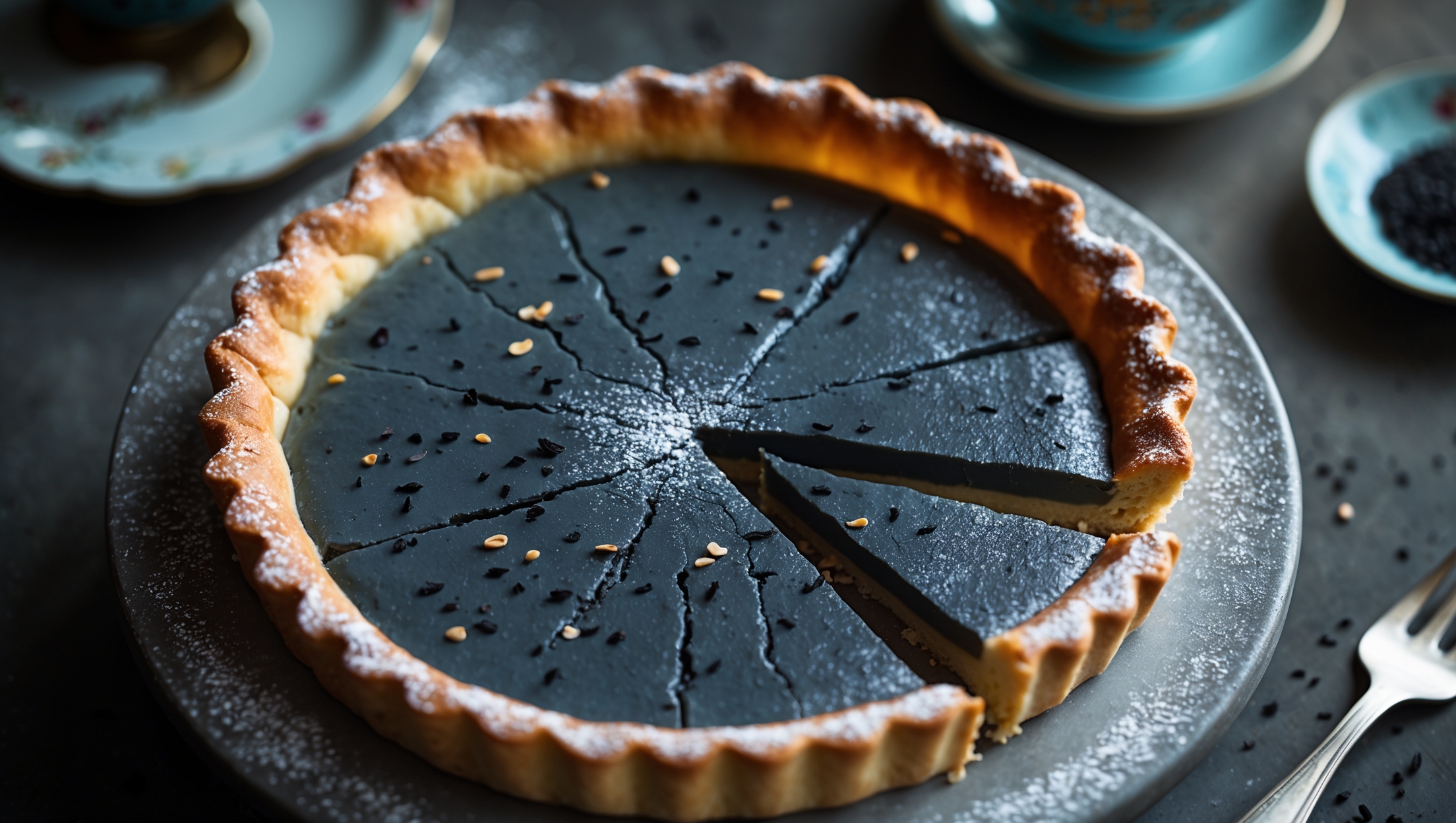
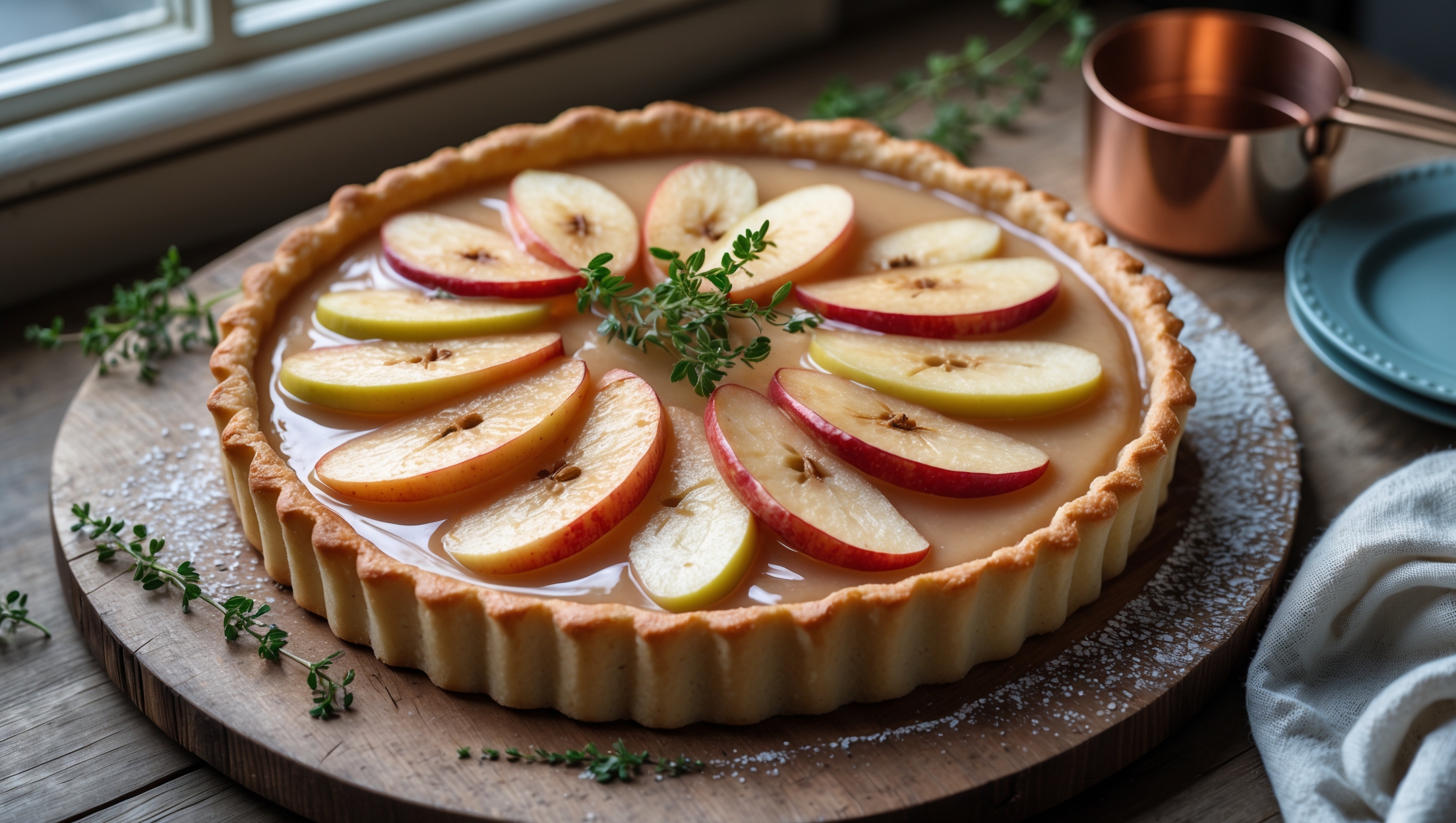
Overhead shot of a golden-orange carrot custard tart with a perfectly crimped shortcrust edge, captured in soft natural light streaming through a kitchen window. The smooth, glossy custard surface exhibits a subtle sheen with delicate orange flecks of carrot visible throughout. A slice has been removed, revealing the contrast between the creamy filling and crisp pastry shell. The tart sits on a rustic wooden serving board, garnished with a sprinkle of freshly grated nutmeg and tiny carrot top sprigs. Surrounding the tart are scattered whole carrots with their green tops, a small bowl of ground spices, and a vintage silver serving spatula, all creating a warm, autumnal color palette.

Ingredients

<ul class="ingredients-main-list"><li class="ingredients-single-item">For the shortcrust pastry:</li><li class="ingredients-single-item">200g plain flour</li><li class="ingredients-single-item">100g cold unsalted butter, cubed</li><li class="ingredients-single-item">30g icing sugar</li><li class="ingredients-single-item">1 large egg yolk</li><li class="ingredients-single-item">2-3 tbsp ice-cold water</li><li class="ingredients-single-item">Pinch of salt</li><li class="ingredients-single-item">For the carrot custard filling:</li><li class="ingredients-single-item">450g carrots, peeled and chopped</li><li class="ingredients-single-item">250ml whole milk</li><li class="ingredients-single-item">100ml double cream</li><li class="ingredients-single-item">3 large eggs</li><li class="ingredients-single-item">100g caster sugar</li><li class="ingredients-single-item">1 tsp vanilla extract</li><li class="ingredients-single-item">1 tsp ground cinnamon</li><li class="ingredients-single-item">1/4 tsp ground nutmeg</li><li class="ingredients-single-item">1/4 tsp ground ginger</li><li class="ingredients-single-item">Pinch of salt</li><li class="ingredients-single-item">For garnish (optional):</li><li class="ingredients-single-item">Fresh grated nutmeg</li><li class="ingredients-single-item">Small carrot tops</li></ul>

Equipment

<ul class="equipment-main-list"><li class="equipment-single-item">23cm (9-inch) loose-bottomed tart tin</li><li class="equipment-single-item">Food processor</li><li class="equipment-single-item">Baking beans or uncooked rice (for blind baking)</li><li class="equipment-single-item">Baking parchment</li><li class="equipment-single-item">Blender or immersion blender</li></ul>
BAKE SMARTER

Kitchen Converter

Quickly switch between common baking units without leaving the recipe.

Convert
Result—

Volume uses US cups, tablespoons, and teaspoons. Converting weight to volume depends on the ingredient.

Directions

<ol class="no-list-style"><li class="MethodStepper"><h4 class="step-title">Step 1</h4>Begin by making the shortcrust pastry. Place the flour, salt, and icing sugar in a food processor and pulse briefly to combine. Add the cold cubed butter and pulse until the mixture resembles breadcrumbs - this creates flaky layers in your pastry. Add the egg yolk and 2 tablespoons of ice-cold water, pulsing until the dough just starts to come together. If needed, add another tablespoon of water, but be careful not to overwork the dough as this develops gluten and makes the pastry tough.</li><li class="MethodStepper"><h4 class="step-title">Step 2</h4>Turn the dough onto a lightly floured surface and gently form into a disc without kneading. Wrap in cling film and refrigerate for at least 30 minutes. Chilling relaxes the gluten and firms up the butter, resulting in a more tender and flaky pastry.</li><li class="MethodStepper"><h4 class="step-title">Step 3</h4>While the pastry chills, prepare the carrot custard filling. Place the chopped carrots in a medium saucepan and cover with water. Bring to a boil and simmer for 15-20 minutes until very tender when pierced with a knife. Drain thoroughly and allow to steam dry for a few minutes - excess moisture will make your custard runny.</li><li class="MethodStepper"><h4 class="step-title">Step 4</h4>Preheat your oven to 200°C (180°C fan/gas mark 6). Take the chilled pastry from the refrigerator and roll it out on a lightly floured surface to about 3mm thickness, making it large enough to line your tart tin with some overhang. Carefully drape the pastry over your rolling pin and transfer it to the tin, gently pressing it into the corners without stretching it. Trim the excess pastry, leaving a small overhang to allow for shrinkage.</li><li class="MethodStepper"><h4 class="step-title">Step 5</h4>Line the pastry case with baking parchment and fill with baking beans or uncooked rice. Blind bake for 15 minutes, then remove the beans and parchment and bake for another 5-7 minutes until the base is lightly golden but not fully cooked. This partial baking ensures your pastry won't become soggy when filled with the custard. Reduce the oven temperature to 170°C (150°C fan/gas mark 3).</li><li class="MethodStepper"><h4 class="step-title">Step 6</h4>While the pastry case is baking, finish preparing the filling. Transfer the cooked carrots to a blender along with the milk and cream. Blend until completely smooth - this may take several minutes to achieve a silky consistency. The smoother your puree, the more luxurious your custard will be.</li><li class="MethodStepper"><h4 class="step-title">Step 7</h4>In a large bowl, whisk together the eggs, sugar, vanilla extract, cinnamon, nutmeg, ginger, and salt until well combined. Gradually whisk in the warm carrot mixture, being careful not to cook the eggs. Strain the mixture through a fine sieve to catch any remaining carrot fibers or egg strands - this extra step guarantees a perfectly smooth custard.</li><li class="MethodStepper"><h4 class="step-title">Step 8</h4>Place the partially baked tart shell on a baking sheet (this makes transferring easier). Carefully pour the carrot custard into the shell, filling it nearly to the top. If you see any air bubbles, gently pop them with a toothpick. Bake for 30-35 minutes until the custard is set around the edges but still has a slight wobble in the center - like a just-set jelly. The residual heat will continue cooking the custard as it cools.</li><li class="MethodStepper"><h4 class="step-title">Step 9</h4>Allow the tart to cool completely in its tin on a wire rack - this may take 2-3 hours. The cooling process is crucial for the custard to fully set and develop its velvety texture. Once cooled, carefully remove from the tin and transfer to a serving plate.</li><li class="MethodStepper"><h4 class="step-title">Step 10</h4>For the perfect finishing touch, grate a little fresh nutmeg over the top and garnish with small carrot tops if desired. Refrigerate until ready to serve, but allow to come to room temperature for about 20 minutes before serving to enjoy the full depth of flavors. The tart will keep covered in the refrigerator for up to 3 days.</li></ol>

Nutrition Facts (per serving)

🍽️ Serving Size: 1 slice
🔥 Calories: 325 calories
🥑 Fat: 21 g
🧈 Saturated Fat: 12 g
🍞 Carbohydrates: 32 g
🍭 Sugar: 18 g
🍗 Protein: 5 g
🫀 Cholesterol: 125 mg
🧂 Sodium: 175 mg

Chef’s Notes

A few helpful details for making this recipe.

Can I make this tart without a food processor?

Yes! You can make the shortcrust pastry by hand using the "rubbing in" method. Simply rub the butter into the flour mixture with your fingertips until it resembles breadcrumbs, then add the egg yolk and water, mixing with a knife until it comes together.

Why does my custard filling crack after baking?

Custard cracks are typically caused by overbaking or baking at too high a temperature. The key is to remove your tart when the edges are set but the centre still has a slight wobble. Also ensure your oven isn't too hot and consider using a water bath for gentler heat.

Is there a dairy-free alternative for this custard tart?

Yes, you can make a dairy-free version by substituting the butter with plant-based butter, and replacing milk and cream with full-fat coconut milk or oat cream. The results will be slightly different in texture but equally delicious with the same carrot and spice flavours.

Want to try something else in ...

More recipes you might like

Keep exploring with more recipes from What's Baking.