Broccoli and Stilton Quiche Recipe

A rich, savory quiche featuring tender broccoli florets nestled in a creamy custard with pockets of tangy Stilton cheese, all encased in buttery, flaky shortcrust pastry.
Difficulty:
Intermediate
Prep Time:
35 mins
Cook Time:
50 mins
Serves:
1 quiche (8 slices)
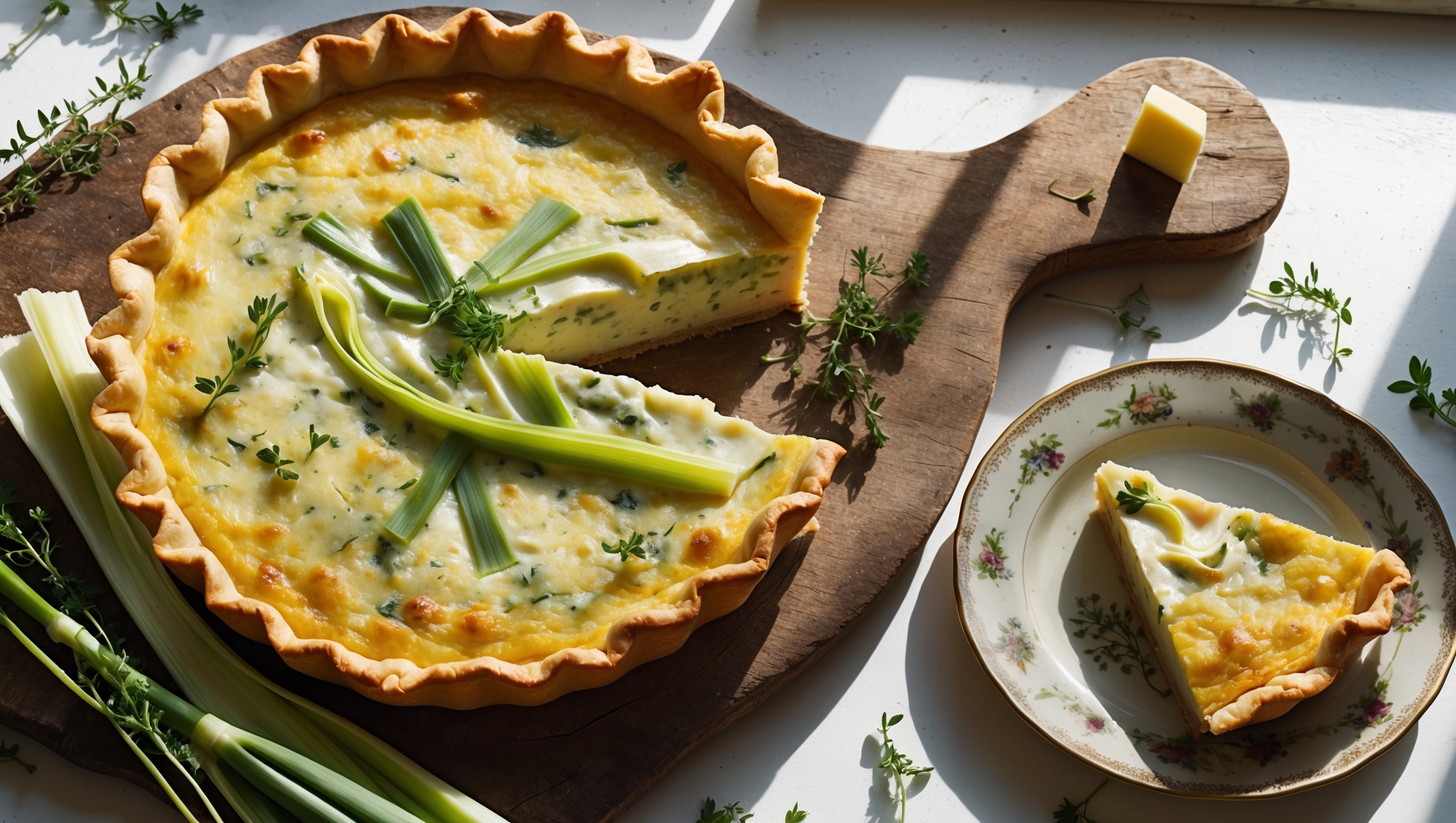
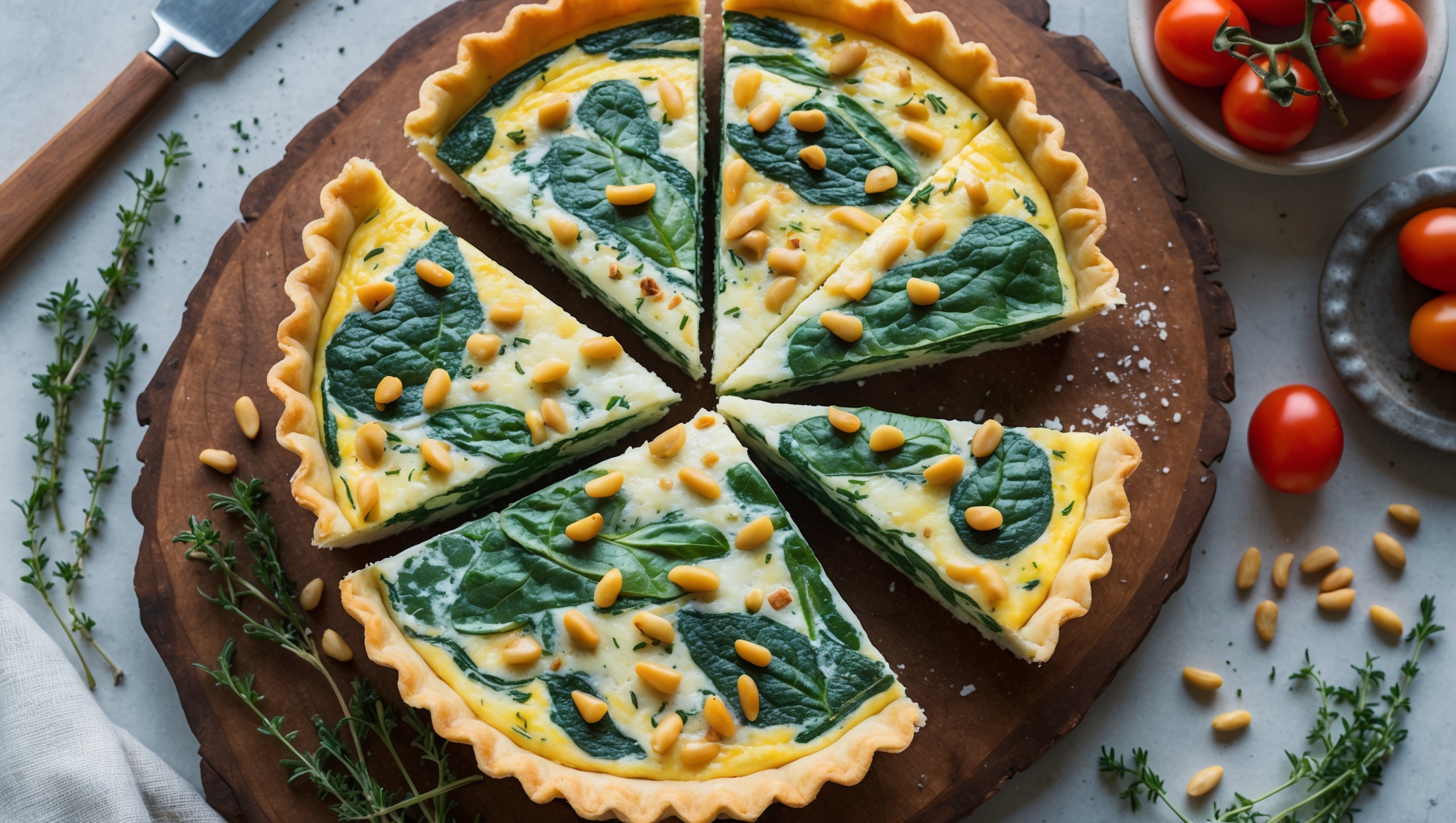
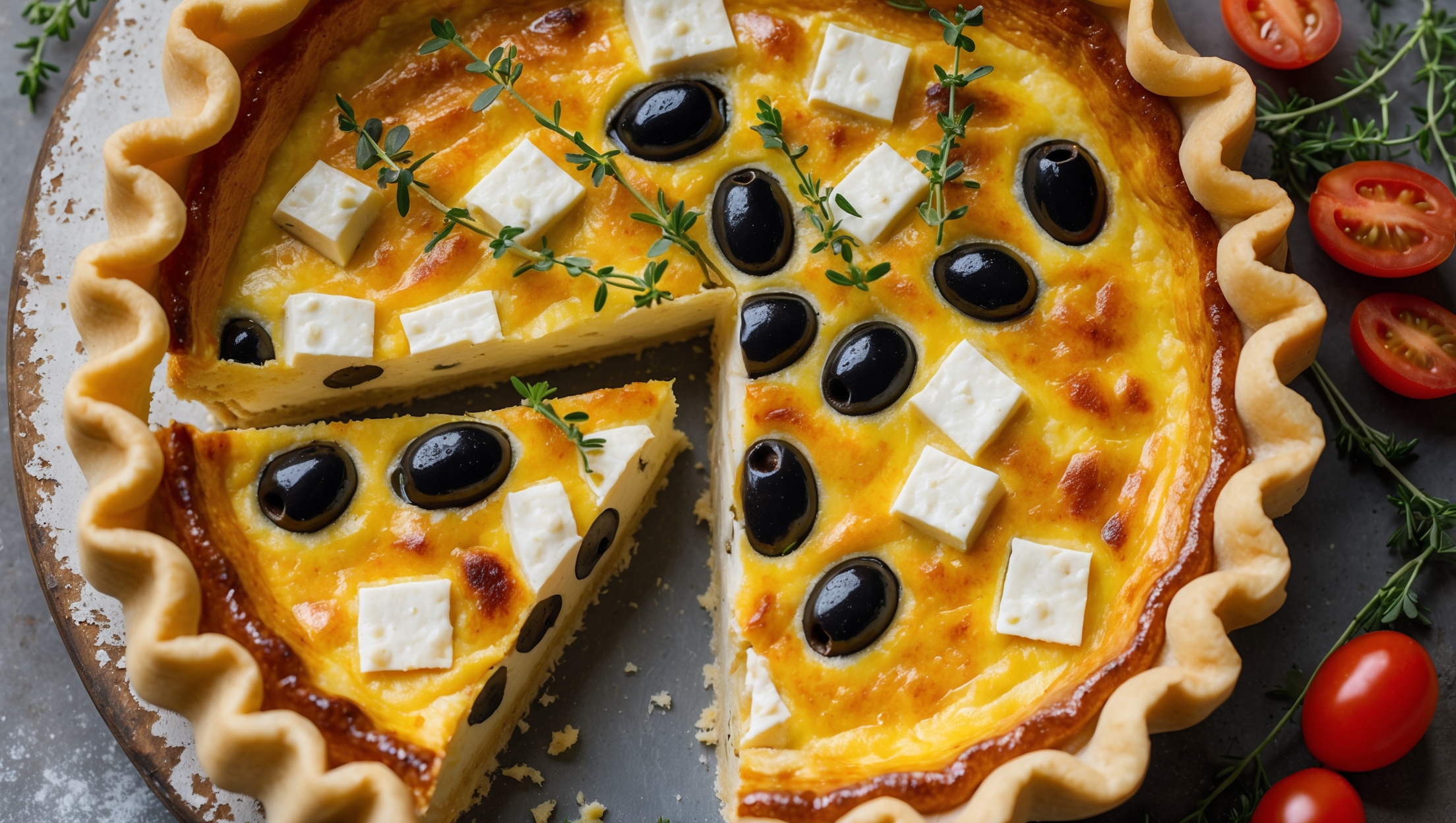
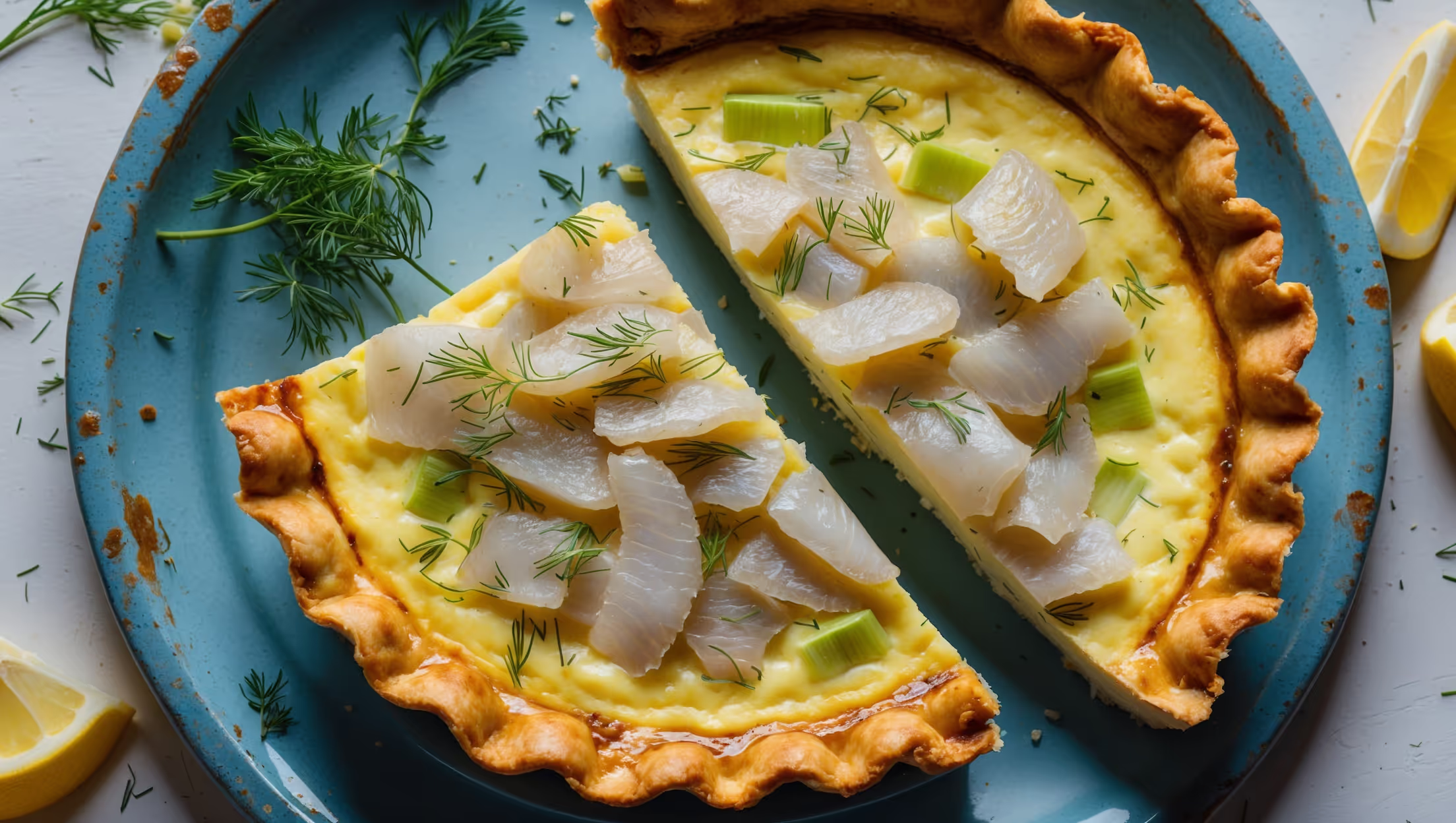
Overhead shot of a golden-brown quiche with a perfectly crimped edge, sliced to reveal the creamy filling studded with vibrant green broccoli florets and marbled with melting pockets of blue Stilton. The flaky pastry crust shows distinct layers under soft natural light streaming through a kitchen window. A wooden serving board holds the quiche alongside a small bunch of fresh thyme, a wedge of Stilton, and a scattering of broccoli florets, enhancing the rustic, homemade appeal while a fork lifts a slice to showcase the perfectly set custard texture.

Ingredients

<ul class="ingredients-main-list"><li class="ingredients-single-item">For the pastry:</li><li class="ingredients-single-item">225g plain flour</li><li class="ingredients-single-item">110g cold unsalted butter, cubed</li><li class="ingredients-single-item">1 large egg, beaten</li><li class="ingredients-single-item">1-2 tbsp cold water (if needed)</li><li class="ingredients-single-item">¼ tsp salt</li><li class="ingredients-single-item">For the filling:</li><li class="ingredients-single-item">300g broccoli florets</li><li class="ingredients-single-item">1 small onion, finely chopped</li><li class="ingredients-single-item">1 tbsp olive oil</li><li class="ingredients-single-item">150g Stilton cheese, crumbled (or Roquefort or Danish blue)</li><li class="ingredients-single-item">4 large eggs</li><li class="ingredients-single-item">300ml double cream</li><li class="ingredients-single-item">Salt and freshly ground black pepper</li><li class="ingredients-single-item">¼ tsp freshly grated nutmeg</li></ul>

Equipment

<ul class="equipment-main-list"><li class="equipment-single-item">23cm loose-bottomed tart tin</li><li class="equipment-single-item">Baking paper</li><li class="equipment-single-item">Baking beans or rice (for blind baking)</li><li class="equipment-single-item">Food processor (optional for pastry)</li></ul>
BAKE SMARTER

Kitchen Converter

Quickly switch between common baking units without leaving the recipe.

Convert
Result—

Volume uses US cups, tablespoons, and teaspoons. Converting weight to volume depends on the ingredient.

Directions

<ol class="no-list-style"><li class="MethodStepper"><h4 class="step-title">Step 1</h4>Begin by making the pastry. If using a food processor, pulse the flour and salt together, then add the cold butter cubes and pulse until the mixture resembles breadcrumbs. Alternatively, use your fingertips to rub the butter into the flour until you achieve the same texture. The cold butter is crucial here – it creates steam pockets during baking that result in a flaky pastry.</li><li class="MethodStepper"><h4 class="step-title">Step 2</h4>Add the beaten egg and mix until the dough just comes together, adding 1-2 tablespoons of cold water if needed. Be careful not to overwork the dough, as this develops gluten and results in tough pastry. Form the dough into a disc, wrap in cling film, and chill in the refrigerator for at least 30 minutes to relax the gluten.</li><li class="MethodStepper"><h4 class="step-title">Step 3</h4>Preheat your oven to 190°C (170°C fan). Roll out the chilled pastry on a lightly floured surface to about 3-4mm thickness and large enough to line your 23cm tart tin. Carefully drape the pastry over the tin, gently pressing it into the corners and up the sides. Trim any excess, leaving a small overhang to allow for shrinkage.</li><li class="MethodStepper"><h4 class="step-title">Step 4</h4>Line the pastry case with baking paper and fill with baking beans or rice. Blind bake for 15 minutes, then remove the beans and paper and bake for a further 5-7 minutes until the base is dry and lightly golden. This crucial step prevents the dreaded "soggy bottom" by partially cooking the pastry before adding wet fillings.</li><li class="MethodStepper"><h4 class="step-title">Step 5</h4>While the pastry is baking, prepare the filling. Blanch the broccoli florets in boiling water for 2 minutes until just tender but still bright green. Immediately plunge into cold water to stop the cooking process (this maintains color and prevents overcooking), then drain thoroughly and pat dry.</li><li class="MethodStepper"><h4 class="step-title">Step 6</h4>In a frying pan, sauté the chopped onion in olive oil over medium heat until soft and translucent, about 5-6 minutes. Set aside to cool slightly. Cooking the onions beforehand removes their moisture and mellows their flavor, preventing them from releasing water into your quiche.</li><li class="MethodStepper"><h4 class="step-title">Step 7</h4>Reduce the oven temperature to 180°C (160°C fan). Arrange the blanched broccoli and sautéed onions evenly across the base of the pastry case, then scatter over about three-quarters of the crumbled Stilton, reserving some for the top.</li><li class="MethodStepper"><h4 class="step-title">Step 8</h4>In a jug, whisk together the eggs, double cream, a pinch of salt (go easy as Stilton is already salty), plenty of freshly ground black pepper, and the grated nutmeg. The eggs provide structure while the cream adds richness – this balance creates that perfect silky, set custard.</li><li class="MethodStepper"><h4 class="step-title">Step 9</h4>Carefully pour the egg mixture into the pastry case, allowing it to flow between the broccoli pieces. Scatter the remaining Stilton on top. Place the quiche on a baking sheet (to catch any potential overflow) and bake for 25-30 minutes until the filling is set but still has a slight wobble in the center.</li><li class="MethodStepper"><h4 class="step-title">Step 10</h4>Allow the quiche to cool in the tin for 10-15 minutes before removing – this resting period helps the custard set completely. The quiche can be served warm or at room temperature. If you notice the edges browning too quickly during baking, cover them loosely with foil to protect them.</li></ol>

Nutrition Facts (per serving)

🍽️ Serving Size: 1 slice
🔥 Calories: 385 calories
🥑 Fat: 28 g
🧈 Saturated Fat: 16 g
🍞 Carbohydrates: 22 g
🍭 Sugar: 2 g
🍗 Protein: 12 g
🫀 Cholesterol: 185 mg
🧂 Sodium: 520 mg

Chef’s Notes

A few helpful details for making this recipe.

Why is it important to blind bake the pastry for a quiche?

Blind baking is crucial for quiches as it pre-cooks the pastry before adding wet fillings, preventing the dreaded "soggy bottom". This technique ensures your pastry base stays crisp and fully cooked while supporting the custard filling, resulting in perfect texture contrast in every bite.

Can I substitute Stilton for another cheese in my savoury tart?

Yes, you can substitute Stilton with other blue cheeses like Roquefort, Danish Blue or Gorgonzola. If you prefer a milder flavour, try mature Cheddar, Gruyère or goat's cheese. Each alternative will give your quiche a different character while maintaining that essential creamy, cheesy element.

How long will a homemade quiche keep in the refrigerator?

A homemade quiche will keep well in the refrigerator for up to 3-4 days when properly stored in an airtight container. You can also freeze it for up to 3 months. For best results when reheating, warm in a 180°C oven for 15-20 minutes until heated through.

Want to try something else in ...

More recipes you might like

Keep exploring with more recipes from What's Baking.