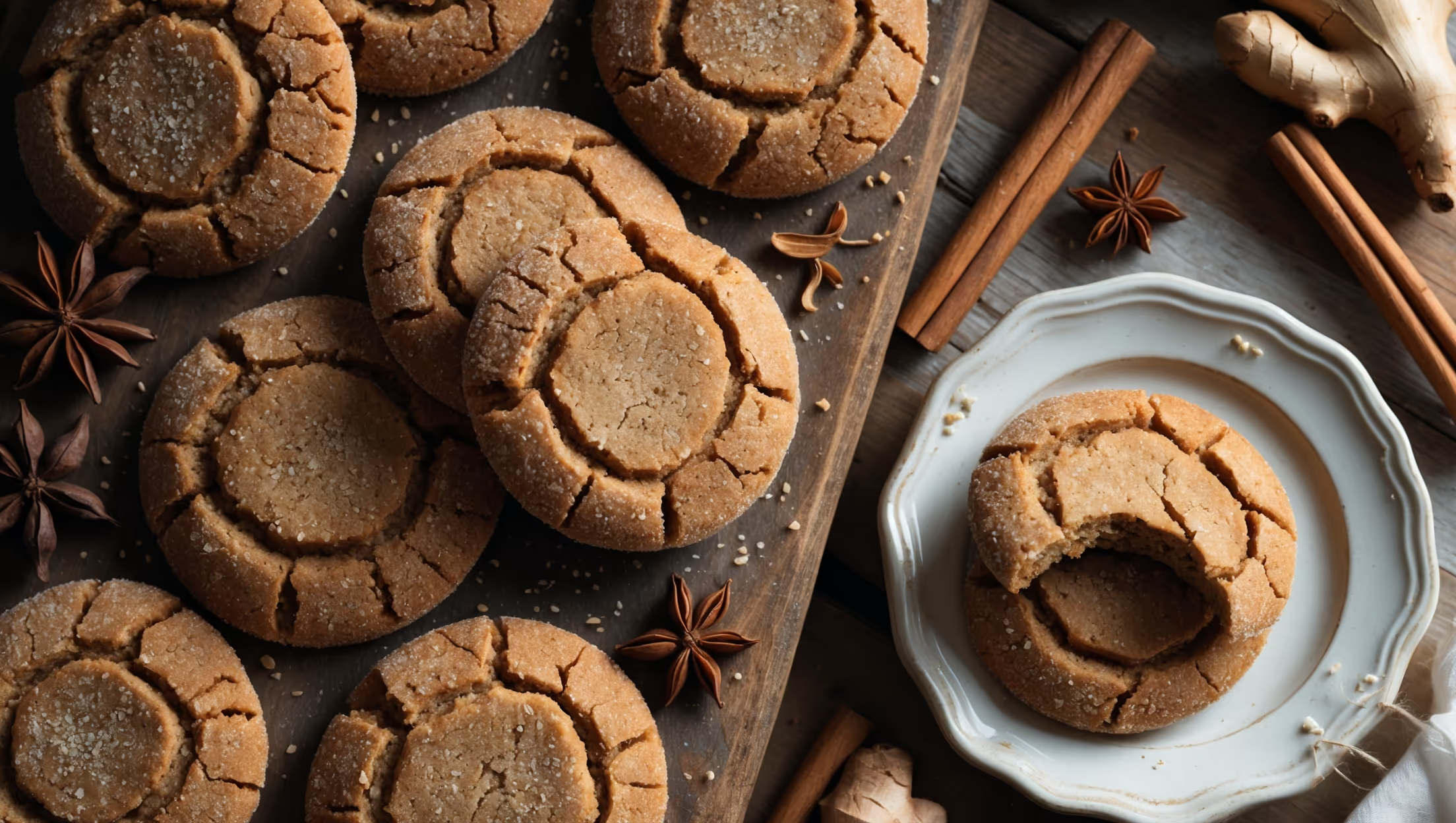
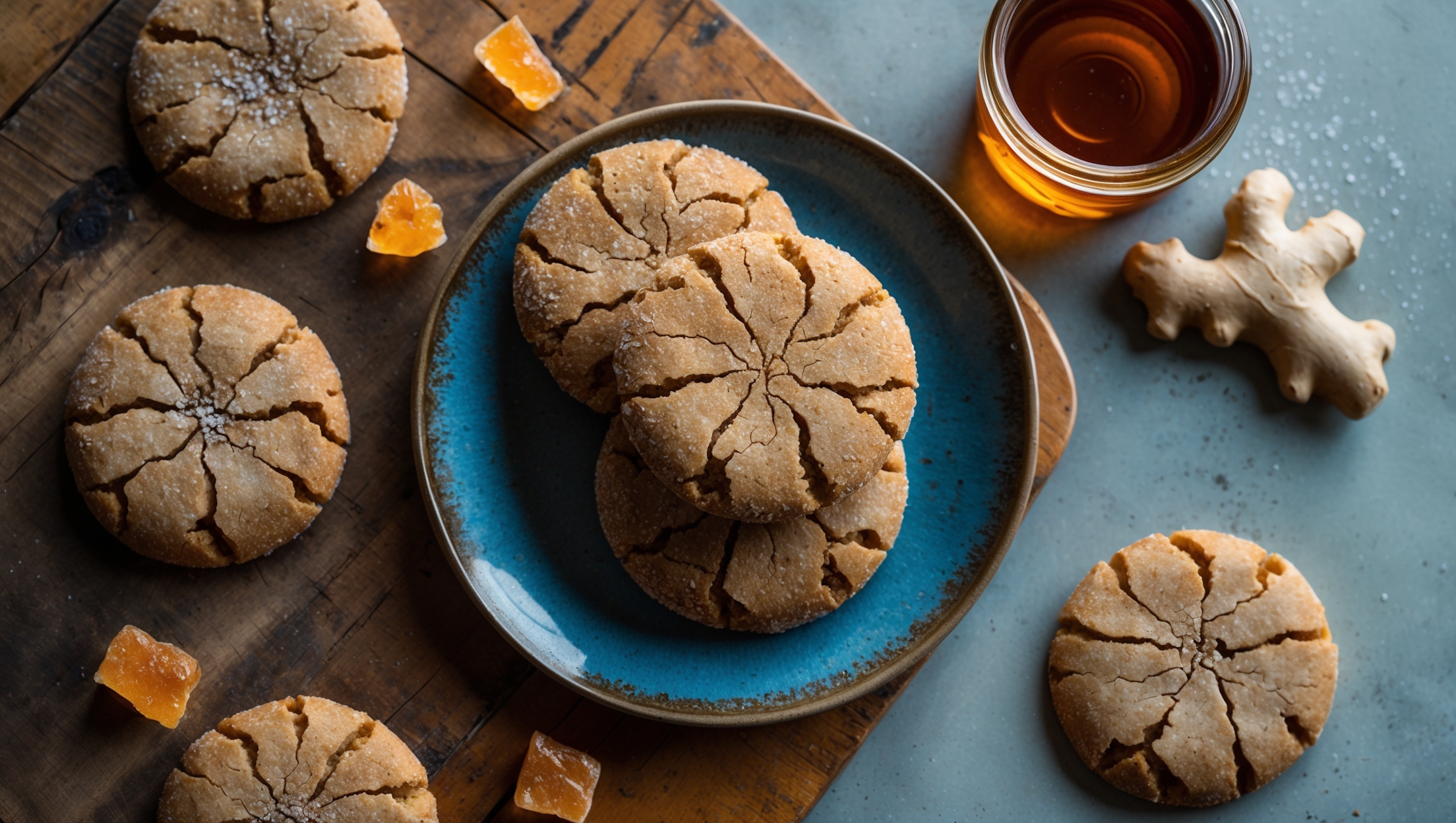
Directions
<ol class="no-list-style"><li class="MethodStepper"><h4 class="step-title">Step 1</h4>Preheat your oven to 170°C (150°C fan) and line two baking sheets with silicone mats or parchment paper. This slightly lower temperature allows the cookies to spread gradually and develop their characteristic chewy centers.</li><li class="MethodStepper"><h4 class="step-title">Step 2</h4>In a medium bowl, whisk together the flour, ground ginger, cinnamon, cloves, nutmeg, salt, and bicarbonate of soda until well combined. This thorough mixing ensures the spices and raising agent are evenly distributed throughout the dough.</li><li class="MethodStepper"><h4 class="step-title">Step 3</h4>In a large bowl, cream together the softened butter and brown sugar until light and fluffy, about 3-4 minutes. This incorporates air into the mixture, helping create a tender cookie texture. The brown sugar adds moisture and a caramel note that complements the treacle.</li><li class="MethodStepper"><h4 class="step-title">Step 4</h4>Add the black treacle and beat until fully incorporated, scraping down the sides of the bowl as needed. Black treacle is more bitter and intense than golden syrup, giving these cookies their distinctive deep flavor and helping keep them chewy.</li><li class="MethodStepper"><h4 class="step-title">Step 5</h4>Beat in the egg, then add the rum and freshly grated ginger, mixing until smooth. The alcohol in the rum will partially evaporate during baking, leaving behind complex flavor compounds that enhance the spices.</li><li class="MethodStepper"><h4 class="step-title">Step 6</h4>Gradually add the dry ingredients to the wet mixture, mixing on low speed just until combined. Overmixing will develop gluten, resulting in tough cookies, so stop as soon as no dry flour remains visible.</li><li class="MethodStepper"><h4 class="step-title">Step 7</h4>Fold in the chopped crystallized ginger by hand using a spatula. This gives bursts of intense ginger flavor and chewy texture throughout the cookies.</li><li class="MethodStepper"><h4 class="step-title">Step 8</h4>Chill the dough for at least 30 minutes, or up to 24 hours. This resting period allows the flour to hydrate fully and the flavors to meld, while the chilled fat will help control spreading during baking.</li><li class="MethodStepper"><h4 class="step-title">Step 9</h4>Place the demerara sugar in a small bowl. Using a cookie scoop or tablespoon, portion the dough into 30g balls, then roll each in the demerara sugar to coat completely. The sugar will create a lovely crunchy exterior that contrasts with the chewy center.</li><li class="MethodStepper"><h4 class="step-title">Step 10</h4>Arrange the dough balls on the prepared baking sheets, leaving about 5cm between each one as they will spread during baking. Press each ball slightly to flatten.</li><li class="MethodStepper"><h4 class="step-title">Step 11</h4>Bake for 11-13 minutes until the edges are set but the centers still appear slightly soft and underdone. The cookies will develop characteristic cracks on top as they bake. Don't overbake—they'll firm up as they cool but remain wonderfully chewy.</li><li class="MethodStepper"><h4 class="step-title">Step 12</h4>Allow the cookies to cool on the baking sheets for 5 minutes (they'll be too soft to move immediately), then transfer to a wire rack to cool completely. As they cool, the cookies will develop that perfect contrast between crisp edges and chewy centers.</li><li class="MethodStepper"><h4 class="step-title">Step 13</h4>Store cooled cookies in an airtight container at room temperature for up to 5 days. You can place a slice of bread in the container to help keep the cookies soft, or freeze them for up to 3 months.</li></ol>