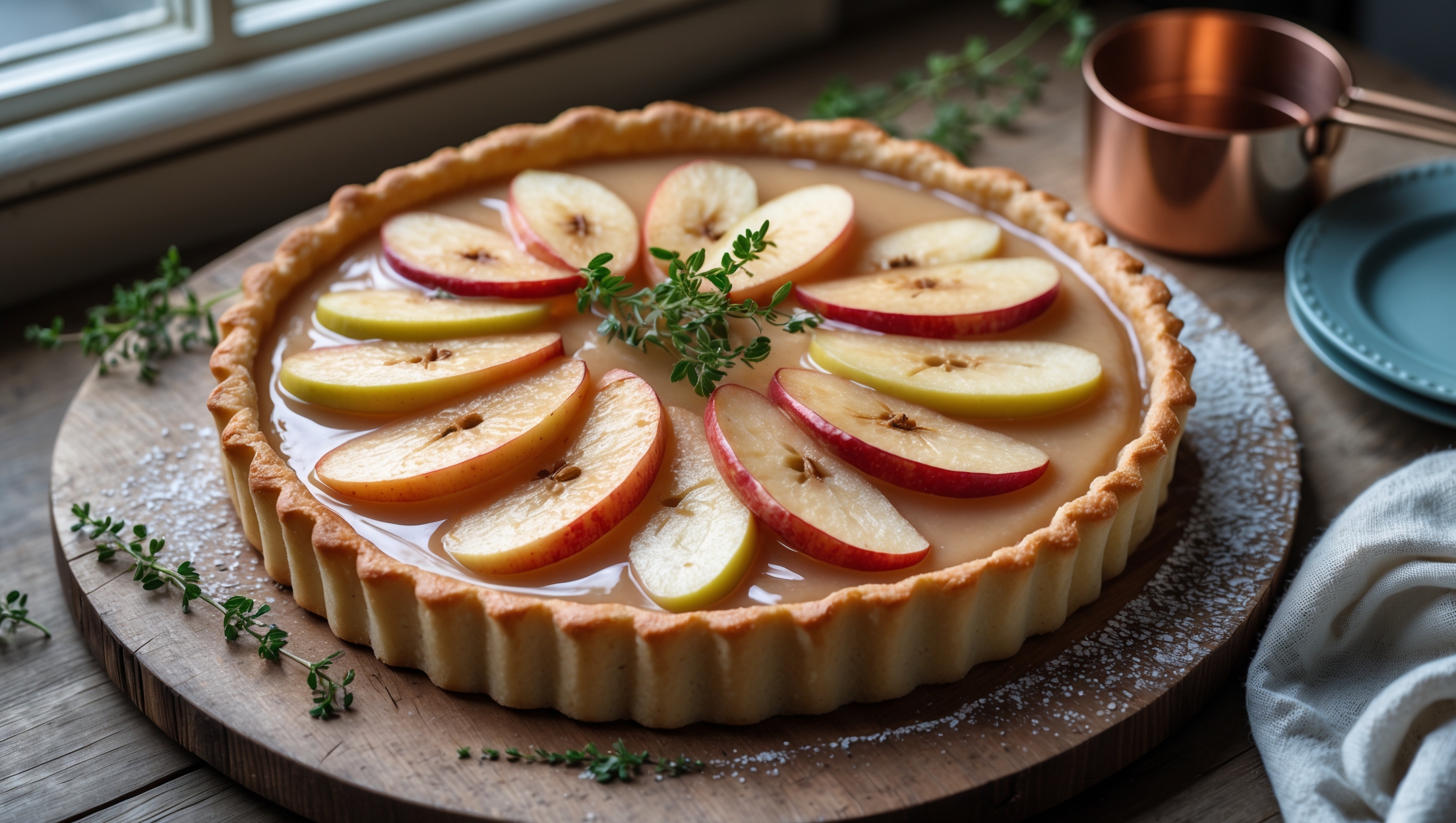
Directions
<ol class="no-list-style"><li class="MethodStepper"><h4 class="step-title">Step 1</h4>Begin with the pastry by placing the flour, icing sugar and salt in a food processor. Add the cold cubed butter and pulse until the mixture resembles fine breadcrumbs. Cold butter creates pockets of steam during baking, resulting in a flaky, tender crust.</li><li class="MethodStepper"><h4 class="step-title">Step 2</h4>Add the egg yolk and 2 tablespoons of ice-cold water, pulsing briefly until the dough just begins to come together. If needed, add the remaining tablespoon of water, but be careful not to overwork the dough as this develops gluten, making the pastry tough.</li><li class="MethodStepper"><h4 class="step-title">Step 3</h4>Turn the dough onto a lightly floured surface and gently form into a disc. Wrap in cling film and refrigerate for at least 30 minutes. Chilling relaxes the gluten and firms the butter, preventing shrinkage during baking.</li><li class="MethodStepper"><h4 class="step-title">Step 4</h4>Preheat your oven to 180°C. Roll the chilled pastry to 3-4mm thickness on a lightly floured surface. Cut circles slightly larger than your tart tins and carefully line each tin, pressing gently into the fluted edges. Trim excess pastry and prick the bases with a fork.</li><li class="MethodStepper"><h4 class="step-title">Step 5</h4>Line each pastry case with baking parchment and fill with ceramic beans. Blind bake for 15 minutes, then remove the beans and parchment and bake for a further 5-7 minutes until the pastry is golden and crisp. Set aside to cool completely.</li><li class="MethodStepper"><h4 class="step-title">Step 6</h4>For the custard, heat the milk with the vanilla pod and seeds in a saucepan until just below boiling point. Remove from heat and allow to infuse for 10 minutes before removing the vanilla pod.</li><li class="MethodStepper"><h4 class="step-title">Step 7</h4>In a heatproof bowl, whisk the egg yolks, sugar, and cornflour until pale and thick. The cornflour acts as a stabilizer, preventing the eggs from curdling when heated and giving the custard its characteristic thickness.</li><li class="MethodStepper"><h4 class="step-title">Step 8</h4>Gradually pour the hot milk into the egg mixture, whisking constantly to prevent curdling. Return the mixture to the saucepan and cook over medium heat, stirring continuously with a wooden spoon until it thickens enough to coat the back of the spoon - around 82-84°C on a thermometer.</li><li class="MethodStepper"><h4 class="step-title">Step 9</h4>Remove from heat and stir in the barrel-aged whiskey. The alcohol's flavor is more pronounced when added after cooking, while much of the alcohol evaporates. Strain through a fine-mesh sieve into a clean bowl and cover the surface directly with cling film to prevent a skin forming. Allow to cool slightly.</li><li class="MethodStepper"><h4 class="step-title">Step 10</h4>Fill the cooled tart shells with the warm (not hot) custard. Refrigerate for at least 3 hours or overnight until the custard is completely set.</li><li class="MethodStepper"><h4 class="step-title">Step 11</h4>For the tempered sugar work, line a baking sheet with a silicone mat or parchment paper. Combine the sugar, water, and cream of tartar in a heavy-bottomed saucepan. The cream of tartar is an acid that prevents crystallization, ensuring smooth sugar work.</li><li class="MethodStepper"><h4 class="step-title">Step 12</h4>Heat the mixture without stirring until it reaches 150°C (hard crack stage) on a sugar thermometer. The mixture should be a light amber color. Immediately remove from heat and carefully pour thin streams or small pools onto your prepared surface, creating decorative shapes. Work quickly as the sugar will set rapidly.</li><li class="MethodStepper"><h4 class="step-title">Step 13</h4>Allow the sugar work to cool and harden completely before carefully lifting from the surface. If the day is humid, make the sugar work just before serving as humidity will cause it to soften and lose its shine.</li><li class="MethodStepper"><h4 class="step-title">Step 14</h4>Just before serving, arrange your tempered sugar decorations atop each custard tart. The contrast between the smooth, creamy custard and the crisp, glassy sugar creates a wonderful textural experience. Serve immediately once decorated, as the sugar will begin to dissolve into the custard over time.</li></ol>