Directions
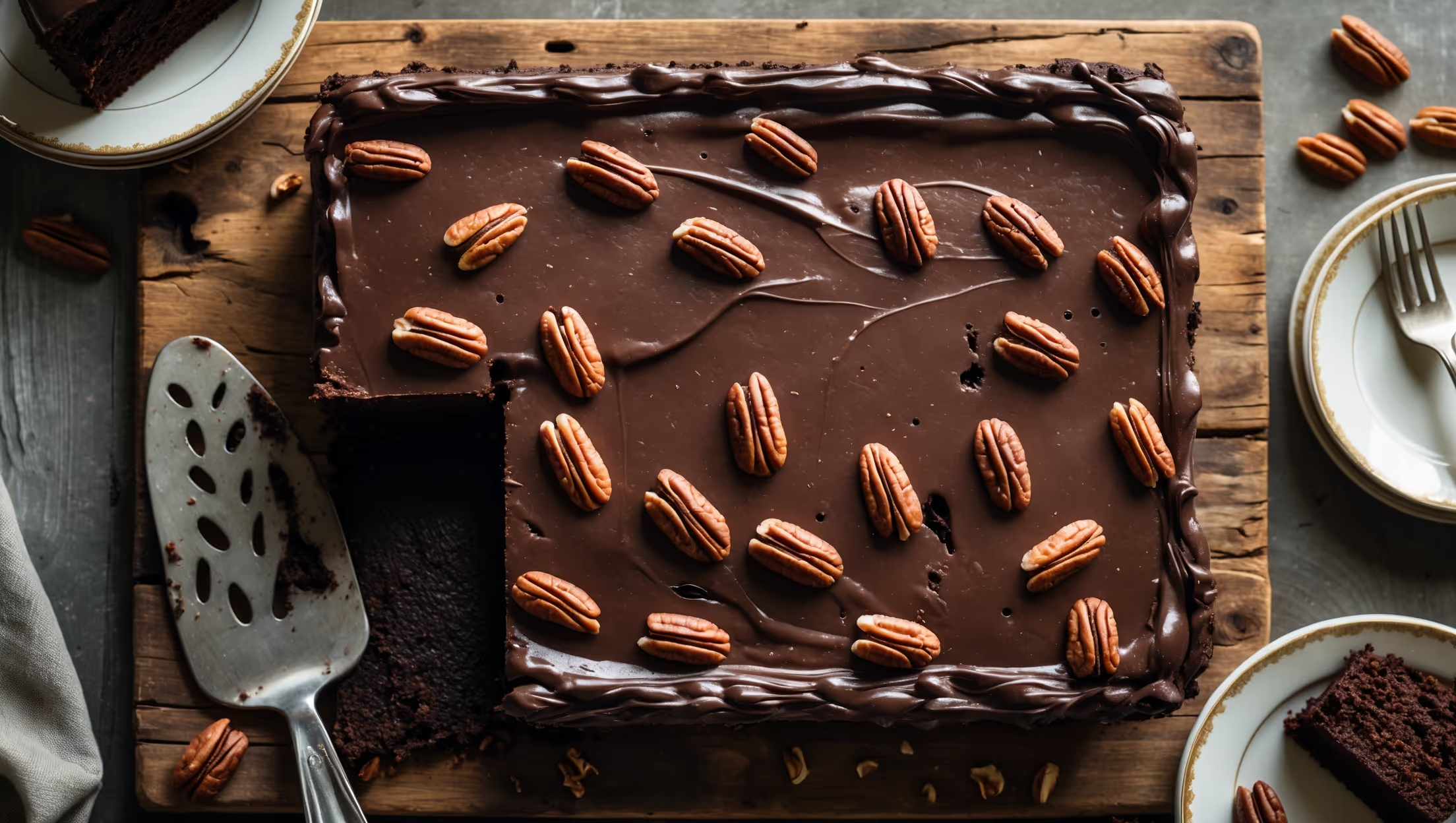
<ol class="no-list-style"><li class="MethodStepper"><h4 class="step-title">Step 1</h4>Preheat your oven to 180°C (350°F) and lightly grease a 33 x 23 cm (13 x 9 inch) baking pan. This large pan is what gives the Texas Sheet Cake its characteristic thin profile, perfect for that ideal cake-to-frosting ratio.</li><li class="MethodStepper"><h4 class="step-title">Step 2</h4>In a large bowl, whisk together the flour, sugar, and salt until well combined, then set aside. This pre-mixing of dry ingredients ensures they'll incorporate evenly into the wet mixture later, preventing flour pockets in your finished cake.</li><li class="MethodStepper"><h4 class="step-title">Step 3</h4>In a medium saucepan over medium heat, combine the butter, cocoa powder, and water. Stir constantly until the butter is completely melted and the mixture comes to a gentle boil. The heat helps bloom the cocoa, intensifying its chocolate flavor. Remove from heat immediately once it reaches a boil.</li><li class="MethodStepper"><h4 class="step-title">Step 4</h4>Pour the hot chocolate mixture over the flour mixture and stir until just combined. The heat from the chocolate mixture will begin to activate the leavening agents, so work efficiently but don't overmix, which can develop gluten and toughen the cake.</li><li class="MethodStepper"><h4 class="step-title">Step 5</h4>In a small bowl, whisk together the buttermilk, eggs, vanilla, and baking soda until smooth. The acidity in the buttermilk works with the baking soda to create a tender crumb and help the cake rise properly. Pour this mixture into the batter and stir until just combined and no visible flour streaks remain.</li><li class="MethodStepper"><h4 class="step-title">Step 6</h4>Pour the batter into your prepared pan, spreading it evenly with a spatula. The batter will be thinner than traditional cake batters – this is exactly right and contributes to the cake's signature texture.</li><li class="MethodStepper"><h4 class="step-title">Step 7</h4>Bake for 18-20 minutes, or until a toothpick inserted in the center comes out with a few moist crumbs (but no wet batter). Be careful not to overbake – this cake is meant to have a fudgy, moist texture. Begin preparing your frosting about 5 minutes before the cake is done.</li><li class="MethodStepper"><h4 class="step-title">Step 8</h4>For the frosting, combine butter, cocoa powder, and milk in a medium saucepan over medium heat. Bring to a boil, stirring constantly, then remove from heat. The boiling ensures the cocoa powder fully blooms for maximum chocolate flavor.</li><li class="MethodStepper"><h4 class="step-title">Step 9</h4>Add the vanilla and powdered sugar to the hot mixture, whisking vigorously until smooth. If the frosting seems too thick, add a tablespoon of milk at a time until it reaches a pourable consistency. If using pecans, stir them in now (reserve a few for garnish if desired).</li><li class="MethodStepper"><h4 class="step-title">Step 10</h4>Pour the hot frosting over the hot cake immediately after it comes out of the oven. This is the signature technique of Texas Sheet Cake – the hot frosting partially melds with the hot cake, creating that characteristic fudgy layer between cake and frosting. Spread quickly with a spatula to ensure even coverage before the frosting begins to set.</li><li class="MethodStepper"><h4 class="step-title">Step 11</h4>Allow the cake to cool completely at room temperature, about 1-2 hours. The frosting will set to a soft, fudgy finish that's the hallmark of a proper Texas Sheet Cake. For cleanest slices, use a knife dipped in hot water and wiped clean between cuts.</li><li class="MethodStepper"><h4 class="step-title">Step 12</h4>Cut into squares and serve. This cake stays wonderfully moist for several days stored in an airtight container at room temperature. For longer storage, cover tightly and refrigerate for up to a week, bringing to room temperature before serving for the best texture and flavor.</li></ol>