Directions
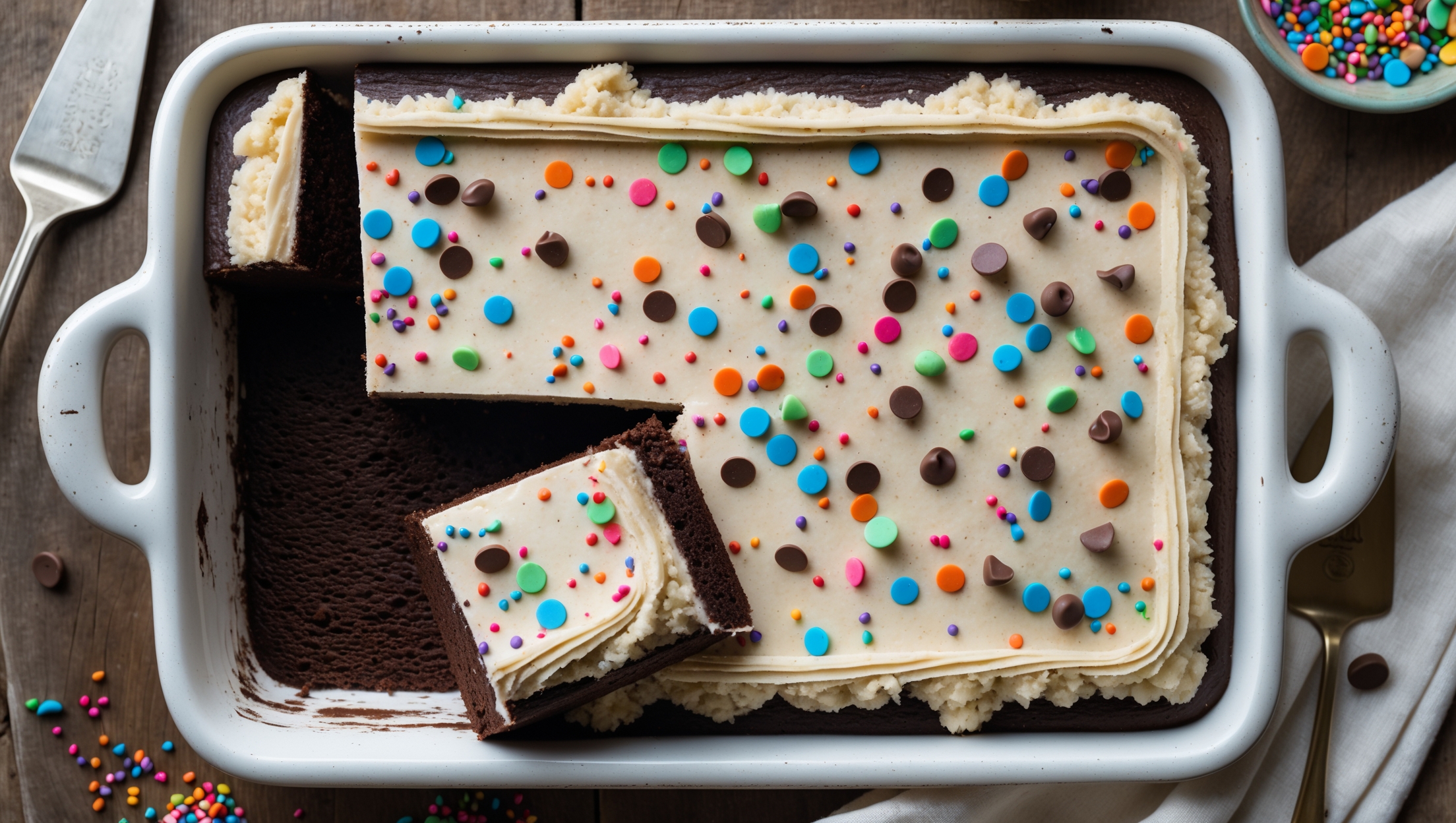
<ol class="no-list-style"><li class="MethodStepper"><h4 class="step-title">Step 1</h4>First, heat-treat your flour for the frosting. Spread 250g flour on a baking sheet and bake at 180°C for 5-7 minutes until it reaches 75°C on a digital thermometer. This eliminates any harmful bacteria, making the flour safe to eat in the raw cookie dough frosting. Cool completely before using.</li><li class="MethodStepper"><h4 class="step-title">Step 2</h4>Preheat your oven to 180°C. Grease and line your 33x23cm baking pan with parchment paper, allowing some overhang for easy removal later.</li><li class="MethodStepper"><h4 class="step-title">Step 3</h4>For the chocolate cake, combine butter, cocoa powder, and water in a medium saucepan over medium heat. Stir constantly until the butter melts and the mixture comes to a simmer. Remove from heat immediately - overheating will cause the cocoa to become bitter.</li><li class="MethodStepper"><h4 class="step-title">Step 4</h4>Transfer the chocolate mixture to a large mixing bowl. Add sugar and whisk until combined, then let cool for 5 minutes. This cooling period prevents the eggs from scrambling when added.</li><li class="MethodStepper"><h4 class="step-title">Step 5</h4>Add eggs one at a time, whisking well after each addition until fully incorporated. Stir in buttermilk and vanilla extract. The acidity in buttermilk will react with the baking soda to help the cake rise properly and create a tender crumb.</li><li class="MethodStepper"><h4 class="step-title">Step 6</h4>In a separate bowl, whisk together flour, baking soda, and salt. Gradually fold the dry ingredients into the wet mixture until just combined. Be careful not to overmix as this develops gluten and can make your cake tough.</li><li class="MethodStepper"><h4 class="step-title">Step 7</h4>Pour the batter into your prepared pan, smoothing the top with a spatula. Bake for 25-30 minutes, or until a toothpick inserted in the center comes out with a few moist crumbs (but no wet batter). Look for the cake to start pulling away slightly from the edges of the pan.</li><li class="MethodStepper"><h4 class="step-title">Step 8</h4>Allow the cake to cool completely in the pan on a wire rack before frosting. This may take 1-2 hours. Patience here is key - applying frosting to a warm cake will cause it to melt.</li><li class="MethodStepper"><h4 class="step-title">Step 9</h4>For the cookie dough frosting, beat softened butter and brown sugar in a stand mixer fitted with the paddle attachment for 3-4 minutes until light and fluffy. The extended beating time incorporates air and creates that signature cookie dough texture.</li><li class="MethodStepper"><h4 class="step-title">Step 10</h4>Add vanilla extract and mix to combine. Gradually add the cooled heat-treated flour and salt, mixing on low speed to prevent a flour cloud. The mixture will look crumbly at this point.</li><li class="MethodStepper"><h4 class="step-title">Step 11</h4>Add milk one tablespoon at a time, mixing after each addition until the frosting reaches a smooth, spreadable consistency that resembles cookie dough. You may need slightly more or less milk depending on your environment.</li><li class="MethodStepper"><h4 class="step-title">Step 12</h4>Fold in the mini chocolate chips by hand using a rubber spatula. This gentle folding preserves the air you've incorporated during beating.</li><li class="MethodStepper"><h4 class="step-title">Step 13</h4>Spread the cookie dough frosting generously over the cooled cake, creating swirls and peaks with your spatula. Immediately sprinkle with rainbow sprinkles while the frosting is still soft so they adhere properly.</li><li class="MethodStepper"><h4 class="step-title">Step 14</h4>For clean slices, refrigerate the cake for 30 minutes before cutting. Store leftovers in an airtight container at room temperature for up to 3 days, or refrigerate for up to 5 days. Allow refrigerated cake to come to room temperature before serving for the best texture and flavor.</li></ol>