Directions
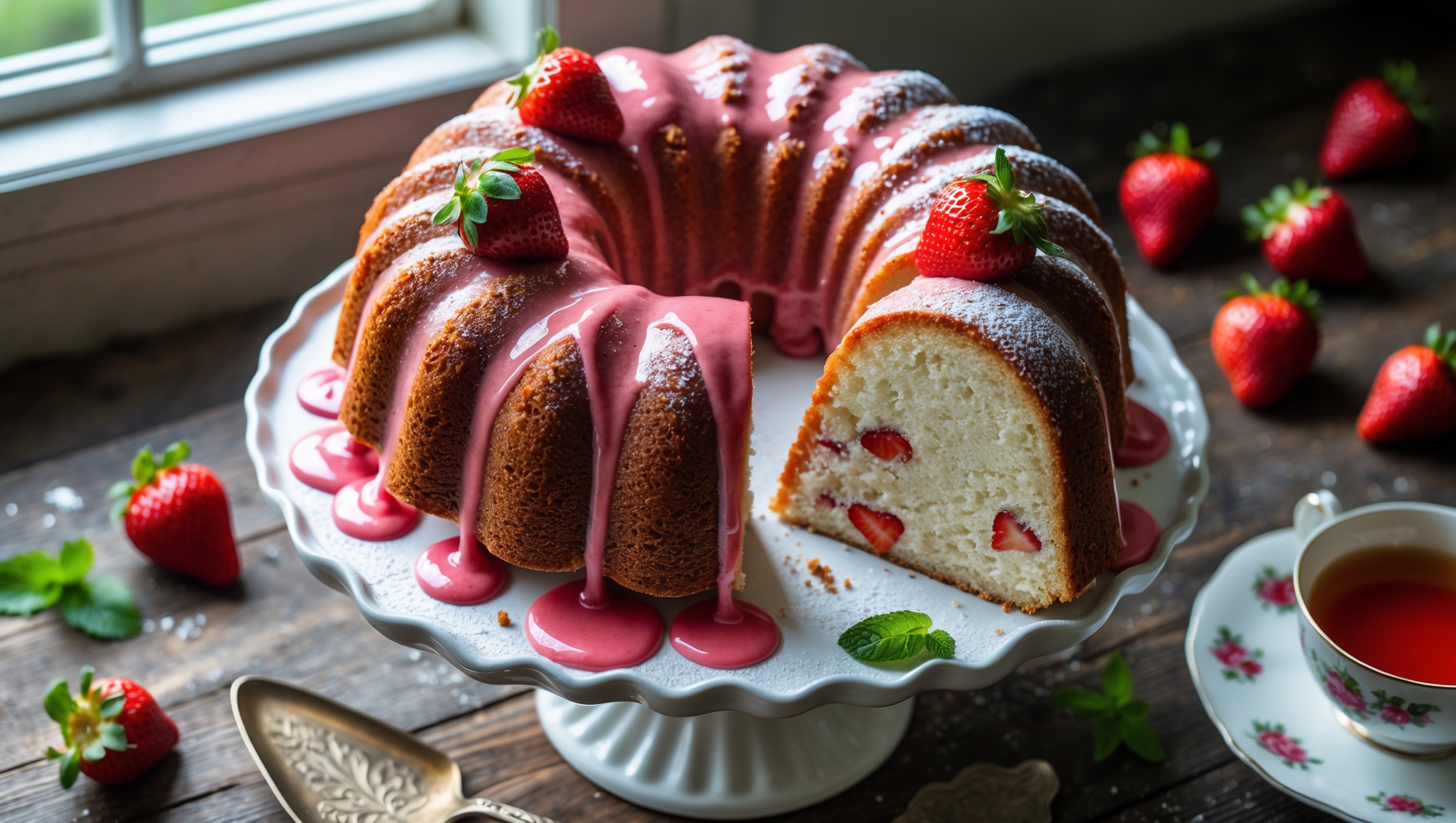
<ol class="no-list-style"><li class="MethodStepper"><h4 class="step-title">Step 1</h4>Preheat your oven to 175°C. Thoroughly grease and flour your Bundt pan, ensuring you reach all the nooks and crevices. This careful preparation is crucial for a clean release later - a stuck Bundt cake can be heartbreaking!</li><li class="MethodStepper"><h4 class="step-title">Step 2</h4>Hull and quarter 200g of the strawberries, then pulse them in a food processor until finely chopped but not pureed - you want small pieces that will distribute throughout the batter. Set aside. Reserve the remaining 100g of strawberries for the glaze and garnish.</li><li class="MethodStepper"><h4 class="step-title">Step 3</h4>In a medium bowl, whisk together the flour, baking powder, baking soda, and salt. Whisking the dry ingredients separately ensures they're evenly distributed throughout the batter, preventing pockets of salt or leavening agents.</li><li class="MethodStepper"><h4 class="step-title">Step 4</h4>In the bowl of your stand mixer fitted with the paddle attachment (or using a hand mixer), cream the butter and sugar on medium-high speed for 4-5 minutes until pale and fluffy. This extended creaming creates air pockets that help the cake rise and gives it a tender crumb.</li><li class="MethodStepper"><h4 class="step-title">Step 5</h4>Add eggs one at a time, beating well after each addition. After all eggs are incorporated, beat in the vanilla extract and lemon zest. Don't worry if the mixture looks slightly curdled - this is normal and will smooth out when you add the dry ingredients.</li><li class="MethodStepper"><h4 class="step-title">Step 6</h4>Reduce the mixer speed to low. Add one-third of the flour mixture, followed by half the sour cream, another third of flour, the remaining sour cream, and finally the last third of flour, mixing just until combined after each addition. Alternating dry and wet ingredients this way prevents gluten development, resulting in a more tender cake.</li><li class="MethodStepper"><h4 class="step-title">Step 7</h4>Add the lemon juice and mix briefly. Using a spatula, gently fold in the chopped strawberries by hand. The batter will be thick and luxurious - this is exactly what you want for a Bundt cake with a perfect texture.</li><li class="MethodStepper"><h4 class="step-title">Step 8</h4>Spoon the batter into your prepared Bundt pan, smoothing the top with a spatula. Give the pan a couple of gentle taps on the counter to remove any air bubbles. Bake in the preheated oven for 50-55 minutes, or until a wooden skewer inserted in the center comes out clean or with a few moist crumbs.</li><li class="MethodStepper"><h4 class="step-title">Step 9</h4>Allow the cake to cool in the pan for exactly 15 minutes - not too short or too long. This timing is crucial: too short and the cake may break, too long and it might stick to the pan. After 15 minutes, invert onto a cooling rack and let cool completely.</li><li class="MethodStepper"><h4 class="step-title">Step 10</h4>For the glaze, puree the remaining strawberries and strain through a fine mesh sieve to remove seeds. In a bowl, whisk together powdered sugar, 2-3 tablespoons of the strawberry puree, and vanilla until smooth. The glaze should be thick enough to coat the back of a spoon but still pour slowly. If needed, adjust consistency with more sugar or strawberry puree.</li><li class="MethodStepper"><h4 class="step-title">Step 11</h4>Once the cake is completely cool, place it on your serving platter and drizzle the glaze over the top, allowing it to cascade down the sides. For the most beautiful presentation, let the glaze set for about 20 minutes before serving. This cake tastes even better the next day as the strawberry flavor develops!</li></ol>