Directions
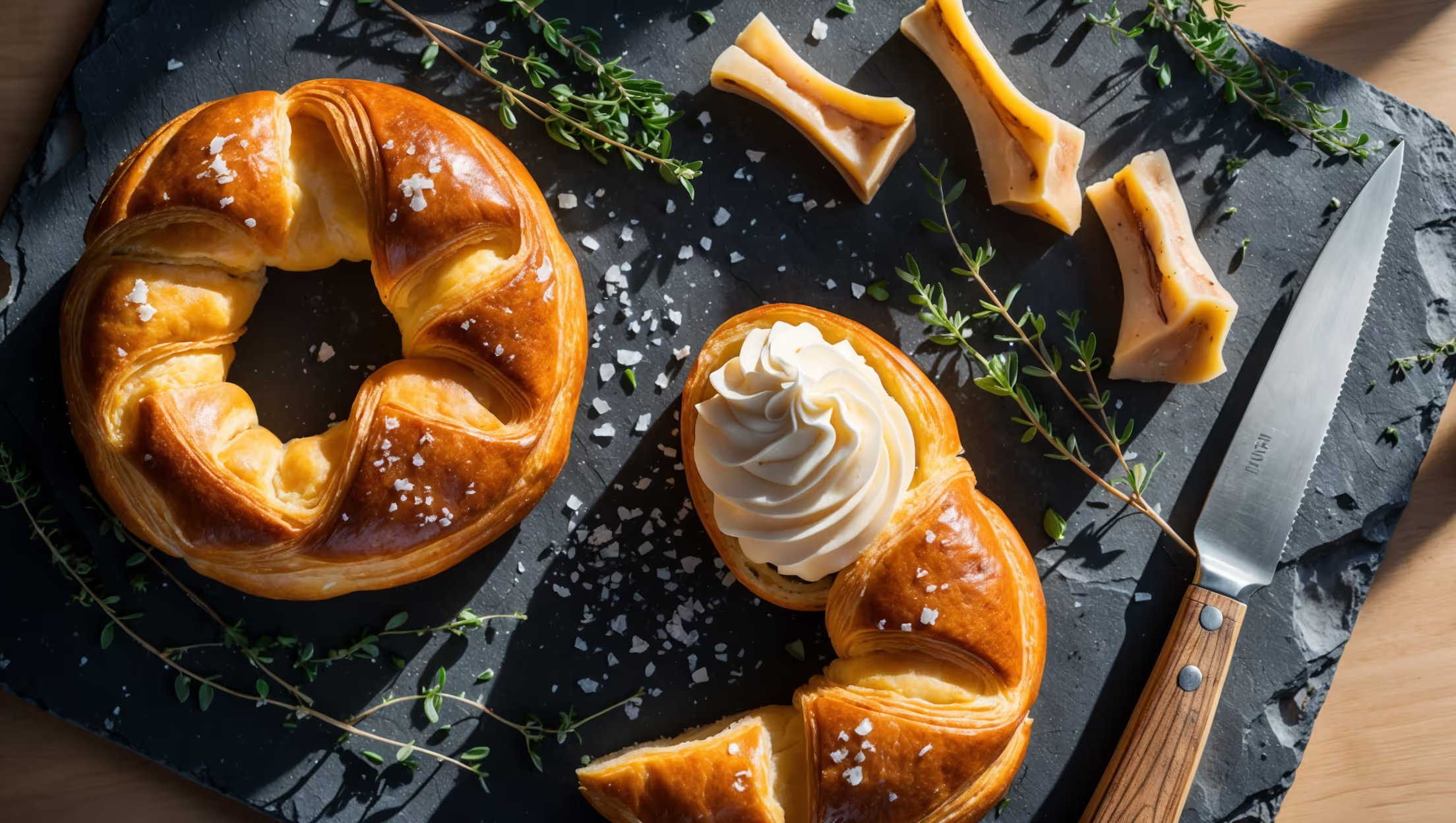
<ol class="no-list-style"><li class="MethodStepper"><h4 class="step-title">Step 1</h4>Preheat your oven to 190°C. On a piece of parchment paper, trace a 20cm diameter circle (using a bowl as a template), then flip the paper over and place on a baking sheet. This will be your guide for piping the choux ring.</li><li class="MethodStepper"><h4 class="step-title">Step 2</h4>For the choux pastry, combine water, milk, butter, and salt in a medium saucepan. Bring to a boil over medium heat, stirring occasionally until the butter is completely melted. This creates the moisture that will generate steam in the oven, causing the pastry to puff.</li><li class="MethodStepper"><h4 class="step-title">Step 3</h4>Once boiling, remove from heat and add all the flour at once. Stir vigorously with a wooden spoon until the mixture forms a smooth ball that pulls away from the sides of the pan, about 1-2 minutes. Return to low heat and continue stirring for another minute to dry out the dough slightly - this helps the pastry hold its shape better when baked.</li><li class="MethodStepper"><h4 class="step-title">Step 4</h4>Transfer the dough to a stand mixer fitted with a paddle attachment. Beat on medium-low speed for 1 minute to release some steam. Add the finely chopped herbs and mix well. The herbs should be very finely chopped to avoid tearing the choux structure.</li><li class="MethodStepper"><h4 class="step-title">Step 5</h4>Add the eggs one at a time, allowing each to be fully incorporated before adding the next. The dough should be shiny and fall slowly from the paddle in a V-shape when lifted - if it's too stiff, beat in a little more egg white. Fold in the grated Gruyère cheese.</li><li class="MethodStepper"><h4 class="step-title">Step 6</h4>Transfer the dough to a piping bag fitted with a 1cm plain tip. Pipe one ring of dough along the inside of your traced circle, then pipe another ring directly beside it, touching the first. Finally, pipe a third ring on top where the first two meet. Brush the dough gently with beaten egg wash, being careful not to drip it onto the parchment (which would prevent rising).</li><li class="MethodStepper"><h4 class="step-title">Step 7</h4>Sprinkle lightly with flaky sea salt and bake for 35-40 minutes until deeply golden and crisp. Do not open the oven door during the first 30 minutes of baking or your pastry may collapse. Once baked, turn off the oven, poke a small hole in the side of the ring to release steam, and leave the pastry in the oven with the door ajar for 10 minutes to dry out further. Cool completely on a wire rack.</li><li class="MethodStepper"><h4 class="step-title">Step 8</h4>For the bone marrow mousse, first extract the marrow from the bones. If your butcher hasn't done this for you, roast beef bones at 200°C for about 15 minutes until the marrow softens, then push it out with the handle of a wooden spoon. Allow to cool slightly.</li><li class="MethodStepper"><h4 class="step-title">Step 9</h4>In a small saucepan, sauté the shallot and garlic until translucent. Add the white wine and reduce until almost dry. Let cool completely.</li><li class="MethodStepper"><h4 class="step-title">Step 10</h4>Bloom the gelatin in cold water for 5 minutes until soft. If using sheet gelatin, squeeze out excess water after blooming.</li><li class="MethodStepper"><h4 class="step-title">Step 11</h4>Gently warm 50ml of the heavy cream, then remove from heat. Add the bloomed gelatin and stir until completely dissolved. Allow to cool to room temperature but not set.</li><li class="MethodStepper"><h4 class="step-title">Step 12</h4>In a food processor, combine the bone marrow, egg yolks, thyme leaves, cooled shallot mixture, salt, and pepper. Process until smooth. With the machine running, gradually add the gelatin-cream mixture until incorporated.</li><li class="MethodStepper"><h4 class="step-title">Step 13</h4>Whip the remaining heavy cream to soft peaks. Gently fold one-third of the whipped cream into the marrow mixture to lighten it, then fold in the remaining cream. The folding technique is crucial here - be gentle to maintain the airy texture that makes the mousse light despite its rich ingredients.</li><li class="MethodStepper"><h4 class="step-title">Step 14</h4>Refrigerate the mousse for at least 2 hours until set, but still pipeable. If it becomes too firm, gently stir to loosen.</li><li class="MethodStepper"><h4 class="step-title">Step 15</h4>To assemble, carefully slice the cooled Paris-Brest horizontally using a serrated knife. Transfer the mousse to a piping bag fitted with a star tip and pipe generous swirls onto the bottom half. Place the top half over the filling.</li><li class="MethodStepper"><h4 class="step-title">Step 16</h4>Garnish with additional fresh herbs, a light sprinkle of flaky sea salt, and a few grinds of black pepper. For the best texture contrast, serve within 2 hours of assembly. The filled Paris-Brest can be refrigerated for up to 4 hours, but the pastry will gradually soften.</li></ol>