Rhubarb Pie Recipe

Tart, ruby-red rhubarb mingles with sweet sugar inside a buttery, flaky crust for a perfectly balanced pie that celebrates spring's most distinctive produce.
Difficulty:
Intermediate
Prep Time:
45 mins
Cook Time:
55 mins
Serves:
1 pie (8 slices)
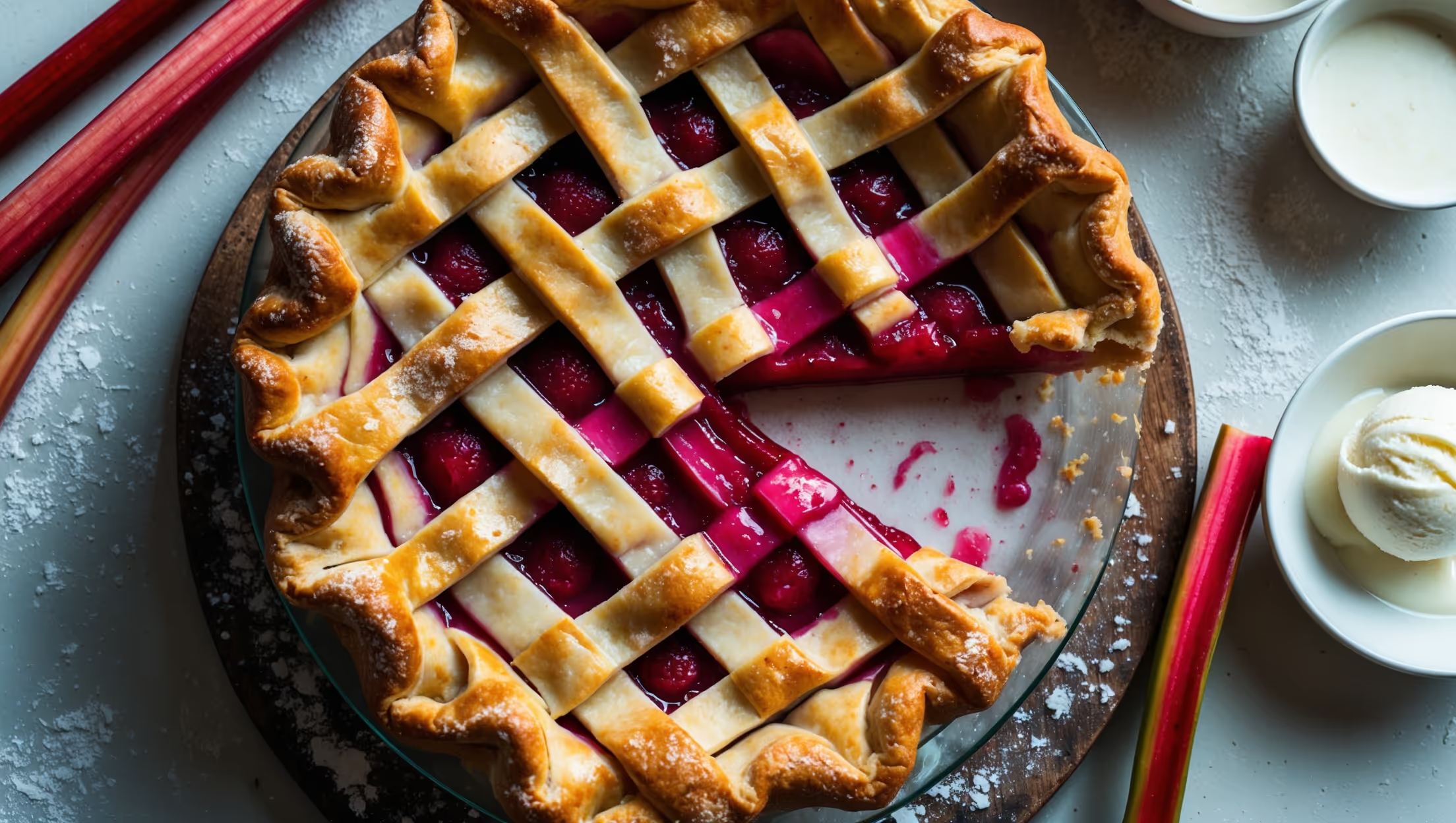
An overhead shot of a golden-brown rhubarb pie with a beautifully latticed top crust, revealing glossy ruby-red filling bubbling through the gaps. A slice has been removed, showcasing the perfect layers of flaky pastry and jewel-toned filling that holds its shape without being runny. The pie rests on a weathered wooden board dusted with flour, with fresh rhubarb stalks and a small bowl of vanilla ice cream melting slightly alongside. The scene is bathed in soft natural light streaming through a kitchen window, highlighting the sugar crystals sparkling on the crust and the vivid pink-red hues of the filling.

Ingredients

<ul class="ingredients-main-list"><li class="ingredients-single-item">For the crust:</li><li class="ingredients-single-item">300g all-purpose flour</li><li class="ingredients-single-item">225g unsalted butter, very cold and cubed</li><li class="ingredients-single-item">1 tbsp granulated sugar</li><li class="ingredients-single-item">1 tsp salt</li><li class="ingredients-single-item">6-8 tbsp ice-cold water</li><li class="ingredients-single-item">1 tbsp apple cider vinegar (helps create tenderness)</li><li class="ingredients-single-item">For the filling:</li><li class="ingredients-single-item">750g fresh rhubarb, cut into 2cm pieces</li><li class="ingredients-single-item">200g granulated sugar</li><li class="ingredients-single-item">50g light brown sugar</li><li class="ingredients-single-item">45g cornstarch</li><li class="ingredients-single-item">1/4 tsp ground cinnamon</li><li class="ingredients-single-item">1/4 tsp salt</li><li class="ingredients-single-item">1 tsp vanilla extract</li><li class="ingredients-single-item">Zest of 1 small lemon</li><li class="ingredients-single-item">For finishing:</li><li class="ingredients-single-item">1 egg, beaten with 1 tbsp water (egg wash)</li><li class="ingredients-single-item">2 tbsp coarse sugar for sprinkling</li></ul>

Equipment

<ul class="equipment-main-list"><li class="equipment-single-item">23cm (9-inch) pie dish</li><li class="equipment-single-item">Rolling pin</li><li class="equipment-single-item">Pastry cutter or food processor</li><li class="equipment-single-item">Pastry wheel or sharp knife (for lattice)</li><li class="equipment-single-item">Baking sheet (to catch drips)</li><li class="equipment-single-item">Pie weights or dried beans</li></ul>
BAKE SMARTER

Kitchen Converter

Quickly switch between common baking units without leaving the recipe.

Convert
Result

Volume uses US cups, tablespoons, and teaspoons. Converting weight to volume depends on the ingredient.

Directions

<ol class="no-list-style"><li class="MethodStepper"><h4 class="step-title">Step 1</h4>Start by making the pie crust. In a large bowl or food processor, combine the flour, sugar, and salt. Add the cold cubed butter and pulse or use a pastry cutter to work it into the flour until you have pea-sized pieces. The varying sizes of butter create pockets of steam during baking, resulting in flaky layers.</li><li class="MethodStepper"><h4 class="step-title">Step 2</h4>Mix the ice water and apple cider vinegar in a small cup. Drizzle 6 tablespoons of this mixture over the flour mixture and gently combine until the dough just begins to come together. If needed, add the remaining water 1 tablespoon at a time. The dough should hold together when squeezed but shouldn't be sticky.</li><li class="MethodStepper"><h4 class="step-title">Step 3</h4>Divide the dough into two equal portions, form into discs, wrap in plastic wrap, and refrigerate for at least 1 hour or up to overnight. Cold dough is essential for a flaky crust as it prevents the butter from melting before hitting the hot oven.</li><li class="MethodStepper"><h4 class="step-title">Step 4</h4>While the dough chills, prepare the filling. In a large bowl, combine the chopped rhubarb, both sugars, cornstarch, cinnamon, salt, vanilla extract, and lemon zest. Gently toss everything together and let stand for 15 minutes to allow the rhubarb to release some juices and the sugar to begin dissolving.</li><li class="MethodStepper"><h4 class="step-title">Step 5</h4>Preheat your oven to 200°C (400°F) with a rack in the lower third position. Place a baking sheet on the rack to preheat (this helps the bottom crust bake properly).</li><li class="MethodStepper"><h4 class="step-title">Step 6</h4>On a floured surface, roll out one disc of dough to about 30cm (12 inches) in diameter and 3mm (1/8 inch) thickness. Carefully transfer it to your pie dish, gently pressing it into the corners without stretching. Trim the edges, leaving a 2cm overhang. Refrigerate while you roll out the second disc.</li><li class="MethodStepper"><h4 class="step-title">Step 7</h4>For the top crust, roll the second disc to the same dimensions. For a lattice top, cut the dough into 2.5cm (1-inch) strips using a pastry wheel or knife. For a traditional top crust, keep it whole but cut a few vents for steam to escape.</li><li class="MethodStepper"><h4 class="step-title">Step 8</h4>Give the rhubarb filling a final stir and pour it into the chilled bottom crust, mounding slightly in the center. The cornstarch will thicken the juices during baking, preventing a soggy bottom.</li><li class="MethodStepper"><h4 class="step-title">Step 9</h4>For a lattice top, lay half the strips across the pie in one direction. Fold back every other strip halfway, then place a strip perpendicular to them. Unfold the strips over the perpendicular one. Repeat this weaving process until the lattice is complete. For a solid top crust, simply place it over the filling.</li><li class="MethodStepper"><h4 class="step-title">Step 10</h4>Trim excess dough and crimp the edges by pinching between your thumb and forefinger to create a decorative seal. Brush the top with egg wash and sprinkle generously with coarse sugar for a beautiful sparkle and crunch.</li><li class="MethodStepper"><h4 class="step-title">Step 11</h4>Place the pie on the preheated baking sheet and bake for 20 minutes at 200°C (400°F). Then reduce the temperature to 180°C (350°F) and continue baking for 35-40 minutes more, until the crust is deeply golden and the filling is bubbling vigorously through the lattice. If the edges brown too quickly, cover them with foil.</li><li class="MethodStepper"><h4 class="step-title">Step 12</h4>Allow the pie to cool completely on a wire rack for at least 3 hours before slicing. This crucial resting time allows the filling to set properly - cutting too soon will result in a runny pie. For the cleanest slices, refrigerate for 1 hour after cooling completely.</li></ol>
Nutrition Facts (per serving)

🍽️ Serving Size: 1 slice
🔥 Calories: 320 calories
🥑 Fat: 14 g
🧈 Saturated Fat: 8 g
🍞 Carbohydrates: 46 g
🍭 Sugar: 24 g
🍗 Protein: 3 g
🫀 Cholesterol: 45 mg
🧂 Sodium: 175 mg

Chef’s Notes

A few helpful details for making this recipe.

Why does my rhubarb pie filling turn out too runny?

Runny filling is often caused by insufficient cornstarch or thickener, not baking the pie long enough, or cutting it before it's completely cooled. Using 45g of cornstarch as this recipe suggests and allowing a full 3-hour cooling period ensures the filling sets properly with a perfect slice-holding consistency.

Can I use frozen rhubarb instead of fresh for my pie?

Yes, frozen rhubarb works well! Thaw it completely first and drain excess liquid, or your pie may become too wet. You might need to increase the cornstarch slightly (by 1-2 tablespoons) to account for the extra moisture that frozen rhubarb typically releases during baking.

What's the secret to creating a flaky pie crust for fruit pies?

The secrets to flaky pie crust are using very cold butter, handling the dough minimally, adding apple cider vinegar to tenderize the gluten, allowing proper chilling time (at least 1 hour), and creating visible butter pockets in the dough that will steam during baking to create those desirable flaky layers.

Want to try something else in ...

More recipes you might like

Keep exploring with more recipes from What's Baking.