Directions
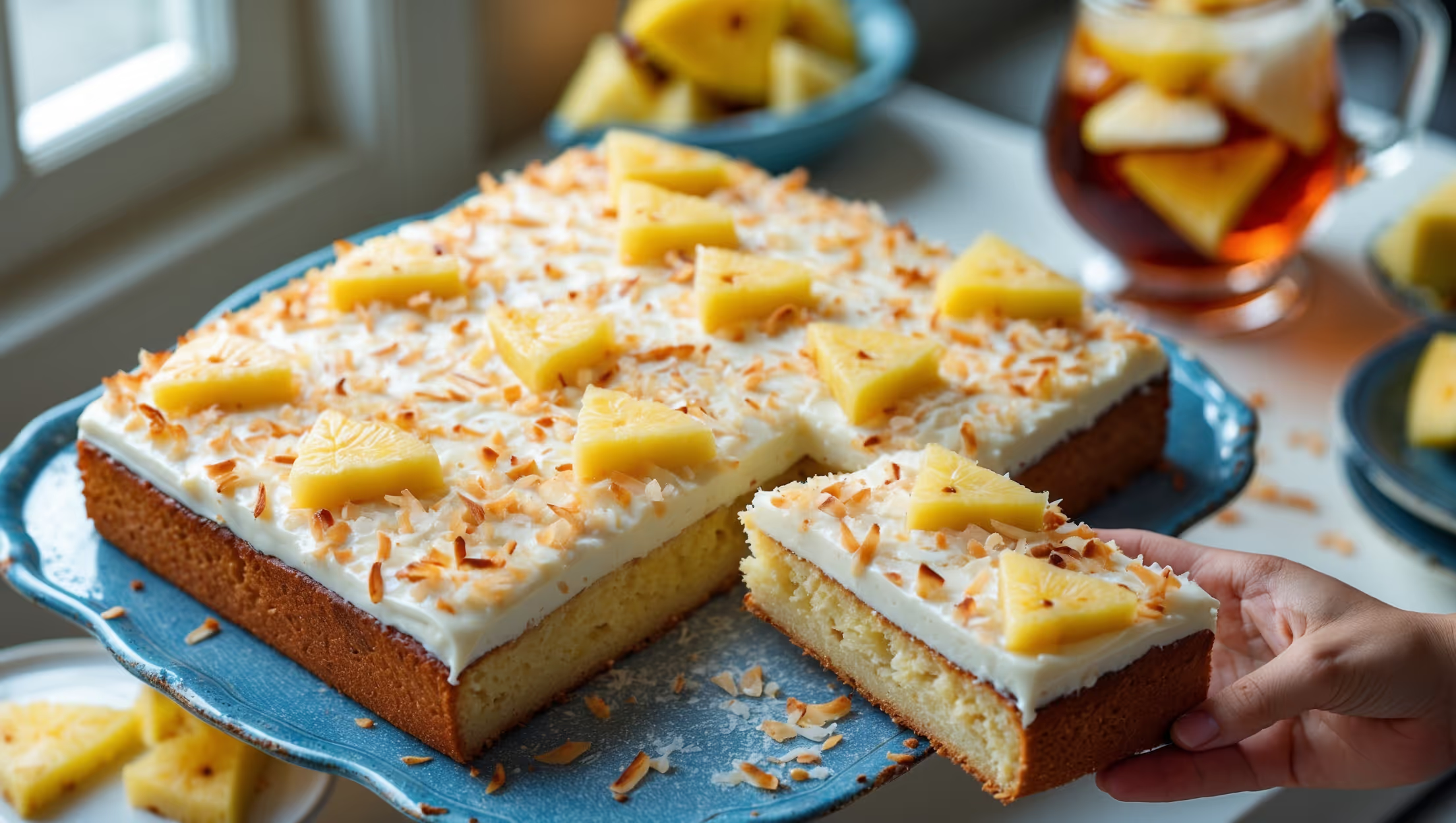
<ol class="no-list-style"><li class="MethodStepper"><h4 class="step-title">Step 1</h4>Preheat your oven to 180°C (350°F). Line your 33x23cm (13x9-inch) baking pan with parchment paper, leaving some overhang on the sides for easy removal, then lightly grease any exposed parts.</li><li class="MethodStepper"><h4 class="step-title">Step 2</h4>In a large mixing bowl, whisk together the flour, sugar, baking soda, and salt until well combined. This thorough mixing ensures the leavening agents are evenly distributed throughout the batter, promoting an even rise.</li><li class="MethodStepper"><h4 class="step-title">Step 3</h4>Make a well in the center of your dry ingredients and add the eggs, vanilla extract, and the entire can of crushed pineapple with its juice. The acid in the pineapple will react with the baking soda, creating carbon dioxide bubbles that help the cake rise and stay tender.</li><li class="MethodStepper"><h4 class="step-title">Step 4</h4>Mix everything together with a wooden spoon or spatula until just combined – don't overmix! The batter will look slightly lumpy from the pineapple pieces, which is perfect. Overmixing would develop too much gluten, resulting in a tougher cake.</li><li class="MethodStepper"><h4 class="step-title">Step 5</h4>If using walnuts, fold them in gently now. The nuts provide a wonderful textural contrast to the soft, moist cake.</li><li class="MethodStepper"><h4 class="step-title">Step 6</h4>Pour the batter into your prepared pan, spreading it evenly to the corners. Give the pan a gentle tap on the counter to release any large air bubbles.</li><li class="MethodStepper"><h4 class="step-title">Step 7</h4>Bake in the preheated oven for 30-35 minutes, or until a toothpick inserted in the center comes out clean with just a few moist crumbs. The cake should spring back lightly when touched. If the top is browning too quickly, loosely cover with aluminum foil.</li><li class="MethodStepper"><h4 class="step-title">Step 8</h4>Remove from the oven and place on a wire rack to cool completely in the pan. The cake needs to be fully cooled before frosting to prevent the cream cheese frosting from melting.</li><li class="MethodStepper"><h4 class="step-title">Step 9</h4>While the cake cools, prepare your frosting. In a large bowl, beat the cream cheese and butter together until smooth and creamy, about 2-3 minutes. The fat molecules in the butter and cream cheese need to be fully incorporated to create a silky texture.</li><li class="MethodStepper"><h4 class="step-title">Step 10</h4>Gradually add the powdered sugar, beating on low speed until incorporated, then increase to medium-high and beat until light and fluffy. Add the vanilla extract and mix until combined.</li><li class="MethodStepper"><h4 class="step-title">Step 11</h4>Once the cake is completely cool, use the parchment paper overhang to lift it from the pan if desired. Spread the frosting evenly over the top of the cake. If using toasted coconut, sprinkle it over the frosted cake for a beautiful garnish and added texture.</li><li class="MethodStepper"><h4 class="step-title">Step 12</h4>For the best flavor, refrigerate the frosted cake for at least 30 minutes before serving to allow the flavors to meld. The cake will keep, covered in the refrigerator, for up to 5 days, though the texture is best within the first 3 days.</li></ol>