Directions
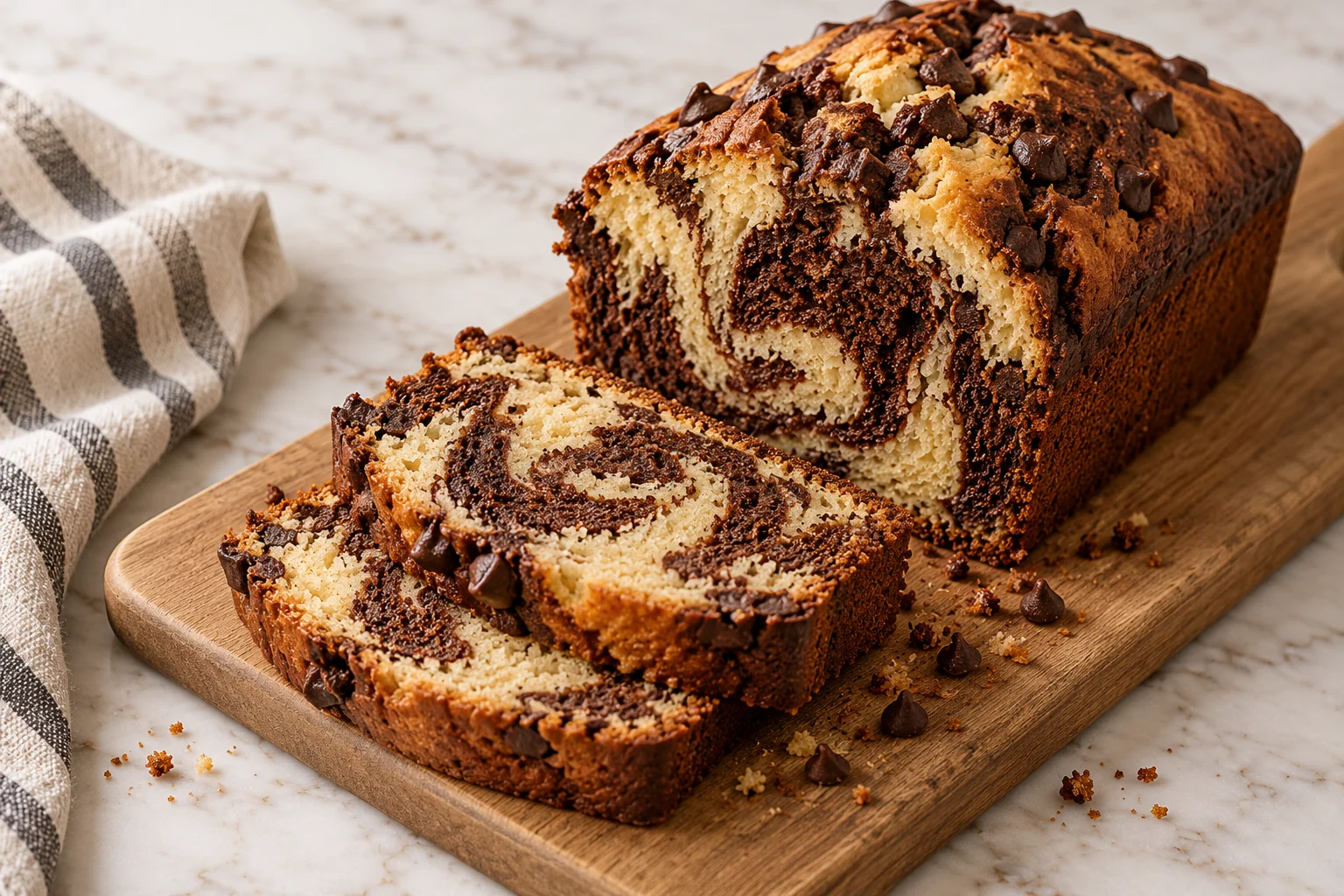
<ol class="no-list-style"><li class="MethodStepper"><h4 class="step-title">Step 1</h4>Preheat your oven to 175°C (350°F). Line your loaf pan with parchment paper, leaving some overhang on the sides to easily lift the bread out after baking. Lightly grease any exposed parts of the pan.</li><li class="MethodStepper"><h4 class="step-title">Step 2</h4>In a medium bowl, whisk together the flour, baking powder, and salt until well combined. Setting these dry ingredients aside now ensures even distribution of leavening agents, which will give your bread a consistent rise.</li><li class="MethodStepper"><h4 class="step-title">Step 3</h4>In a separate small bowl, mix the cocoa powder with hot water until smooth and no lumps remain. The hot water helps "bloom" the cocoa powder, intensifying its flavor and ensuring it incorporates smoothly into the batter later. Set aside to cool slightly.</li><li class="MethodStepper"><h4 class="step-title">Step 4</h4>In the bowl of your stand mixer fitted with the paddle attachment (or using a hand mixer), cream the softened butter and sugar on medium-high speed for 4-5 minutes until very pale and fluffy. This extended creaming process incorporates air, which helps create a tender crumb in your finished bread.</li><li class="MethodStepper"><h4 class="step-title">Step 5</h4>Add the eggs one at a time, beating well after each addition until fully incorporated. If your mixture looks slightly curdled, don't worry – this is normal and will smooth out when you add the flour. Mix in the vanilla extract.</li><li class="MethodStepper"><h4 class="step-title">Step 6</h4>With the mixer on low speed, add one-third of the flour mixture, followed by half the milk. Continue alternating, ending with the flour mixture, mixing just until combined after each addition. Be careful not to overmix – stopping when the ingredients are just incorporated preserves the gluten structure and prevents a tough bread.</li><li class="MethodStepper"><h4 class="step-title">Step 7</h4>Transfer about half of the batter to another bowl. Add the cooled cocoa mixture to this portion and gently fold until evenly distributed. If using chocolate chips, fold them into this chocolate batter portion.</li><li class="MethodStepper"><h4 class="step-title">Step 8</h4>Create your marble effect by alternating spoonfuls of vanilla and chocolate batters into the prepared loaf pan. You can make two or three layers depending on how intricate you want your marbling. Once all the batter is in the pan, use a skewer, butter knife, or thin spatula to swirl through the batters. Make about 8-10 figure-eight motions, being careful not to overmix – you want distinct swirls, not a blended batter.</li><li class="MethodStepper"><h4 class="step-title">Step 9</h4>Tap the pan gently on the counter a few times to remove any large air bubbles and level the top. This helps ensure even baking and a more uniform texture.</li><li class="MethodStepper"><h4 class="step-title">Step 10</h4>Bake in the preheated oven for 55-65 minutes, or until a skewer inserted into the center comes out clean with a few moist crumbs (but no wet batter). If the top starts browning too quickly, loosely cover with foil after about 40 minutes of baking.</li><li class="MethodStepper"><h4 class="step-title">Step 11</h4>Allow the bread to cool in the pan for 15 minutes – this resting period helps the structure set. Then, using the parchment paper overhang, carefully lift the bread out of the pan and transfer to a wire rack to cool completely, at least 1 hour. Cutting too soon will result in a gummy texture, so patience here is rewarded!</li><li class="MethodStepper"><h4 class="step-title">Step 12</h4>Once cooled, slice with a serrated knife and enjoy! Store any leftovers in an airtight container at room temperature for up to 3 days, or freeze for up to 1 month, wrapped well in plastic wrap and foil.</li></ol>