Lemon Sheet Cake Recipe

Bright, zingy lemon-infused sheet cake paired with a silky smooth cream cheese frosting creates a perfect balance of sweet and tart in every mouthwatering bite.
Difficulty:
Beginner
Prep Time:
20 mins
Cook Time:
25 mins
Serves:
1 cake (16 slices)
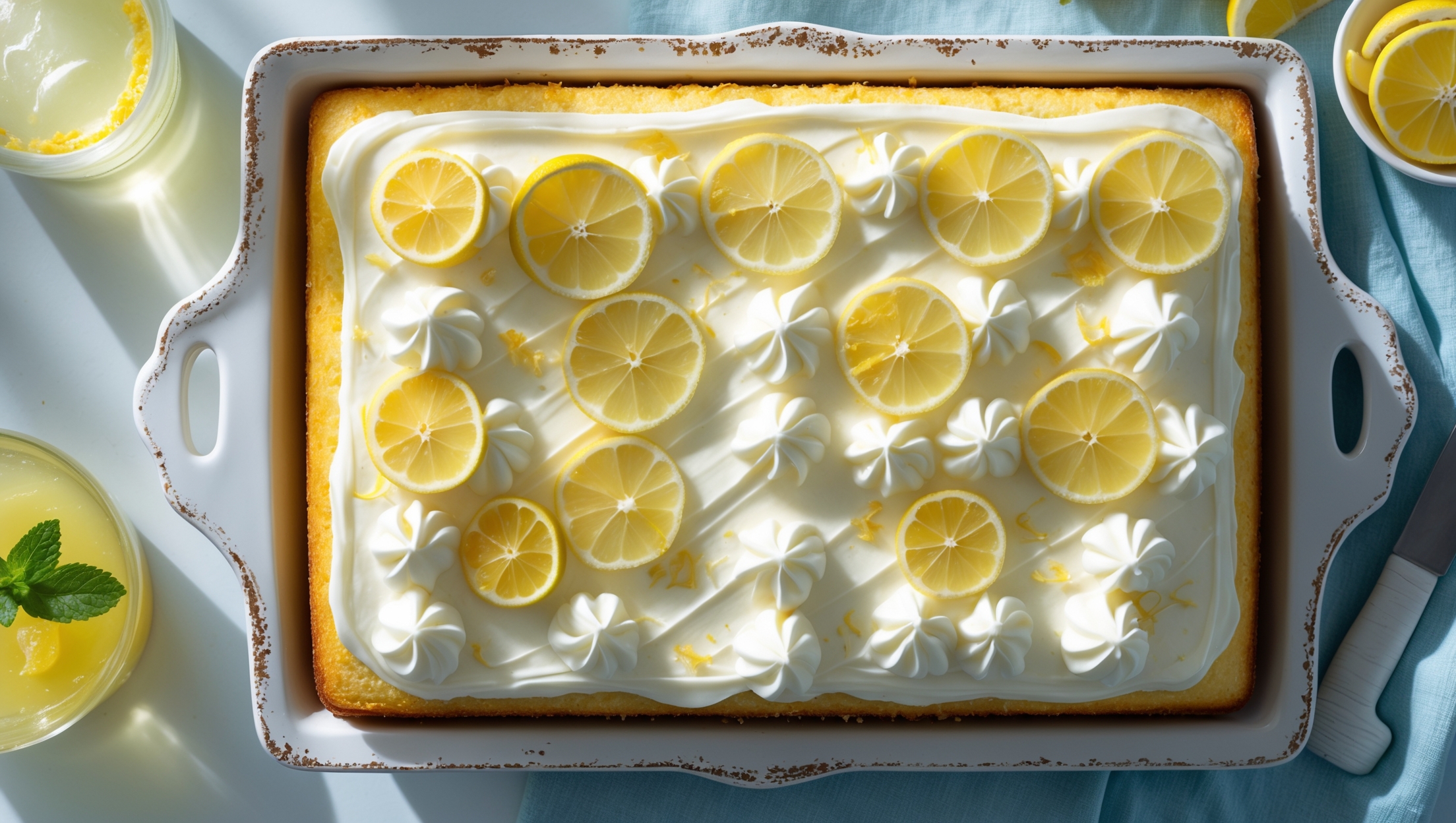
An overhead shot of a golden yellow sheet cake with perfectly level surface, sliced to reveal its moist, tender crumb. The cake is topped with a pristine layer of smooth, white cream cheese frosting, delicately swirled into peaks and valleys. Thin lemon slices and fresh lemon zest are artfully scattered across the surface, creating vibrant yellow accents against the white backdrop. The cake rests on a vintage white ceramic platter, positioned on a light blue linen tablecloth. Soft natural light streams in from a nearby window, highlighting the glistening frosting and casting a warm glow that emphasizes the cake's inviting texture. A small glass of lemonade garnished with mint sits alongside, complementing the cake's fresh citrus theme.

Ingredients

<ul class="ingredients-main-list"><li class="ingredients-single-item">300g all-purpose flour</li><li class="ingredients-single-item">2 tsp baking powder</li><li class="ingredients-single-item">1/2 tsp salt</li><li class="ingredients-single-item">225g unsalted butter, softened</li><li class="ingredients-single-item">400g granulated sugar</li><li class="ingredients-single-item">4 large eggs, room temperature</li><li class="ingredients-single-item">2 tbsp lemon zest (from about 2 large lemons)</li><li class="ingredients-single-item">60ml fresh lemon juice</li><li class="ingredients-single-item">120ml buttermilk (or 120ml milk with 1 tbsp lemon juice)</li><li class="ingredients-single-item">1 tsp vanilla extract</li><li class="ingredients-single-item">For the frosting:</li><li class="ingredients-single-item">225g cream cheese, softened</li><li class="ingredients-single-item">115g unsalted butter, softened</li><li class="ingredients-single-item">360g powdered sugar, sifted</li><li class="ingredients-single-item">1 tbsp lemon juice</li><li class="ingredients-single-item">1 tsp lemon zest</li><li class="ingredients-single-item">1/2 tsp vanilla extract</li></ul>

Equipment

<ul class="equipment-main-list"><li class="equipment-single-item">33cm x 23cm (13x9-inch) baking pan</li><li class="equipment-single-item">Electric mixer (stand or handheld)</li><li class="equipment-single-item">Microplane or fine grater for zesting</li><li class="equipment-single-item">Parchment paper</li></ul>
BAKE SMARTER

Kitchen Converter

Quickly switch between common baking units without leaving the recipe.

Convert
Result—

Volume uses US cups, tablespoons, and teaspoons. Converting weight to volume depends on the ingredient.

Directions

<ol class="no-list-style"><li class="MethodStepper"><h4 class="step-title">Step 1</h4>Preheat your oven to 180°C (350°F). Line your 33cm x 23cm baking pan with parchment paper, allowing some overhang on the sides for easy removal. Lightly grease any exposed parts of the pan.</li><li class="MethodStepper"><h4 class="step-title">Step 2</h4>In a medium bowl, whisk together the flour, baking powder, and salt. This pre-mixing ensures the leavening agents are evenly distributed throughout the batter, resulting in an even rise.</li><li class="MethodStepper"><h4 class="step-title">Step 3</h4>In a large bowl, cream the softened butter and granulated sugar with an electric mixer on medium-high speed for 4-5 minutes until pale and fluffy. This extended beating time incorporates air into the mixture, creating a lighter cake texture.</li><li class="MethodStepper"><h4 class="step-title">Step 4</h4>Add the eggs one at a time, beating well after each addition. This gradual incorporation prevents the batter from curdling and ensures a smooth, emulsified mixture. Scrape down the sides of the bowl as needed.</li><li class="MethodStepper"><h4 class="step-title">Step 5</h4>Beat in the lemon zest, lemon juice, and vanilla extract until well combined. The acidity in the lemon juice will begin to react with the baking powder, so move efficiently to the next steps.</li><li class="MethodStepper"><h4 class="step-title">Step 6</h4>Gradually add the flour mixture to the wet ingredients in three additions, alternating with the buttermilk (beginning and ending with flour). Mix on low speed just until combined after each addition. Overmixing at this stage can develop gluten, resulting in a tougher cake.</li><li class="MethodStepper"><h4 class="step-title">Step 7</h4>Pour the batter into your prepared pan, smoothing the top with a spatula. Give the pan a gentle tap on the counter to release any large air bubbles.</li><li class="MethodStepper"><h4 class="step-title">Step 8</h4>Bake for 25-30 minutes or until a toothpick inserted in the center comes out clean or with just a few moist crumbs. The cake should spring back when lightly touched in the center. Be careful not to overbake, as this will dry out your cake.</li><li class="MethodStepper"><h4 class="step-title">Step 9</h4>Allow the cake to cool in the pan for 15 minutes, then use the parchment overhang to lift it out onto a wire rack to cool completely. Cooling in the pan initially gives the cake structure, while removing it prevents condensation from making the bottom soggy.</li><li class="MethodStepper"><h4 class="step-title">Step 10</h4>For the frosting, beat the softened cream cheese and butter together until completely smooth and fluffy, about 2-3 minutes. Scrape down the bowl to ensure no lumps remain.</li><li class="MethodStepper"><h4 class="step-title">Step 11</h4>Gradually add the sifted powdered sugar, mixing on low speed until incorporated, then increase to medium-high and beat until light and fluffy. Add the lemon juice, zest, and vanilla, beating until well combined. The acid in the lemon juice helps balance the sweetness of the frosting.</li><li class="MethodStepper"><h4 class="step-title">Step 12</h4>Once the cake is completely cool, spread the frosting evenly over the top in decorative swirls. If the frosting seems too soft, refrigerate it for 10-15 minutes before spreading. A cold offset spatula (placed in the freezer for a few minutes) can help create beautiful, smooth swirls.</li><li class="MethodStepper"><h4 class="step-title">Step 13</h4>For the best flavor, allow the frosted cake to rest at room temperature for about 30 minutes before serving. This gives the flavors time to meld together. Store any leftovers in an airtight container in the refrigerator for up to 5 days, bringing to room temperature before serving for the best texture and flavor.</li></ol>
Nutrition Facts (per serving)

🍽️ Serving Size: 1 slice
🔥 Calories: 380 calories
🥑 Fat: 25 g
🧈 Saturated Fat: 16 g
🍞 Carbohydrates: 36 g
🍭 Sugar: 22 g
🍗 Protein: 5 g
🫀 Cholesterol: 125 mg
🧂 Sodium: 120 mg

Chef’s Notes

A few helpful details for making this recipe.

Can I make this lemon cake ahead of time for a party?

Absolutely! This lemon sheet cake can be prepared up to two days in advance. Store unfrosted cake at room temperature, tightly wrapped. The frosting can be made a day ahead and refrigerated. Frost the cake up to 24 hours before serving and refrigerate until needed.

Why is my lemon cake not as flavourful as expected?

The secret to intense lemon flavour is using fresh lemons for both juice and zest. Never substitute bottled juice, as it lacks the aromatic oils. Always zest your lemons before juicing, and consider adding a touch more zest than called for if you prefer a pronounced citrus punch.

How can I prevent my cream cheese frosting from becoming runny?

For perfectly thick cream cheese frosting, ensure both the butter and cream cheese are properly chilled but slightly softened before mixing. Sift your powdered sugar to avoid lumps, add it gradually, and if the frosting becomes too soft, refrigerate for 15-20 minutes before spreading.

Want to try something else in ...

More recipes you might like

Keep exploring with more recipes from What's Baking.