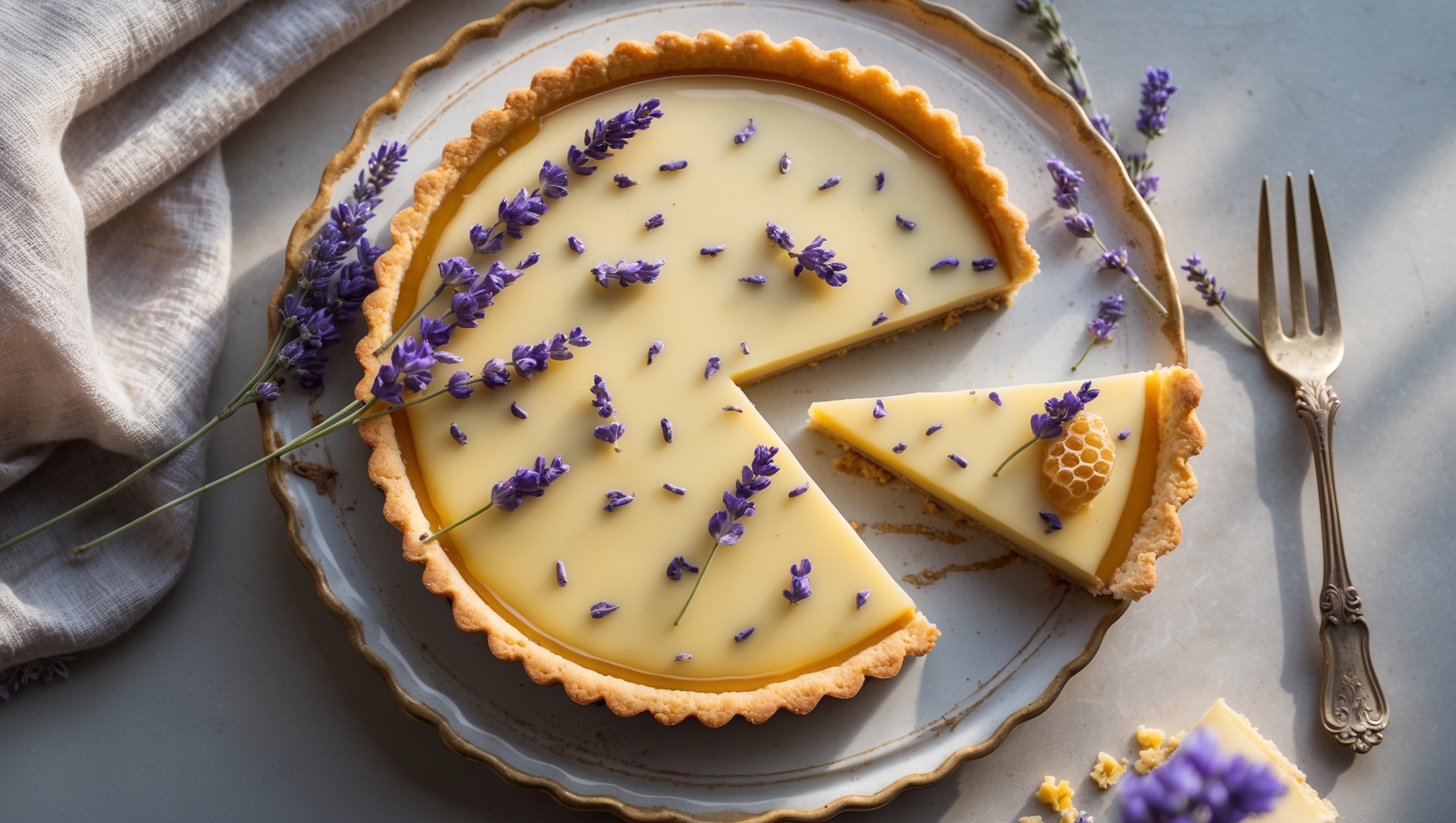
Directions
<ol class="no-list-style"><li class="MethodStepper"><h4 class="step-title">Step 1</h4>Begin with the pastry. In a large bowl, rub the cold butter into the flour using your fingertips until the mixture resembles fine breadcrumbs. This technique coats the flour particles with fat, resulting in a tender, flaky crust. Add the sugar and salt, then mix in the egg yolk and just enough ice-cold water to bring the dough together. The cold ingredients help prevent gluten development, ensuring a short, crisp texture.</li><li class="MethodStepper"><h4 class="step-title">Step 2</h4>Form the dough into a disc, wrap in cling film, and refrigerate for at least 30 minutes. Chilling allows the gluten to relax and the fat to solidify, preventing shrinkage during baking. Meanwhile, preheat your oven to 180°C (fan 160°C).</li><li class="MethodStepper"><h4 class="step-title">Step 3</h4>On a lightly floured surface, roll out the pastry to about 3mm thickness, large enough to line your tart tin. Carefully drape the pastry over the tin, gently pressing into the edges without stretching. Trim any excess, leaving a small overhang to allow for shrinkage. Prick the base with a fork, then line with baking parchment and fill with baking beans or rice.</li><li class="MethodStepper"><h4 class="step-title">Step 4</h4>Blind bake for 15 minutes, then remove the beans and parchment and bake for a further 5-7 minutes until the base is lightly golden but not fully cooked. The pastry should look dry and matte rather than shiny. Let the case cool slightly while you prepare the filling.</li><li class="MethodStepper"><h4 class="step-title">Step 5</h4>For the filling, combine the cream and milk in a saucepan. Add the lavender buds and heat gently until just below boiling point. Remove from heat, cover, and let steep for 15-20 minutes. The warm fat in the dairy will extract the aromatic oils from the lavender, infusing the mixture with its distinctive flavor.</li><li class="MethodStepper"><h4 class="step-title">Step 6</h4>In a heatproof bowl, whisk together the egg yolks and sugar until pale and creamy. The sugar crystals physically cut into the egg proteins, creating a smoother mixture. Whisk in the flour until no lumps remain.</li><li class="MethodStepper"><h4 class="step-title">Step 7</h4>Strain the lavender-infused cream mixture through a fine mesh sieve into a jug, pressing gently on the lavender to extract all the flavor. Gradually pour this warm mixture into the egg mixture, whisking constantly. This slow incorporation tempers the eggs, preventing them from curdling.</li><li class="MethodStepper"><h4 class="step-title">Step 8</h4>Return the combined mixture to the saucepan and cook over medium-low heat, stirring constantly with a wooden spoon, until it thickens enough to coat the back of the spoon - this should take about 5-7 minutes. Be patient and maintain a gentle heat; rushing this step could result in a lumpy custard.</li><li class="MethodStepper"><h4 class="step-title">Step 9</h4>Pour the custard into the partially baked tart case and smooth the surface. Bake for 20-25 minutes until the filling is set but still has a slight wobble in the center - it will continue to firm up as it cools. Look for a gentle dome and edges that have just started to puff up.</li><li class="MethodStepper"><h4 class="step-title">Step 10</h4>Allow the tart to cool completely on a wire rack. The cooling process is crucial for the custard to set properly and develop its flavor. Once cooled, warm the honey slightly until runny and drizzle over the tart surface, using the back of a spoon to create an even layer. Sprinkle with the remaining lavender buds for garnish.</li><li class="MethodStepper"><h4 class="step-title">Step 11</h4>For the best flavor, refrigerate for at least 2 hours before serving to allow the lavender notes to fully develop. The tart keeps well in the refrigerator for up to 2 days, though the pastry will gradually soften. Serve at cool room temperature to fully appreciate the delicate floral notes balanced with the sweet honey.</li></ol>