Directions
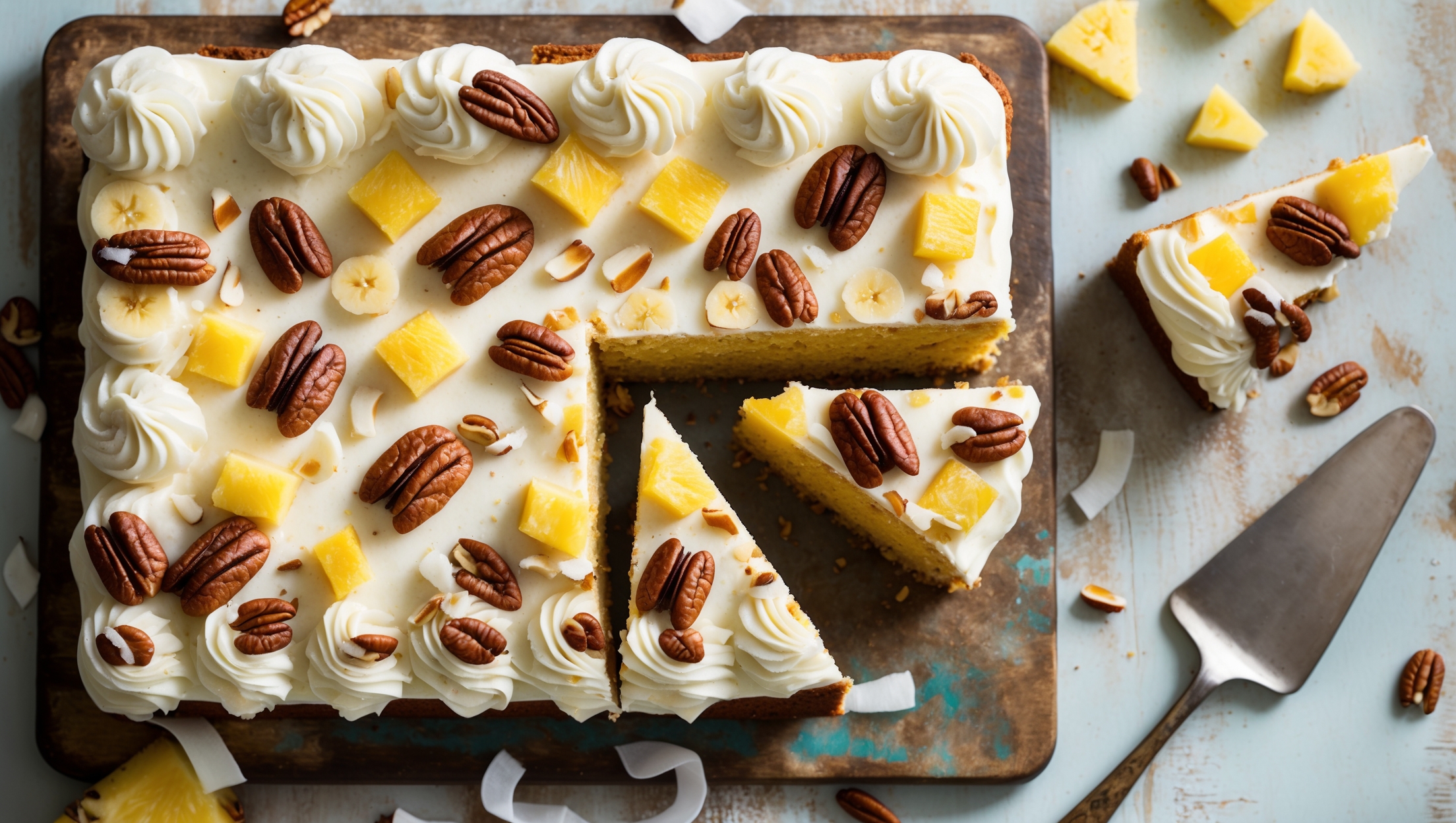
<ol class="no-list-style"><li class="MethodStepper"><h4 class="step-title">Step 1</h4>Preheat your oven to 180°C (350°F) and position a rack in the center. Generously grease your 33cm x 23cm baking pan and line with parchment paper, allowing some overhang on the sides for easy removal later.</li><li class="MethodStepper"><h4 class="step-title">Step 2</h4>In a large bowl, whisk together the flour, sugar, baking soda, cinnamon, and salt until well combined. This thorough mixing ensures your leavening agents and spices are evenly distributed throughout the batter.</li><li class="MethodStepper"><h4 class="step-title">Step 3</h4>In a separate medium bowl, whisk the eggs until lightly beaten, then add the vegetable oil and vanilla extract, whisking until smooth and emulsified. The oil (rather than butter) is what gives hummingbird cake its characteristic moistness and tender crumb.</li><li class="MethodStepper"><h4 class="step-title">Step 4</h4>Add the mashed bananas to your wet ingredients and mix well. Be sure to use very ripe bananas with plenty of brown spots for the best flavor – they'll contribute natural sweetness and moisture to your cake.</li><li class="MethodStepper"><h4 class="step-title">Step 5</h4>Pour the wet ingredients into the dry ingredients and stir with a wooden spoon or spatula just until combined – you should still see a few streaks of flour. Over-mixing will develop gluten and result in a tougher cake texture.</li><li class="MethodStepper"><h4 class="step-title">Step 6</h4>Gently fold in the drained pineapple chunks, chopped pecans, and desiccated coconut until evenly distributed throughout the batter. The pineapple adds little bursts of juicy sweetness while the nuts provide textural contrast.</li><li class="MethodStepper"><h4 class="step-title">Step 7</h4>Pour the batter into your prepared baking pan, spreading it evenly to the corners with a spatula. Gently tap the pan on the counter a few times to release any large air bubbles.</li><li class="MethodStepper"><h4 class="step-title">Step 8</h4>Bake for 30-35 minutes, or until a wooden skewer inserted into the center comes out clean or with just a few moist crumbs attached. The cake should be golden brown on top and will spring back slightly when gently pressed.</li><li class="MethodStepper"><h4 class="step-title">Step 9</h4>Allow the cake to cool completely in the pan on a wire rack before frosting. This cooling period is crucial – applying frosting to a warm cake will cause it to melt and slide off.</li><li class="MethodStepper"><h4 class="step-title">Step 10</h4>For the cream cheese frosting, beat the room temperature cream cheese and butter in a large bowl using an electric mixer on medium-high speed until completely smooth and fluffy, about 2 minutes. Cold cream cheese will result in lumpy frosting, so patience with bringing it to room temperature is key!</li><li class="MethodStepper"><h4 class="step-title">Step 11</h4>Gradually add the sifted icing sugar, about 100g at a time, beating well after each addition until incorporated. Add the vanilla extract and salt, then beat on high speed for 1-2 minutes until the frosting is light and fluffy.</li><li class="MethodStepper"><h4 class="step-title">Step 12</h4>Use an offset spatula to spread the frosting evenly over the cooled cake. Create decorative swirls on top if desired. For the finishing touch, sprinkle additional chopped pecans around the edges of the cake.</li><li class="MethodStepper"><h4 class="step-title">Step 13</h4>For the best flavor, refrigerate the frosted cake for at least 1 hour before serving to allow the flavors to meld. Let the cake sit at room temperature for about 15 minutes before slicing to allow the frosting to soften slightly.</li></ol>