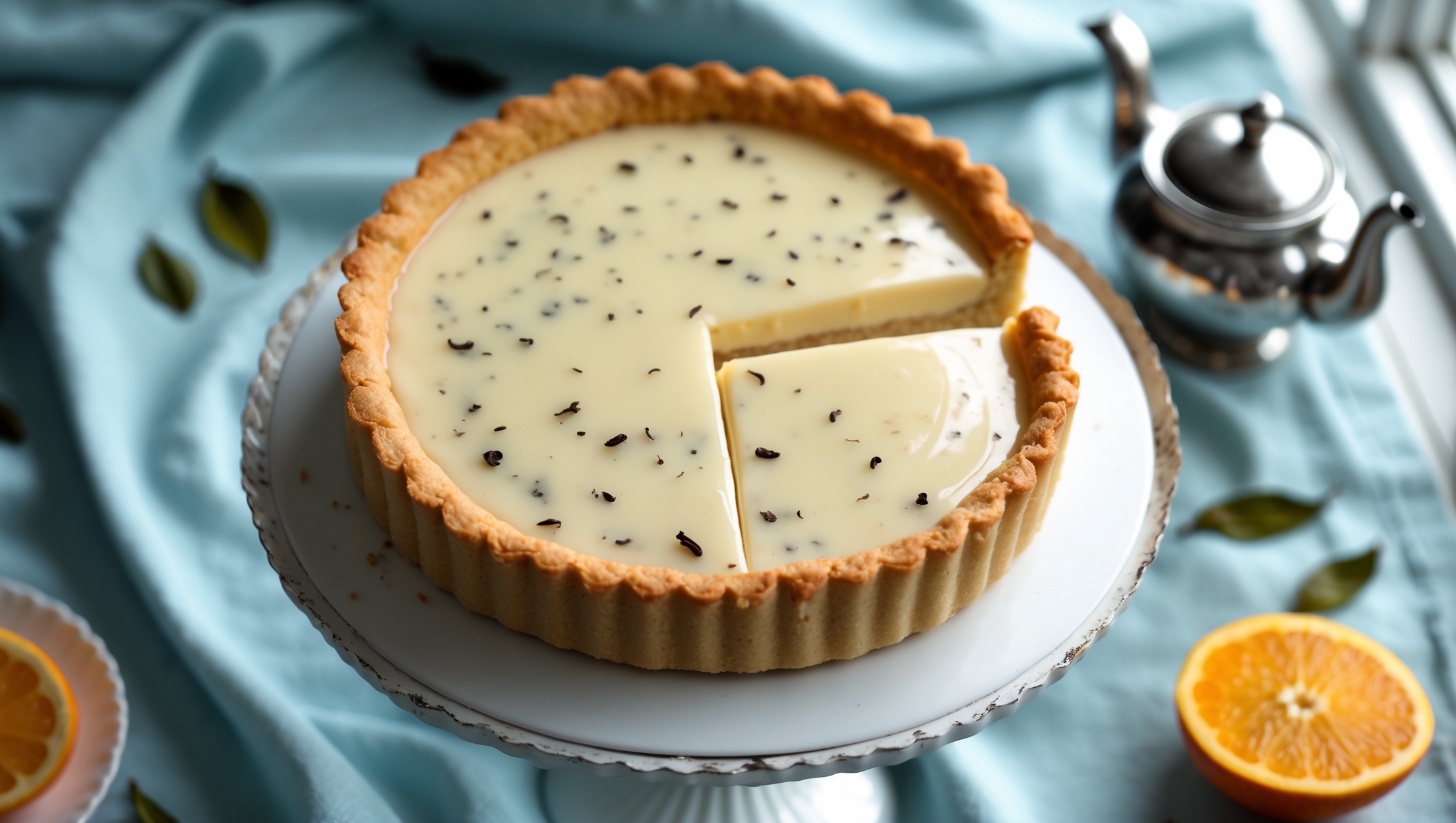
Directions
<ol class="no-list-style"><li class="MethodStepper"><h4 class="step-title">Step 1</h4>Begin by making the pastry. If using a food processor, pulse the flour, butter, and salt until the mixture resembles breadcrumbs. Alternatively, rub the butter into the flour using your fingertips until no large lumps remain. This technique creates a flaky texture by ensuring the butter remains cold and distributed in small pieces throughout the dough.</li><li class="MethodStepper"><h4 class="step-title">Step 2</h4>Stir in the icing sugar, then add the egg yolk and enough ice-cold water to bring the dough together into a smooth ball. The cold water prevents the butter from melting, which is crucial for achieving a crisp, flaky pastry. Wrap the dough in cling film and refrigerate for at least 30 minutes to relax the gluten.</li><li class="MethodStepper"><h4 class="step-title">Step 3</h4>While the dough is chilling, begin the filling. Combine the cream and milk in a saucepan over medium heat until just below simmering point. Remove from heat, add the tea bags or loose tea (if using loose tea, place in a tea infuser or muslin cloth), cover, and allow to steep for 20 minutes. The warm (not boiling) liquid gently extracts the bergamot flavor without developing bitterness.</li><li class="MethodStepper"><h4 class="step-title">Step 4</h4>Preheat your oven to 180°C (160°C fan/Gas 4). Roll out the chilled pastry on a lightly floured surface to about 3-4mm thickness, large enough to line your tart tin. Carefully transfer the pastry to the tin, gently pressing it into the fluted edges. Trim any excess, leaving a small overhang to allow for shrinkage.</li><li class="MethodStepper"><h4 class="step-title">Step 5</h4>Line the pastry case with baking parchment and fill with baking beans or uncooked rice. This prevents the pastry from puffing up during blind baking. Bake for 15 minutes, then remove the beans and paper and return to the oven for another 5-10 minutes until the base is pale golden and dry to the touch. Remove from the oven and trim any excess pastry for a neat edge.</li><li class="MethodStepper"><h4 class="step-title">Step 6</h4>While the pastry case is cooling, finish the filling. Remove the tea bags or strain the infused cream mixture through a fine mesh strainer. Return the cream to a clean saucepan and add the vanilla extract and lemon zest, warming gently.</li><li class="MethodStepper"><h4 class="step-title">Step 7</h4>In a large bowl, whisk together the egg yolks, sugar, and cornflour until pale and thick. The cornflour acts as a stabilizer, ensuring your custard sets properly without curdling. Gradually pour the warm cream mixture over the egg mixture, whisking constantly to prevent the eggs from scrambling.</li><li class="MethodStepper"><h4 class="step-title">Step 8</h4>Return the mixture to the saucepan and cook over low heat, stirring constantly with a wooden spoon or silicone spatula, until the custard thickens enough to coat the back of the spoon. This should take 5-7 minutes. Don't rush this step or increase the heat, as patience prevents curdling.</li><li class="MethodStepper"><h4 class="step-title">Step 9</h4>Pour the thickened custard into the pastry case, smoothing the top with a spatula. Return to the oven and bake for 15-18 minutes until the filling is mostly set but still has a slight wobble in the center. The residual heat will continue to cook the custard as it cools.</li><li class="MethodStepper"><h4 class="step-title">Step 10</h4>Allow the tart to cool completely at room temperature, then refrigerate for at least 2 hours or preferably overnight. This resting time allows the flavors to develop and the custard to set fully. Serve chilled, perhaps with a light dusting of icing sugar or a few fresh berries if desired. Your Earl Grey Tea Tart will keep beautifully in the refrigerator for up to 3 days.</li></ol>