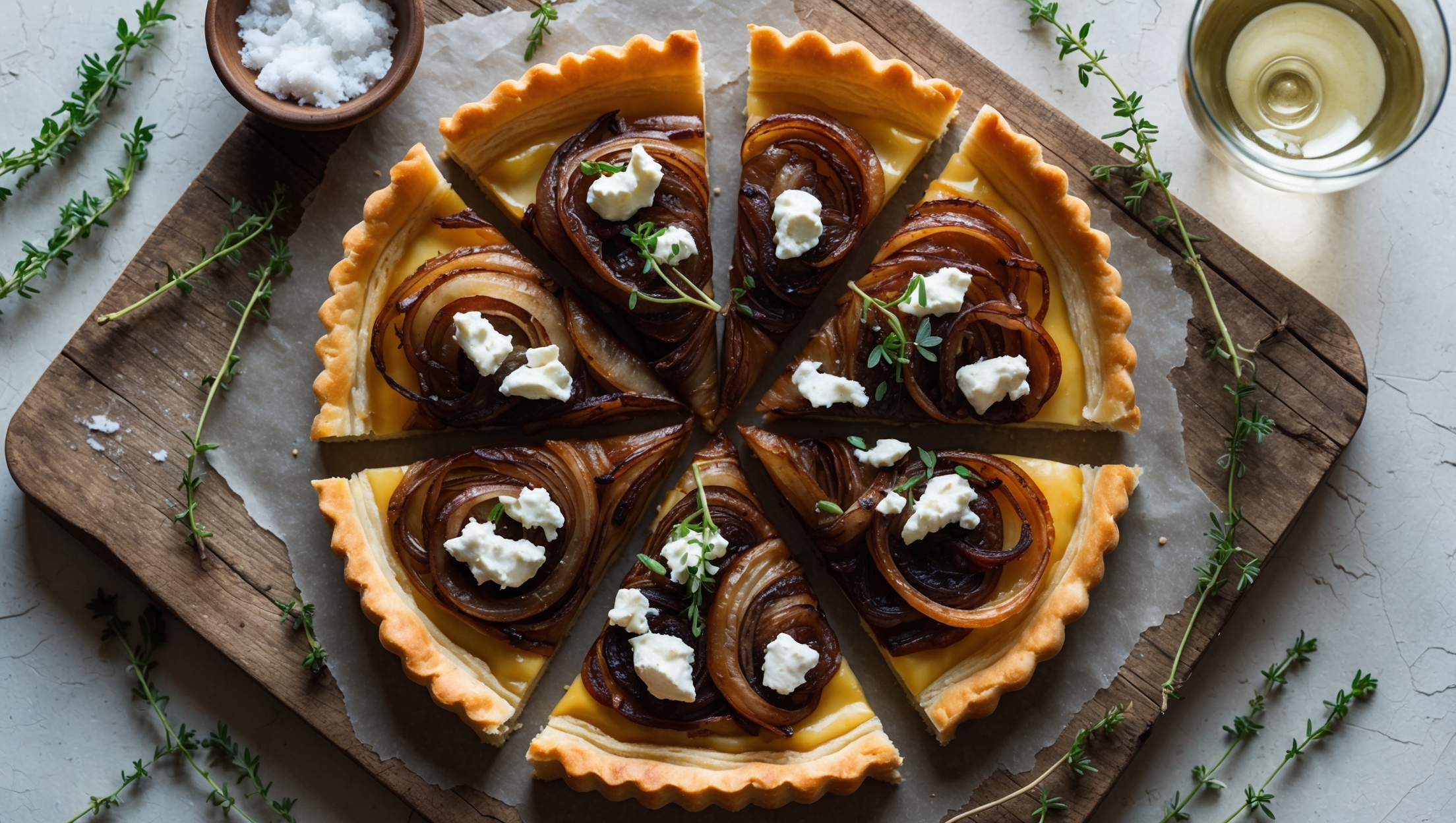
Directions
<ol class="no-list-style"><li class="MethodStepper"><h4 class="step-title">Step 1</h4>Begin by making the shortcrust pastry. In a large bowl, mix the flour and salt, then rub in the cold cubed butter using your fingertips until the mixture resembles breadcrumbs. Working with cold butter is crucial here – it creates pockets of fat that will steam during baking, creating those wonderful flaky layers.</li><li class="MethodStepper"><h4 class="step-title">Step 2</h4>Beat the egg with 2 tablespoons of ice-cold water, then add to the flour mixture. Use a knife to bring the dough together, adding the remaining tablespoon of water only if needed – the dough should be just moist enough to form a ball without being sticky. Handle the dough as little as possible to prevent the gluten from developing, which would make your pastry tough.</li><li class="MethodStepper"><h4 class="step-title">Step 3</h4>Wrap the dough in cling film and chill in the refrigerator for at least 30 minutes. This resting period allows the gluten to relax and the butter to firm up again, ensuring your pastry will be tender and flaky.</li><li class="MethodStepper"><h4 class="step-title">Step 4</h4>While the pastry chills, prepare the caramelized onions. Heat the butter and olive oil in a large, heavy-bottomed sauté pan over medium-low heat. Add the thinly sliced onions with a pinch of salt and cook very slowly, stirring occasionally, for about 45-50 minutes. Patience is key here – proper caramelization cannot be rushed. The onions should gradually turn a deep golden brown as their natural sugars develop.</li><li class="MethodStepper"><h4 class="step-title">Step 5</h4>When the onions are deeply golden and sweet, stir in the thyme leaves, balsamic vinegar, and sugar. Cook for another 5 minutes to intensify the flavors, then remove from heat and allow to cool slightly. The balsamic vinegar not only adds complexity but also helps deglaze the pan, incorporating all those flavorful browned bits back into your onions.</li><li class="MethodStepper"><h4 class="step-title">Step 6</h4>Preheat your oven to 190°C (170°C fan/375°F). On a lightly floured surface, roll out the chilled pastry to about 3-4mm thickness, making sure it's large enough to line your tart tin with some overhang. Gently press the pastry into the tin, being careful not to stretch it (which could cause shrinkage). Trim the excess pastry, leaving a small overhang to account for shrinkage.</li><li class="MethodStepper"><h4 class="step-title">Step 7</h4>Line the pastry case with baking paper and fill with baking beans or rice for blind baking. Bake for 15 minutes, then remove the paper and beans and bake for another 5-7 minutes until the base is dry and pale golden. This crucial step ensures your crust won't become soggy when filled.</li><li class="MethodStepper"><h4 class="step-title">Step 8</h4>Reduce the oven temperature to 180°C (160°C fan/350°F). In a bowl, whisk together the eggs and double cream, seasoning with salt and pepper. This custard will bind your tart filling together while adding richness.</li><li class="MethodStepper"><h4 class="step-title">Step 9</h4>Spread the caramelized onions evenly over the base of the pastry case. Crumble the goat cheese over the onions, distributing it evenly. Pour the egg and cream mixture over the top, being careful not to overfill – the filling should come just below the rim of the pastry case.</li><li class="MethodStepper"><h4 class="step-title">Step 10</h4>Bake the tart for 25-30 minutes until the filling is set with just a slight wobble in the center and the top is golden. The tart will continue to set as it cools, so don't worry if it seems slightly underdone in the very center – overcooking would result in a dry, rubbery texture.</li><li class="MethodStepper"><h4 class="step-title">Step 11</h4>Allow the tart to cool in the tin for 10 minutes before carefully removing. This resting period allows the structure to set, making it easier to cut clean slices. Serve warm or at room temperature, garnished with fresh thyme leaves if desired. The tart pairs beautifully with a simple green salad dressed with a sharp vinaigrette to balance the sweetness of the onions.</li></ol>