Directions
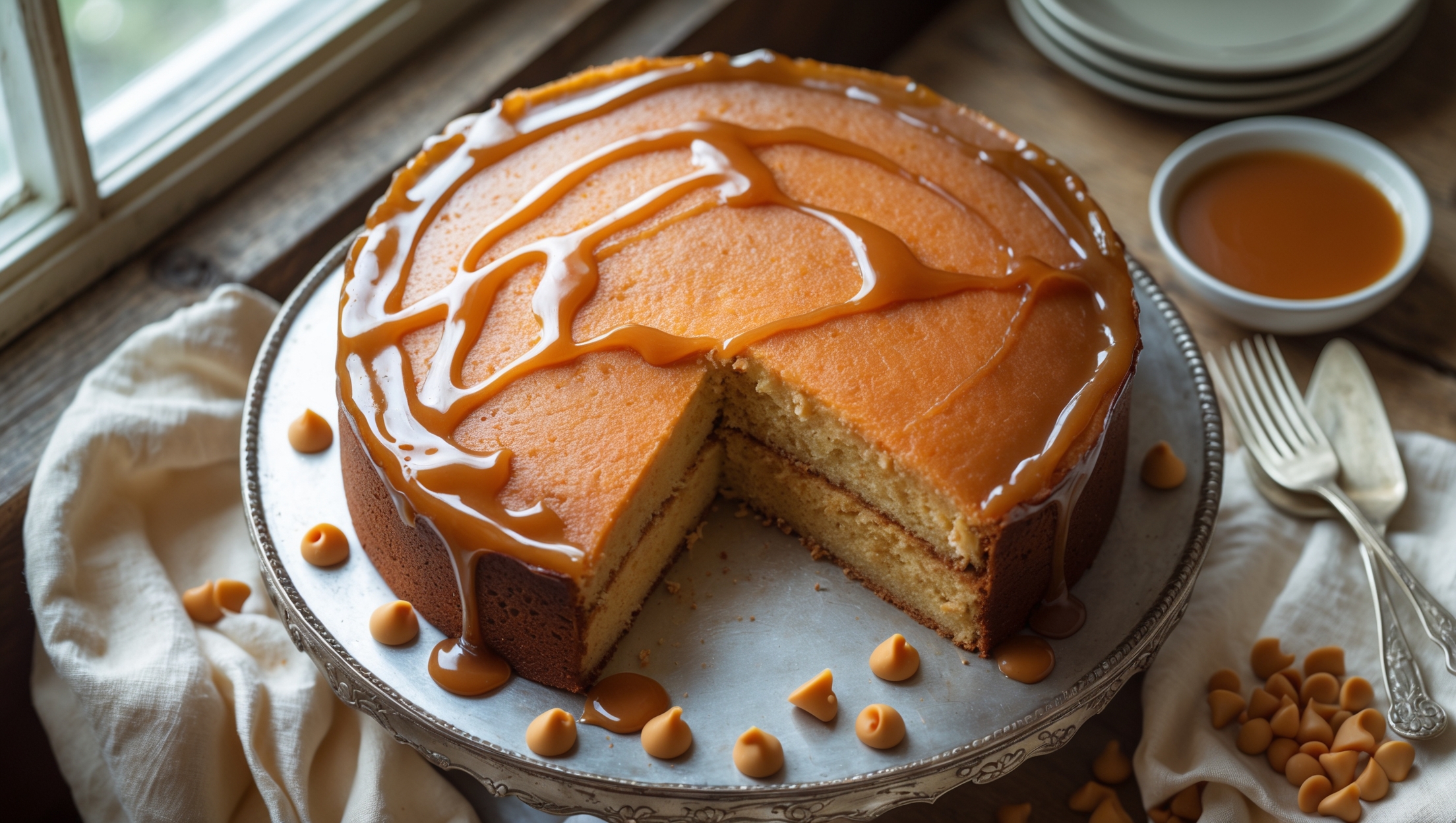
<ol class="no-list-style"> <li class="MethodStepper"> <h4 class="step-title">Step 1</h4> Preheat your oven to 175°C (350°F). Line your 23x33cm baking pan with parchment paper, leaving some overhang on the sides to help remove the cake later, and lightly grease any exposed parts of the pan. </li> <li class="MethodStepper"> <h4 class="step-title">Step 2</h4> In a large bowl, whisk together the flour, both sugars, baking powder, baking soda, and salt until well combined and no lumps of brown sugar remain. The brown sugar is crucial here as it contains molasses, which gives butterscotch its distinctive flavor. </li> <li class="MethodStepper"> <h4 class="step-title">Step 3</h4> In another bowl, whisk together the melted butter, buttermilk, eggs, and vanilla until smooth. The buttermilk's acidity will react with the baking soda to create a tender crumb, while also balancing the cake's sweetness. </li> <li class="MethodStepper"> <h4 class="step-title">Step 4</h4> Pour the wet ingredients into the dry ingredients and mix gently until just combined. Be careful not to overmix – stopping when you no longer see dry flour is perfect. Overmixing develops gluten, which can make your cake tough rather than tender. </li> <li class="MethodStepper"> <h4 class="step-title">Step 5</h4> Pour the batter into your prepared pan and smooth the top with a spatula. Give the pan a gentle tap on the counter to release any large air bubbles. </li> <li class="MethodStepper"> <h4 class="step-title">Step 6</h4> Bake for 30-35 minutes, or until a toothpick inserted into the center comes out clean or with just a few moist crumbs. The cake should be golden brown and will spring back slightly when gently pressed in the center. </li> <li class="MethodStepper"> <h4 class="step-title">Step 7</h4> Allow the cake to cool in the pan for 15 minutes, then use the parchment overhang to carefully lift it out onto a wire rack to cool completely. The cake needs to be completely cool before glazing. </li> <li class="MethodStepper"> <h4 class="step-title">Step 8</h4> For the butterscotch glaze, melt the butter in a medium saucepan over medium heat. Add the brown sugar and whisk constantly for about 2 minutes until the mixture is bubbling and the sugar has dissolved. The caramelization of the sugars here is what creates that deep butterscotch flavor. </li> <li class="MethodStepper"> <h4 class="step-title">Step 9</h4> Carefully add the cream (it will bubble vigorously) and salt, continuing to whisk. Bring the mixture back to a gentle boil and cook for another minute, then remove from heat. </li> <li class="MethodStepper"> <h4 class="step-title">Step 10</h4> Stir in the vanilla extract, then gradually whisk in the sifted icing sugar until smooth. Allow the glaze to cool for about 5-10 minutes, stirring occasionally. You want it to be still warm and pourable, but thick enough to set on the cake without all running off. </li> <li class="MethodStepper"> <h4 class="step-title">Step 11</h4> Place your cooled cake on a serving platter or board, then pour the warm glaze evenly over the top, working quickly to spread it to the edges with an offset spatula if needed. The glaze will begin to set as it cools. </li> <li class="MethodStepper"> <h4 class="step-title">Step 12</h4> Allow the glaze to set for at least 30 minutes before slicing the cake. For clean slices, dip your knife in hot water and wipe it dry between cuts. Store the cake covered at room temperature for up to 3 days, or refrigerate for up to 5 days. </li> </ol>