Directions
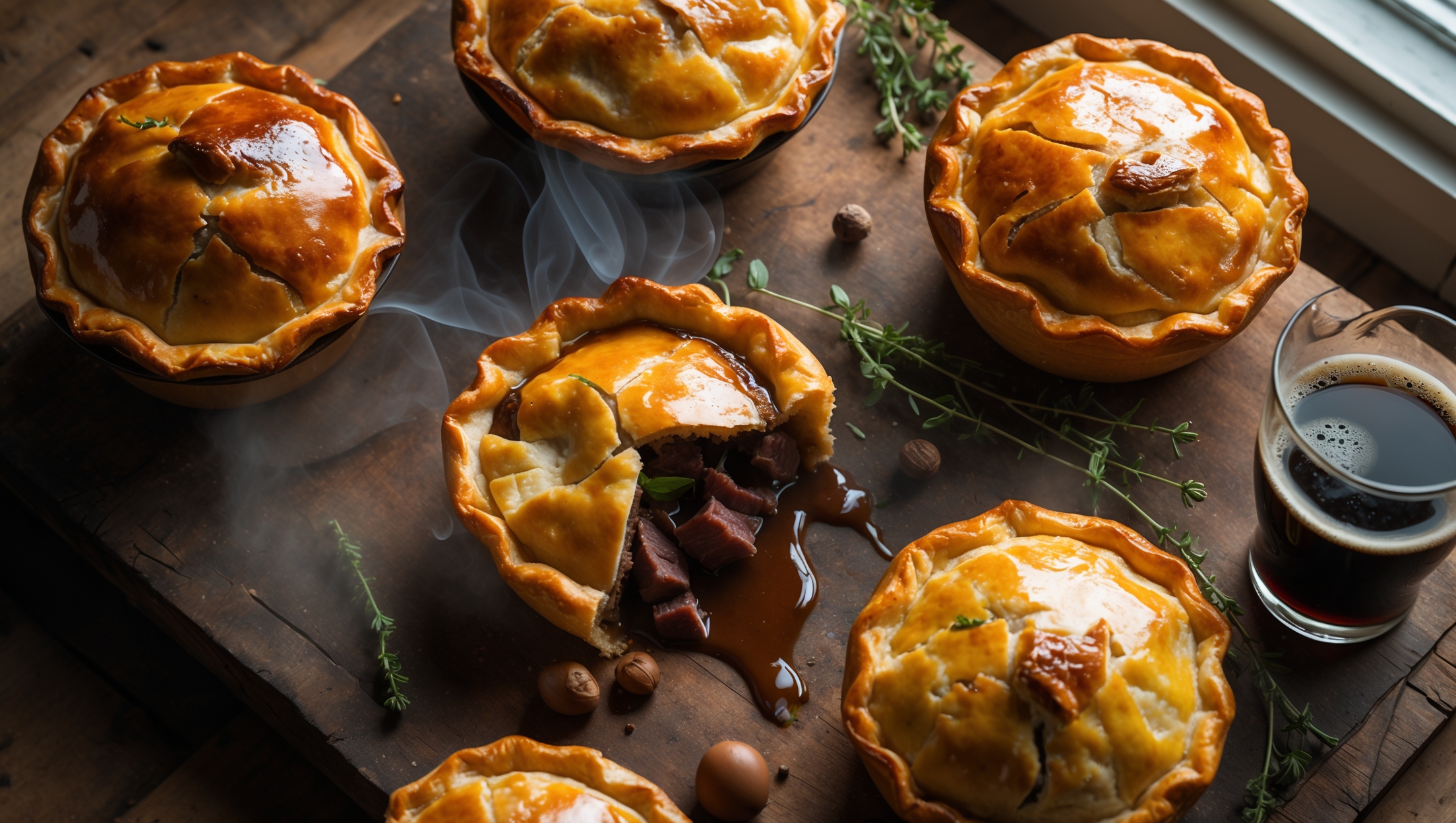
<ol class="no-list-style"><li class="MethodStepper"><h4 class="step-title">Step 1</h4>Begin by preparing the filling. Season the beef chunks generously with salt and pepper, then toss in the flour until evenly coated. This flour coating will help thicken your gravy as it cooks and create a beautiful crust on the meat when seared.</li><li class="MethodStepper"><h4 class="step-title">Step 2</h4>Heat the vegetable oil in a large, heavy-bottomed casserole dish over medium-high heat. Working in batches (overcrowding will cause the meat to steam rather than sear), brown the beef on all sides until you achieve a deep golden crust, about 3-4 minutes per batch. Transfer the browned beef to a plate and set aside.</li><li class="MethodStepper"><h4 class="step-title">Step 3</h4>Reduce the heat to medium and add the diced onions, carrots, and celery to the same pot, scraping up any browned bits from the bottom. Cook for 6-8 minutes until the vegetables have softened. Add the minced garlic and cook for another minute until fragrant.</li><li class="MethodStepper"><h4 class="step-title">Step 4</h4>Stir in the tomato paste and cook for 2 minutes to caramelize slightly, then pour in the Guinness, scraping the bottom of the pot to deglaze. The alcohol will create steam, so stand back slightly as you pour. Allow to simmer for 2 minutes to cook off the initial alcohol.</li><li class="MethodStepper"><h4 class="step-title">Step 5</h4>Return the beef to the pot along with any accumulated juices. Add the beef stock, bay leaves, thyme sprigs, Worcestershire sauce, and brown sugar. Season with salt and pepper. Bring to a gentle boil, then reduce heat to very low, cover, and simmer for 2.5-3 hours, or until the beef is fork-tender and the sauce has reduced to a rich, glossy consistency. Check occasionally, stirring gently to prevent sticking.</li><li class="MethodStepper"><h4 class="step-title">Step 6</h4>While the filling is in its final hour of cooking, prepare the pastry. In a large bowl, combine the flour and salt. Add the cold cubed butter and use your fingertips to rub it into the flour until the mixture resembles breadcrumbs with some pea-sized pieces remaining. The varying butter sizes will create beautiful layers in your pastry.</li><li class="MethodStepper"><h4 class="step-title">Step 7</h4>Gradually add the ice-cold water, mixing with a knife until the dough just comes together – you may not need all the water. Cold ingredients and minimal handling are crucial for flaky pastry, as they prevent the butter from melting before baking.</li><li class="MethodStepper"><h4 class="step-title">Step 8</h4>Turn the dough onto a lightly floured surface and bring together gently into a ball. Do not knead. Divide into two portions – one slightly larger (about 60%) for the bases, and one smaller (about 40%) for the lids. Wrap both in plastic wrap and refrigerate for at least 30 minutes.</li><li class="MethodStepper"><h4 class="step-title">Step 9</h4>When the filling is ready, remove the bay leaves and thyme sprigs. If the sauce seems too thin, increase heat and simmer uncovered for 10-15 minutes until it reduces to a gravy-like consistency. It should coat the back of a spoon but still be fluid enough to surround the meat. Allow to cool for 20-30 minutes before assembling the pies.</li><li class="MethodStepper"><h4 class="step-title">Step 10</h4>Preheat your oven to 200°C (180°C fan/Gas 6). On a lightly floured surface, roll out the larger piece of pastry to about 3mm thickness. Cut circles large enough to line the bases and sides of your pie dishes with some overhang. Gently press the pastry into each dish, being careful not to stretch it.</li><li class="MethodStepper"><h4 class="step-title">Step 11</h4>Fill each pastry case with the cooled beef mixture. The filling should come up to about 1cm below the rim to allow room for steam and to prevent overflow during baking.</li><li class="MethodStepper"><h4 class="step-title">Step 12</h4>Roll out the remaining pastry and cut circles slightly larger than the tops of your pie dishes. Brush the rim of the pastry bases with beaten egg, then place the lids on top. Press the edges together firmly to seal, then trim any excess pastry. Crimp the edges by pinching with your fingers or pressing with a fork for a decorative finish.</li><li class="MethodStepper"><h4 class="step-title">Step 13</h4>Make a small steam hole in the center of each pie lid using the tip of a knife. Brush the tops generously with beaten egg to ensure a beautiful golden finish. If you like, you can use any pastry scraps to create decorative leaves or shapes to place on top.</li><li class="MethodStepper"><h4 class="step-title">Step 14</h4>Place the pies on a baking sheet and bake in the preheated oven for 35-40 minutes, or until the pastry is crisp and deeply golden. If the tops are browning too quickly, cover loosely with foil.</li><li class="MethodStepper"><h4 class="step-title">Step 15</h4>Remove from the oven and allow to rest for 10 minutes before serving. This resting time allows the filling to settle and makes for cleaner slices. Serve hot with mashed potatoes and green vegetables for a truly comforting meal.</li></ol>