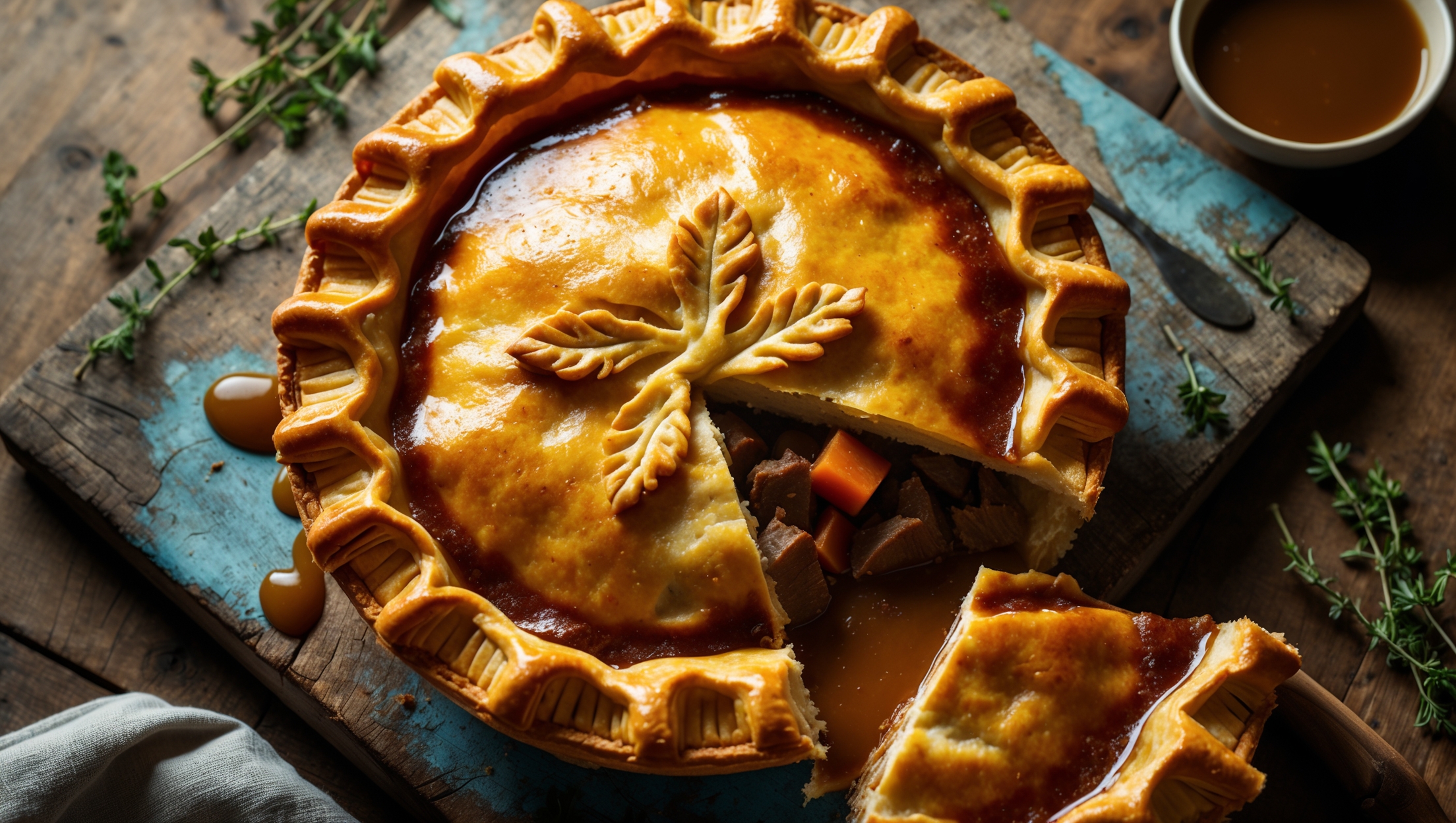
Directions
<ol class="no-list-style"><li class="MethodStepper"><h4 class="step-title">Step 1</h4>Start by making the pastry. Place the flour and salt in a large bowl and add the cold cubed butter. Using your fingertips, rub the butter into the flour until the mixture resembles breadcrumbs. Working with cold butter and handling the mixture minimally keeps the pastry flaky, as the butter will create steam pockets when baking.</li><li class="MethodStepper"><h4 class="step-title">Step 2</h4>Add the beaten egg and 2 tablespoons of ice-cold water to the flour mixture. Combine with a table knife until the dough starts coming together, adding the extra tablespoon of water if needed. The dough should hold together but not be sticky. Tip onto a lightly floured surface and gather into a ball, but don't knead (overworking develops gluten, making the pastry tough).</li><li class="MethodStepper"><h4 class="step-title">Step 3</h4>Divide the dough into two portions – about 2/3 for the base and 1/3 for the lid. Flatten each into discs, wrap in cling film and chill in the refrigerator for at least 30 minutes. Chilling relaxes the gluten and firms up the butter, ensuring a tender, flaky result.</li><li class="MethodStepper"><h4 class="step-title">Step 4</h4>While the pastry chills, prepare the filling. Season the beef chunks generously with salt and pepper, then toss in the 3 tablespoons of flour until evenly coated. The flour will help thicken the gravy as it cooks.</li><li class="MethodStepper"><h4 class="step-title">Step 5</h4>Heat 2 tablespoons of oil in a large heavy-based casserole over medium-high heat. Working in batches to avoid overcrowding (which would steam rather than sear the meat), brown the beef on all sides until deeply caramelized, about 3-4 minutes per batch. Transfer to a plate and set aside. This browning creates the Maillard reaction, developing rich, complex flavors in the final dish.</li><li class="MethodStepper"><h4 class="step-title">Step 6</h4>In the same pan, add another tablespoon of oil if needed. Add the onions, carrots, and celery, cooking for 8-10 minutes until softened. Add the mushrooms and cook for another 3-4 minutes until they release their moisture. Stir in the garlic and cook for 1 minute until fragrant.</li><li class="MethodStepper"><h4 class="step-title">Step 7</h4>Return the beef to the pan and add the tomato purée, stirring to coat everything evenly. Pour in the ale, scraping the bottom of the pan with a wooden spoon to release any caramelized bits (these contain tremendous flavor). Add the stock, bay leaves, thyme, Worcestershire sauce, and brown sugar.</li><li class="MethodStepper"><h4 class="step-title">Step 8</h4>Bring to a simmer, then reduce heat to very low. Cover and cook for 2 hours, or until the beef is meltingly tender. Check occasionally, stirring gently. The liquid should reduce and thicken; if it's reducing too quickly, add a splash more stock. If it's too thin after cooking, simmer uncovered for 10-15 minutes to reduce.</li><li class="MethodStepper"><h4 class="step-title">Step 9</h4>Remove from heat and discard the bay leaves and thyme sprigs. Taste and adjust seasoning if needed. Transfer to a bowl and allow to cool completely. A hot filling would melt the pastry butter before baking, resulting in a soggy bottom.</li><li class="MethodStepper"><h4 class="step-title">Step 10</h4>Preheat your oven to 200°C (180°C fan/gas mark 6). On a lightly floured surface, roll out the larger pastry disc to about 3mm thickness, making it large enough to line your pie dish with some overhang. Carefully drape it over the dish, pressing gently into the corners without stretching the pastry.</li><li class="MethodStepper"><h4 class="step-title">Step 11</h4>Spoon the cooled beef filling into the pastry-lined dish, creating a slight mound in the center. Brush the pastry rim with beaten egg to help seal the lid.</li><li class="MethodStepper"><h4 class="step-title">Step 12</h4>Roll out the remaining pastry for the lid to about 3mm thickness. Place over the filling and trim the excess pastry from both lid and base, leaving a 1cm overhang. Crimp the edges together using your fingers or a fork to create a good seal. This prevents the juices from leaking during baking.</li><li class="MethodStepper"><h4 class="step-title">Step 13</h4>Cut a small steam vent in the center of the pie (or create decorative vents or pastry decorations with any scraps). Brush the entire surface with beaten egg for a beautiful golden finish. The egg proteins will coagulate during baking, creating a shiny, attractive surface.</li><li class="MethodStepper"><h4 class="step-title">Step 14</h4>Bake in the preheated oven for 40-45 minutes, or until the pastry is deeply golden and the filling is bubbling. If the pastry is browning too quickly, cover loosely with foil.</li><li class="MethodStepper"><h4 class="step-title">Step 15</h4>Remove from the oven and allow to rest for 10-15 minutes before serving. This rest time allows the filling to settle and makes it easier to slice cleanly. Serve warm with seasonal vegetables for a hearty, comforting meal.</li></ol>