On this page
An afternoon tea table is most inviting when every bite has a purpose. A small buttery pastry beside a pot of fragrant tea, a neat square of chocolate-chip cookie bar, a little savoury pinwheel, and a delicate coconut macaroon can feel more thoughtful than a tower crowded with oversized cakes. The magic is in variety, manageable portions, and preparing the food in an order that lets you enjoy your guests.
This guide brings together real recipes from What’s Baking? and shows how to turn them into a coherent afternoon tea. It focuses on mini pastries for afternoon tea that are achievable at home: cookies and macaroons, cut bars and blondies, petite cupcakes, fig Danish pastries, herb-and-cheese pinwheels, and elegant slices of tart. Along the way, we will be precise about what each linked recipe actually makes. A cake cannot become a tart shell merely because it contains almond flour; likewise, a rich custard pie is not a tub of cream-cheese frosting. Accurate descriptions help you plan a beautiful table without unpleasant surprises.
The ideas below are hosting adaptations, not a claim that every linked recipe has been tested at a smaller size. When a recipe card gives full-size baking directions, follow that method first, then cut the finished product into petite portions. If you change the pan size or bake miniature versions directly, treat the timing as an experiment and check doneness early rather than assuming the original time still applies.
Build a balanced afternoon tea before you turn on the oven
A satisfying tea spread offers a contrast between sweet and savoury, delicate and substantial, creamy and crisp. You do not need ten different bakes. For a small gathering, three sweet choices and one or two savoury choices can make a more polished table than a dozen recipes competing for oven space. Think in categories instead of individual dishes: something coconutty or nutty; something chocolatey; a fruit pastry; one savoury bite; and perhaps a small cake.
Portions should encourage tasting rather than force guests to commit to one heavy slice. Cookie bars can be cut into tidy rectangles, a slice of tart can be divided into narrow wedges, and Danish pastries can be offered individually as a more substantial highlight. Allow two or three small pieces per guest initially, with extra portions available for those who want them. This is a hosting estimate, not a rule; appetite, meal timing, and the number of options matter.
Consider allergens early. The recipes in this collection include common allergens such as wheat, eggs, milk, peanuts, tree nuts, coconut, soy-containing ingredients, and sesame depending on the bake. A recipe marked vegan is not necessarily nut-free or gluten-free. Read the ingredient lists, check packaging, use clean equipment when preparing food for someone with an allergy, and never assume a homemade substitution is safe without reviewing the entire preparation.
1. Coconut macaroons: Small sweets with a tender centre
Coconut Macaroons Recipe is a natural afternoon tea choice because the finished cookies are already individually portioned. The published recipe uses sweetened shredded coconut, sweetened condensed milk, vanilla, egg whites, and salt, with optional dark chocolate for dipping. These are not vegan macaroons as written, and they contain egg and dairy. Their soft centres and lightly browned edges give the table a texture distinct from pastry or sponge cake.
For presentation, let the macaroons cool fully before transferring them to a platter. Arrange them in modest groups rather than towering piles; coconut surfaces can stick together if the cookies are warm. If you are dipping some in chocolate, make a mixture of plain and chocolate-dipped pieces so guests can choose. A little parchment between layers protects the shape when storing or transporting.
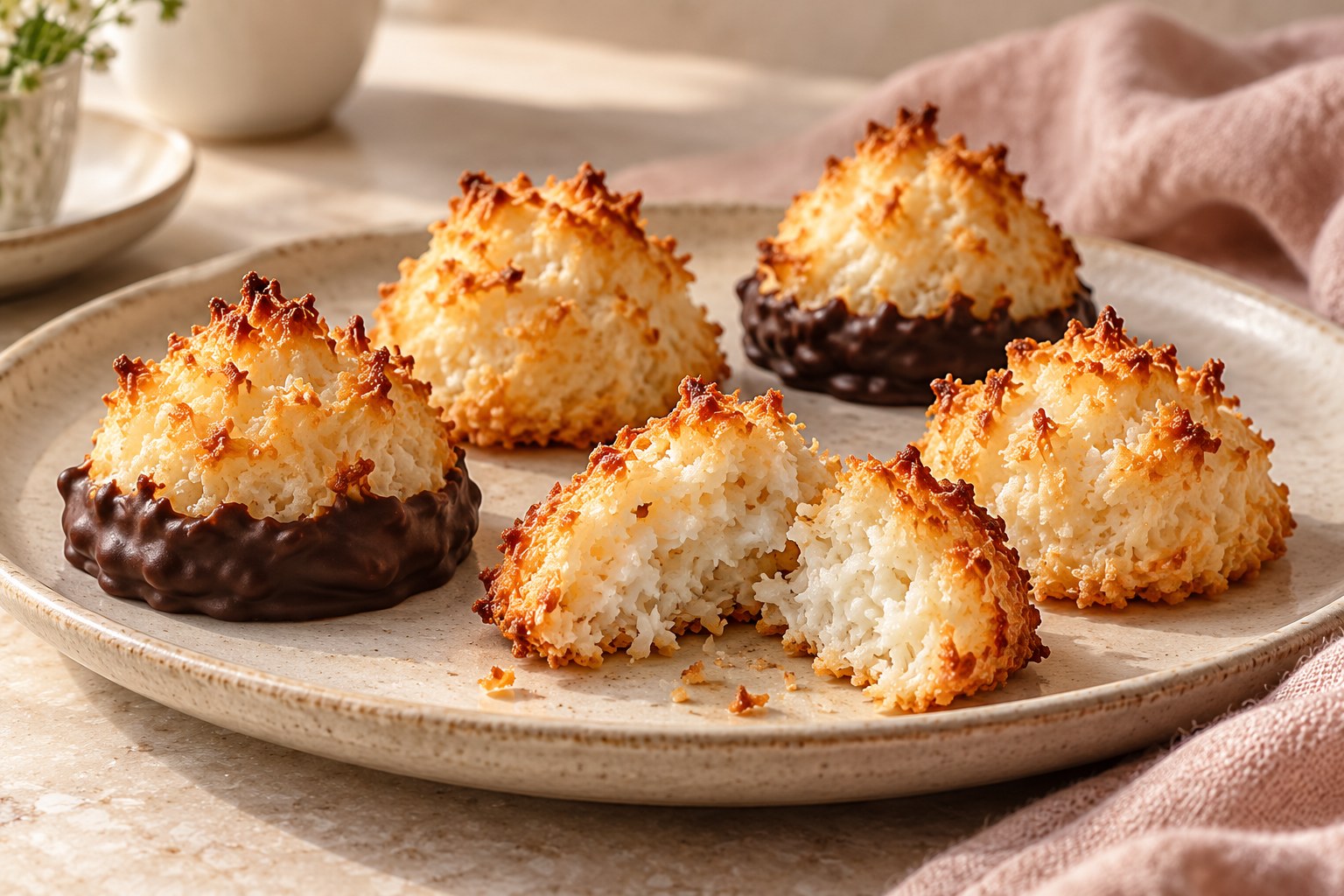
Macaroons are especially useful when your menu includes richer buttery items such as blondies or fig Danish pastries. The coconut flavour feels different enough to keep the spread interesting. Serve with Earl Grey, jasmine tea, or a plain black tea, according to the guests' preferences. These are pairing suggestions rather than universal culinary rules.
What about vegan coconut macaroons?
The site also has a separate Vegan Coconut Macaroons Recipe that uses aquafaba rather than egg whites and condensed milk. It calls for desiccated coconut, sugar, coconut flour or almond flour, and optional vegan chocolate. If you are serving a vegan guest, use that genuinely plant-based formula rather than quietly replacing the ingredients in the conventional version. If using its optional almond flour, remember that you have added a tree nut ingredient.
2. Flourless peanut butter cookies: Rich, simple, and clearly labelled
The Flourless Peanut Butter Cookies Recipe uses peanut butter, sugars, egg, vanilla, baking soda, salt, and optionally chopped peanuts. It is flourless as written but not vegan, peanut-free, or automatically suitable for someone avoiding gluten because of coeliac disease; cross-contact and individual ingredient labels still matter. For a tea table, the cookies' distinct peanut flavour is best served with a clear allergen label.
To give full-size cookies an elegant appearance, arrange them in a single row or a shallow circle and avoid crowding them with extra garnishes. The familiar fork-mark pattern can be its own decoration. Their richness makes them suitable beside unsweetened black tea or coffee. If you need to accommodate a peanut allergy, do not treat a casual seed-butter substitution as validated by the published recipe. Choose a separate tested allergen-appropriate cookie instead.

If cookies spread too much, consider whether the ingredients were measured accurately and whether the dough was overly warm. If they seem crumbly while hot, give them time to firm up on the tray before moving them. Resist the temptation to bake longer solely to make the centres feel solid while warm; delicate cookies can become dry by the time they cool.
3. Chocolate-chip cookie bars: A batch bake that portions beautifully
Chocolate Chip Cookie Bars are one of the most practical choices for a crowd. The published recipe contains butter, brown and white sugar, eggs, vanilla, wheat flour, baking soda, salt, and chocolate chips. Bake it according to the recipe card, allow it to cool completely, and slice into consistently sized squares or slim fingers.
A sharp knife cleaned between cuts gives you neater edges than dragging a chocolate-covered blade through the whole tray. If the chocolate is still soft, refrigerate briefly just until the slab is easier to cut; do not leave it uncovered so long that it dries out. Position the bars on a flat tier because a sloping plate makes clean lines harder to maintain.

Cookie bars are a useful 'anchor' dessert: familiar, appealing, easy to serve, and forgiving of transport. They also provide a chocolate element without requiring separate individual cakes. Pair them with a brisk Assam or breakfast tea; the tannic quality of the tea can provide a pleasant contrast to the bar's sweetness. If your tea menu already includes several chocolate desserts, cut the cookie bars smaller rather than increasing the total amount of chocolate on the table.
4. Vegan white-chocolate blondies: Soft squares with a distinct flavour
The Vegan Blondies with White Chocolate Recipe is plant-based as published. It uses vegan butter, brown sugar, flaxseed mixed with water, flour, and vegan white chocolate, with nuts listed as optional. That last detail is important: a vegan blondie can still contain wheat and possibly tree nuts. White chocolate itself must be specifically vegan, as the recipe requires.
Blondies have a soft, rich crumb that contrasts nicely with crispy cookies and flaky pastry. For afternoon tea, bake the full slab and slice it into small, even pieces once fully set. Lining the pan with parchment helps release the slab cleanly. Avoid loading each square with heavy toppings: a simple surface looks more refined and travels better.

When serving both blondies and chocolate-chip cookie bars, think about whether the two items are too similar. One option is to offer only one at a very small party. Another is to cut both into petite pieces and place them on separate trays with accurate labels. Variety should enhance the tea, not make the menu repetitive.
5. Vegan vanilla bean cupcakes: Make the familiar look special
Vegan Vanilla Bean Cupcakes are cupcakes, not a vanilla cupcake loaf. The published batter uses plant milk, apple cider vinegar, wheat flour, corn starch, raising agents, sugar, neutral oil, applesauce, vanilla, and a vegan-butter frosting. They are vegan as written, but they are not gluten-free and may contain soy or almond depending on which plant milk is chosen.
A small cupcake makes a gentle centrepiece among cookies and bars. You can serve the finished cupcakes at their published size or experiment with miniature tins, keeping in mind that miniature cakes will need their own doneness checks. The recipe card's baking time applies to the specified cupcake format, not automatically to every tin. If you try a smaller tin, fill consistently, start checking earlier, and record the result so a future batch is reproducible.

Frost with a modest swirl rather than an oversized tower. Heavy frosting can make a cupcake topple when someone lifts it from a tiered stand. For a refined look, use the same piping tip across the batch, then add a tiny garnish such as a pinch of vanilla bean or a small piece of suitable fruit. Keep the ingredient list available, especially when plant milks or optional decorations introduce additional allergens.
6. Fig Danish: The true pastry showpiece
If you want one unmistakably pastry-focused item, choose the Fig Danish Recipe. It uses a yeast dough made from flour, milk, egg, sugar and yeast; a butter block for lamination; a cream-cheese filling; cooked fig filling; egg wash; and a honey finish. This is not a quick, gluten-free or dairy-free pastry. It is a more involved project that deserves generous preparation time.
The distinctive pleasure of a Danish comes from its contrast: layered dough, creamy centre, fruit and a crisp edge. Unlike cookie bars, its texture is most rewarding on the day it is baked. Use this as the signature bake if you enjoy dough work or want to showcase your baking technique. Pair it with simpler supporting sweets so the whole event does not depend on several labour-intensive recipes.
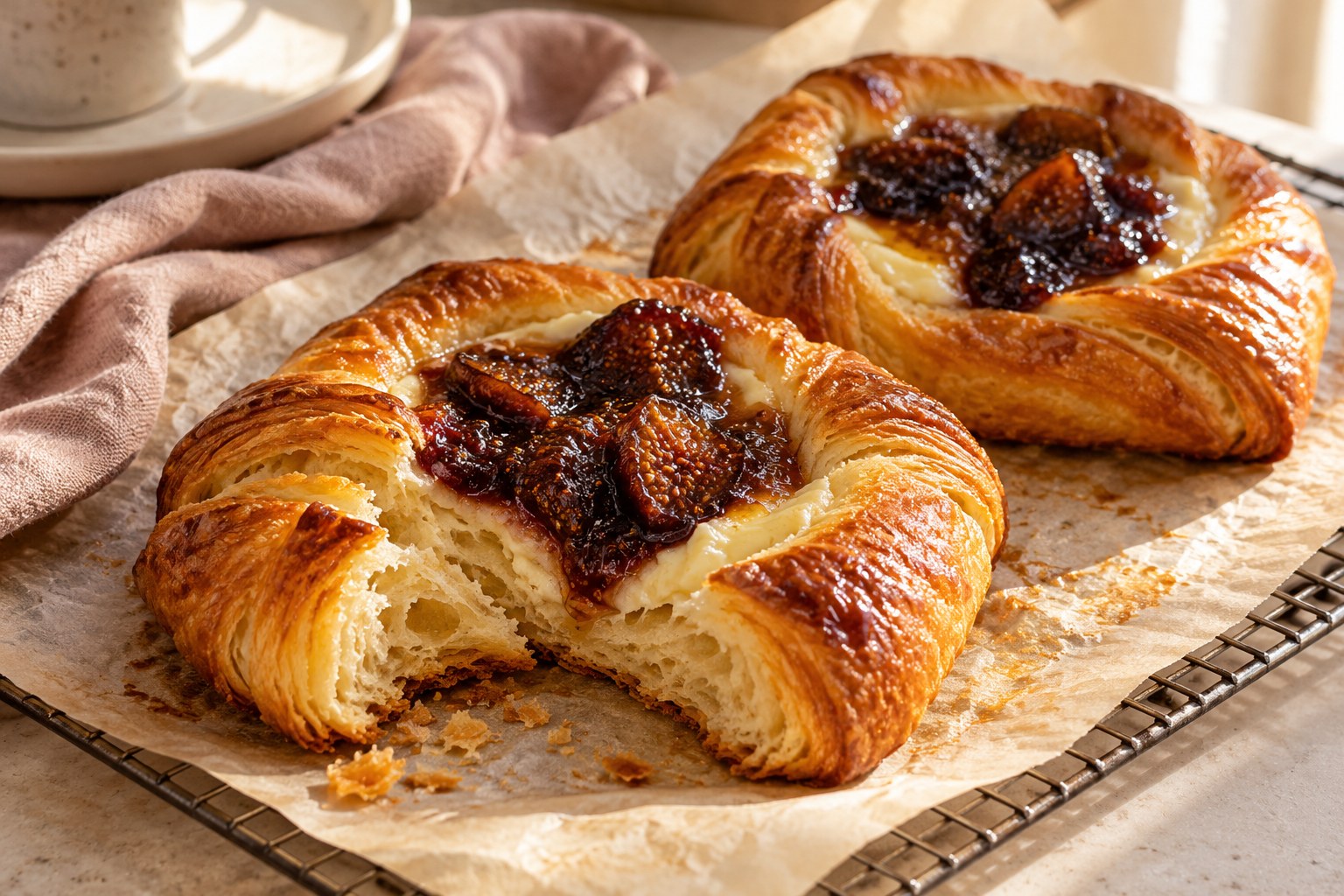
Read the pastry recipe from start to finish before beginning. Lamination involves maintaining clear layers of dough and butter. If the butter becomes too soft it can smear into the dough; if it becomes too cold it may crack as you roll. Work in measured stages and chill when the dough resists or the butter feels greasy. Trying to rush repeated folds is rarely worth the loss of definition.
Can the Danish be made miniature?
A smaller Danish is an attractive afternoon tea idea, but changing piece size changes how quickly it bakes and how much filling it can safely hold. The What’s Baking? recipe should be the reference for the original format; treat miniature shaping as a separate trial. Keep the filling modest so that it does not leak and burn. Watch the colour and firmness of the pastry rather than treating the full-size time as a guarantee.
For a simple gathering, it may be better to serve the published-size Danish on its own small plate as the central pastry and use truly petite cookies for the rest of the selection. Elegance comes from arrangement, not forcing every recipe into the smallest possible shape.
7. Cherry and almond tart: A fruit-led alternative
Cherry and Almond Tart is a more accurate source for a pastry-based fruit dessert than the almond-flour cake that the old article incorrectly called a tart shell. The actual tart recipe has a wheat-flour butter pastry, an almond frangipane filling containing eggs and butter, cherries, and flaked almonds. It is neither nut-free nor gluten-free as written.
A tart gives the table a different visual texture: glossy or deeply coloured fruit against a pale pastry shell. Bake the tart according to its own instructions, allow it to cool as required, and slice it into narrow portions with a well-sharpened knife. Thin, even wedges look especially attractive beside the rounded shapes of macaroons and cupcakes.

If you want individual tartlets, do not simply press batter from the site's Almond Flour Cake into mini shells. That recipe makes a cake containing almond flour, eggs and butter, not a shortcrust pastry. A proper small-tart project needs a pastry recipe and separately checked baking times. The cherry-and-almond tart gives you a verified full-size starting point.
8. Vanilla cream pie: Serve a slice, not fictional frosting
The Vanilla Cream Pie Recipe includes a butter pastry shell, a cooked vanilla custard made with milk and egg yolks, and whipped cream. It is not a 'vanilla cream cheese frosting' recipe, even though the earlier afternoon tea article described it that way.
Its appeal is the soft custard and light topping, which contrast with firm cookies and bars. For a small gathering, cut neat pieces and place them on chilled dessert plates or in shallow individual dishes. Because the filling contains dairy and eggs, follow safe refrigeration practices and bring portions out for service rather than leaving a cream-filled pie on the table for hours.

If cream pie would duplicate the richness of your Danish or cupcakes, omit it. A well-curated tea table is better served by four distinctive foods than six variations on soft cream-filled desserts. Think of this option as a substitute for another creamy bake, not an automatic addition.
9. Herb-and-cheese pinwheels: The savoury balance
The Herb and Cheese Pinwheels Recipe is an excellent counterpoint to sweet pastries. It uses ready-rolled puff pastry, cream cheese, cheddar, chives, parsley, thyme, garlic, seasoning, and an egg wash. The result is a savoury spiral with aromatic herbs and a rich cheese filling.
For a tea table, allow pinwheels a little space so their edges stay attractive. Serve them on a savoury plate separate from chocolate-dipped desserts. This also helps guests see that the table includes a proper savoury choice rather than only sweets. Use a modest garnish of fresh herbs, if suitable, instead of elaborate decorations that make finger food hard to hold.

Pinwheels are generally easier to integrate into a hosting plan than a complex savoury pie. They can occupy one baking session, and their familiar spiral shape looks intentional alongside cinnamon pastries. Follow the recipe's assembly, oven temperature, and cook time rather than inventing a raw-pastry shortcut for the final minutes before guests arrive.
10. Tigelle flatbread: A small savoury sandwich base
Tigelle (Italian Flatbread) Recipe makes a more substantial savoury tea addition. The published dough contains flour, milk, butter, yeast, salt, sugar, and olive oil; its preparation time includes several hours. It is not a three-ingredient flatbread, gluten-free bread, or something you can roll and serve immediately without preparing the dough.
Cook and cool the tigelle according to the recipe. For a savoury afternoon tea adaptation, split the flatbreads and serve with a modest filling that does not drip. A simple herb cream cheese or a vegetable spread can work, provided the filling is suited to your guests and kept appropriately chilled. Cut the portions only if their size makes that practical; the goal is easy finger food rather than tiny fragments.
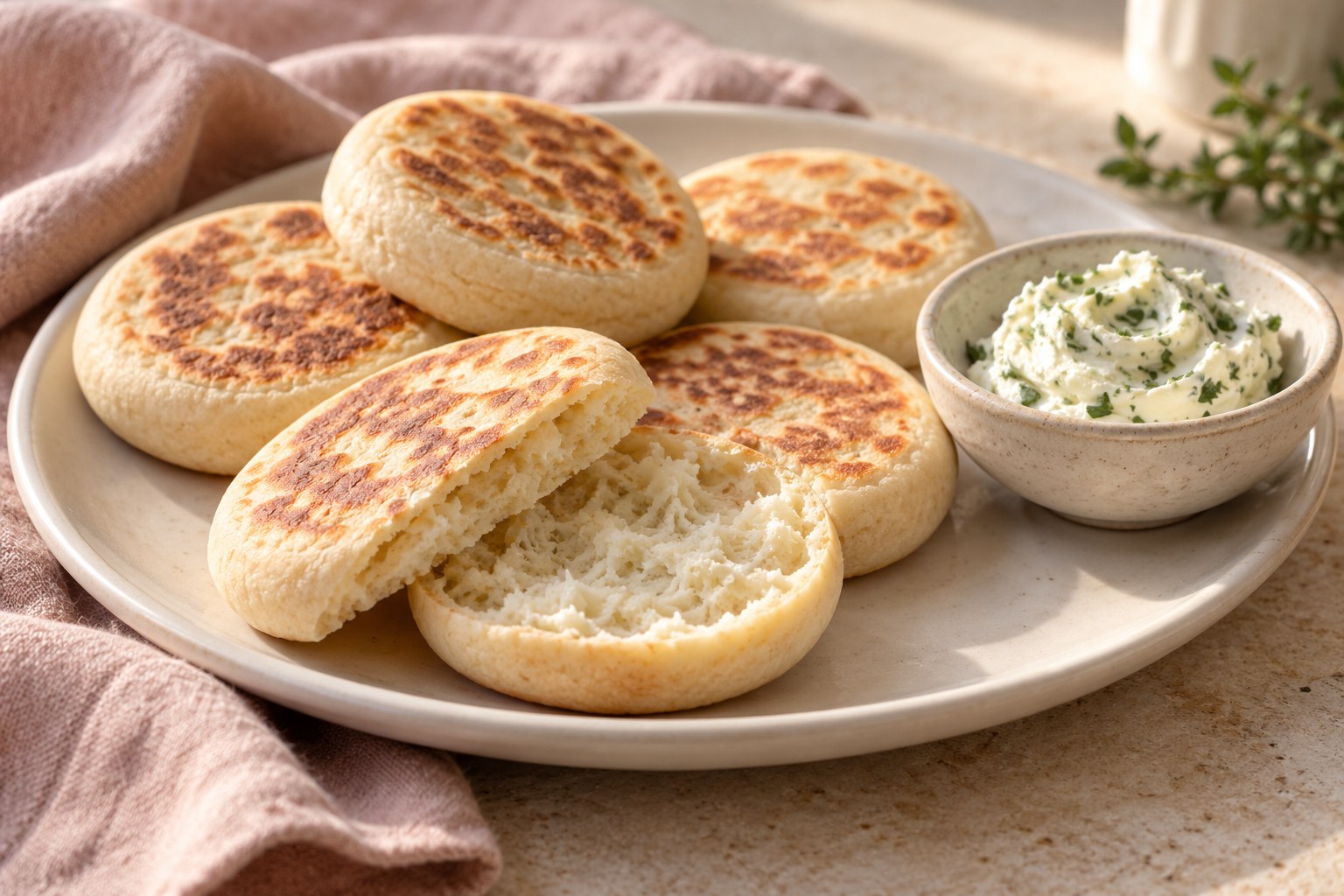
Compared with pinwheels, tigelle are a bread-based choice that can make the spread feel more meal-like. You probably do not need both for a brief tea. Choose pinwheels when you want a flaky bite and tigelle when guests might appreciate a little savoury sandwich.
11. Almond paste pinwheels: For a nut-focused pastry table
The Almond Paste Pinwheels Recipe uses a buttery dough, almond paste, egg, icing sugar, almond extract, apricot jam, and sliced almonds. Its almond flavour makes it attractive with strong black tea. It also means this recipe is clearly unsuitable for someone with an almond allergy. Keep it separate from nut-free items and label it plainly.
Arrange finished pinwheels with enough room to show their spiral shape. If the jam or glaze is tacky, allow the surface to set before stacking. This is a good example of a pastry that already delivers visual interest without extra piping or decorative pieces. Consider serving it instead of the fig Danish when you want a nut-led theme.
12. Chocolate cream-cheese sandwich cookies: Small and indulgent
The Chocolate Cream Cheese Sandwich Cookies Recipe combines chocolate cookies made with butter, egg, cocoa and flour with a sweet cream-cheese filling. This is an indulgent, dairy-containing dessert—not a lightweight, shelf-stable sandwich biscuit. Keep it chilled as appropriate, especially when assembling in advance.
For afternoon tea, a few sandwich cookies can give the stand a darker colour and a soft filling that differs from crunchy macaroons. Place them on a flat tray to prevent sliding and do not squeeze so many together that the filling oozes out. If you already plan to serve vanilla cream pie or richly frosted cupcakes, this is another item to consider substituting rather than adding.

Choosing the best menu for your gathering
For six guests, a reasonable starting menu might be chocolate-chip cookie bars, coconut macaroons, fig Danish, and herb-and-cheese pinwheels. This creates a chocolate bake, a coconut sweet, a flaky fruit pastry and a savoury option. If one guest is vegan, consider the vegan coconut macaroons and vegan blondies, while keeping those separate from dairy-containing choices. Always check individual ingredient labels rather than assuming the menu satisfies every dietary restriction.
For a larger celebratory event, add a cherry-and-almond tart or small vanilla cupcakes as a visual centrepiece. For a quiet afternoon with two friends, cut the menu down to two sweet options and one savoury. Fewer dishes let you be more careful with the baking and give guests an easier decision at the table.
Do not set a rigid number of servings based on online inspiration photographs. The right quantity depends on whether tea replaces lunch or follows it, whether guests bring children, and whether you offer other foods. It is sensible to have a few extra portions available but not necessary to bake every recipe on the site.
A sensible tiered-stand arrangement
A tiered stand is useful because it separates textures and invites a gradual progression through the menu. Put heavier, stable savoury food on the lowest level, sturdy bar squares and cookies in the middle, and smaller delicate pastries or cupcakes on top. If your stand is narrow or wobbly, use separate platters instead of overloading it. A stable table looks more polished than an elaborate stand that guests are afraid to touch.
Keep sticky chocolate glazes and cream fillings away from foods they might smear. Leave enough space for tongs or serving forks. Provide a small card for each recipe with its correct name and major allergens when appropriate; this matters more than decorative typography. The What’s Baking? article should support confident serving, not just beautiful photographs.
Consider colour as well as flavour. Golden pastries and brown cookie bars can look monochromatic. Fresh fruit on a separate platter, a few edible herbs, or modest table flowers can brighten the arrangement without altering the baked goods. Use only ingredients and flowers known to be food-safe if placing anything directly onto the food; florist blooms are not automatically edible.
Tea pairings that complement rather than compete
Earl Grey can pair nicely with coconut and vanilla, while Assam or English Breakfast tea can stand up to richer chocolate bakes. Jasmine tea provides a fragrant contrast to buttery pastry. Chamomile or a mild mint infusion can suit guests who prefer herbal drinks. Offer plain hot water and milk alternatives if needed, and remember that not everyone wants caffeine.
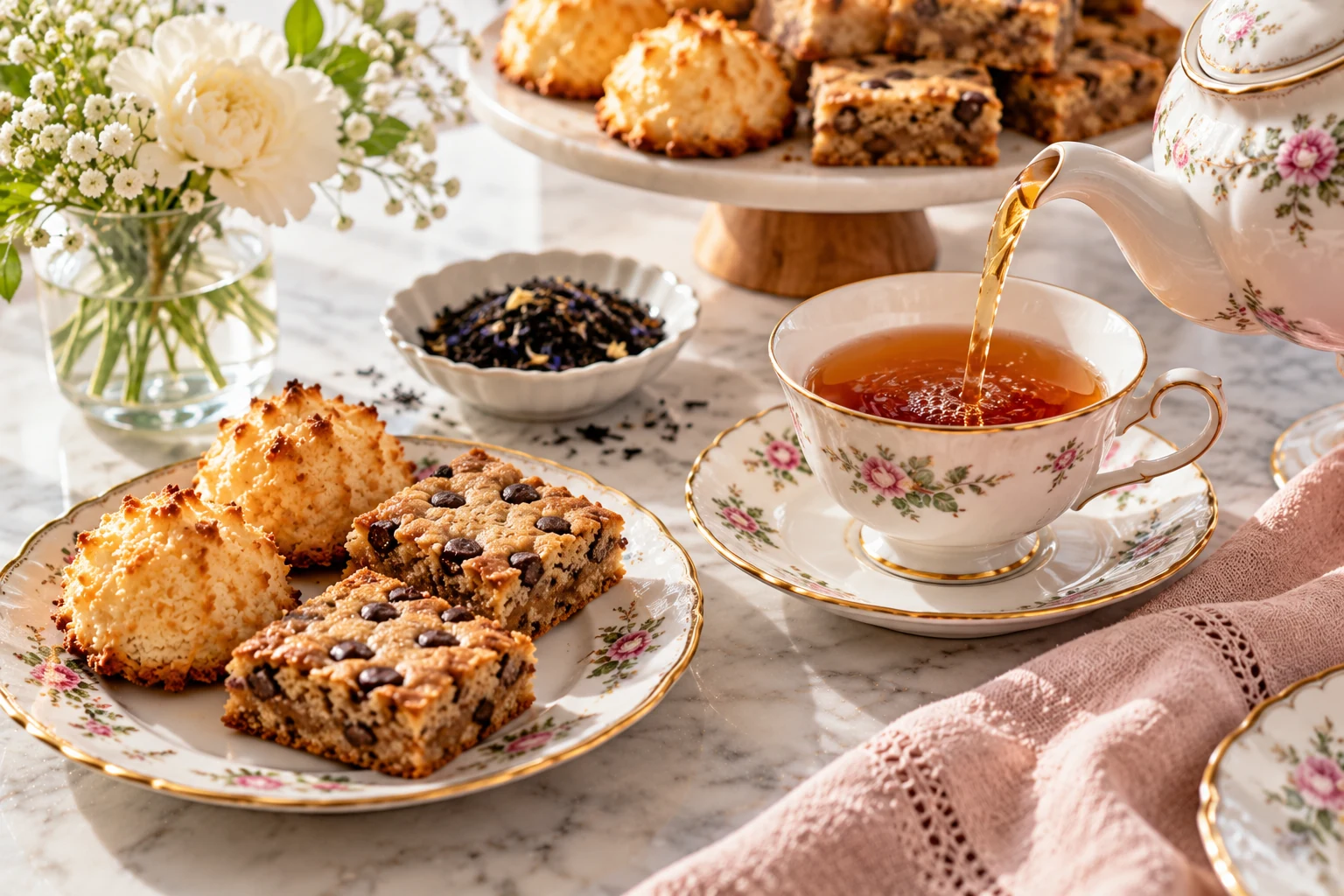
When testing a pairing, taste the pastry and tea separately, then together. A delicate tea can seem faint after a very chocolatey dessert; a heavily brewed black tea can overwhelm a mild custard. Adjust brewing and serving according to the tea package and your guests' preferences rather than treating any pairing list as definitive.
A simple drinks service is often enough: one black tea, one caffeine-free choice, water, and perhaps coffee. Several elaborate signature beverages can distract from the baking. Serve tea at a temperature that is comfortable and safe for the people at the table, especially when children are present.
The realistic two-day afternoon tea preparation plan
Two days before, decide on guest numbers, allergies, menu size, tableware and whether you have enough oven space. Purchase ingredients and read the recipes. If making a laminated Danish, pay special attention to the required working and resting time. Check that your fridge has room for cream-filled dishes and ingredients.
One day before, bake sturdy items such as cookie bars or blondies if their recipe and storage requirements allow it. Cool fully before wrapping. Make a simple list of what remains: savoury pastry, delicate fruit pastries, frosting, cream fillings and final slicing. Label containers and keep any foods needing refrigeration cold. Avoid assuming that a chocolate glaze or cream filling will be safe on the counter simply because it looks firm.
On the day, prioritize the recipes whose texture is best freshly baked. Bake pinwheels or the Danish according to the actual recipe's timetable. Prepare the tea station and serving dishes while pastries cool. Assemble any chilled fillings near service and return extras promptly to the fridge. Cut bars with a clean knife and arrange the tiers only once foods are completely ready to serve.
Just before guests arrive, clear away the mixing bowls, set out napkins and small plates, and make the first tea. Keep chilled desserts cold until appropriate serving time. If the event will run long, replenish small platters instead of putting every portion out at once.
How to handle storage, transport and leftovers
Food storage depends on the ingredients and preparation method. Plain cookies and some unfrosted bars can behave differently from custards, cream cheese fillings and whipped cream. Follow the linked recipe's guidance when provided, keep perishable foods refrigerated, and transport them in a cooler with cold packs when needed. Do not rely on room temperature merely because a pastry looks dry on the outside.
For crisp pastry, condensation is an enemy. Let baked items cool before sealing them, and avoid placing a very warm pastry into a completely closed plastic container. For soft cookies and bars, airtight packing helps reduce drying. Where the centre is moist or dairy-filled, food safety takes priority over texture.
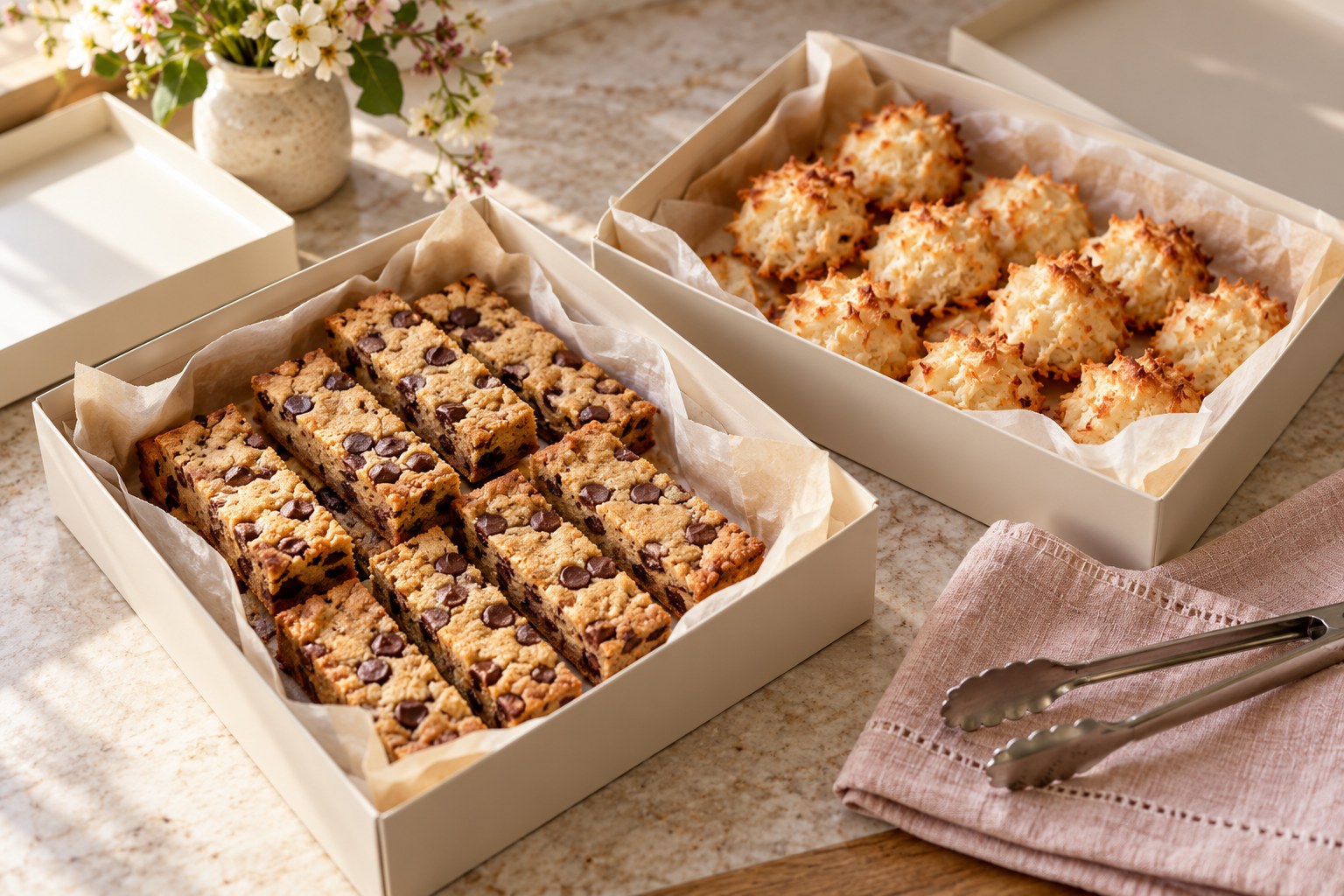
Freezing can be practical for some unfrosted cookies and bars, but not every finished dessert freezes beautifully. Cream fillings may separate, meringue-like textures can soften, and crisp laminated pastry can lose some of its fresh character. Test one or two pieces before committing your entire party menu to the freezer. Label dates and allergens on containers.
When packing for a gathering away from home, use shallow, sturdy boxes; place parchment between delicate layers; and transport glazed or filled pastries upright. Bring a few spare napkins and serving utensils. Assemble tiers after arrival rather than trying to move a fully loaded stand through a car journey.
Common mistakes and how to avoid them
Making too many elaborate pastries. A lineup of laminated Danish, filled tarts, elaborate frosting, and multiple decorated cookies may sound exciting, but it can leave you exhausted before guests arrive. Start with one technically demanding recipe and surround it with simpler recipes.
Misreading what a recipe actually makes. The old version of this article called cupcakes a loaf, vanilla cream pie frosting, and an almond-flour cake a tart shell. Check the actual recipe's ingredients, equipment, method and finished format before adding it to the menu.
Treating every bake as gluten-free or nut-free. Gluten-free and nut-free are specific ingredient and cross-contact matters, not aesthetic qualities. Coconut macaroons may omit wheat flour but use egg and dairy; peanut butter cookies contain peanuts; almond cakes contain almonds. Read labels and take allergies seriously.
Cutting pastries before they are cool. Warm bars can smear and crumble. Soft fillings may run. Let the bake reach the temperature suitable for its recipe, then cut and arrange with a clean utensil.
Letting cream-based desserts sit out all afternoon. Beautiful presentation does not override food safety. Chill perishable fillings and replenish serving plates in small batches when necessary.
Using untested miniature-bake times. A recipe baked in a large pan may behave differently in tiny moulds. If you want a miniature adaptation, test it beforehand and use physical doneness cues rather than a copied timer.
Frequently asked questions
How many kinds of mini pastries should I make?
For a small gathering, three sweet choices and one savoury choice are a reasonable place to start. Reduce the menu if you prefer more elaborate recipes. The number of guests, whether tea replaces a meal, and how much preparation time you have matter more than a fixed rule.
Can I use the almond-flour cake as tart pastry?
Not as a straightforward substitution. The site's Almond Flour Cake Recipe is a batter with eggs, sugar and butter. For an actual tart, use an appropriate pastry recipe, such as the pastry component of Cherry and Almond Tart.
Are coconut macaroons always vegan?
No. The site's conventional Coconut Macaroons use egg whites and condensed milk. A separate Vegan Coconut Macaroons recipe uses aquafaba and different ingredients.
Can I turn the cupcake recipe into a loaf?
Not without testing a new pan and bake time. The site's Vegan Vanilla Bean Cupcakes are formulated and timed as cupcakes. Serve them as published or treat another shape as an experimental adaptation.
What is the easiest item to make in advance?
Sturdy chocolate-chip cookie bars or blondies tend to be easier to cut, portion and transport than filled cream pastries. Follow the specific recipe's storage instructions and account for room temperature and ingredients.
Can afternoon tea be entirely vegan?
Yes, with a deliberately chosen set of plant-based recipes, such as vegan blondies, vegan coconut macaroons and vegan vanilla cupcakes. But this specific collection also includes many dairy- and egg-containing recipes, so do not silently present the whole list as vegan.
How can I accommodate someone avoiding gluten?
Choose recipes specifically formulated for their dietary requirements, verify all ingredient labels, and consider cross-contact if the guest has coeliac disease. Do not assume a flourless peanut butter cookie is guaranteed free from gluten contamination, and do not describe a wheat-based Danish or flatbread as gluten-free.
Should I put all desserts on a three-tier stand?
Only if it is stable and large enough. Tiered stands work well for finger food, but wide plates can be better for tall cupcakes, cream pies or large Danish pastries. Presentation should make serving easier, not create a balancing exercise.
What if I want to serve both savoury and sweet pastries?
Choose at least one savoury item, such as Herb and Cheese Pinwheels, then balance it with a fruit pastry and a cookie or bar. Separate the savoury and sweet areas to avoid mixed crumbs, fillings and allergens.
How far ahead should I prepare a tea party?
Plan the menu and shopping a couple of days before, make sturdy bakes ahead as appropriate, and reserve the final day for pastries that benefit from being fresh, chilled fillings, slicing and serving. A written schedule prevents too many oven-dependent recipes colliding at the last minute.
Final thoughts: A thoughtful tea table feels effortless
The most beautiful afternoon tea is not necessarily the one with the greatest number of pastries. It is the one where textures contrast, the serving sizes make sense, the drinks complement the food, and the baker can actually enjoy the company. Start with one signature pastry—perhaps the Fig Danish—and surround it with reliable supporting bakes such as Coconut Macaroons, Chocolate Chip Cookie Bars and Herb and Cheese Pinwheels.
Read the actual recipe cards, be clear about allergens and storage, and treat miniature changes as experiments unless the recipe was written for that form. You can make a charming, generous afternoon tea at home without pretending a cake is a pastry shell or spending an entire weekend making more desserts than anyone can taste. Put the kettle on, set out the small plates, and let the food tell its own story.
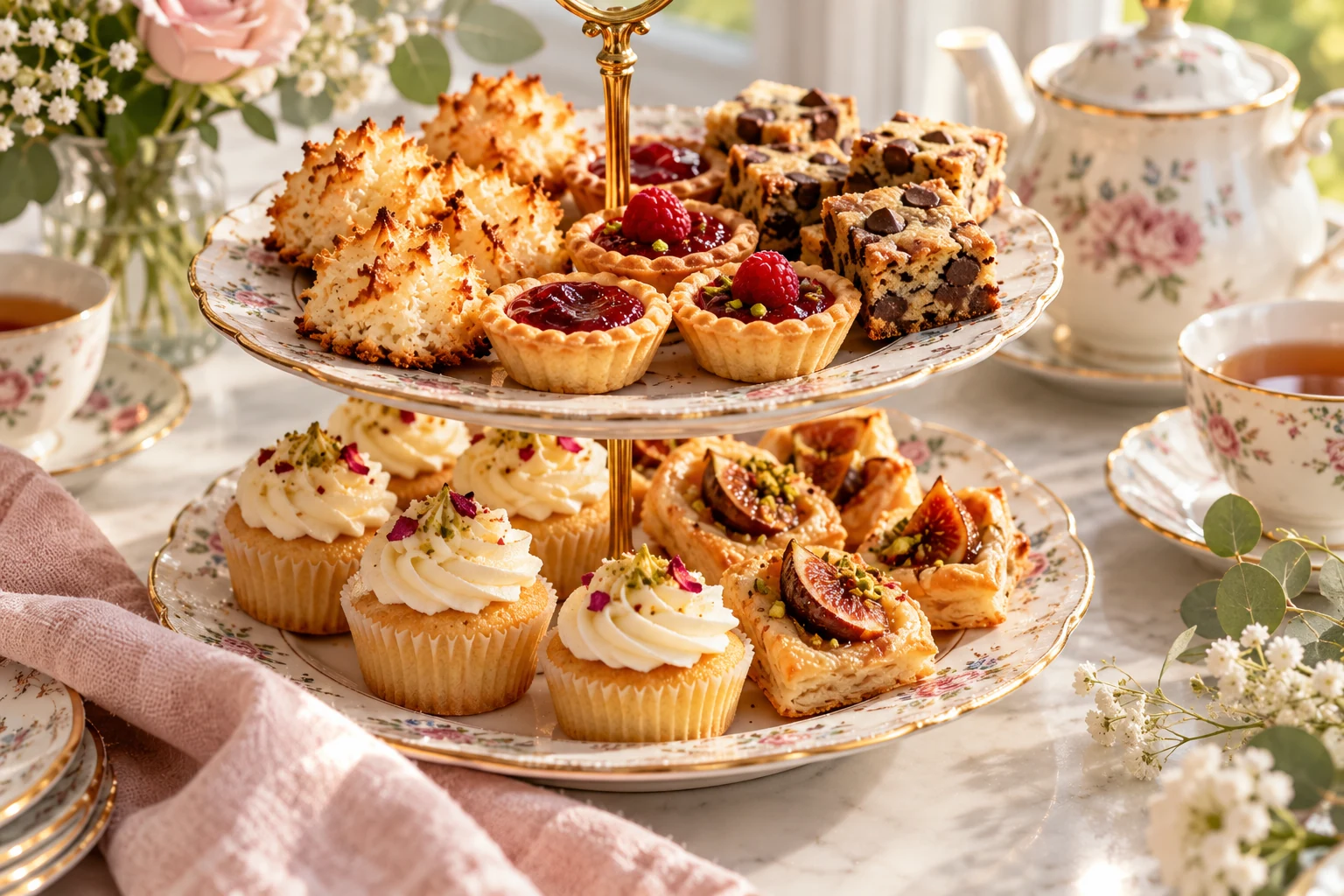
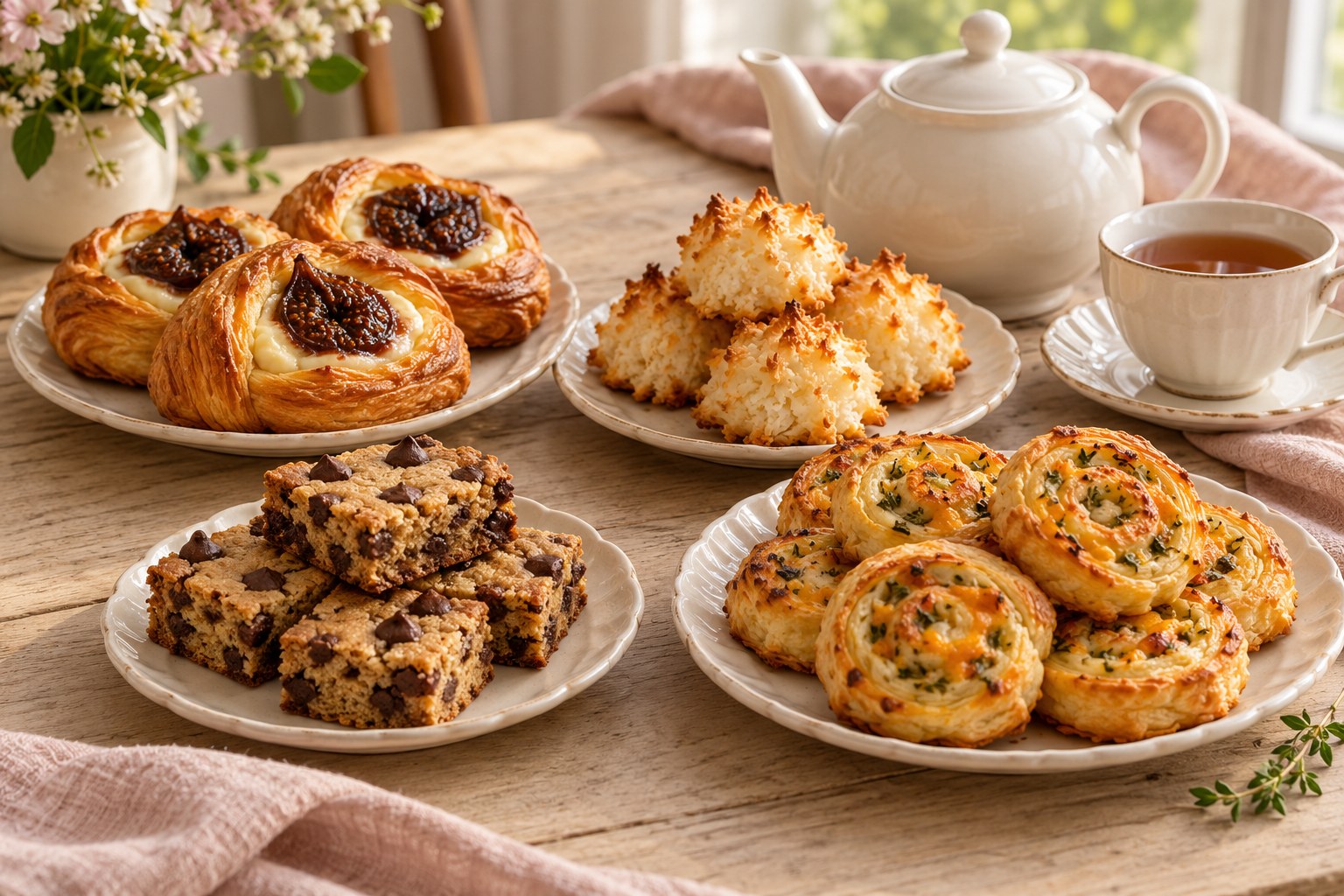
A tiered tea stand keeps small sweet pastries arranged attractively. AI editorial illustration.
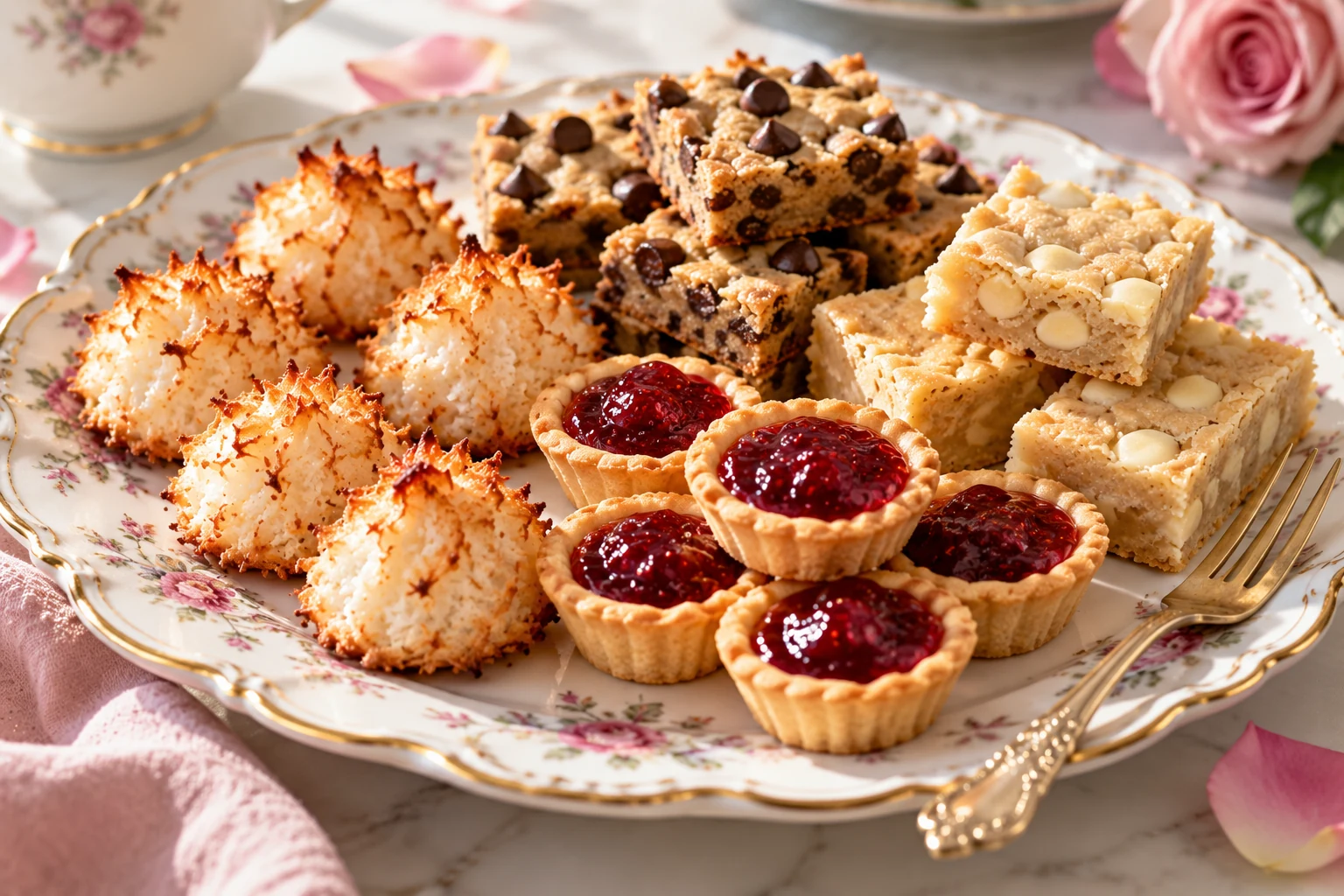
Mix textures and flavors with macaroons, tartlets and petite cookie-bar squares. AI editorial illustration.
IN PICTURES
From the baking notebook

FROM THE RECIPE BOX


