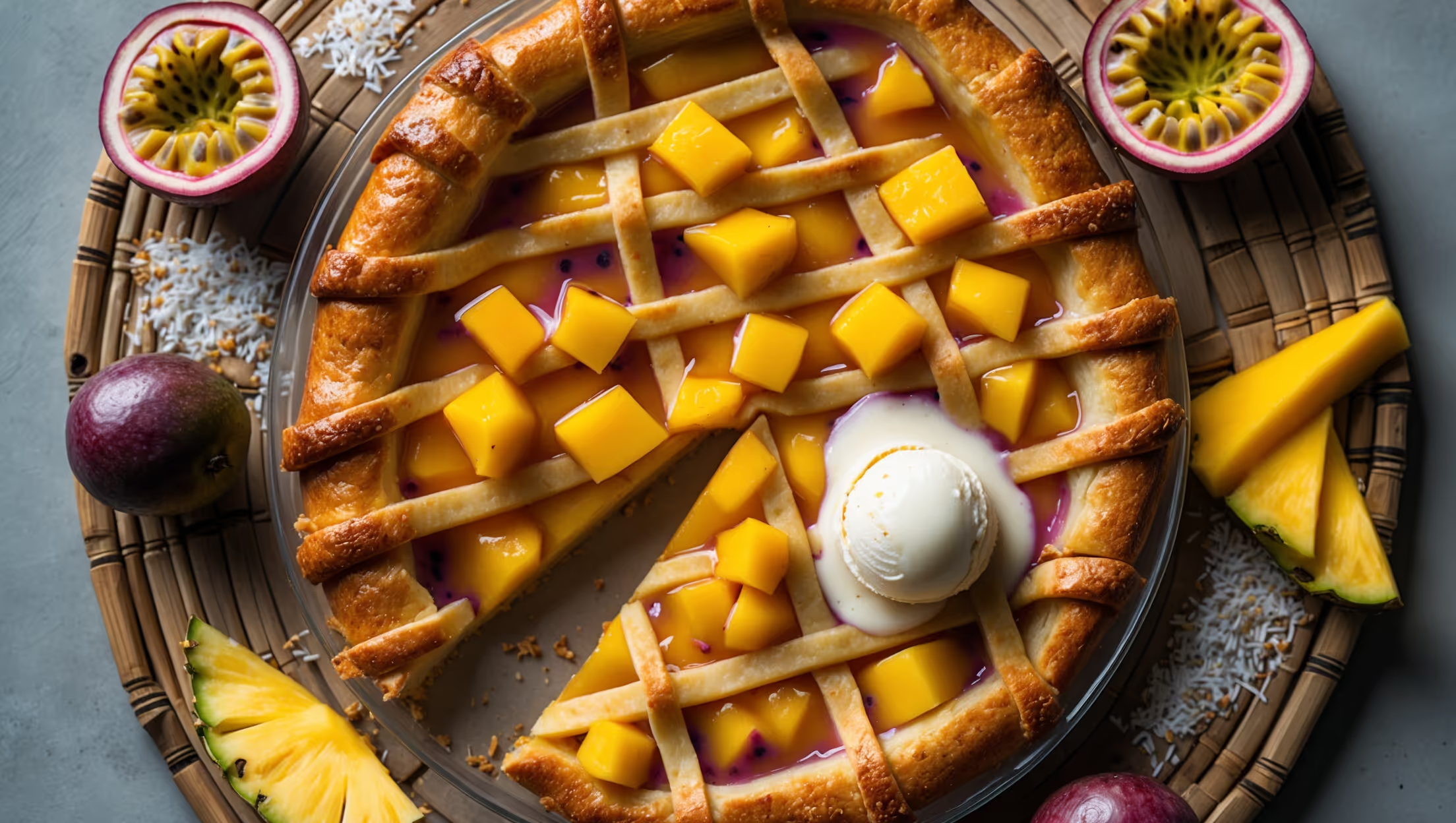
Directions
<ol class="no-list-style"><li class="MethodStepper"><h4 class="step-title">Step 1</h4>Make the pastry by placing the flour, salt, and sugar in a large bowl and whisking to combine. Add the cold cubed butter and work it into the flour using your fingertips or a pastry cutter until the mixture resembles coarse breadcrumbs with some pea-sized butter pieces remaining (these butter pockets create flaky layers in your crust). Gradually add the beaten egg and just enough ice water to bind the dough together without making it sticky. Cold ingredients are crucial here as they prevent the butter from melting before baking, which is essential for a flaky texture.</li><li class="MethodStepper"><h4 class="step-title">Step 2</h4>Divide the dough into two portions, one slightly larger (about 60%) for the bottom crust and a smaller portion (about 40%) for the lattice top. Form each into a disk, wrap in plastic wrap, and refrigerate for at least 1 hour or up to 2 days. This resting period allows the gluten to relax, preventing a tough crust, and keeps the butter cold.</li><li class="MethodStepper"><h4 class="step-title">Step 3</h4>While the dough chills, prepare your filling. In a medium saucepan, combine the diced mango, pineapple, passion fruit pulp, sugar, cornstarch, lime juice, vanilla, and salt. Stir well to coat the fruit with cornstarch. Cook over medium heat for 5-7 minutes, stirring frequently until the mixture begins to bubble and thicken. Pre-cooking the filling ensures the perfect consistency and prevents a soggy bottom crust. Remove from heat and let cool completely to room temperature.</li><li class="MethodStepper"><h4 class="step-title">Step 4</h4>Preheat your oven to 190°C (375°F) with a rack in the lower third position. Remove the larger disk of dough from the refrigerator and let it sit for 5-10 minutes to become more pliable. On a lightly floured surface, roll the dough into a circle about 30cm (12 inches) in diameter and 3-4mm thick. Transfer the dough to your pie dish by gently folding it in quarters, placing the point in the center of the dish, and unfolding. Press it gently into the bottom and sides, leaving some overhang. Return to the refrigerator while you prepare the lattice.</li><li class="MethodStepper"><h4 class="step-title">Step 5</h4>Roll out the smaller disk of dough to a similar thickness and cut into 2.5cm (1-inch) strips for the lattice. You'll need approximately 10-12 strips. For a classic lattice, place half the strips parallel on a piece of parchment paper, then weave the remaining strips perpendicular, lifting alternating strips to create the over-under pattern. Refrigerate the lattice for 15 minutes if it becomes too soft.</li><li class="MethodStepper"><h4 class="step-title">Step 6</h4>Remove the pie shell from the refrigerator and pour in the cooled filling, spreading it evenly. Carefully transfer the lattice top over the filling (or arrange the strips directly on the pie). Trim any excess dough from both the bottom crust and lattice, leaving about 1cm overhang. Fold the overhang under itself and crimp or flute the edges decoratively to seal.</li><li class="MethodStepper"><h4 class="step-title">Step 7</h4>Brush the lattice and crimped edges with egg wash (this creates that beautiful golden shine during baking) and sprinkle with demerara sugar for extra crunch and sparkle. The sugar also helps caramelize the crust for added flavor complexity.</li><li class="MethodStepper"><h4 class="step-title">Step 8</h4>Place the pie on a baking sheet to catch any potential overflow and bake for 20 minutes at 190°C. Then reduce the temperature to 175°C (350°F) and continue baking for 30-35 minutes more, until the crust is deeply golden and the filling is bubbling in the center. If the edges brown too quickly, shield them with aluminum foil. The temperature reduction allows the filling to cook through while preventing the crust from burning.</li><li class="MethodStepper"><h4 class="step-title">Step 9</h4>During the last 5 minutes of baking, sprinkle the toasted coconut flakes over the lattice top. Remove from the oven and place on a cooling rack. Allow the pie to cool completely for at least 4 hours before slicing. This cooling period is crucial as it allows the filling to set to the perfect consistency for clean slices.</li><li class="MethodStepper"><h4 class="step-title">Step 10</h4>Serve at room temperature or slightly warm with a scoop of vanilla ice cream or coconut sorbet if desired. The pie will keep at room temperature, loosely covered, for 2 days, or refrigerated for up to 5 days. For the best texture, bring refrigerated slices to room temperature before serving.</li></ol>