Directions
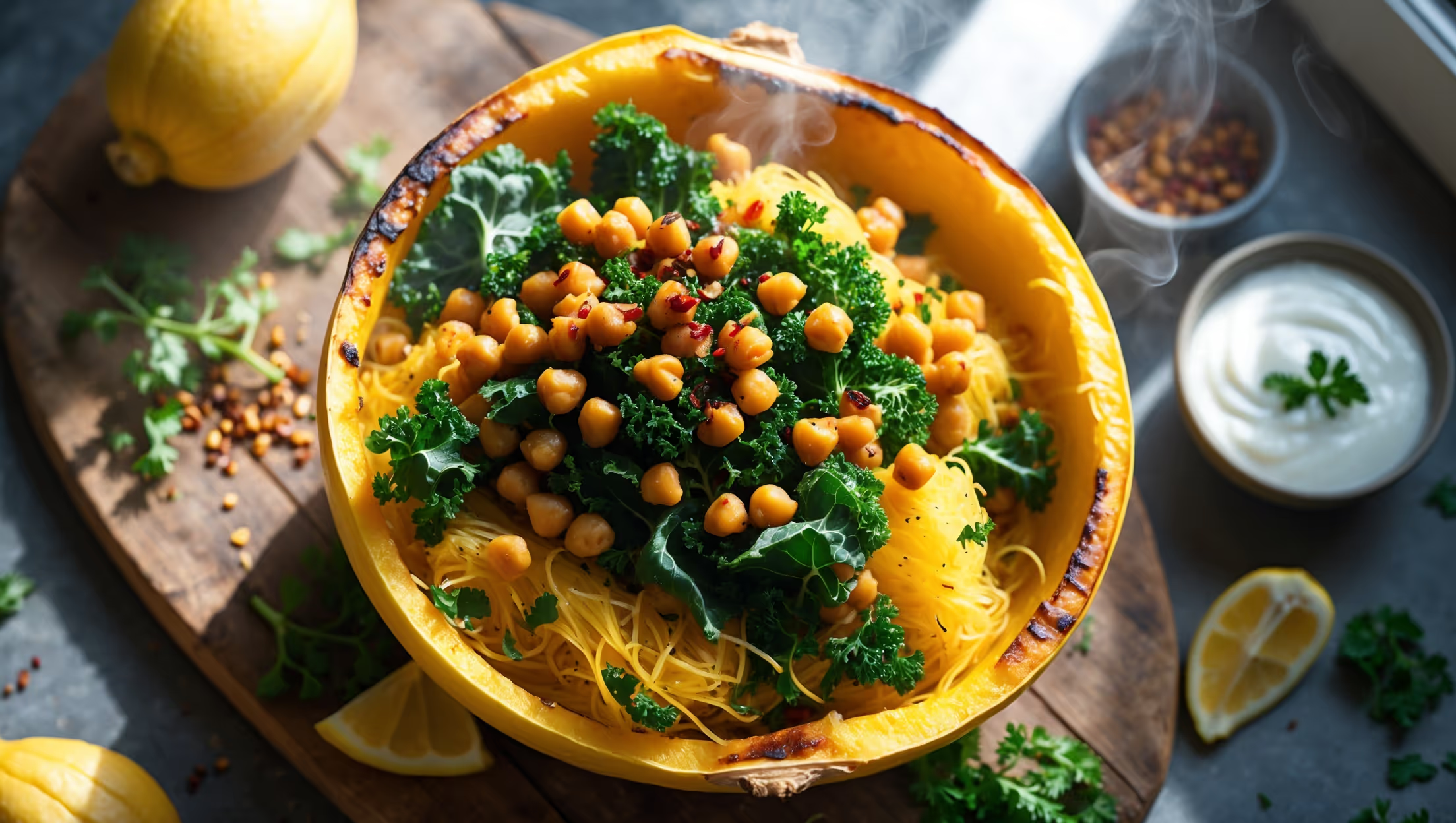
<ol class="no-list-style"> <li class="MethodStepper"> <h4 class="step-title">Step 1</h4> Preheat your oven to 190°C. Line a baking sheet with parchment paper. Using a sharp knife, carefully cut the spaghetti squash in half lengthwise. This can be challenging, so work slowly and with caution - you might find it helpful to microwave the whole squash for 3-4 minutes first to soften it slightly. </li> <li class="MethodStepper"> <h4 class="step-title">Step 2</h4> Scoop out and discard the seeds from the squash. Brush the cut sides with 1 tablespoon of olive oil and season generously with salt and pepper. Place the squash halves cut-side down on the prepared baking sheet. This position allows steam to help cook the squash evenly and prevents the strands from drying out. </li> <li class="MethodStepper"> <h4 class="step-title">Step 3</h4> Roast the squash for 35-45 minutes until the flesh is tender when pierced with a fork. The exact time will depend on the size of your squash - smaller ones may need only 30 minutes, while larger ones could need up to 50 minutes. You want the flesh to be tender but not mushy. </li> <li class="MethodStepper"> <h4 class="step-title">Step 4</h4> While the squash is roasting, heat the remaining 2 tablespoons of olive oil in a large skillet over medium heat. Add the onion and cook for 5-6 minutes until softened and translucent. Add the garlic and cook for another 30 seconds until fragrant, being careful not to burn it. </li> <li class="MethodStepper"> <h4 class="step-title">Step 5</h4> Add the chickpeas to the skillet, along with the cumin and smoked paprika. Cook for about 5 minutes, stirring occasionally, until the chickpeas begin to turn golden and crisp around the edges. The spices will become aromatic as they toast slightly, enhancing their flavor. </li> <li class="MethodStepper"> <h4 class="step-title">Step 6</h4> Add the chopped kale to the skillet and cook, stirring frequently, for 2-3 minutes until it begins to wilt. If the pan seems dry, you can add a tablespoon of water to help the kale steam. Season with salt, pepper, and chili flakes if using. </li> <li class="MethodStepper"> <h4 class="step-title">Step 7</h4> When the squash is done, remove it from the oven and let it cool slightly. Using a fork, gently scrape the flesh from the skin in a circular motion to create long, spaghetti-like strands. The strands should come away easily if the squash is properly cooked. </li> <li class="MethodStepper"> <h4 class="step-title">Step 8</h4> Add the spaghetti squash strands to the skillet with the chickpea and kale mixture. Gently toss everything together until well combined. The heat from the mixture will help any residual moisture in the squash evaporate, preventing a soggy final dish. </li> <li class="MethodStepper"> <h4 class="step-title">Step 9</h4> Stir in the lemon zest and juice, which will brighten all the flavors. Taste and adjust the seasoning as needed. If the mixture seems too dry, you can add a little more olive oil. </li> <li class="MethodStepper"> <h4 class="step-title">Step 10</h4> Serve the spaghetti squash mixture warm, garnished with crumbled feta cheese (if using) and fresh parsley. For a beautiful presentation, you can also serve the mixture directly in the hollowed squash shells. The dish is delicious on its own, or you can serve it with a side of Greek yogurt mixed with a little lemon juice and garlic as a cooling accompaniment. </li> </ol>