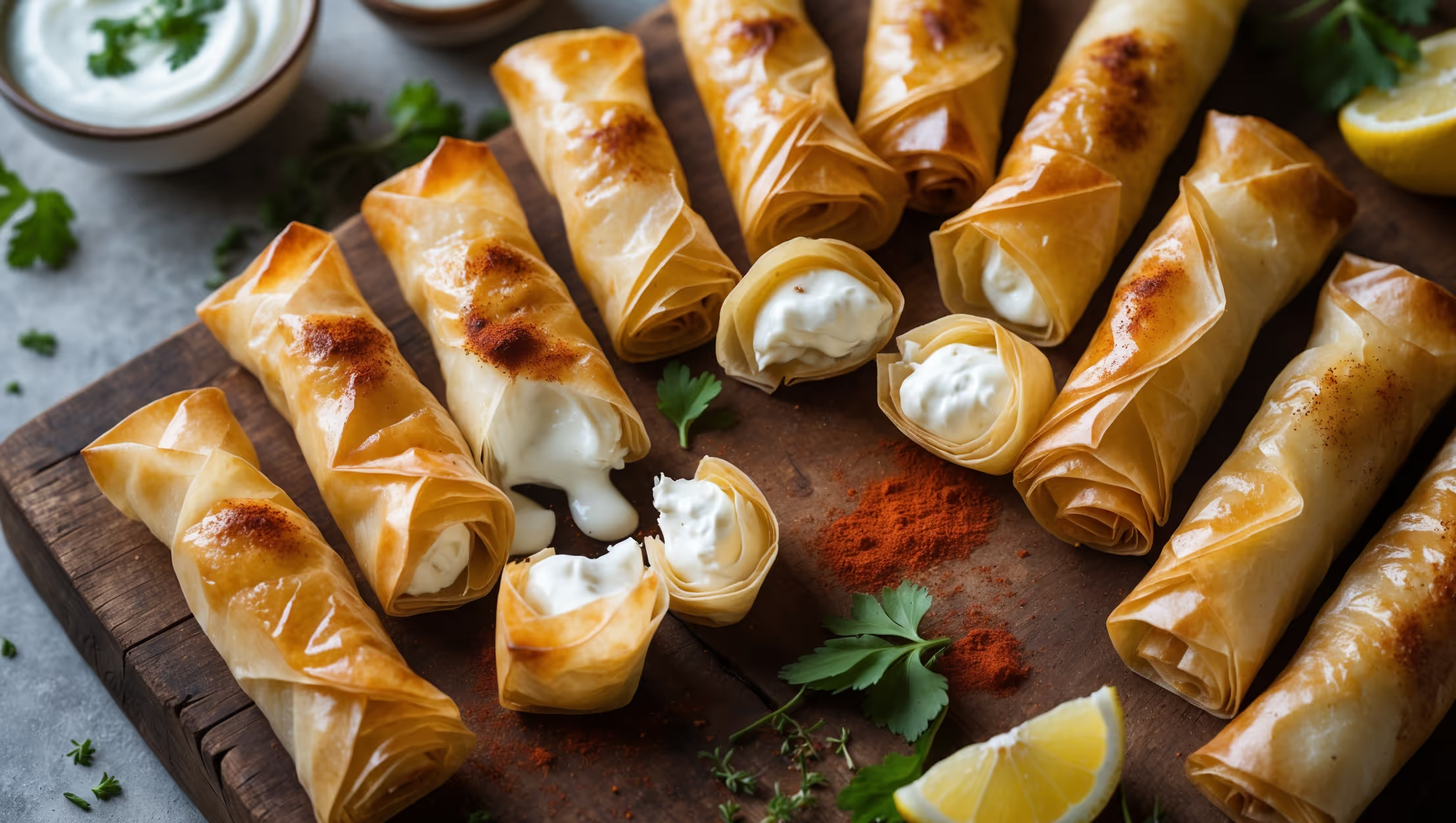
Directions
<ol class="no-list-style"> <li class="MethodStepper"> <h4 class="step-title">Step 1</h4> Prepare the cheese filling by combining the crumbled feta, grated kashar cheese (or mozzarella), chopped dill, parsley, spring onions, dried mint and black pepper in a medium bowl. Mix thoroughly until all ingredients are evenly distributed. The herbs should be very finely chopped to ensure they blend seamlessly with the cheese. </li> <li class="MethodStepper"> <h4 class="step-title">Step 2</h4> Carefully remove the phyllo pastry from its packaging and immediately cover with a slightly damp clean kitchen towel to prevent it from drying out. Phyllo dries extremely quickly, so always keep sheets covered when not actively working with them. </li> <li class="MethodStepper"> <h4 class="step-title">Step 3</h4> Take one sheet of phyllo and place it on a clean work surface with the long edge facing you. Cut the sheet into three equal strips lengthwise, creating three long rectangles. Cover the remaining phyllo sheets with the damp cloth. </li> <li class="MethodStepper"> <h4 class="step-title">Step 4</h4> Brush each strip lightly with olive oil using a pastry brush. The oil helps create those crispy, flaky layers during frying and aids the browning process. Don't oversaturate – a light coating is sufficient. </li> <li class="MethodStepper"> <h4 class="step-title">Step 5</h4> Place about 1 tablespoon of the cheese filling at the bottom end of each strip, leaving a small border of about 1 cm on all sides. The filling should be compact enough to roll but not so much that it bursts through the pastry. </li> <li class="MethodStepper"> <h4 class="step-title">Step 6</h4> Fold the bottom corners over the filling to cover it, then continue rolling the strip upward like a cigar, maintaining a tight, even pressure. When you reach the end, brush the edges with beaten egg and seal securely. The egg acts as an excellent edible glue that prevents the rolls from opening during frying. </li> <li class="MethodStepper"> <h4 class="step-title">Step 7</h4> Repeat the process with the remaining phyllo sheets and filling. Arrange the prepared rolls on a tray without overlapping and keep covered with a clean kitchen towel to prevent drying while you complete rolling all böreği. </li> <li class="MethodStepper"> <h4 class="step-title">Step 8</h4> Heat the vegetable oil in a deep frying pan or pot to 180°C. It's important to maintain this temperature throughout cooking - too hot and the böreği will brown too quickly without cooking through; too cool and they'll absorb excess oil and become greasy. </li> <li class="MethodStepper"> <h4 class="step-title">Step 9</h4> Carefully place 4-5 rolls into the hot oil, being careful not to overcrowd the pan. Fry for 2-3 minutes, turning occasionally, until they're evenly golden-brown all over. The böreği should sizzle gently when added to the oil - a vigorous bubbling indicates the oil is too hot. </li> <li class="MethodStepper"> <h4 class="step-title">Step 10</h4> Remove the fried böreği with a slotted spoon and transfer to a plate lined with paper towels to absorb excess oil. Allow them to cool slightly before serving - the filling will be extremely hot immediately after frying. </li> <li class="MethodStepper"> <h4 class="step-title">Step 11</h4> Serve warm while the exterior is still crispy and the cheese filling is soft and melty. These are traditionally enjoyed with a side of plain yogurt or cacık (Turkish yogurt with cucumber and herbs). They're best eaten fresh but can be reheated in a 180°C oven for 5-7 minutes to restore crispness. </li> </ol>