Pear Pie Recipe

Tender, spiced pear slices nestled in a buttery, flaky crust with hints of cinnamon and nutmeg create a comforting dessert that celebrates the delicate sweetness of ripe pears.
Difficulty:
Intermediate
Prep Time:
45 mins
Cook Time:
55 mins
Serves:
1 pie (8 slices)
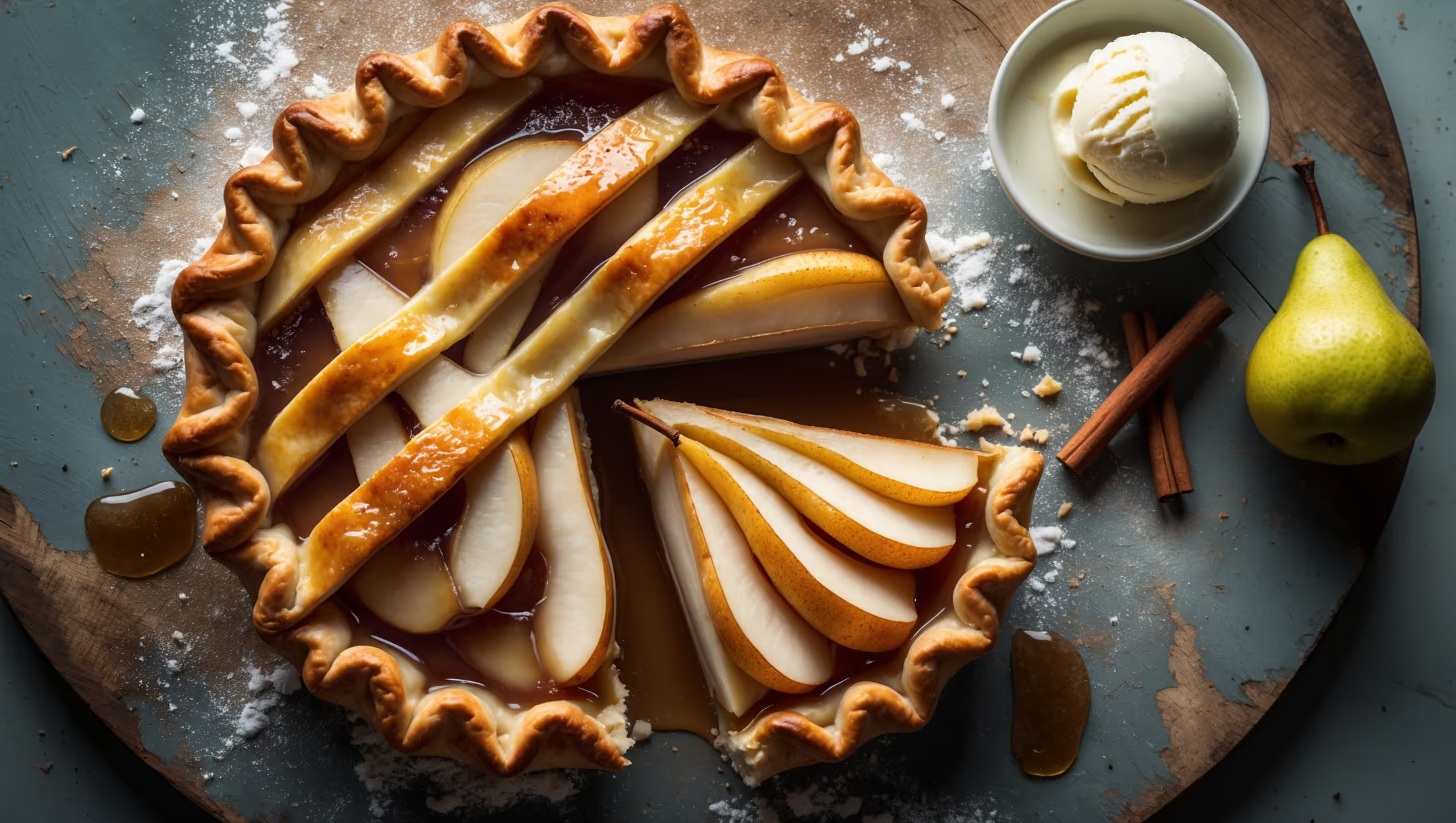
An overhead shot of a golden-brown pear pie with a lattice top crust, where juices bubble through the gaps creating caramelized spots. A slice has been removed, revealing perfectly cooked pear slices glistening with spiced syrup. The pie rests on a weathered wooden board dusted with flour, captured in soft natural light that highlights the flaky texture of the pastry. A small bowl of vanilla ice cream melts slowly beside it, while a few fresh pears and cinnamon sticks are artfully scattered nearby, hinting at the key ingredients.

Ingredients

<ul class="ingredients-main-list"><li class="ingredients-single-item">For the crust:</li><li class="ingredients-single-item">300g all-purpose flour</li><li class="ingredients-single-item">200g unsalted butter, very cold and cubed</li><li class="ingredients-single-item">1 tbsp granulated sugar</li><li class="ingredients-single-item">1 tsp salt</li><li class="ingredients-single-item">80-100ml ice-cold water</li><li class="ingredients-single-item">1 tbsp apple cider vinegar (helps tenderize the crust)</li><li class="ingredients-single-item">For the filling:</li><li class="ingredients-single-item">1kg firm but ripe pears (Bosc or Anjou work best)</li><li class="ingredients-single-item">100g granulated sugar</li><li class="ingredients-single-item">50g light brown sugar</li><li class="ingredients-single-item">3 tbsp cornstarch</li><li class="ingredients-single-item">1 tsp ground cinnamon</li><li class="ingredients-single-item">1/4 tsp ground nutmeg</li><li class="ingredients-single-item">1/4 tsp ground ginger</li><li class="ingredients-single-item">1 tbsp lemon juice</li><li class="ingredients-single-item">1 tsp vanilla extract</li><li class="ingredients-single-item">25g unsalted butter, cut into small pieces</li><li class="ingredients-single-item">For finishing:</li><li class="ingredients-single-item">1 egg, beaten with 1 tbsp water</li><li class="ingredients-single-item">2 tbsp demerara sugar (or granulated sugar)</li></ul>

Equipment

<ul class="equipment-main-list"><li class="equipment-single-item">23cm (9-inch) pie dish</li><li class="equipment-single-item">Rolling pin</li><li class="equipment-single-item">Pastry cutter or food processor</li><li class="equipment-single-item">Pastry wheel or sharp knife (for lattice)</li><li class="equipment-single-item">Baking sheet</li><li class="equipment-single-item">Pie weights or dried beans</li></ul>
BAKE SMARTER

Kitchen Converter

Quickly switch between common baking units without leaving the recipe.

Convert
Result—

Volume uses US cups, tablespoons, and teaspoons. Converting weight to volume depends on the ingredient.

Directions

<ol class="no-list-style"><li class="MethodStepper"><h4 class="step-title">Step 1</h4>Start by making the pie crust. In a large bowl or food processor, combine the flour, sugar, and salt. Add the cold cubed butter and pulse or use a pastry cutter to incorporate until the mixture resembles coarse crumbs with pea-sized pieces of butter still visible. These butter pieces are crucial as they create steam pockets during baking, resulting in flaky layers.</li><li class="MethodStepper"><h4 class="step-title">Step 2</h4>Mix the ice water and apple cider vinegar together. Drizzle this liquid into the flour mixture 1 tablespoon at a time, mixing gently until the dough just begins to come together. You may not need all the liquid - stop when the dough holds together when pinched. Divide the dough into two equal portions, shape into discs, wrap in plastic, and refrigerate for at least 1 hour or up to overnight. Cold dough is essential for a flaky crust.</li><li class="MethodStepper"><h4 class="step-title">Step 3</h4>While the dough chills, prepare the filling. Peel, core, and slice the pears into approximately 1cm thick slices. In a large bowl, gently toss the pear slices with both sugars, cornstarch, spices, lemon juice, and vanilla extract. Let sit for 15-20 minutes to allow the flavors to meld and the pears to release some of their juices.</li><li class="MethodStepper"><h4 class="step-title">Step 4</h4>Preheat your oven to 190°C (375°F) and place a baking sheet on the middle rack to heat up. On a lightly floured surface, roll out one disc of dough to about 3mm thickness and a diameter of roughly 30cm. Carefully transfer to your pie dish, gently pressing it into the corners without stretching the dough. Trim the edges leaving about 2cm overhang. Refrigerate while you prepare the lattice top.</li><li class="MethodStepper"><h4 class="step-title">Step 5</h4>Roll out the second disc of dough to the same thickness. Cut into strips approximately 2.5cm wide for a traditional lattice. For a perfect lattice, keep your strips cold by placing them on a parchment-lined baking sheet in the refrigerator while you assemble the pie.</li><li class="MethodStepper"><h4 class="step-title">Step 6</h4>Remove the pie shell from the refrigerator. Give the pear mixture one final gentle stir and transfer it to the pie shell, mounding slightly in the center. Dot the filling with the small pieces of butter – this enriches the filling and helps prevent it from becoming too watery.</li><li class="MethodStepper"><h4 class="step-title">Step 7</h4>Create the lattice top by laying half the strips in one direction across the pie, spacing them evenly. Fold back every other strip halfway, then place one strip perpendicular to them. Unfold the folded strips over the perpendicular strip. Now fold back the alternate strips and place another perpendicular strip. Continue this pattern to create a woven appearance. Trim and crimp the edges decoratively.</li><li class="MethodStepper"><h4 class="step-title">Step 8</h4>Brush the lattice top with the egg wash, making sure to get into all the crevices but avoiding puddles. Sprinkle generously with demerara sugar, which adds both sweetness and a delightful crunch to the finished pie.</li><li class="MethodStepper"><h4 class="step-title">Step 9</h4>Place the pie on the preheated baking sheet (this catches any drips and helps cook the bottom crust). Bake for 20 minutes at 190°C, then reduce the temperature to 175°C (350°F) and continue baking for 35-40 minutes more, or until the crust is deeply golden and the filling is bubbling vigorously. If the edges brown too quickly, cover them loosely with foil.</li><li class="MethodStepper"><h4 class="step-title">Step 10</h4>Allow the pie to cool completely on a wire rack for at least 3 hours before slicing. This cooling period is crucial for the filling to set properly. A warm pie might taste delicious but will be too runny to serve neatly. Serve at room temperature or slightly warm with a scoop of vanilla ice cream or a dollop of whipped cream. Your patience will be rewarded with perfect slices that showcase the beautiful layers of pears.</li></ol>
Nutrition Facts (per serving)

🍽️ Serving Size: 1 slice
🔥 Calories: 345 calories
🥑 Fat: 16 g
🧈 Saturated Fat: 8 g
🍞 Carbohydrates: 48 g
🍭 Sugar: 26 g
🍗 Protein: 3 g
🫀 Cholesterol: 75 mg
🧂 Sodium: 195 mg

Chef’s Notes

A few helpful details for making this recipe.

Which pear varieties work best for baking in a pie?

Bosc and Anjou pears are ideal for pie baking as they hold their shape well during cooking and don't turn mushy. Bartlett pears can work but tend to soften more. Avoid very ripe, soft pears as they'll break down too much in the baking process.

Why should I pre-cook pears slightly before adding them to the pie crust?

Pre-cooking pears slightly helps release excess moisture, ensuring your pie filling sets properly without a soggy bottom crust. This quick step also allows the spices to better infuse into the fruit and helps control the final texture of your filling.

What's the purpose of adding apple cider vinegar to pie crust dough?

Apple cider vinegar inhibits gluten formation, resulting in a more tender, flakier crust. It evaporates during baking leaving no vinegar taste, but its acidity helps prevent the dough from becoming tough while making it easier to work with and creating those desirable flaky layers.

Want to try something else in ...

More recipes you might like

Keep exploring with more recipes from What's Baking.