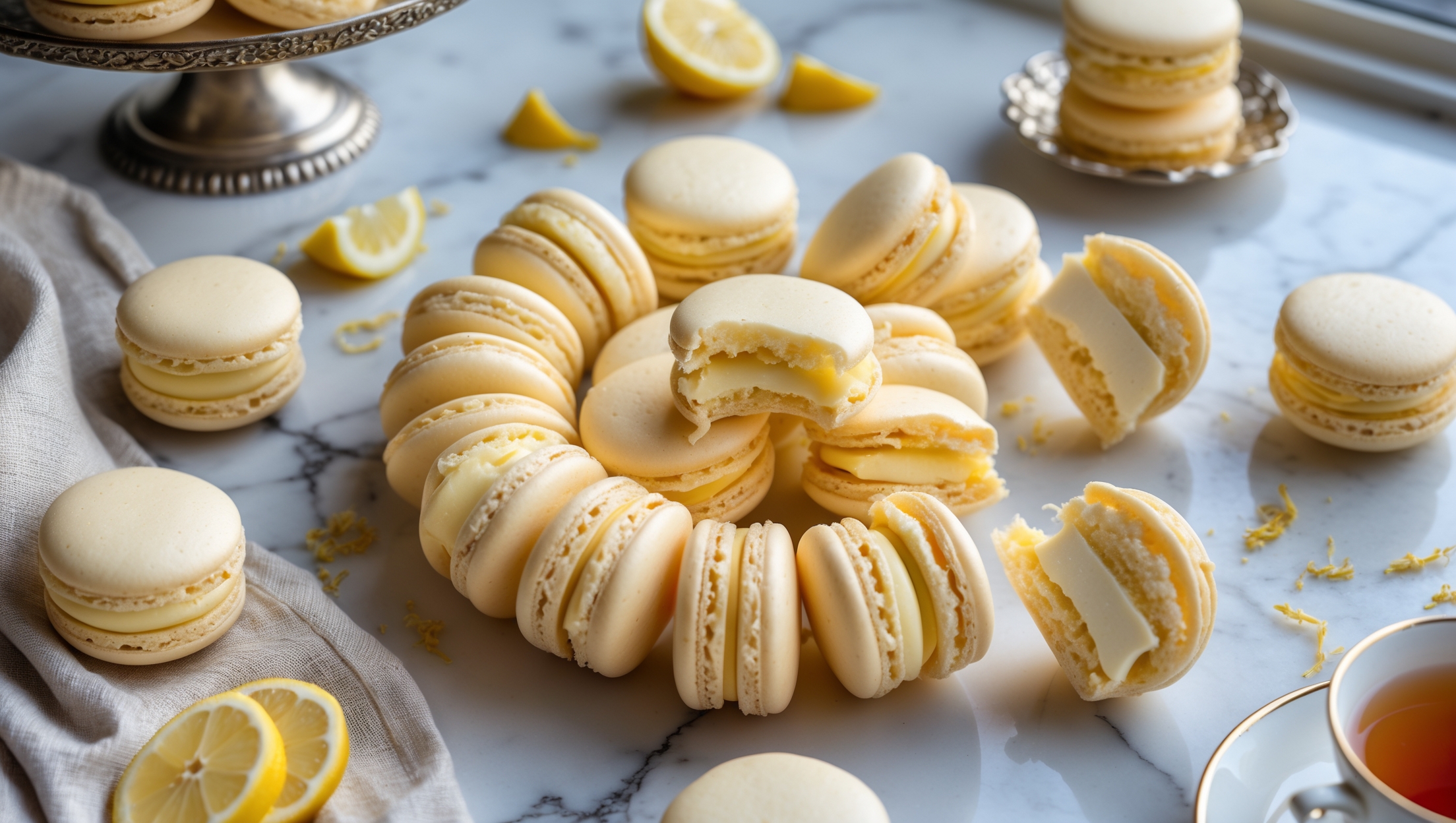
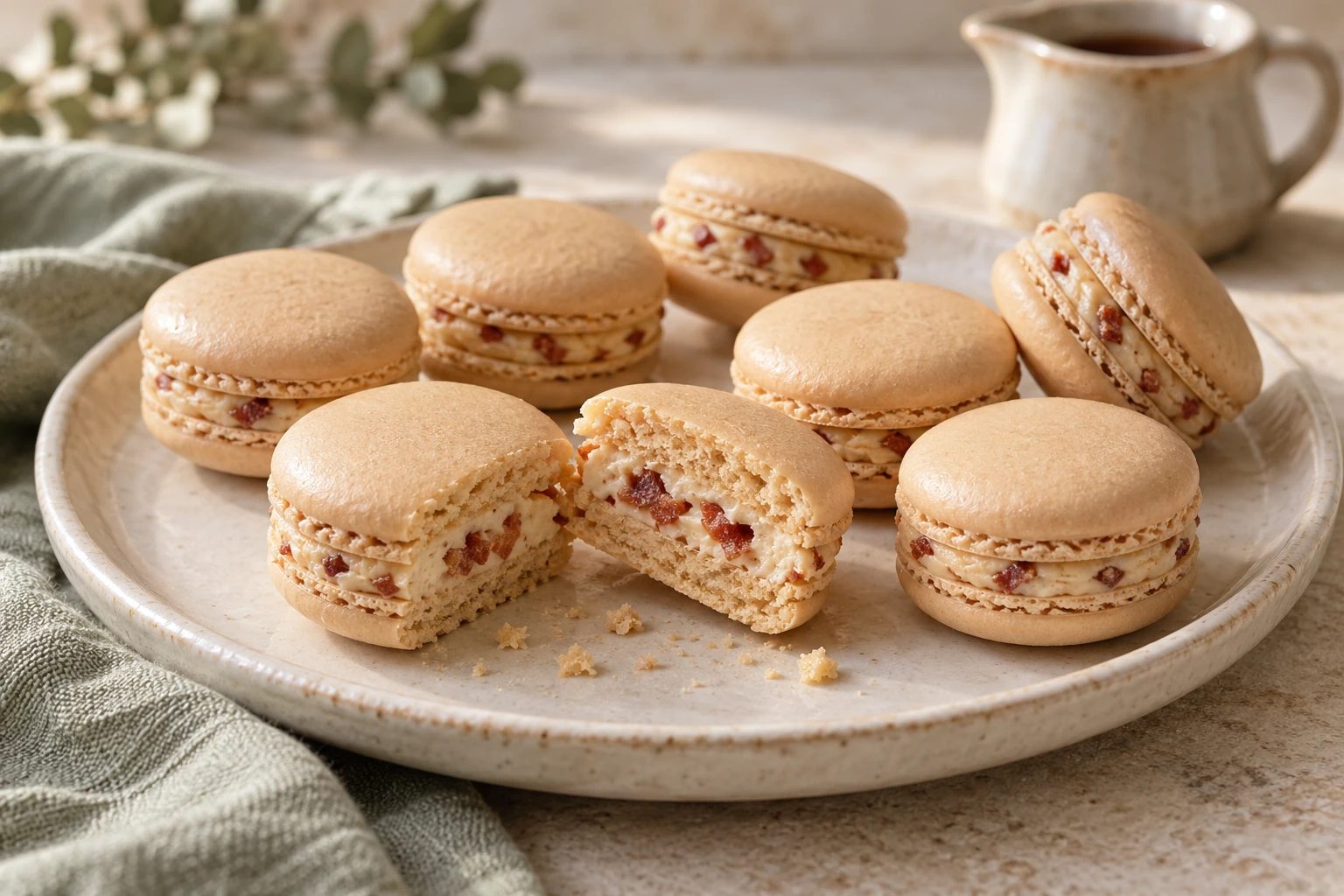
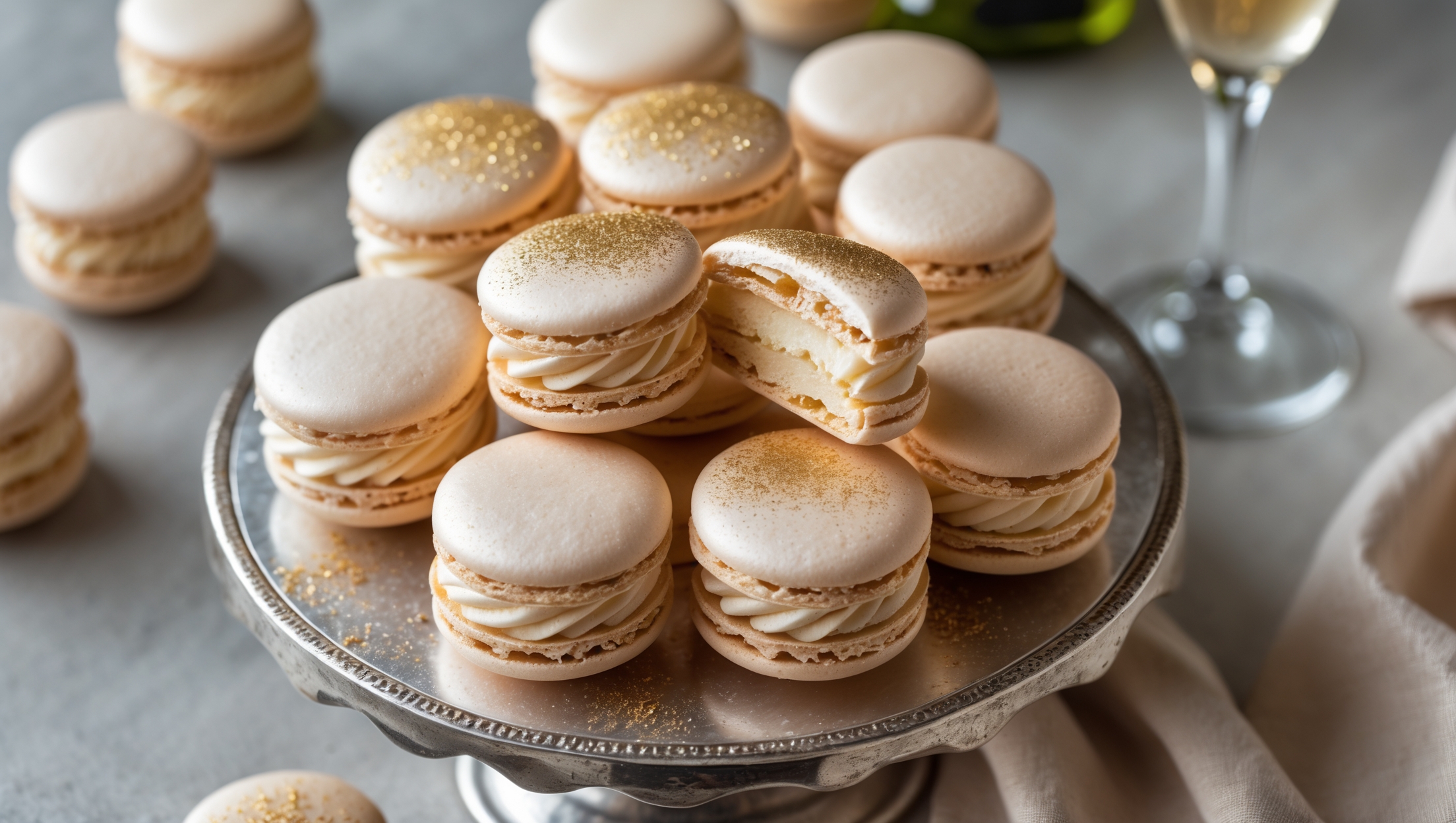
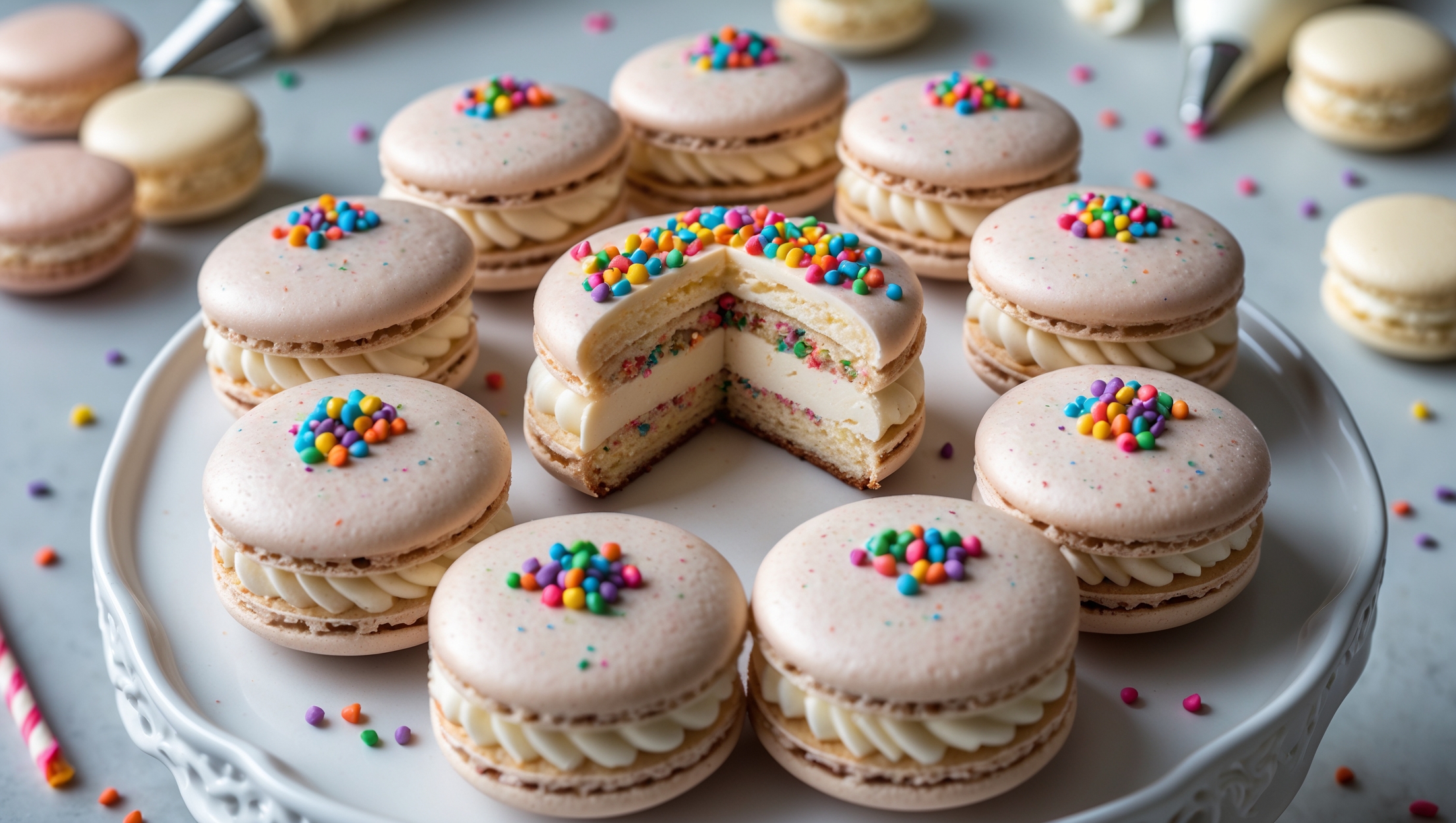
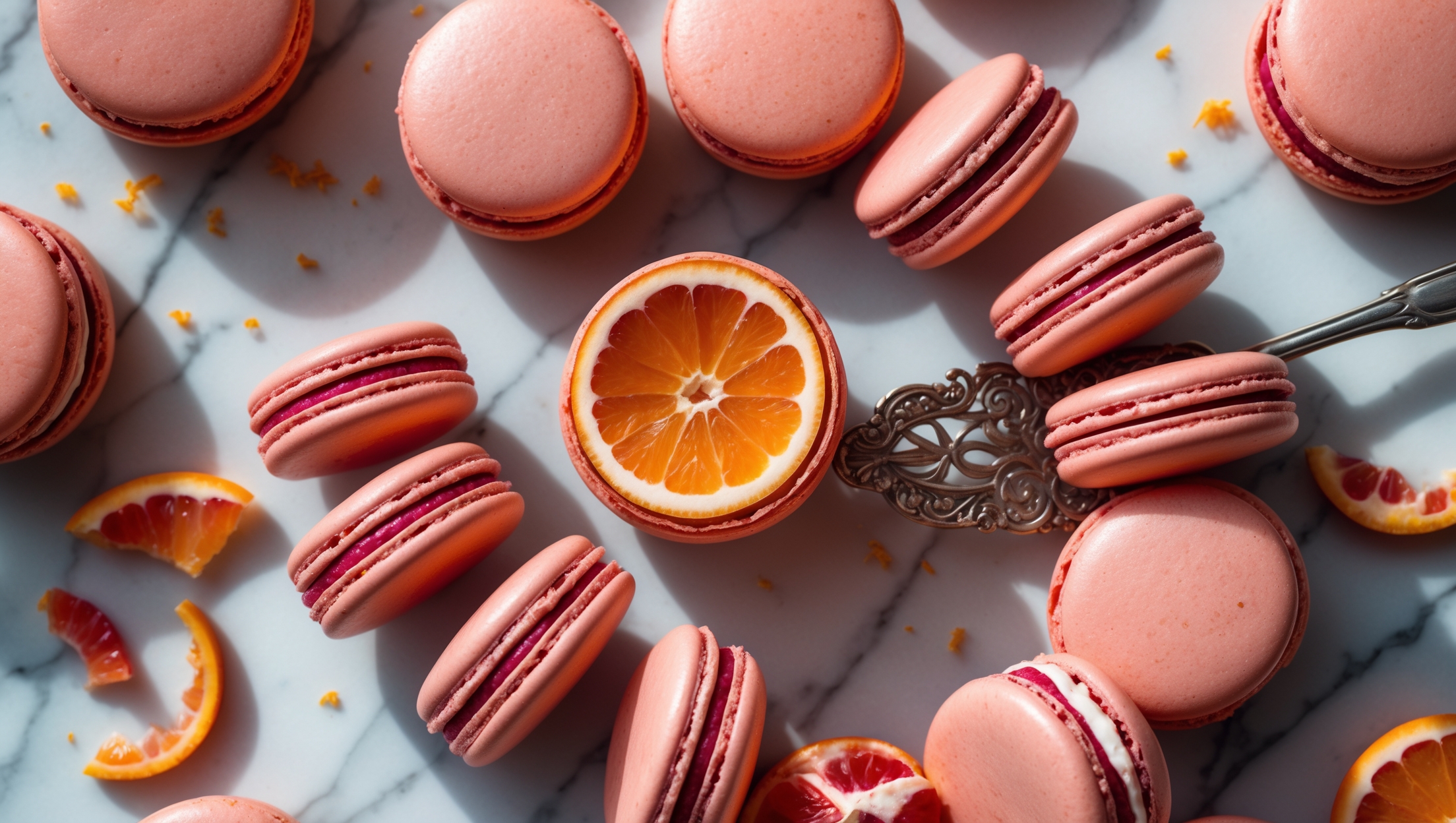
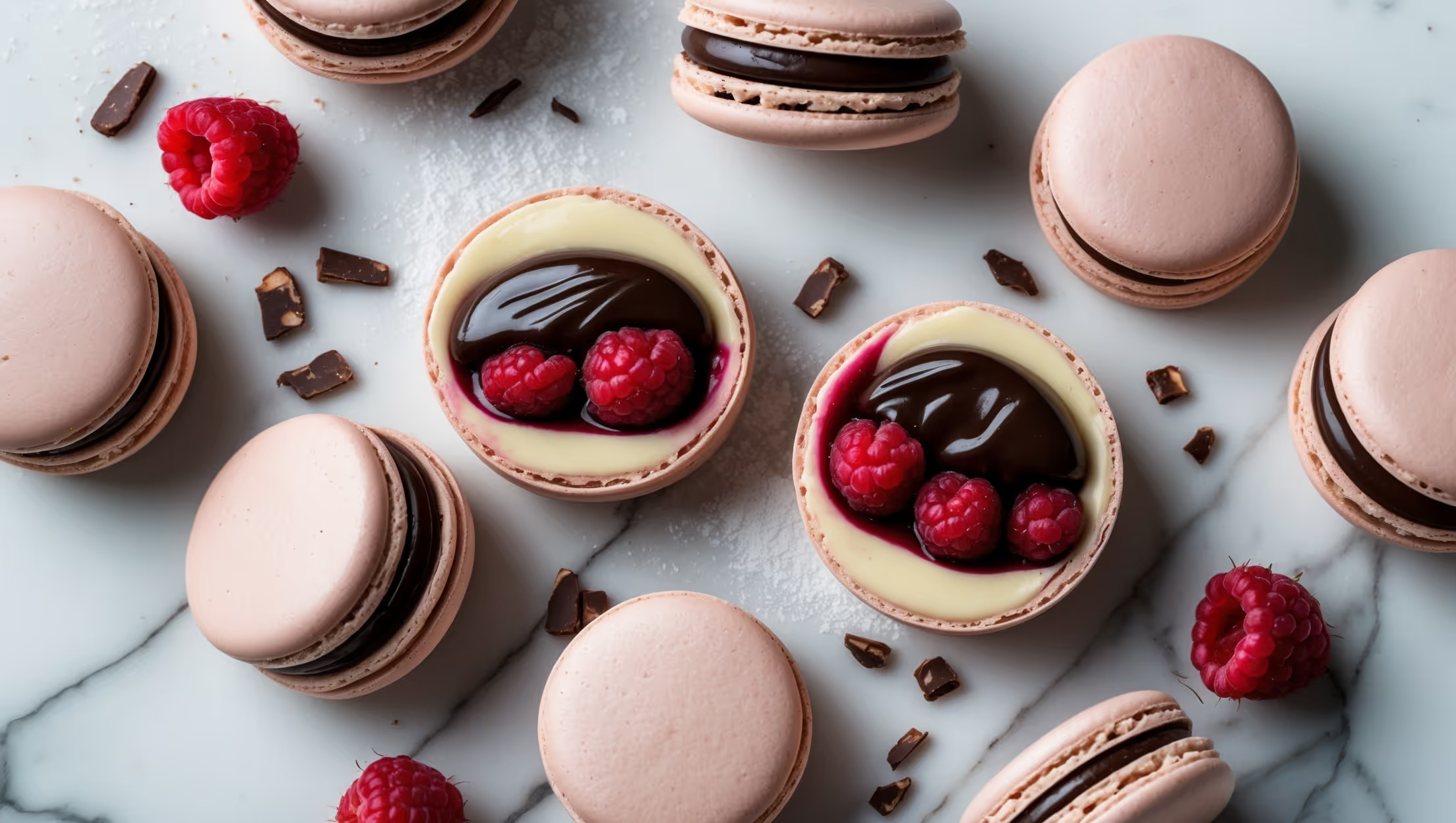
Directions
<ol class="no-list-style"> <li class="MethodStepper"> <h4 class="step-title">Step 1</h4> Begin by preparing your workspace and ingredients. Measure everything precisely as macarons require exact ratios. Sift the ground almonds and icing sugar together three times to ensure there are no lumps – this is crucial for smooth shells. Set aside. Line two baking sheets with silicone macaron mats or parchment paper with circles drawn on the reverse side as guides. </li> <li class="MethodStepper"> <h4 class="step-title">Step 2</h4> In a perfectly clean, grease-free bowl of your stand mixer, add the aged egg whites (aging removes excess moisture and helps create stable meringue). Begin whisking on medium speed until foamy, then add a pinch of salt which helps stabilize the protein structure. Gradually add the caster sugar, a tablespoon at a time, while continuing to whisk. </li> <li class="MethodStepper"> <h4 class="step-title">Step 3</h4> Increase the speed to high and whisk until you achieve stiff peaks – the meringue should be glossy and when you lift the whisk, peaks should stand straight without drooping. When nearly ready, add a small amount of yellow food coloring to represent the passion fruit. Be careful not to overbeat as this will cause dry, cracked shells. </li> <li class="MethodStepper"> <h4 class="step-title">Step 4</h4> Add the sifted almond and sugar mixture to the meringue. Using a flexible spatula, fold the mixture using the macaronage technique: press and spread the batter against the sides of the bowl, then scrape and fold back into the center. The correct consistency is reached when the batter flows like lava – if you draw a figure 8 with the batter, it should disappear within 10-15 seconds. Too thick will create peaked shells; too runny will result in spread, flat cookies. </li> <li class="MethodStepper"> <h4 class="step-title">Step 5</h4> Transfer the batter to a piping bag fitted with a round tip. Pipe 3-4cm circles onto your prepared baking sheets, holding the piping bag perpendicular to the surface. After piping, firmly tap the trays on the counter several times to release air bubbles which could cause cracks. Let the macarons rest at room temperature for 30-60 minutes until they form a dry skin – when touched lightly with your finger, no batter should stick. This resting period is essential for developing the characteristic "feet." </li> <li class="MethodStepper"> <h4 class="step-title">Step 6</h4> While the shells are resting, preheat your oven to 150°C (300°F). When ready, bake one tray at a time for 12-15 minutes. The macarons are done when they're firm to a gentle touch but haven't browned. If they still seem soft, bake for another minute but watch carefully as they can quickly become too dry. Allow to cool completely on the trays before attempting to remove them. </li> <li class="MethodStepper"> <h4 class="step-title">Step 7</h4> For the passion fruit filling, first make a curd base. In a small saucepan, whisk together the passion fruit pulp (with seeds for authenticity or strain if preferred), egg yolks, caster sugar, and cornflour. Cook over medium-low heat, stirring constantly, until the mixture thickens enough to coat the back of a spoon (around 82-85°C). Remove from heat, add 25g of the butter and stir until melted. Transfer to a bowl, cover with cling film touching the surface to prevent a skin forming, and refrigerate until completely cold. </li> <li class="MethodStepper"> <h4 class="step-title">Step 8</h4> To complete the filling, beat the remaining 50g of softened butter until pale and fluffy, then gradually add the sifted icing sugar in batches. Beat until light and creamy. Gradually incorporate the chilled passion fruit curd, beating well after each addition until smooth and well-combined. Transfer to a piping bag. </li> <li class="MethodStepper"> <h4 class="step-title">Step 9</h4> To assemble, match macaron shells of similar size. Pipe a generous amount of passion fruit filling onto one shell, then gently sandwich with another shell. Apply slight pressure and twist a little to spread the filling to the edges. For the best flavor and texture, place the filled macarons in an airtight container and refrigerate for 24 hours before serving – this "maturation" allows flavors to meld and the shells to soften slightly from the filling's moisture. Bring to room temperature for 30 minutes before serving. </li> </ol>