Directions
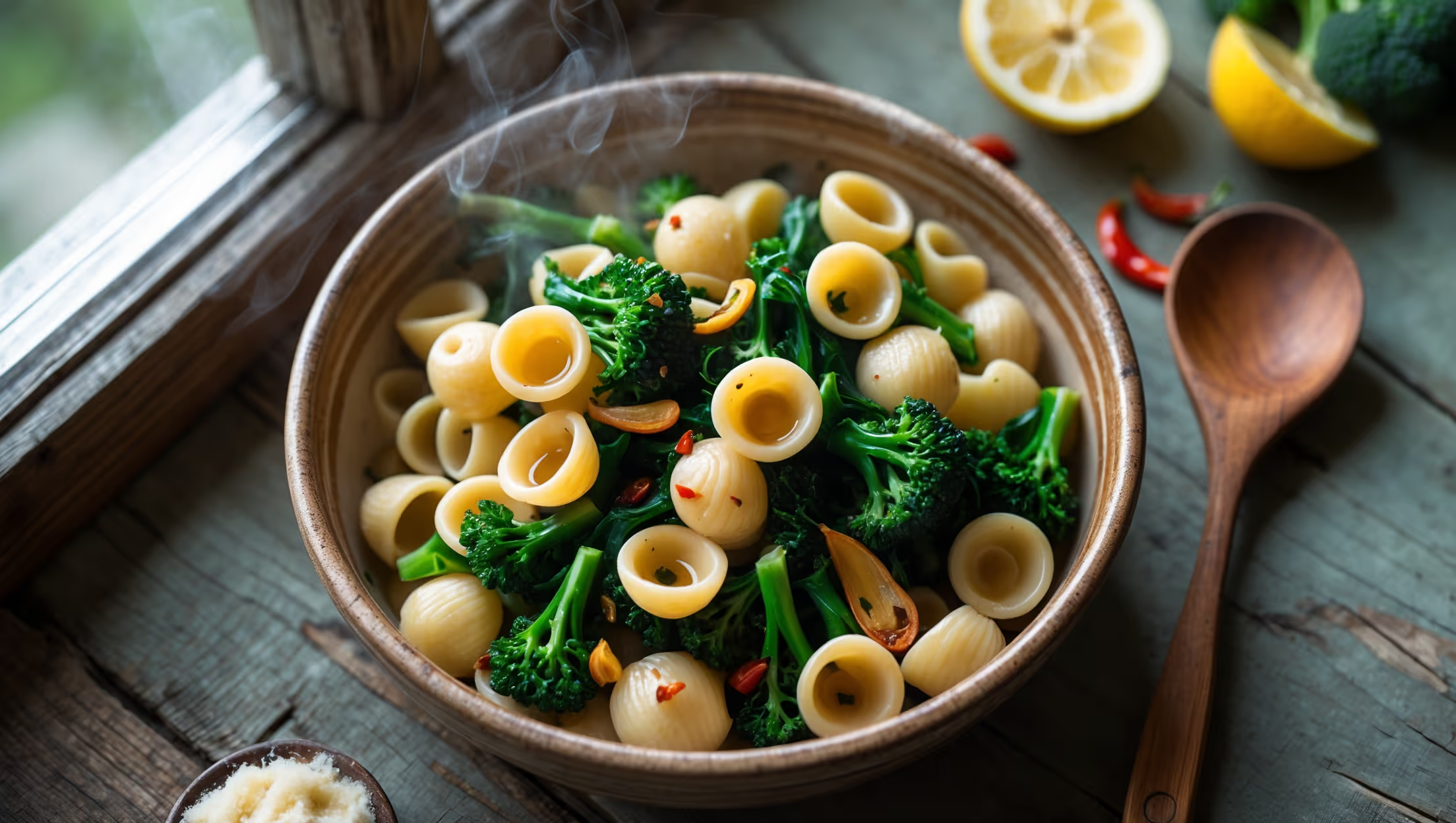
<ol class="no-list-style"><li class="MethodStepper"><h4 class="step-title">Step 1</h4>Bring a large pot of generously salted water to a rolling boil (the water should taste like the sea). This proper salting is crucial for flavoring the pasta from the inside out.</li><li class="MethodStepper"><h4 class="step-title">Step 2</h4>Add the broccoli rabe to the boiling water and blanch for 2 minutes until bright green and slightly tender. Using tongs or a slotted spoon, transfer the broccoli rabe to a colander, preserving all the pasta water. Run cold water over the broccoli rabe briefly to stop the cooking process and preserve its vibrant color.</li><li class="MethodStepper"><h4 class="step-title">Step 3</h4>Return the same pot of water to a boil and add the orecchiette pasta. Cook according to package instructions until al dente (usually 10-12 minutes for dried pasta). The pasta should have a slight resistance when bitten – this texture will hold up better when tossed with the sauce. Before draining, reserve about 240ml of the starchy pasta cooking water.</li><li class="MethodStepper"><h4 class="step-title">Step 4</h4>While the pasta cooks, heat the olive oil in a large skillet or sauté pan over medium heat. Add the sliced garlic and red pepper flakes, cooking gently for 2-3 minutes until the garlic is fragrant and just starting to turn golden (be careful not to let it brown too much as it will become bitter). The slow infusion of the oil with garlic and chili creates the aromatic base for your sauce.</li><li class="MethodStepper"><h4 class="step-title">Step 5</h4>Add the blanched broccoli rabe to the skillet with the garlic and stir to coat in the flavored oil. Season with a pinch of salt and pepper and cook for another 3-4 minutes until the broccoli rabe is tender but still has some bite. The slight bitterness of properly cooked broccoli rabe is essential to the authentic flavor of this dish.</li><li class="MethodStepper"><h4 class="step-title">Step 6</h4>Once the pasta is al dente, drain and immediately add it to the skillet with the broccoli rabe mixture. Add about 120ml of the reserved pasta water to start, then toss everything together vigorously. The starch in the pasta water will help create a silky sauce that clings to the pasta. Add more pasta water if needed to achieve the desired consistency.</li><li class="MethodStepper"><h4 class="step-title">Step 7</h4>Remove the skillet from heat and drizzle with fresh lemon juice for brightness. Add the grated Pecorino Romano and stir gently to incorporate. The residual heat will slightly melt the cheese, creating a subtle creaminess without making the dish heavy.</li><li class="MethodStepper"><h4 class="step-title">Step 8</h4>Taste and adjust seasoning with additional salt, pepper, or red pepper flakes as desired. The perfect balance should have a pleasant bitterness from the rabe, richness from the oil, sharpness from the cheese, and a gentle heat from the pepper flakes.</li><li class="MethodStepper"><h4 class="step-title">Step 9</h4>Serve immediately in warmed bowls, garnished with a little more freshly grated Pecorino Romano, a drizzle of your best olive oil, and a twist of black pepper. The unique ear-shaped orecchiette pasta will catch small pools of the flavorful sauce in their centers, creating the perfect bite every time.</li></ol>