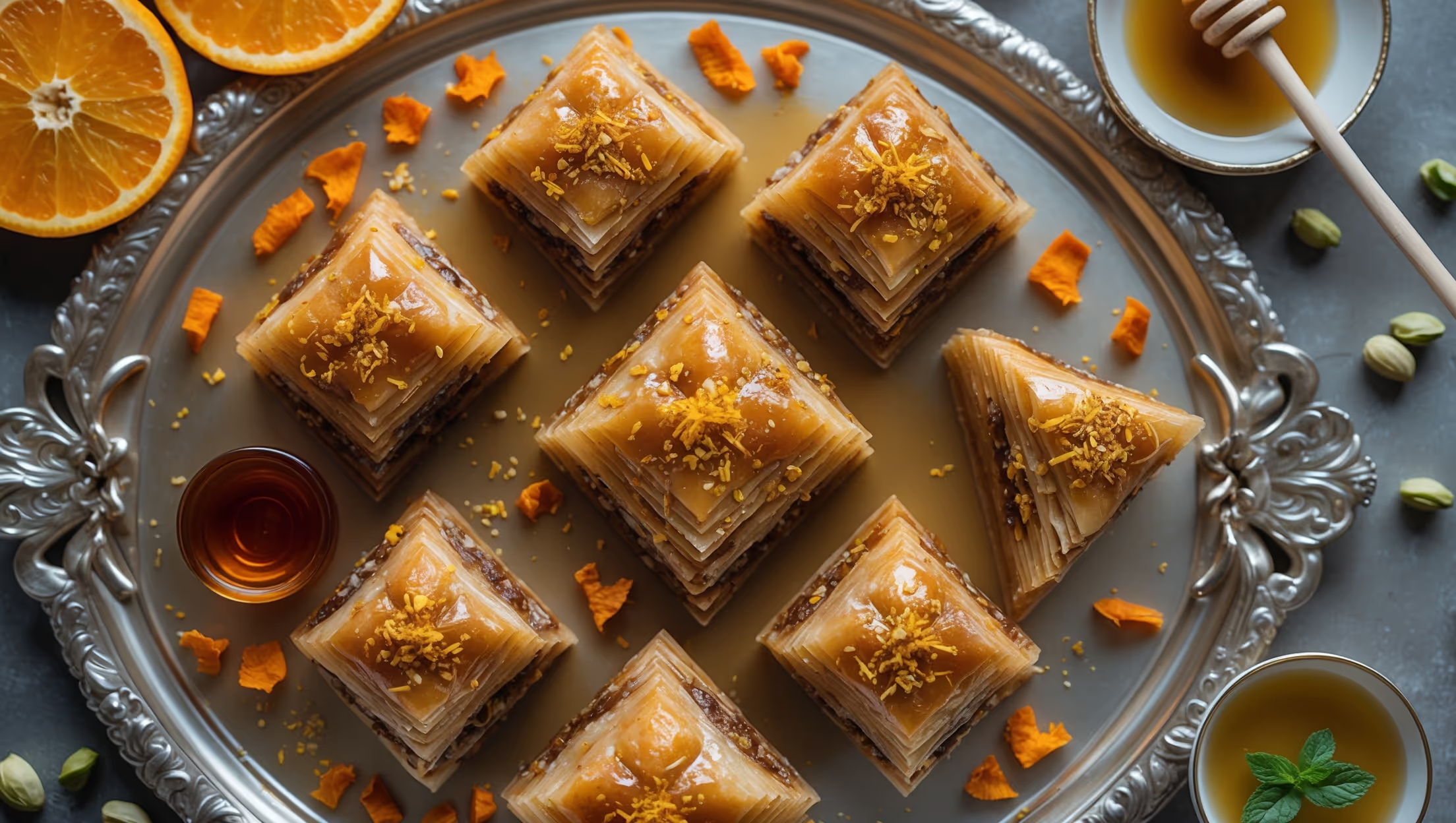
Directions
<ol class="no-list-style"><li class="MethodStepper"><h4 class="step-title">Step 1</h4>Remove the phyllo pastry from the refrigerator about 2 hours before starting to bring it to room temperature. Keep it covered with a slightly damp kitchen towel to prevent drying out. Preheat your oven to 180°C (350°F) and position a rack in the lower third of the oven.</li><li class="MethodStepper"><h4 class="step-title">Step 2</h4>Prepare the nut filling by combining all chopped nuts, sugar, cinnamon, cardamom, and orange zest in a large bowl. Mix thoroughly until well combined – this blend of spices with orange zest creates the distinctive aromatic base of your baklava. The varied texture of different nuts provides complexity both in flavor and bite.</li><li class="MethodStepper"><h4 class="step-title">Step 3</h4>Melt the butter and stir in 2 tablespoons of orange zest. The warm butter helps release the citrus oils from the zest, infusing the butter with bright orange flavor that will permeate through all the pastry layers.</li><li class="MethodStepper"><h4 class="step-title">Step 4</h4>Brush the bottom of your baking dish generously with the orange-infused butter. Carefully place a sheet of phyllo in the dish, then brush it lightly with butter. Repeat this process with 7 more sheets, brushing each with butter. This creates a sturdy base layer that will support the filling without becoming soggy.</li><li class="MethodStepper"><h4 class="step-title">Step 5</h4>Spread about one-third of the nut mixture evenly over the phyllo layers. Top with 2 sheets of phyllo, brushing each with butter. Add another third of nuts, then 2 more buttered phyllo sheets, and finally the remaining nuts.</li><li class="MethodStepper"><h4 class="step-title">Step 6</h4>Finish with 8-10 layers of phyllo on top, brushing each sheet with butter. The top layers should be particularly well-buttered to achieve a golden, flaky finish. Trim any overhanging edges with a sharp knife.</li><li class="MethodStepper"><h4 class="step-title">Step 7</h4>Using a very sharp knife, cut the unbaked baklava into diamond shapes by making diagonal cuts about 5cm apart in one direction, then crossing in the opposite direction. It's crucial to cut all the way to the bottom before baking – this allows the butter to flow through the cuts and ensures the syrup will properly penetrate later.</li><li class="MethodStepper"><h4 class="step-title">Step 8</h4>Bake in the preheated oven for 45-50 minutes, until the pastry is puffed and golden brown. The beautiful color development indicates caramelization of sugars in the phyllo, which adds depth of flavor.</li><li class="MethodStepper"><h4 class="step-title">Step 9</h4>While the baklava bakes, prepare the syrup. Combine sugar, water, honey, orange juice, cinnamon sticks, cloves, and orange peel in a saucepan. Bring to a boil, then reduce heat and simmer for about 15 minutes until slightly thickened. The syrup should coat the back of a spoon but remain pourable.</li><li class="MethodStepper"><h4 class="step-title">Step 10</h4>Remove the syrup from heat and stir in the orange blossom water. Allow to cool completely – the temperature difference between hot baklava and cool syrup is essential for proper absorption without sogginess.</li><li class="MethodStepper"><h4 class="step-title">Step 11</h4>When the baklava comes out of the oven, immediately pour the cooled syrup evenly over the hot pastry, making sure it flows into all the cuts. You'll hear a satisfying sizzle as the syrup hits the hot pastry. Let the baklava sit uncovered at room temperature for at least 6 hours, preferably overnight, to allow the syrup to be fully absorbed and the flavors to meld.</li><li class="MethodStepper"><h4 class="step-title">Step 12</h4>Once completely cool and set, re-cut along the lines to ensure clean pieces and serve at room temperature. Your Orange Blossom Baklava will keep well in an airtight container at room temperature for up to 2 weeks, with the flavors continuing to develop over the first few days.</li></ol>