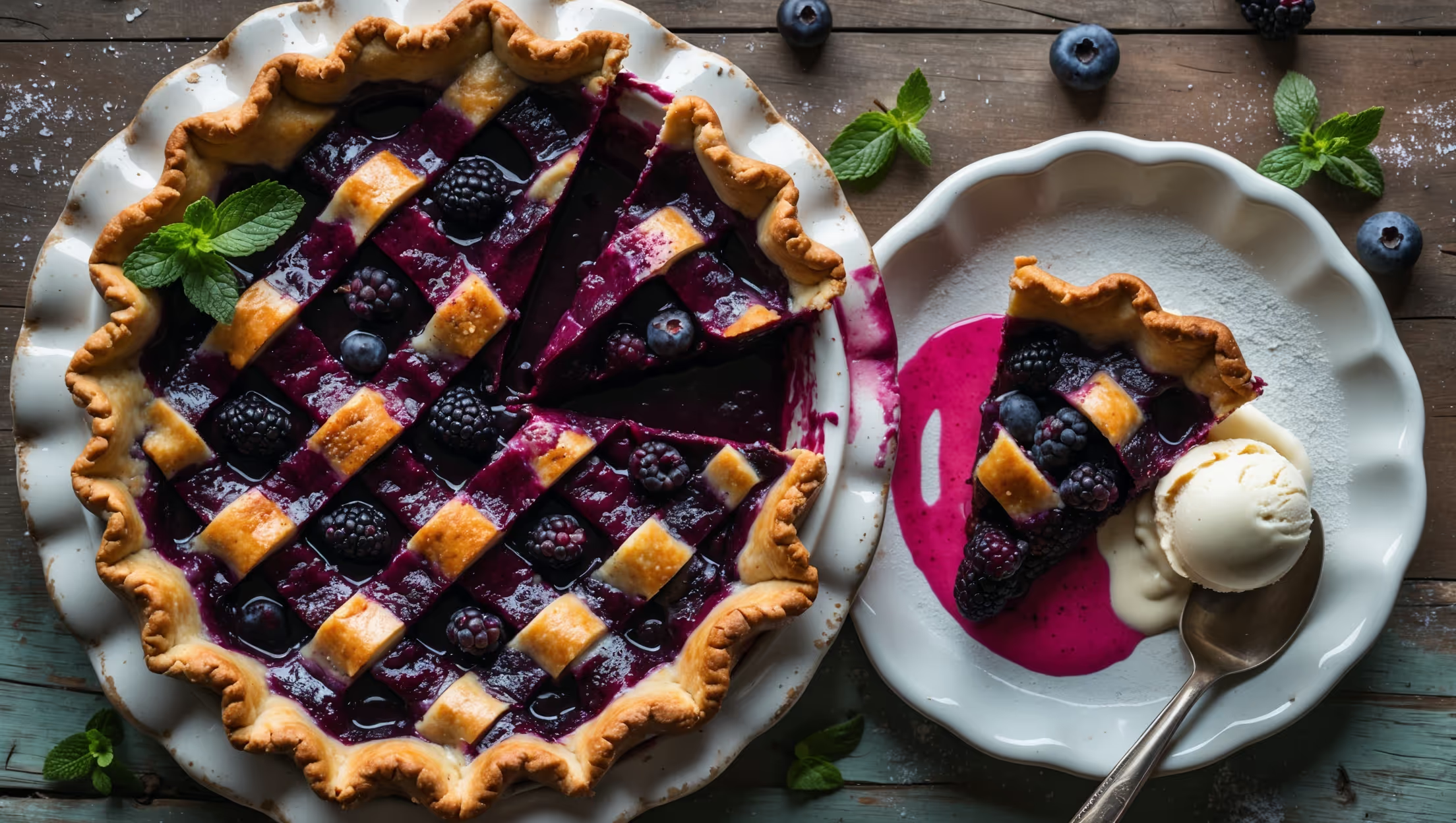
Directions
<ol class="no-list-style"> <li class="MethodStepper"> <h4 class="step-title">Step 1</h4> Begin by preparing the pie crust. In a large bowl or food processor, combine the flour, sugar, and salt. Add the cold cubed butter and pulse or cut in with a pastry cutter until the mixture resembles coarse crumbs with some pea-sized pieces remaining. The cold butter pieces create steam pockets during baking, resulting in those desirable flaky layers. </li> <li class="MethodStepper"> <h4 class="step-title">Step 2</h4> Mix the ice-cold water and apple cider vinegar together, then drizzle over the flour mixture, 1 tablespoon at a time, stirring with a fork until the dough just begins to come together. You may not need all the liquid – stop when the dough holds together when pinched. </li> <li class="MethodStepper"> <h4 class="step-title">Step 3</h4> Divide the dough into two equal portions, flatten into discs, wrap in plastic wrap, and refrigerate for at least 2 hours or overnight. This resting period is crucial as it allows the gluten to relax (preventing a tough crust) and the butter to firm up. </li> <li class="MethodStepper"> <h4 class="step-title">Step 4</h4> While the dough chills, prepare your filling. If using strawberries, hull and quarter them. Leave smaller berries like blueberries whole. In a large bowl, gently toss the berries with sugar, cornstarch, lemon juice, lemon zest, cinnamon, and salt. The cornstarch will thicken the juices released by the berries during baking, preventing a soggy bottom crust. </li> <li class="MethodStepper"> <h4 class="step-title">Step 5</h4> Preheat your oven to 200°C (400°F) and place a baking sheet in the oven to heat up. When ready to assemble, take one disc of dough from the refrigerator and roll it out on a lightly floured surface to about 3mm thickness and about 30cm in diameter. </li> <li class="MethodStepper"> <h4 class="step-title">Step 6</h4> Carefully transfer the rolled dough to your pie dish by draping it over your rolling pin. Press it gently into the corners without stretching the dough (which can cause shrinkage). Trim the edges leaving about 2cm overhang. </li> <li class="MethodStepper"> <h4 class="step-title">Step 7</h4> Pour the berry filling into the crust, mounding slightly in the center. Small gaps between the berries are good – they'll fill with thickened juices during baking. </li> <li class="MethodStepper"> <h4 class="step-title">Step 8</h4> Roll out the second disc of dough to the same thickness. For a lattice top, cut the dough into 2cm wide strips. Arrange half the strips across the pie, then weave the remaining strips perpendicular to create the lattice pattern. For beginners, you can simply lay the strips in both directions without weaving. </li> <li class="MethodStepper"> <h4 class="step-title">Step 9</h4> Trim excess dough and fold the bottom crust's overhang over the lattice edges. Crimp decoratively with your fingers or a fork to seal. Brush the top with beaten egg and sprinkle with coarse sugar for a beautiful shine and crunch. </li> <li class="MethodStepper"> <h4 class="step-title">Step 10</h4> Place the pie on the preheated baking sheet (this catches any drips and helps cook the bottom crust). Bake for 20 minutes at 200°C, then reduce temperature to 175°C (350°F) and continue baking for 40-45 minutes more, until the crust is deeply golden and the filling is bubbling vigorously through the lattice. </li> <li class="MethodStepper"> <h4 class="step-title">Step 11</h4> If the edges are browning too quickly, shield them with aluminum foil or a pie shield. The bubbling is critical – it indicates that the cornstarch has activated and will properly thicken the filling. </li> <li class="MethodStepper"> <h4 class="step-title">Step 12</h4> Allow the pie to cool completely on a wire rack for at least 4 hours before slicing. This cooling period is essential for the filling to set properly. Cutting too soon will result in a runny filling. Serve at room temperature or slightly warm with a scoop of vanilla ice cream. </li> </ol>