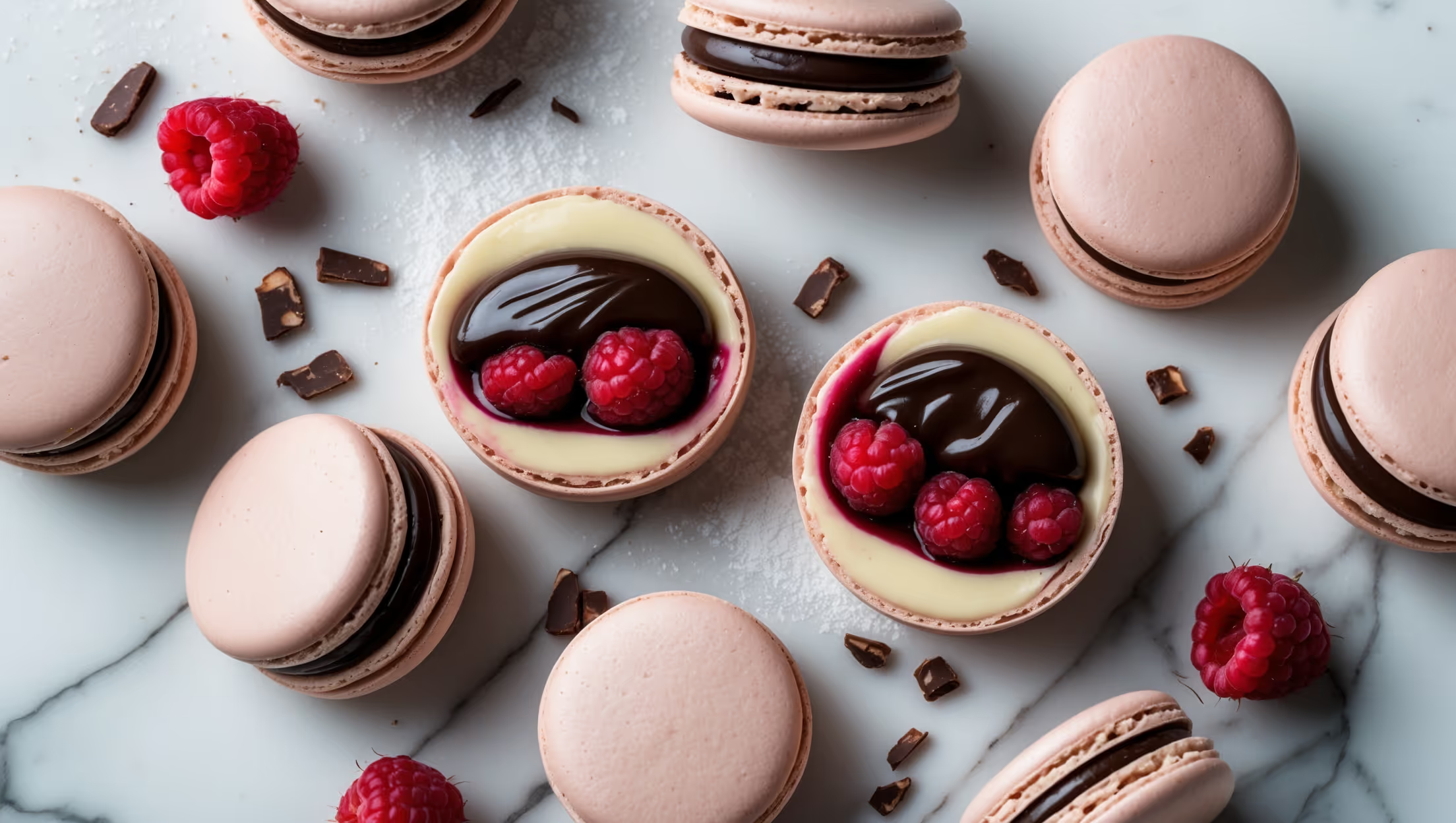
Directions
<ol class="no-list-style"><li class="MethodStepper"><h4 class="step-title">Step 1</h4>Begin by preparing your workspace and ingredients. Measure everything precisely as macarons are a technical bake that requires accuracy. Line two heavy-duty baking sheets with silicone mats or parchment paper. If using parchment, you can draw 3.5cm circles as piping guides, then flip the paper over so the ink doesn't touch your macarons.</li><li class="MethodStepper"><h4 class="step-title">Step 2</h4>Sift the almond flour, powdered sugar, and matcha powder together into a large bowl. Sift twice more to ensure there are absolutely no lumps and the matcha is evenly distributed. This triple sifting creates a perfectly smooth shell texture.</li><li class="MethodStepper"><h4 class="step-title">Step 3</h4>In a clean, dry mixing bowl of your stand mixer, add room temperature egg whites and a pinch of salt. Begin whipping on medium speed until they become frothy. Gradually add the granulated sugar, a little at a time, while continuing to whip. Increase to medium-high speed and beat until you achieve stiff, glossy peaks. The meringue is ready when you can turn the bowl upside down without anything falling out, but be careful not to over-whip as this will make the batter too dry.</li><li class="MethodStepper"><h4 class="step-title">Step 4</h4>Add one-third of the dry ingredients to the meringue and fold gently using a flexible silicone spatula. Cut through the center and sweep around the edges, rotating the bowl as you go. Add the remaining dry ingredients in two more additions, folding gently but thoroughly. The proper consistency is crucial: continue folding until the batter flows like lava when raised with your spatula, forming a ribbon that disappears back into the mixture within about 30 seconds. This is called the "magma" stage.</li><li class="MethodStepper"><h4 class="step-title">Step 5</h4>Transfer the batter to a piping bag fitted with a round tip. Pipe 3.5cm circles onto your prepared baking sheets, holding the bag perpendicular to the surface. Once piped, firmly tap the baking sheets against your countertop 3-4 times to release any air bubbles. This prevents cracking during baking.</li><li class="MethodStepper"><h4 class="step-title">Step 6</h4>Allow the piped macarons to rest at room temperature for 30-60 minutes, depending on humidity levels, until they develop a skin. They're ready when you can gently touch the surface without batter sticking to your finger. This resting period is essential for developing the characteristic macaron "feet" during baking.</li><li class="MethodStepper"><h4 class="step-title">Step 7</h4>Preheat your oven to 150°C. Bake one sheet at a time for 14-16 minutes. The macarons are done when they have developed feet and feel firm to the touch, with just the slightest bit of give. If they appear to be browning, place an empty baking sheet on the rack above them to shield from direct heat.</li><li class="MethodStepper"><h4 class="step-title">Step 8</h4>Allow the baked shells to cool completely on the baking sheets before attempting to remove them. Moving them while warm will result in broken shells.</li><li class="MethodStepper"><h4 class="step-title">Step 9</h4>For the white chocolate ganache filling, place chopped white chocolate in a heat-resistant bowl. Heat the heavy cream in a small saucepan just until it begins to simmer around the edges (do not boil). Pour the hot cream over the chocolate and let it stand for 1 minute before gently stirring until smooth. Add the softened butter and stir until fully incorporated and silky. The butter adds richness and helps stabilize the ganache. Refrigerate the ganache for about 30-45 minutes, stirring occasionally, until it reaches a pipeable consistency.</li><li class="MethodStepper"><h4 class="step-title">Step 10</h4>Once the shells are completely cool and the ganache has thickened, pair shells of matching size. Pipe a generous amount of ganache onto the flat side of one shell, then gently sandwich with its matching partner, twisting slightly to spread the filling to the edges.</li><li class="MethodStepper"><h4 class="step-title">Step 11</h4>For the best flavor and texture, store the assembled macarons in an airtight container in the refrigerator for 24 hours before serving. This "maturation" period allows the flavors to meld and the shells to soften slightly from the moisture in the filling. Bring to room temperature for about 30 minutes before serving for the best texture and flavor experience.</li></ol>