Directions
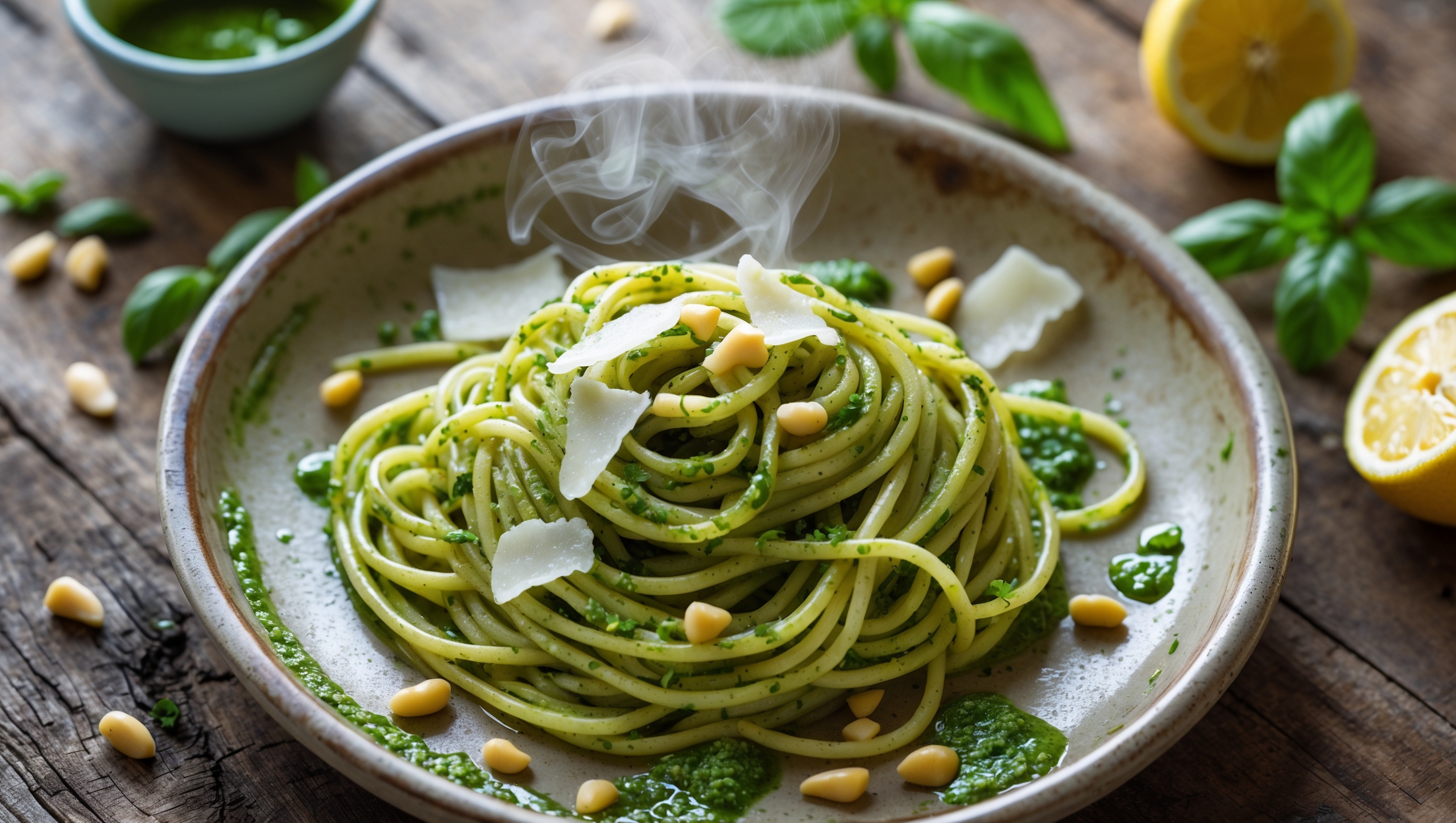
<ol class="no-list-style"> <li class="MethodStepper"> <h4 class="step-title">Step 1</h4> Bring a large pot of water to a rolling boil. Add 2 tablespoons of salt (the water should taste like the sea). This properly seasons your pasta from the inside out as it cooks. </li> <li class="MethodStepper"> <h4 class="step-title">Step 2</h4> While waiting for the water to boil, toast the pine nuts in a dry skillet over medium-low heat for 3-5 minutes, stirring frequently until golden brown. Toasting enhances their nutty flavor and adds depth to your pesto. Allow to cool slightly before proceeding. </li> <li class="MethodStepper"> <h4 class="step-title">Step 3</h4> Add the pasta to the boiling water and cook according to package instructions until al dente (typically 8-10 minutes). Reserve 120ml of pasta cooking water before draining - this starchy water is essential for creating a silky sauce that clings to the pasta. </li> <li class="MethodStepper"> <h4 class="step-title">Step 4</h4> While the pasta cooks, make the pesto. In a food processor, combine the basil leaves, cooled toasted pine nuts, Parmesan, and garlic. Pulse several times until coarsely chopped. </li> <li class="MethodStepper"> <h4 class="step-title">Step 5</h4> With the food processor running, slowly drizzle in the olive oil until you achieve a smooth, emulsified sauce. The slow addition of oil creates a proper emulsion rather than an oily mixture. </li> <li class="MethodStepper"> <h4 class="step-title">Step 6</h4> Transfer the pesto to a bowl and stir in the salt, pepper, and lemon juice. Taste and adjust seasoning if needed - the pesto should be vibrant and well-balanced. </li> <li class="MethodStepper"> <h4 class="step-title">Step 7</h4> Drain the pasta in a colander but don't rinse it - the starchy exterior helps the sauce adhere. Return the hot pasta to the pot. </li> <li class="MethodStepper"> <h4 class="step-title">Step 8</h4> Add about two-thirds of the pesto to the hot pasta along with 60ml of the reserved pasta water. Toss thoroughly to coat, adding more pasta water as needed to create a silky sauce that coats each strand. The heat of the pasta will gently warm the pesto without cooking it, preserving its fresh flavor. </li> <li class="MethodStepper"> <h4 class="step-title">Step 9</h4> Serve immediately in warmed pasta bowls, topped with a spoonful of additional pesto, a sprinkle of freshly grated Parmesan, extra toasted pine nuts, and some small basil leaves. Enjoy while hot! </li> <li class="MethodStepper"> <h4 class="step-title">Step 10</h4> Store any leftover pesto in an airtight container with a thin layer of olive oil on top to prevent oxidation. It will keep in the refrigerator for up to 1 week, or can be frozen in ice cube trays for up to 3 months. </li> </ol>