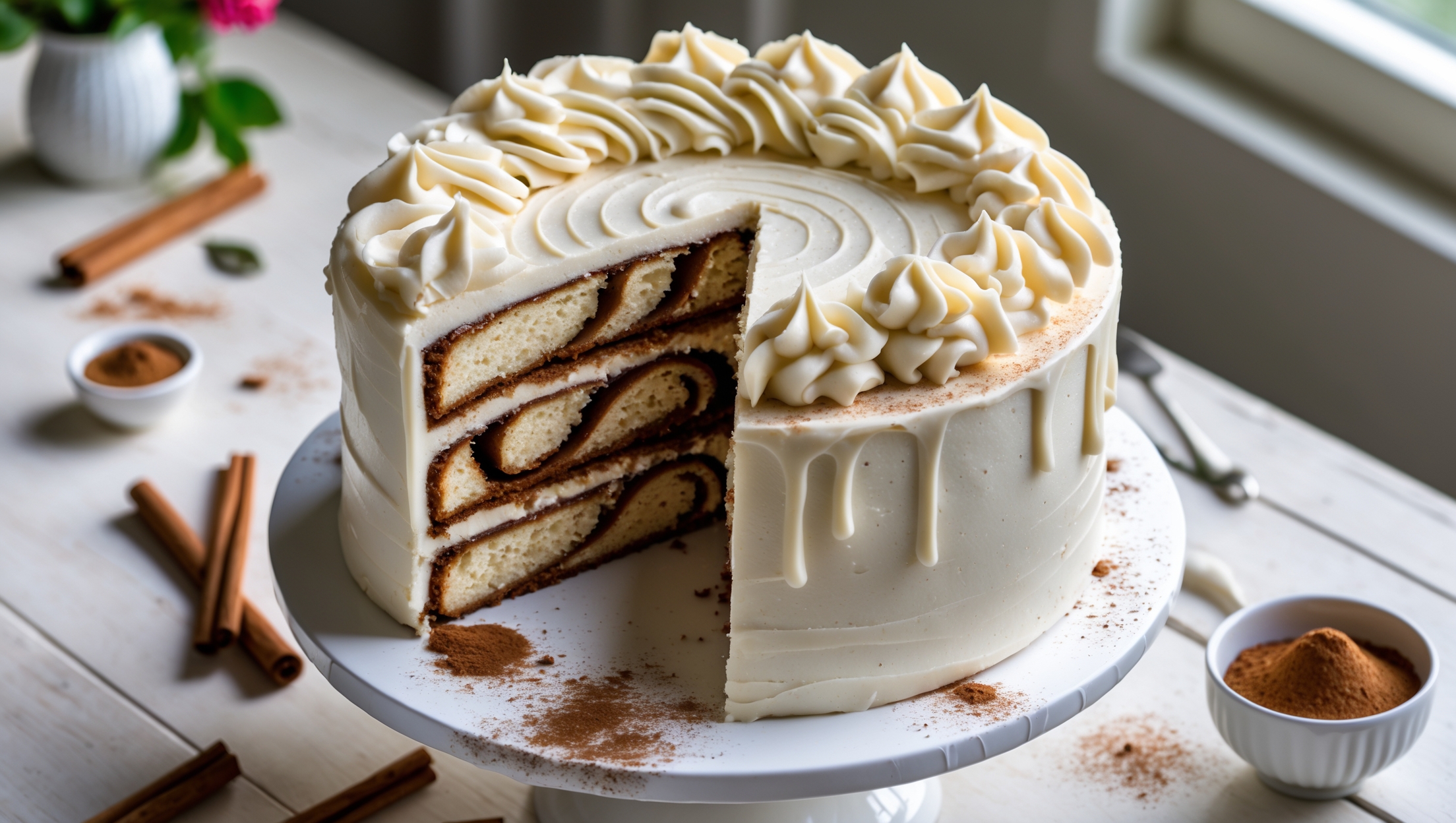
Directions
<ol class="no-list-style"><li class="MethodStepper"><h4 class="step-title">Step 1</h4>Begin by making the Earl Grey milk infusion. In a small saucepan, heat the milk until it just begins to simmer (don't let it boil). Remove from heat, add the loose Earl Grey tea, cover, and let steep for 30 minutes. The milk will take on a beige color and strong tea aroma. Strain through a fine mesh sieve, pressing gently on the tea leaves to extract maximum flavor. Set aside to cool completely – you'll need this for both the cake and frosting.</li><li class="MethodStepper"><h4 class="step-title">Step 2</h4>Preheat your oven to 180°C. Grease three 20cm round cake pans and line the bottoms with parchment paper. For extra insurance against sticking, you can dust the sides lightly with flour.</li><li class="MethodStepper"><h4 class="step-title">Step 3</h4>In your stand mixer fitted with the paddle attachment, cream the butter on medium speed until smooth and creamy, about 1 minute. Add the granulated sugar and beat on medium-high until pale and fluffy, about 4-5 minutes. Don't rush this step – proper aeration creates a lighter cake structure.</li><li class="MethodStepper"><h4 class="step-title">Step 4</h4>Reduce the mixer speed to medium and add the eggs one at a time, ensuring each is fully incorporated before adding the next. Scrape down the sides of the bowl frequently. Add the vanilla extract and mix to combine. The mixture might look slightly curdled, but don't worry – this is normal.</li><li class="MethodStepper"><h4 class="step-title">Step 5</h4>In a separate bowl, whisk together the cake flour, baking powder, and salt. With the mixer on low speed, add the dry ingredients to the butter mixture in three additions, alternating with the cooled Earl Grey milk infusion (beginning and ending with the dry ingredients). Mix just until combined after each addition – overmixing will develop too much gluten, resulting in a tough cake.</li><li class="MethodStepper"><h4 class="step-title">Step 6</h4>Divide the batter evenly among the three prepared pans. To ensure even layers, you can weigh the pans – each should contain approximately the same amount of batter. Smooth the tops with an offset spatula.</li><li class="MethodStepper"><h4 class="step-title">Step 7</h4>Bake the cakes for 25-30 minutes, until they're lightly golden at the edges and a toothpick inserted in the center comes out clean. The cakes should also spring back when gently pressed in the center. Be careful not to overbake as this will dry out your cake.</li><li class="MethodStepper"><h4 class="step-title">Step 8</h4>Allow the cakes to cool in the pans for 10 minutes before turning out onto wire racks to cool completely. If the tops have domed, use a cake leveler or serrated knife to trim them flat once cooled. You want perfectly even layers for a professional-looking cake.</li><li class="MethodStepper"><h4 class="step-title">Step 9</h4>While the cakes cool, prepare the bergamot buttercream. In your cleaned stand mixer bowl with paddle attachment, beat the butter on medium-high speed until pale and very fluffy, about 5 minutes. The extended beating time creates a silky, less grainy frosting.</li><li class="MethodStepper"><h4 class="step-title">Step 10</h4>Reduce the speed to low and gradually add the sifted powdered sugar, about 125g at a time, mixing well between additions. Once all sugar is incorporated, add the 4 tablespoons of reserved Earl Grey milk infusion, bergamot extract, and salt. Increase speed to medium-high and beat until light and fluffy, about 2 minutes. If using, add a tiny amount of purple food coloring to achieve a pale lavender tint that complements the Earl Grey theme.</li><li class="MethodStepper"><h4 class="step-title">Step 11</h4>To assemble the cake, place one layer on your serving plate or cake stand. If using a turntable, place the cake board on this first. Spread about 180g of buttercream evenly over the top. Place the second layer on top and repeat with the same amount of buttercream. Add the final layer, top side down (this gives you a perfectly flat top).</li><li class="MethodStepper"><h4 class="step-title">Step 12</h4>Apply a thin layer of buttercream all over the cake to seal in any crumbs (the "crumb coat"). Refrigerate for 20 minutes to set this layer. This patience-requiring step ensures your final frosting layer will be clean and crumb-free.</li><li class="MethodStepper"><h4 class="step-title">Step 13</h4>After the crumb coat has set, apply the remaining buttercream in a thicker, decorative layer. For a smooth finish, use a bench scraper held at a 90-degree angle to the side of the cake while slowly rotating the turntable. For the top, use an offset spatula to smooth or create decorative swirls as desired.</li><li class="MethodStepper"><h4 class="step-title">Step 14</h4>If you wish, decorate with dried culinary lavender, fresh edible flowers, or a light dusting of loose Earl Grey tea leaves. For the best flavor and texture, allow the cake to sit at room temperature for 1-2 hours before serving. This gives the tea flavors time to fully develop and the cake to soften to the perfect consistency.</li></ol>