Creamy Butternut Squash Pasta Recipe

Silky-smooth butternut squash pasta sauce coats tender noodles with a velvety richness that's comforting, subtly sweet, and utterly satisfying.
Difficulty:
Beginner
Prep Time:
15 mins
Cook Time:
45 mins
Serves:
4 servings
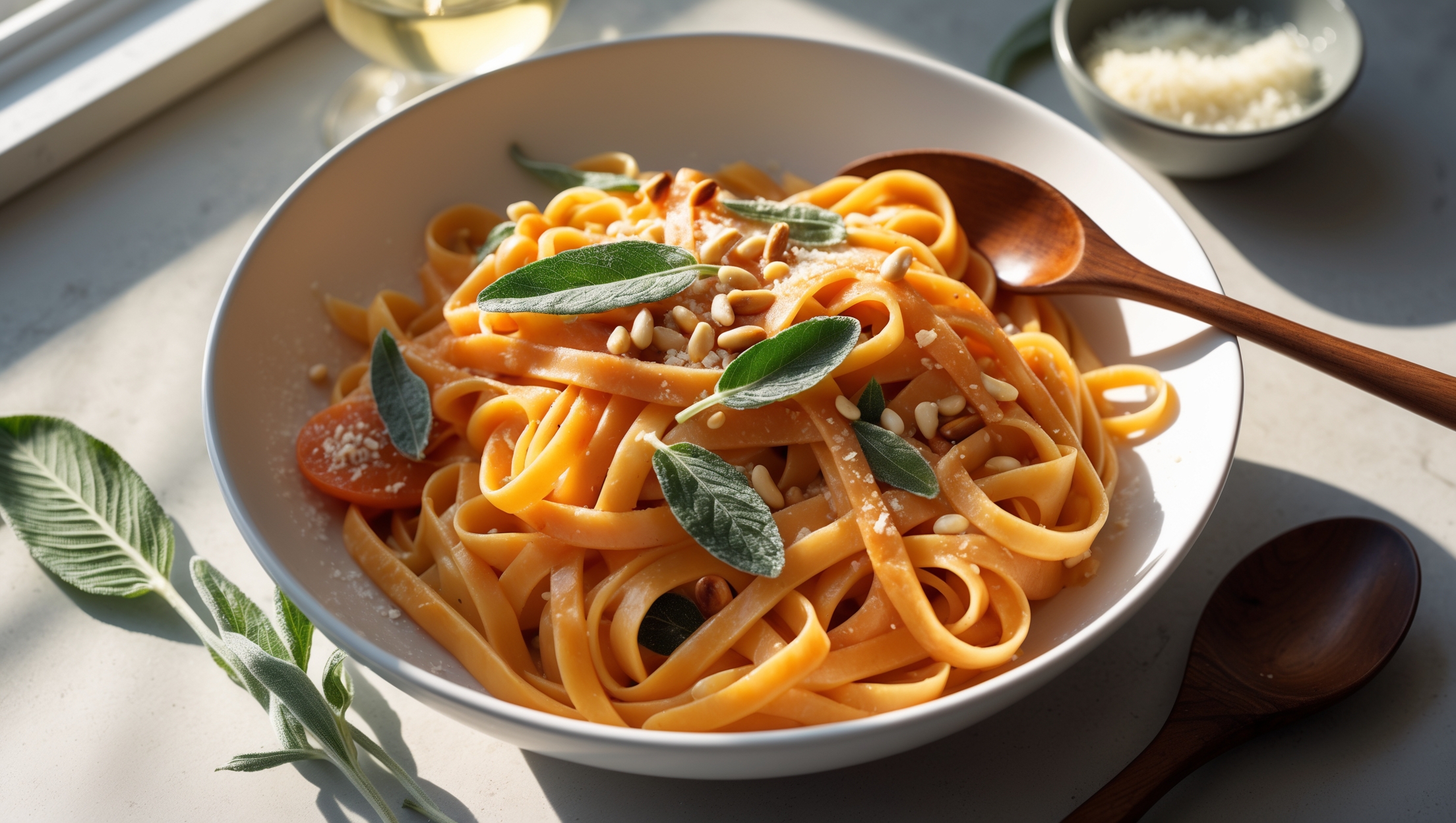
An overhead shot of al dente fettuccine coated in a glossy, vibrant orange butternut squash sauce, served in a shallow white bowl. The pasta is garnished with fresh sage leaves, toasted pine nuts, and a light dusting of Parmesan cheese that's just beginning to melt. A wooden serving spoon rests beside the bowl, with delicate strands of pasta wrapped around its edge. The scene is bathed in soft natural light from a nearby window, highlighting the creamy texture of the sauce and creating shadows that add depth to the composition. In the background, a small bowl of grated Parmesan and a sprig of sage sit alongside a glass of white wine, suggesting a cozy autumn dinner setting.

Ingredients

<ul class="ingredients-main-list"><li class="ingredients-single-item">1 medium butternut squash (about 900g)</li><li class="ingredients-single-item">2 tablespoons olive oil</li><li class="ingredients-single-item">1 medium onion, diced</li><li class="ingredients-single-item">3 garlic cloves, minced</li><li class="ingredients-single-item">240ml vegetable stock</li><li class="ingredients-single-item">120ml heavy cream (or full-fat coconut milk)</li><li class="ingredients-single-item">50g Parmesan cheese, grated (plus extra for serving)</li><li class="ingredients-single-item">1/4 teaspoon ground nutmeg</li><li class="ingredients-single-item">1 tablespoon fresh sage leaves, chopped (plus extra for garnish)</li><li class="ingredients-single-item">350g pasta (fettuccine or pappardelle work well)</li><li class="ingredients-single-item">3 tablespoons pine nuts</li><li class="ingredients-single-item">Salt and black pepper to taste</li></ul>

Equipment

<ul class="equipment-main-list"><li class="equipment-single-item">Baking tray</li><li class="equipment-single-item">Blender or food processor</li><li class="equipment-single-item">Heavy-bottomed saucepan</li></ul>
BAKE SMARTER

Kitchen Converter

Quickly switch between common baking units without leaving the recipe.

Convert
Result—

Volume uses US cups, tablespoons, and teaspoons. Converting weight to volume depends on the ingredient.

Directions

<ol class="no-list-style"><li class="MethodStepper"><h4 class="step-title">Step 1</h4>Preheat your oven to 200°C (400°F). Line a baking tray with parchment paper for easy cleanup. Cut the butternut squash in half lengthwise and scoop out the seeds. Drizzle the cut sides with 1 tablespoon of olive oil and season with salt and pepper. Place cut-side down on the prepared baking tray.</li><li class="MethodStepper"><h4 class="step-title">Step 2</h4>Bake the butternut squash for 35-40 minutes, until completely tender when pierced with a fork. The roasting process caramelizes the natural sugars in the squash, enhancing its sweetness and adding depth of flavor to your final sauce. Once done, let cool slightly before scooping out the flesh - you should have approximately 600-650g of cooked squash.</li><li class="MethodStepper"><h4 class="step-title">Step 3</h4>While the squash is cooling, heat a dry frying pan over medium heat and toast the pine nuts until golden brown, about 2-3 minutes. Watch them carefully as they burn quickly! Set aside for garnishing later.</li><li class="MethodStepper"><h4 class="step-title">Step 4</h4>In a heavy-bottomed saucepan, heat the remaining tablespoon of olive oil over medium heat. Add the diced onion and sauté for 4-5 minutes until softened and translucent. Add the minced garlic and chopped sage, cooking for another 30 seconds until fragrant. The aromatic foundations of your sauce are crucial for a well-balanced flavor.</li><li class="MethodStepper"><h4 class="step-title">Step 5</h4>Add the roasted squash flesh and vegetable stock to the pan. Bring to a simmer and cook for 5 minutes to allow the flavors to meld. Transfer the mixture to a blender or food processor and blend until completely smooth. Be careful when blending hot liquids - work in batches if needed and allow steam to escape.</li><li class="MethodStepper"><h4 class="step-title">Step 6</h4>Return the blended sauce to the saucepan over low heat. Stir in the cream, grated Parmesan, and nutmeg. Season with salt and pepper to taste. The fatty components (cream and cheese) create a silky emulsion with the squash puree, giving your sauce that luxurious restaurant-quality texture.</li><li class="MethodStepper"><h4 class="step-title">Step 7</h4>Meanwhile, bring a large pot of generously salted water to a boil. Cook the pasta according to package instructions until al dente. Before draining, reserve 120ml of the starchy pasta water - this is your secret ingredient for helping the sauce adhere to the pasta.</li><li class="MethodStepper"><h4 class="step-title">Step 8</h4>Drain the pasta and add it directly to the saucepan with the butternut squash sauce. Toss gently to coat each strand evenly, adding a splash of the reserved pasta water as needed to achieve your desired consistency. The starch in the pasta water helps the sauce cling beautifully to the pasta.</li><li class="MethodStepper"><h4 class="step-title">Step 9</h4>Serve immediately, garnished with the toasted pine nuts, extra grated Parmesan, fresh sage leaves, and a crack of black pepper. The contrast between the creamy sauce and crunchy pine nuts creates a delightful textural experience with every bite.</li></ol>
Nutrition Facts (per serving)

🍽️ Serving Size: 1 serving
🔥 Calories: 425 calories
🥑 Fat: 18 g
🧈 Saturated Fat: 7 g
🍞 Carbohydrates: 58 g
🍭 Sugar: 8 g
🍗 Protein: 12 g
🫀 Cholesterol: 35 mg
🧂 Sodium: 480 mg

Chef’s Notes

A few helpful details for making this recipe.

Can I make butternut squash pasta sauce ahead of time?

Yes, the sauce can be made up to 3 days ahead and stored in the fridge in an airtight container. It also freezes beautifully for up to 3 months. When ready to use, gently reheat, adding a splash of stock or pasta water to achieve the desired consistency before tossing with freshly cooked pasta.

What can I substitute for heavy cream in butternut squash pasta?

For a lighter version, substitute the heavy cream with half-fat crème fraîche, Greek yoghurt, or unsweetened coconut milk. For a dairy-free option, cashew cream works wonderfully. You can also use reserved pasta water and extra Parmesan to create creaminess without the added fat.

How do you prevent butternut squash sauce from becoming too sweet?

Balance the natural sweetness of butternut squash by adding acidity (a splash of white wine or lemon juice), increasing the savoury elements (more Parmesan, a dash of miso paste), adding a pinch of chilli flakes for heat, or incorporating more herbs like sage or thyme to create complexity.

Want to try something else in ...

More recipes you might like

Keep exploring with more recipes from What's Baking.