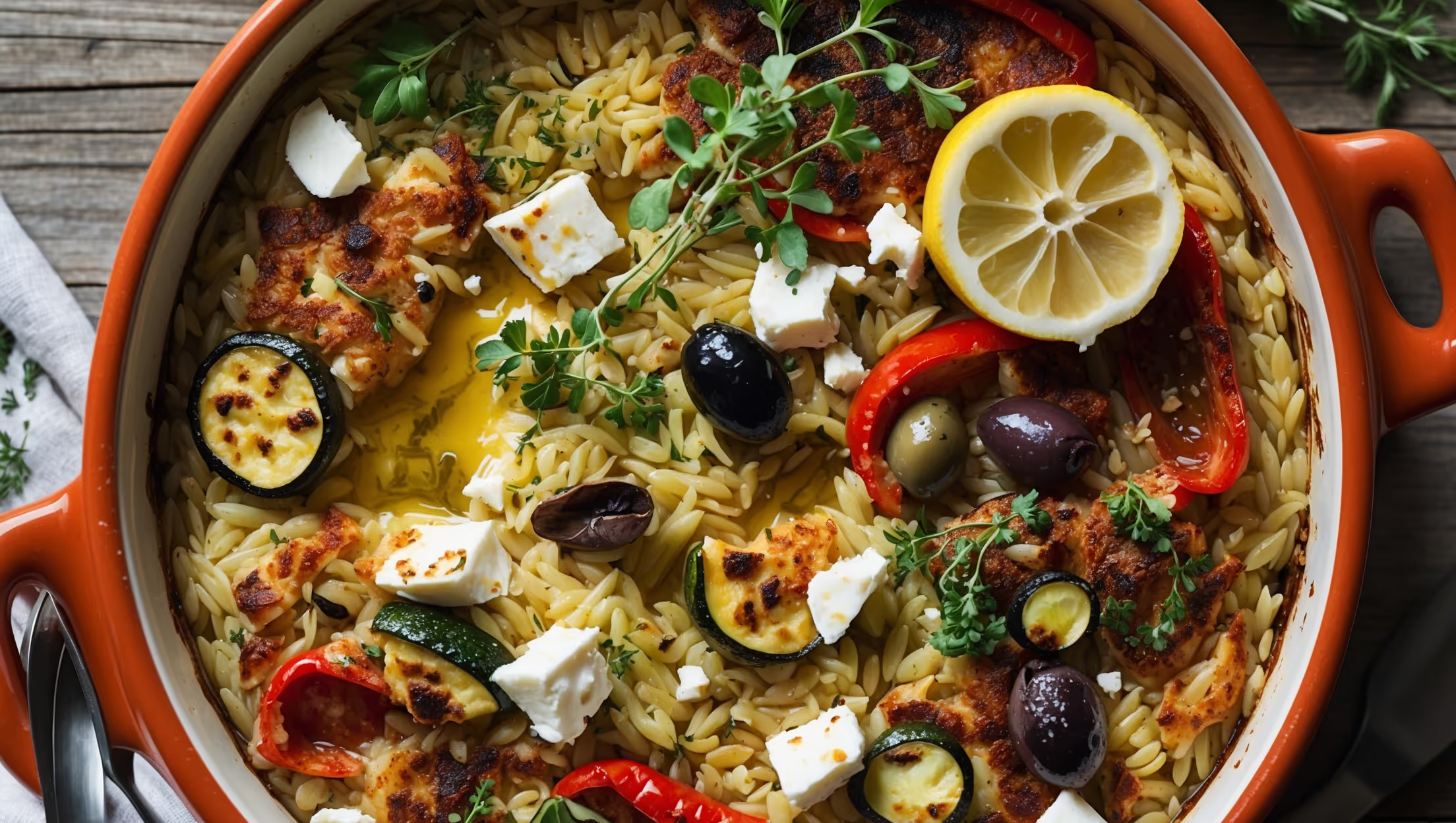
Directions
<ol class="no-list-style"><li class="MethodStepper"><h4 class="step-title">Step 1</h4>Preheat your oven to 190°C (375°F). Lightly grease your baking dish with olive oil and set aside. This preparation ensures your casserole won't stick while developing those desirable crispy edges.</li><li class="MethodStepper"><h4 class="step-title">Step 2</h4>Heat 2 tablespoons of olive oil in a large sauté pan or Dutch oven over medium heat. Add the diced onion and cook for 4-5 minutes until softened and translucent but not browned. This slow cooking releases the onion's natural sweetness that will form our flavor base.</li><li class="MethodStepper"><h4 class="step-title">Step 3</h4>Add the minced garlic to the pan and cook for another 30 seconds until fragrant. Be careful not to let it brown as garlic can quickly become bitter when overcooked.</li><li class="MethodStepper"><h4 class="step-title">Step 4</h4>Add the diced red bell pepper and zucchini, cooking for 5 minutes until they begin to soften. These vegetables will continue cooking in the oven, so they don't need to be completely tender at this stage.</li><li class="MethodStepper"><h4 class="step-title">Step 5</h4>Stir in the dried oregano, thyme, and cinnamon, cooking for 30 seconds to bloom the spices. This step is crucial as it releases the essential oils in the dried herbs, intensifying their flavors throughout the dish.</li><li class="MethodStepper"><h4 class="step-title">Step 6</h4>Add the uncooked orzo pasta to the pan and stir to coat with the oil and spices. Toast for about 2 minutes, stirring frequently. This toasting step creates a nutty flavor in the orzo and helps it maintain structure during baking.</li><li class="MethodStepper"><h4 class="step-title">Step 7</h4>Pour in the canned diced tomatoes with their juice and the vegetable stock. Season with salt and pepper to taste. Bring the mixture to a simmer, stirring to ensure the orzo doesn't stick to the bottom of the pan.</li><li class="MethodStepper"><h4 class="step-title">Step 8</h4>Transfer the mixture to your prepared baking dish, making sure the orzo is submerged in liquid. The pasta will absorb this flavorful liquid as it bakes, similar to a risotto method but without constant stirring.</li><li class="MethodStepper"><h4 class="step-title">Step 9</h4>Cover the baking dish tightly with aluminum foil and bake for 20 minutes. The covered baking creates steam that cooks the orzo evenly while preventing the top from drying out.</li><li class="MethodStepper"><h4 class="step-title">Step 10</h4>After 20 minutes, remove from the oven and carefully remove the foil. Stir in the Kalamata olives and half of the crumbled feta cheese. The residual heat will begin to soften the feta slightly, creating pockets of creaminess.</li><li class="MethodStepper"><h4 class="step-title">Step 11</h4>Sprinkle the remaining feta cheese on top and return to the oven, uncovered, for another 15-20 minutes until the orzo is tender and the top is golden and slightly crisp. Look for bubbling edges and a slight reduction in liquid as signs your casserole is done.</li><li class="MethodStepper"><h4 class="step-title">Step 12</h4>Remove from the oven and let stand for 5 minutes. This resting period allows the casserole to set slightly and makes serving easier.</li><li class="MethodStepper"><h4 class="step-title">Step 13</h4>Just before serving, sprinkle with fresh parsley, lemon zest, and a squeeze of lemon juice. Finish with a drizzle of good quality olive oil. These fresh, bright elements balance the richness of the baked dish and add a final layer of authentic Greek flavor.</li></ol>