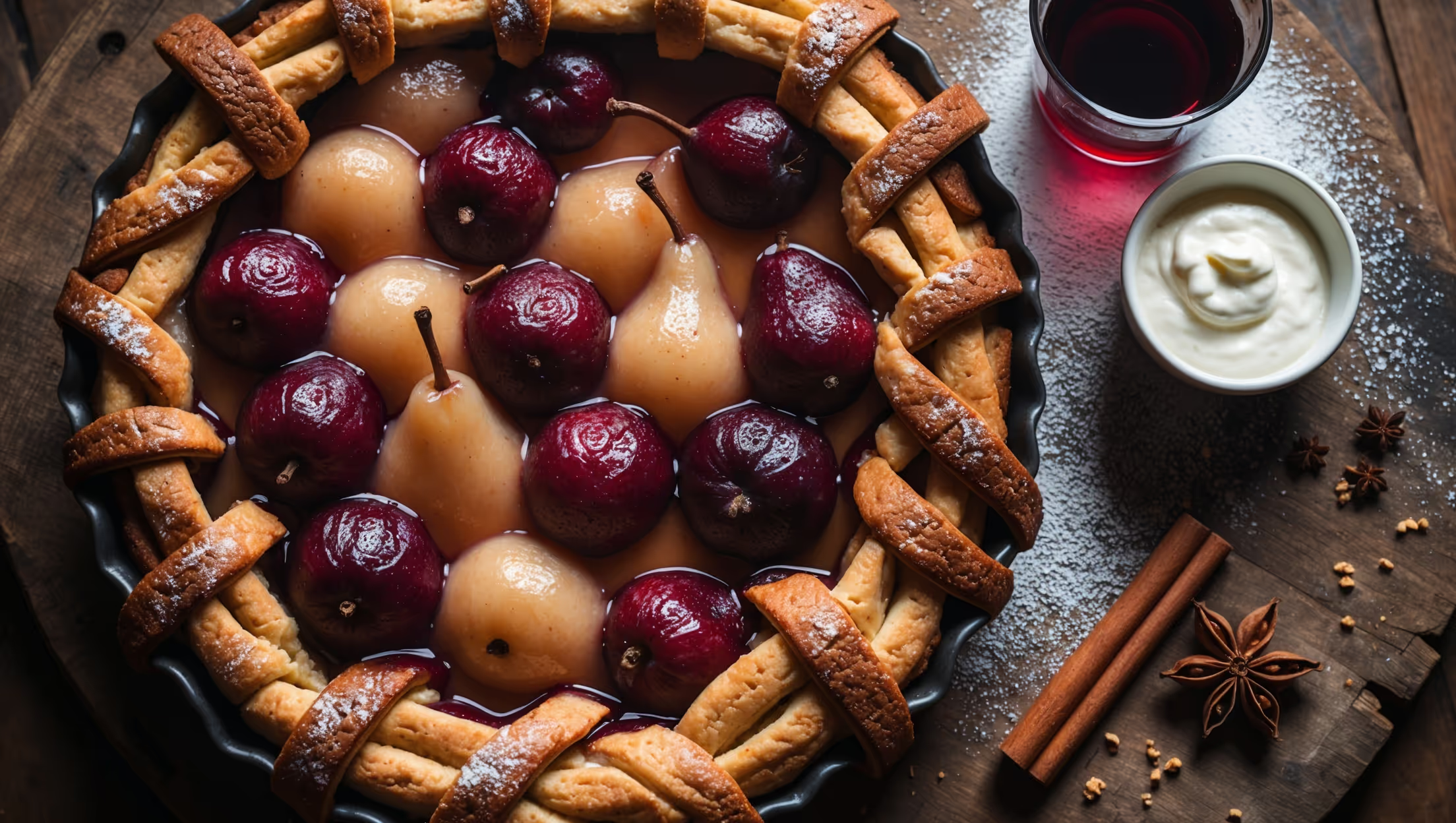
Directions
<ol class="no-list-style"><li class="MethodStepper"><h4 class="step-title">Step 1</h4>Begin with the pie dough. In a food processor, pulse together flour, sugar, and salt. Add the cold cubed butter and pulse until the mixture resembles coarse breadcrumbs with some pea-sized pieces remaining (these butter pockets create flakiness during baking). Slowly drizzle in ice water while pulsing until the dough just begins to come together – it should hold when pressed between your fingers but shouldn't be wet or sticky.</li><li class="MethodStepper"><h4 class="step-title">Step 2</h4>Turn the dough onto a lightly floured surface, form into a disc without overworking it (overhandling develops gluten, making the crust tough). Wrap in plastic and refrigerate for at least 1 hour or up to 2 days. Cold dough is crucial for a flaky crust as it allows the butter to remain solid until hitting the hot oven.</li><li class="MethodStepper"><h4 class="step-title">Step 3</h4>While the dough chills, prepare the wine-poached pears. In a large saucepan, combine the red wine, port wine (if using), sugar, cinnamon stick, star anise, cloves, vanilla pod, and orange zest. Bring to a gentle simmer over medium heat, stirring until sugar dissolves.</li><li class="MethodStepper"><h4 class="step-title">Step 4</h4>Carefully add the peeled, halved pears to the simmering liquid. The liquid should just cover the pears – if not, add a little water. Reduce heat to low, cover partially, and poach for 20-25 minutes until the pears are tender but still hold their shape when pierced with a knife. The cooking time will vary depending on the ripeness of your pears.</li><li class="MethodStepper"><h4 class="step-title">Step 5</h4>Using a slotted spoon, gently transfer the pears to a plate to cool. Increase the heat to medium-high and reduce the poaching liquid by half until slightly syrupy, about 15-20 minutes. This intensifies the flavors for both the custard and the pears. Set aside 120ml of the reduced liquid for the custard and let cool.</li><li class="MethodStepper"><h4 class="step-title">Step 6</h4>Preheat your oven to 190°C (375°F). Roll out the chilled pie dough on a floured surface to about 3mm thickness and transfer to a 23cm pie dish. Trim the excess, leaving a 2cm overhang, then fold under and crimp decoratively. Prick the bottom with a fork several times, line with parchment paper, and fill with pie weights or dried beans. Blind bake for 15 minutes, then remove the weights and parchment and bake for another 5-7 minutes until just beginning to color. Reduce oven temperature to 180°C (350°F).</li><li class="MethodStepper"><h4 class="step-title">Step 7</h4>For the speculoos lattice, place the cookies in a food processor and pulse until finely ground. Mix with melted butter until the mixture resembles wet sand and holds together when pressed. Roll the mixture between two sheets of parchment paper to about 5mm thickness. Refrigerate for 15 minutes to firm up.</li><li class="MethodStepper"><h4 class="step-title">Step 8</h4>Prepare the spiced custard by whisking together the reduced wine syrup, eggs, sugar, heavy cream, cinnamon, ginger, and cloves until smooth. The custard serves as a binding agent for the pears while adding richness and complementary spice notes.</li><li class="MethodStepper"><h4 class="step-title">Step 9</h4>Slice the cooled poached pears into 1cm thick slices, keeping their shape intact. Arrange them decoratively in the blind-baked pie shell, overlapping slightly. Gently pour the custard mixture over and around the pears, being careful not to overfill – leave about 1cm from the top of the crust.</li><li class="MethodStepper"><h4 class="step-title">Step 10</h4>Remove the chilled speculoos dough from the refrigerator and cut into 2cm wide strips using a sharp knife or pastry wheel. Create a lattice pattern over the pie by placing strips in one direction, then weaving perpendicular strips over and under. The beauty of this cookie lattice is that it's more forgiving than traditional pastry lattice – don't worry if pieces break, just press them back together.</li><li class="MethodStepper"><h4 class="step-title">Step 11</h4>Brush the lattice strips with beaten egg wash, which will help the cookie lattice develop a beautiful golden color and slight shine. Place the pie on a baking sheet (to catch any potential overflow) and bake for 40-45 minutes until the custard is set with just a slight wobble in the center and the lattice is golden brown. If the edges brown too quickly, cover them with foil.</li><li class="MethodStepper"><h4 class="step-title">Step 12</h4>Allow the pie to cool completely on a wire rack for at least 3 hours before slicing. This resting time is crucial as it allows the custard to fully set and flavors to meld. Serve at room temperature with a dollop of lightly whipped cream or crème fraîche to complement the rich, wine-infused filling. This pie will keep for up to 3 days refrigerated, though the lattice will soften slightly over time.</li></ol>