
On this page
A generous bowl of macaroni coated in a smooth, savoury sauce is comfort food at its simplest. You do not need dairy cheese to make a satisfying version, and nutritional yeast is not essential to creating a creamy texture. But that does not mean every vegan mac and cheese recipe can be converted by removing it without changing the flavour. Some rely on nutritional yeast for much of their savoury character, even when cashews, vegetables, and starch provide the texture.
This guide explains what makes plant-based mac and cheese creamy, how to build flavour without nutritional yeast, what to do when a sauce turns grainy or stiff, and how to make sensible nut-free or gluten-free adaptations. It also clears up an important distinction in the existing What’s Baking? recipe collection: the published Vegan Mac and Cheese Casserole contains four tablespoons of nutritional yeast, and the published Vegan Mac and Cheese contains nutritional yeast too. Both are legitimate plant-based recipes, but neither should be described as a tested no-nutritional-yeast recipe.
Think of the information below as a technique-led guide to adapting vegan macaroni, not a claim that one untested substitution guarantees the same outcome as the published recipes. If you prefer to follow a complete, tested-as-written set of instructions from our collection, use the linked recipes with their listed ingredients. If you want to omit nutritional yeast, the principles here will help you make deliberate adjustments and evaluate the result.
The quick answer: Can vegan mac and cheese be creamy without nutritional yeast?
Yes. Nutritional yeast contributes savoury, nutty notes, but it is not usually the ingredient responsible for the bulk of a sauce's thickness. Creaminess can come from blended soaked cashews, tender cooked vegetables, an adequately hydrated starch, or a well-made plant-milk roux. Oil or another suitable fat improves the perception of richness, while the right quantity of liquid lets the sauce coat pasta without forming a paste.

Removing nutritional yeast changes the flavour more than the basic mechanics of thickening. To replace some of that savoury depth, you may try modest amounts of white miso, garlic, onion, Dijon mustard, or another compatible seasoning. A little lemon juice can brighten a heavy sauce. These are flavour adjustments, not mathematically equivalent replacements; add them gradually and taste.
For a dependable result, decide which problem you are solving before choosing ingredients. If your goal is no nutritional yeast, a cashew or roux base is still possible. If your goal is nut-free, choose a sauce that does not rely on cashews. If your goal is dairy-free and gluten-free, check both pasta and thickener labels. If your goal is simply very creamy, the most important steps are thorough blending, controlled heating, and balancing sauce with pasta.
What makes a plant-based cheese sauce taste satisfying?
Traditional cheese sauce brings salt, richness, acidity, savoury flavours, and an emulsified texture. Recreating every flavour of matured cheddar is not necessary for a delicious vegan dish, but understanding those parts makes a much better sauce than reaching for a large amount of one seasoning.
Body is the material that makes a sauce feel substantial. Soft potatoes, squash, cashews, or a starch-thickened plant milk can all provide it. Too little body produces a watery sauce that falls to the bottom of the bowl. Too much makes a sticky coating that clumps as it cools.
Richness helps sauce feel rounded rather than thin. Cashews already contain fat; an alternative sauce may use vegan butter or olive oil. Different products behave differently when chilled or reheated, so avoid promising that any fat will perform exactly like dairy butter.
Savouriness can come from cooked onion, garlic, miso, mustard, or nutritional yeast when used. In a no-yeast version, build flavour in layers rather than trying to imitate cheddar with excess salt. Acidity matters too: a little lemon juice or vinegar often lifts a bland sauce, but too much makes it sharply sour. Finally, contrast—a crisp breadcrumb topping or freshly cooked broccoli—keeps a rich pasta dish interesting to eat.
Nutritional yeast: What it does and what it does not do
Nutritional yeast is a deactivated yeast product often used for its distinctive savoury, nutty flavour. It is not the same as active dry yeast used to raise bread, and it does not make macaroni dough rise. In many vegan cheese sauces it supplies a familiar savoury note that people associate with a cheese-style dish.
Nutritional yeast does not normally create a stretchy sauce by itself. That characteristic is more likely to come from starches, sauce concentration, or a particular processed cheese alternative. If a vegan sauce contains tapioca starch, for example, heating it according to the recipe can produce a more cohesive texture. The outcome depends on the concentration, other ingredients, and temperature, not simply the presence of nutritional yeast.
Some cooks dislike its flavour, cannot easily buy it, or prefer recipes without it. Those are reasonable preferences. If you remove it from an existing recipe, expect the sauce to taste different even if it still thickens. Before increasing salt or acidity, taste the blended sauce warm. Cold sauces can seem blander or thicker than they do once served.
Which published What’s Baking? recipes include nutritional yeast?
The Vegan Mac and Cheese Casserole lists cashews, plant milk, olive oil, nutritional yeast, tapioca starch, lemon juice, Dijon, spices, pasta, and panko. Its nutritional yeast is part of the published formula. The Vegan Mac and Cheese uses cashews, squash or sweet potato, carrots, nutritional yeast, miso, plant milk, lemon, and thickener. It is a different formula, not a direct substitute for the casserole.
For readers searching specifically for vegan mac and cheese without nutritional yeast, it is essential not to label either linked recipe as yeast-free. The adjustments discussed in this article are home-cooking options to explore; they have not been validated as equivalent versions of those published recipes. That transparency helps readers decide whether to follow an established formula or experiment.
Choosing the right base: Three approaches to creamy vegan macaroni
There is no single best base for every household. Cashew sauces offer natural richness and blend particularly well with a powerful blender. Vegetable sauces bring body and gentle sweetness. Roux-based sauces are useful when nuts must be avoided and a cook wants a familiar stovetop method.
Option 1: Soaked cashews for a smooth, rich texture
Cashews soften when soaked or briefly boiled, allowing them to blend with liquid into a relatively smooth cream. The actual result depends on the blender and how thoroughly the nuts soften. A standard blender may require longer processing and careful scraping, while a high-speed blender can usually make a finer sauce. A sauce that remains gritty after heating often began with inadequately softened or blended cashews.
Use raw, unsalted cashews where a recipe specifically calls for them. Salted, roasted cashews may contribute a noticeably different flavour and texture. Drain the soaking water unless the recipe instructs otherwise, then add measured fresh liquid. When you blend, begin with less liquid than you think you need and increase gradually; the goal is pourable cream rather than nut paste.
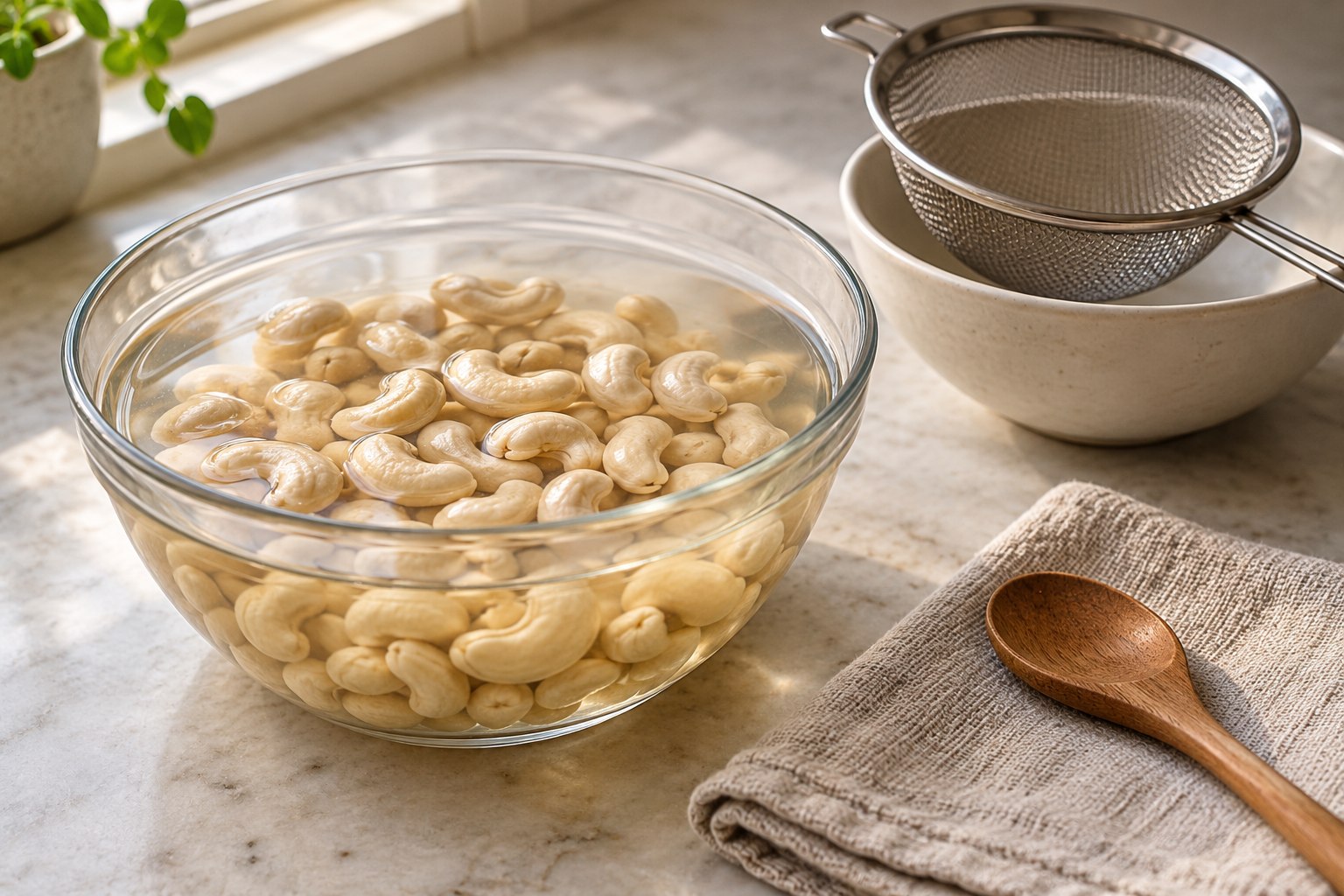
A cashew base is not nut-free. Swapping sunflower seeds for cashews can change the colour, bitterness, and thickness of a sauce. Treat it as a different experimental preparation, not a proven one-for-one substitution. For a serious nut allergy, use a deliberately nut-free method and check packaged ingredients for cross-contact information.
Option 2: Soft vegetables for body and colour
Cooked butternut squash, carrots, sweet potato, and ordinary potatoes can make a sauce thicker and give it a warm golden colour. Their starch and fibre help the mixture cling to pasta, and their natural flavour can be pleasant when balanced with mustard, garlic, salt, and a touch of acid. But vegetables alone do not create the same richness as a cashew sauce, so decide whether to add a modest amount of oil or another compatible fat.
Cook vegetables until completely tender before blending. Firm pieces are difficult to purée smoothly and may leave grainy fragments, even in a good blender. Drain the cooked vegetables well, but reserve some cooking liquid in case the finished sauce becomes too thick. Use the smallest amount needed for blending, then adjust after the sauce has been heated and mixed with pasta.
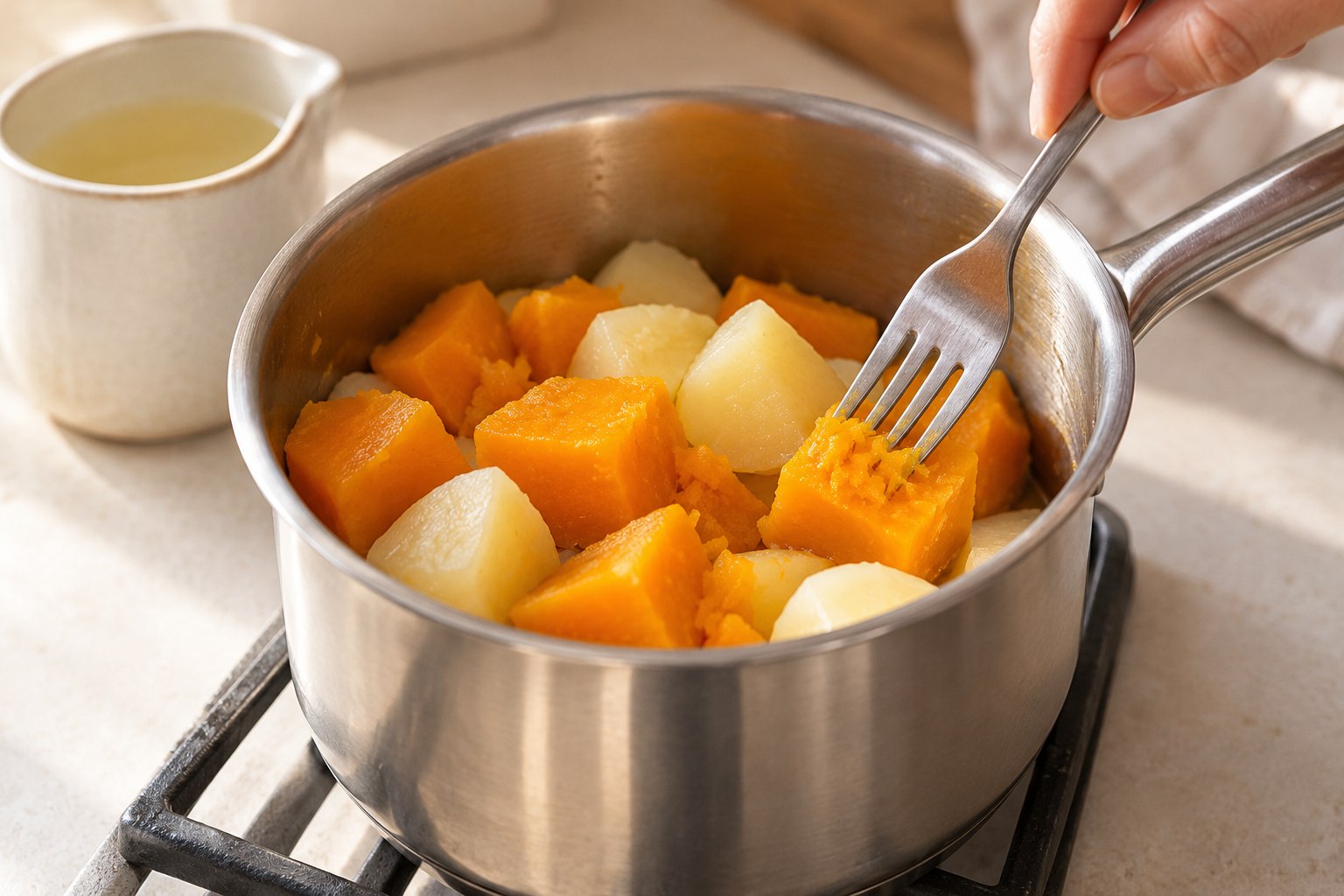
Sweet potato and carrots naturally taste sweeter than white potato. That is not a defect, but it can make macaroni taste closer to a seasoned vegetable purée than to a savoury cheese sauce if used alone in large proportions. A blend of vegetables may give a more balanced result. Add garlic, mustard, miso or other seasoning with care rather than hiding the sweetness behind an excessive amount of sodium.
Option 3: A nut-free roux with unsweetened plant milk
A roux is a mixture of fat and flour cooked briefly before liquid is whisked in. The flour thickens when hydrated and heated. This method can create a familiar creamy macaroni sauce without cashews or nutritional yeast, although the flavour will depend on seasonings and any cheese-style product you choose to add. It is a useful approach when you want control over thickness using ordinary pantry ingredients.
Start by warming a little vegan butter or another suitable fat, then stir in an appropriate quantity of flour. Cook briefly, without letting it burn, before adding unsweetened plant milk gradually. Whisk thoroughly to prevent lumps and simmer gently until the flour has hydrated and the raw taste fades. Avoid high heat that rapidly reduces the liquid and produces a paste.

For gluten-free cooking, choose a suitable gluten-free thickener or flour blend rather than assuming wheat flour is safe. Different starches thicken at different rates, and cornstarch is usually used differently from a wheat-flour roux. Follow a specifically tested gluten-free formula when reliability is crucial. Check plant-milk ingredients if soy, nuts, oats, or other allergens are an issue.
A practical no-nutritional-yeast sauce blueprint
The following is a starting framework for home adaptation, not a tested What’s Baking? recipe. It explains the relationships among ingredients so that you can adapt a familiar macaroni dish thoughtfully. Do not treat the amounts as a guarantee of a particular cheese-like result: brands, blenders, vegetables, and pasta shapes all influence the finished sauce.
For about 300 g of dried macaroni, one approachable direction is to blend approximately 150 g well-softened cashews, 200–250 g very tender cooked squash or potato, 250–350 ml unsweetened plant milk, a little lemon juice, garlic and onion seasoning, and salt to taste. Add a modest quantity of mustard or white miso for savouriness if compatible with your dietary needs. Start with the smaller amount of liquid; more can be added while blending or after heating. The goal is a smooth, pourable sauce that looks slightly looser than you want it on the plate.
The important choice is not an exact ratio copied from another recipe. It is whether you want a vegetable-forward sauce, a cashew-rich sauce, or a mixture of both. A sauce made largely from potato will be starchy and mild; one made largely from cashews may be richer and heavier. If you need a nut-free option, do not use this cashew blueprint—use the separate roux method above or a verified nut-free recipe.
If you want extra adhesion or a more cohesive mouthfeel, a thickener can be considered, but follow a tested thickener quantity rather than adding several tablespoons blindly. Too much tapioca or cornstarch can make sauce elastic, gummy, or glue-like. The published casserole's starch amount belongs to its particular full formula and should not be copied automatically into this adaptation.
Step-by-step approach for the sauce blueprint
- Prepare the cashews and vegetables. Soften cashews thoroughly and cook squash or potatoes until a fork passes through easily. Keep the cooking method and equipment instructions safe and appropriate.
- Cook macaroni separately. Bring a pot of generously salted water to a boil. Cook pasta until just tender for a stovetop version, or slightly firmer if you plan to bake it afterward. Reserve a small cup of cooking water before draining.
- Blend the sauce until fully smooth. Combine drained softened cashews, the tender vegetables, plant milk, seasonings and a little acid. Stop to scrape the blender when needed. Avoid handling hot liquids in a sealed blender that is not rated for them.
- Warm gently and taste. Transfer the sauce to a saucepan and heat it while stirring. If it tastes flat, adjust seasoning gradually. If it tastes too sweet, try a modest savoury or acidic adjustment rather than adding large amounts at once.
- Combine with pasta. Fold in drained macaroni and assess coating. Add a splash of plant milk or reserved pasta water if the sauce is too thick; simmer briefly if it is too loose.
- Serve or bake thoughtfully. A stovetop version should remain slightly loose when serving. A baked version should begin with more sauce, because pasta absorbs liquid during its time in the oven.
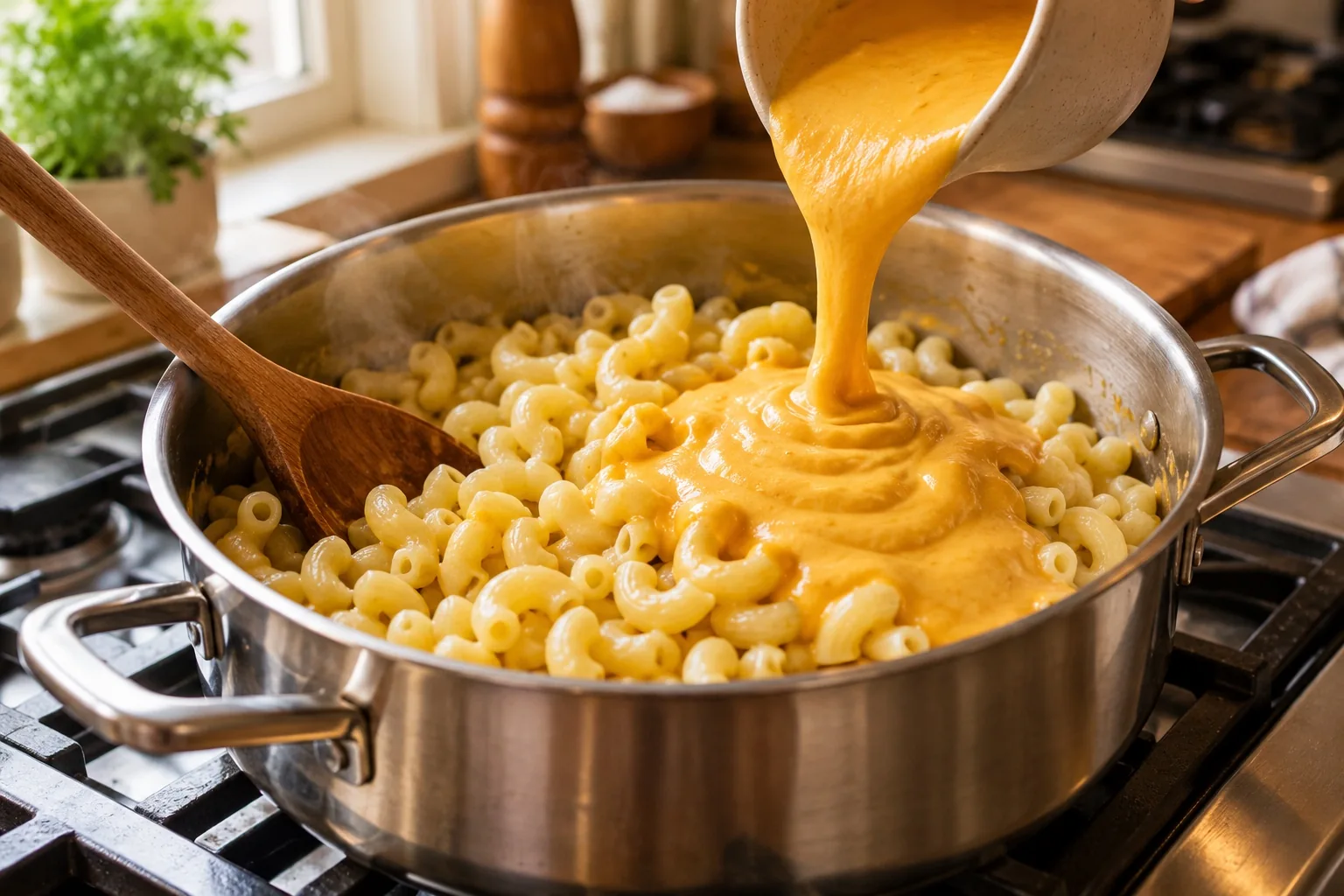
Taste and texture are the final checks. Your first adaptation may need adjustment, which is normal. Note what you changed so that a successful version can be repeated. If you are cooking for guests and cannot risk experimentation, use a tested published recipe as written instead.
How to adapt the published casserole if you dislike nutritional yeast
The linked Vegan Mac and Cheese Casserole contains four tablespoons of nutritional yeast; simply omitting that ingredient gives you an altered recipe, not the published tested result. To explore a no-yeast adaptation, you could omit it and then taste the sauce before baking. Introduce a small amount of extra mustard, lemon, garlic, or miso only if those flavours work for you. Some cooks may prefer a mild, creamy pasta rather than a strong imitation-cheese flavour.
Avoid introducing several new substitutions at the same time. First make the recipe as published if you want to understand its intended flavour, or deliberately adapt the yeast-free version while keeping other ingredients consistent. Record the outcome: Does the sauce taste too sweet? Too bland? Too acidic? Is the texture still smooth? That feedback helps far more than a rule that any replacement is universally equivalent.
If the reason for excluding nutritional yeast is an allergy or a medical dietary restriction, review ingredient labels and obtain advice appropriate to that restriction; do not assume that miso, seed products, or packaged vegan cheese alternatives are suitable just because they are plant-based. The article is a cooking guide and cannot validate individual medical diets.
The best plant milk for a creamy sauce
Choose a plain, unsweetened milk alternative first. Vanilla-flavoured or sweetened drinks can make savoury pasta taste like dessert. Oat milk can be smooth and mild, while soy milk often contributes more protein and a different body. Almond milk tends to be lighter and varies widely by brand. Coconut milk from a can is much richer and more distinctly flavoured than refrigerated coconut beverages, so the two are not interchangeable.
Brand formulas matter. Some plant milks contain gums, oils, or stabilizers that alter how they behave when heated. You may notice separation or a film if a beverage is boiled aggressively, particularly in a highly acidic sauce. Warm sauces gently, add acidity gradually, and evaluate the result after combining everything. Choose the milk based on the whole recipe rather than assuming any plant milk is guaranteed to work one-for-one.
When reheating, a small splash of the same unsweetened plant milk can help restore a thickened sauce. Add it slowly and stir while the macaroni warms. A measured addition is usually more effective than pouring in a large quantity and then trying to boil off the excess.
Cashews, potatoes, and starch: How each changes the texture
A smooth sauce can be built in different ways, but each thickener has trade-offs. Cashews provide richness along with thickening. Potatoes and squash provide structure and can contribute a recognizably vegetable-based flavour. Flour or starch thickens a liquid when heated; it is particularly useful in a nut-free preparation. None of these ingredients can be swapped indiscriminately without affecting flavour, body, or reheating.

- Blended cashews — Main benefit: Creamy richness — Common drawback: Nut allergen; can be gritty if poorly blended — Best use: Smooth, rich sauce where nuts are suitable
- Cooked squash or carrot — Main benefit: Golden colour and vegetable body — Common drawback: Sweetness may dominate — Best use: Mild vegetable-forward sauce
- Cooked white potato — Main benefit: Neutral-tasting thickness — Common drawback: Can turn gluey when heavily processed — Best use: Use in measured amounts with other ingredients
- Wheat-flour roux — Main benefit: Familiar stovetop thickening — Common drawback: Contains gluten; needs careful whisking — Best use: Nut-free sauce if other ingredients are nut-free
- Cornstarch slurry — Main benefit: Thickens liquid quickly — Common drawback: Too much produces a pasty texture — Best use: Measured thickening in suitable recipes
- Tapioca starch — Main benefit: Can give a cohesive, elastic texture — Common drawback: Excess can become gummy — Best use: Recipes specifically formulated for it
A blended sauce should be smooth before it touches the macaroni. Heating can help a starch-thickened sauce reach its intended body, but it cannot magically fix a badly blended cashew mixture. If the sauce is already very stiff, add liquid in measured increments rather than more thickener.
Picking the right pasta shape
Elbow macaroni is familiar for a reason: its short curved tubes are easy to eat and catch sauce inside. Cavatappi has ridges and a spiral shape that provides even more surface for a thick sauce. Small shells catch pockets of sauce in their centres, making them another dependable choice. Long spaghetti can still work, but it changes the experience and may not feel like classic macaroni and cheese.
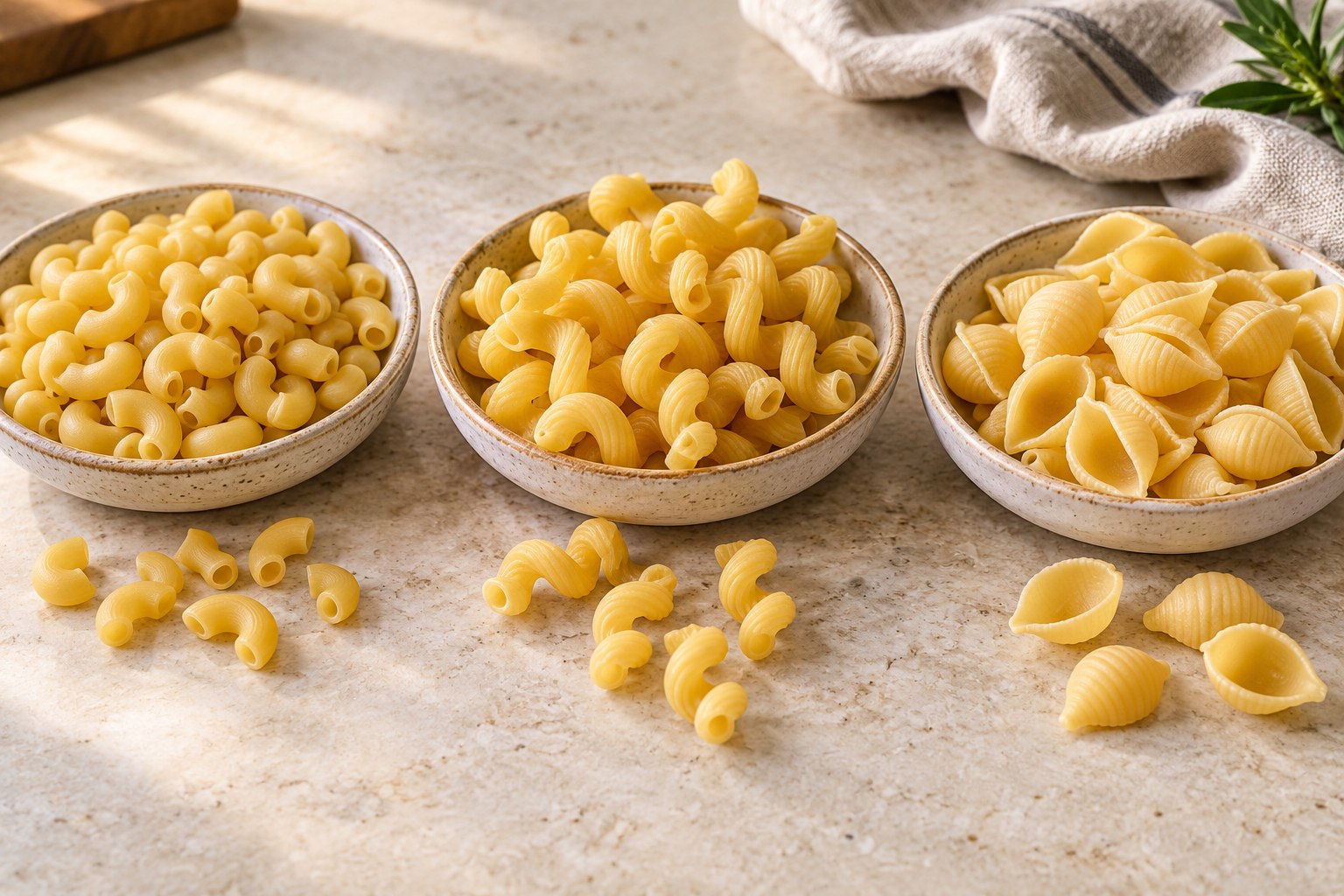
Pasta type matters beyond shape. Standard wheat pasta can handle a little extra oven time if cooked slightly under al dente first. Many gluten-free pastas soften and break down more quickly after cooking and reheating. Follow package directions and check for doneness early. If a gluten-free brand absorbs a lot of sauce, set aside additional plant milk to adjust consistency when serving.
Salt the cooking water enough to season the pasta, remembering that miso, cheese alternatives and some sauces add sodium later. Reserve some cooking liquid, but use it judiciously: a little starch-rich water may loosen a sauce, while too much dilutes its flavour. Drain pasta promptly and combine it while still warm.
Stovetop mac versus baked casserole
A stovetop version makes the most sense when you want maximum creaminess and very little delay. Finish the sauce, fold in cooked pasta, and serve while it flows. Sauce thickens as it cools, so aim for a consistency slightly looser than your ideal plate. Do not cook the finished macaroni over high heat for a long time; it may absorb liquid and become sticky.
A baked casserole offers a different pleasure: toasted breadcrumbs, browned edges, and a more set interior. It also needs more planning. Pasta absorbs moisture while baking, so a thick sauce that looks perfect on the stovetop can become dry by the time the topping browns. Begin with sauce that feels fairly loose, avoid overcooking the pasta, and use the published recipe's baking method when following that formula.
For a breadcrumb topping, mix suitable panko or regular crumbs with a little oil or vegan butter and your preferred herbs. Check packaged breadcrumbs if you need a fully vegan result. Spread in an even layer so that the top browns rather than forms thick dry patches. Do not claim that broiling is always necessary: it can quickly scorch crumbs or delicate toppings, especially in shallow baking dishes.

How to get flavour without imitating cheddar exactly
Some readers want a sauce that resembles cheddar; others just want savoury, creamy macaroni. Both are valid. Try to build a taste that stands on its own rather than telling yourself the dish has failed because a vegetable-based sauce does not taste identical to aged dairy cheese.
Start with the aromatic foundation. Garlic and onion powder provide consistent flavour without adding visible pieces. Dijon mustard can provide depth and a gentle tang; begin with a small quantity because brands vary. White miso can introduce a richer savoury element, but it may contain soy and should be measured carefully. Lemon juice contributes brightness and should be added gradually. Smoked paprika can be appealing if you want smoky pasta, but it easily dominates a mild sauce.

For extra complexity, serve mushrooms, roasted broccoli, or crisp breadcrumbs alongside or on top. These give diners contrast without forcing the sauce to carry every flavour. Keep spicy additions such as chilli flakes at the table when cooking for people with different preferences. If using ready-made vegan cheese, check whether its flavour and melt quality actually suit the recipe; some products become oily or rubbery when heated for too long.
Five common sauce problems and how to fix them
1. The sauce is gritty rather than silky
Poorly softened cashews are the first possibility in a cashew sauce. Ensure they have been prepared according to the recipe, and blend long enough with sufficient liquid for your appliance. Graininess may also come from uncooked vegetable fragments or a starch mixture added without dispersing it properly. Identify the source before adding more oil, which may conceal the problem briefly without solving it.
2. The mac and cheese becomes dry after baking
Pasta absorbs more liquid as it heats, especially in a casserole. A sauce that was already thick before baking will become thicker still. Next time, undercook pasta slightly, add a little more liquid before baking, and use an appropriate dish and baking time. For a leftover portion, stir in unsweetened plant milk while reheating instead of baking repeatedly until the edges harden.
3. The sauce tastes sweet
Carrots, squash, sweet potato, and some plant milks contribute sweetness. Check the milk label first; a vanilla or sweetened product can overwhelm a savoury dish. If using unsweetened milk, balance the vegetables with a small amount of mustard, lemon, miso, garlic, or another savoury ingredient. Do not assume that nutritional yeast is the only way to correct sweetness.
4. The texture is gummy or oddly stretchy
Starches work best in the correct quantity and cooking conditions. If a sauce contains too much tapioca or cornstarch, it may become thick, sticky, or stringy. Adding liquid can loosen it to some extent, but it will not necessarily recreate the intended texture. Follow a measured recipe next time and avoid adding a large spoonful of starch directly into hot sauce, which can form lumps.
5. The sauce separates or turns oily
Too much fat or intense heat may lead to visible separation, particularly with certain commercial vegan cheese products. Remove the pan from direct heat, whisk gently, and add a modest quantity of liquid to see whether the mixture returns to a smoother texture. Some sauces cannot be fully rescued after severe overheating. In the future, warm gradually and add acidic ingredients a little at a time.
Nut-free, gluten-free, soy-free, and other adaptations
The word vegan identifies what a recipe does not contain from animal sources; it does not automatically mean allergen-free. Cashew sauces contain tree nuts. Wheat pasta contains gluten. Soy milk and miso can contain soy. Some plant-based packaged foods also include other allergens, and brand formulations can change.
For a nut-free sauce, consider a suitable roux-based recipe made with a nut-free milk alternative, or a vegetable-forward sauce that does not rely on cashews. Do not simply replace cashews with sunflower seeds and claim the result will be identical. For gluten-free macaroni, use appropriately labelled pasta and a compatible thickener. For soy-free cooking, choose a soy-free beverage and leave out soy-based miso; season with other ingredients instead.
If someone has a severe allergy, checking every packaged ingredient and cross-contact risk is essential, including pasta, toppings, plant milks, breadcrumbs, and vegan cheeses. Separate equipment or utensils may be needed depending on the situation. This guide cannot certify any individual preparation as allergy-safe.
What to serve with creamy vegan mac and cheese
A rich pasta dish benefits from something fresh, acidic, crisp, or green on the side. Air Fryer Broccoli can be a useful vegetable pairing when the recipe's optional Parmesan is omitted. Lemon juice and crisp browned broccoli help balance the pasta's soft richness. A quick green salad with vinaigrette also works, especially for a potluck where the macaroni is the main attraction.

For another savoury side, Vegan Cheesy Garlic Biscuits use vegan butter and vegan cheese according to their published ingredient list. It is a richer pairing, better suited to a larger shared table than to a dinner that needs a lighter side. Air Fryer Apple Chips are a simple sweet ending if you prefer fruit after dinner.
Take care with the site's Air Fryer Garlic Bread: the published recipe uses dairy butter and optional Parmesan, so it is not vegan as written. You could develop a separate adaptation using vegan butter and omitting Parmesan, but that change is not an existing tested What’s Baking? vegan recipe. Clear recipe labelling prevents confusion, particularly for readers avoiding dairy for a specific reason.
A practical make-ahead plan
If cooking for a busy evening, prepare the sauce ingredients first: soak the cashews as required, cook the vegetables, and measure seasonings. Pasta tastes best when cooked reasonably close to serving. If you must prepare the dish in advance, consider storing sauce and pasta separately so that the pasta does not absorb every drop of liquid while refrigerated.

For a baked casserole, assemble only as far ahead as your chosen tested recipe allows and refrigerate promptly. Let the dish's size and starting temperature guide heating; a deep refrigerated casserole takes longer to warm through than a shallow dish freshly assembled on the countertop. Do not guess doneness based solely on a golden top. Check that the centre has heated safely before serving.
Store crunchy breadcrumbs separately when possible and add them before baking or final reheating. You can also prep chopped broccoli, herbs, or a small salad earlier in the day. That way, the main dish remains the centrepiece without everything depending on last-minute chopping and washing up.
Safe storage, reheating, and freezing
Cooked pasta with plant-based sauce is still a perishable prepared food. Refrigerate leftovers promptly in clean, shallow containers. Health Canada advises consuming refrigerated leftovers within two to three days, or freezing them for later; food left at room temperature for more than two hours should be discarded. Packaging and storage conditions matter more than whether leftovers smell normal.
Reheat leftovers to an internal temperature of 74°C (165°F), checking with a digital food thermometer. Stir sauces and pasta during heating so that hot and cool spots even out. A splash of unsweetened plant milk can improve texture, but safe reheating and palatability are separate considerations. Avoid repeatedly reheating the same container of pasta.
Freezing is possible, but the texture may change. Cashew sauces can thicken, pasta can soften, and some starch-based mixtures separate after thawing. For better flexibility, freeze sauce separately in suitable containers, label it with the date, and thaw safely in the refrigerator. If you freeze assembled mac and cheese, accept that it may be softer once reheated and avoid promising fresh-from-the-oven texture.
For detailed food-safety instructions, see Health Canada's food safety tips for leftovers.
Frequently asked questions
Can I simply leave nutritional yeast out of vegan mac and cheese?
You can experiment with omitting it, but the flavour will change. Both linked What’s Baking? mac and cheese recipes include nutritional yeast in their published formulas, so removing it creates an adaptation rather than the same tested recipe. Taste the sauce warm and adjust other flavour elements carefully instead of claiming it is an identical replacement.
Is vegan mac and cheese automatically healthier than dairy mac and cheese?
No. Nutritional composition depends on ingredients, portions, and the whole meal. Cashews, oils, vegetables, commercial vegan cheese alternatives, and different pasta shapes all contribute different amounts of fat, sodium, fibre, and protein. The word vegan does not tell you whether a dish fits a particular nutrition goal.
Why isn't my cashew sauce smooth?
The cashews may not have softened enough or the blender may need more time and liquid. Some ordinary blenders cannot produce the same texture as powerful high-speed machines. Follow the published recipe's soaking instructions and blend cautiously, stopping to scrape down the sides as needed.
Can I make it without nuts at all?
Yes, with an appropriately formulated nut-free sauce such as a roux-based or vegetable-based version using compatible ingredients. The cashew-based starting framework in this guide is not suitable for nut allergies. Check every packaged product rather than assuming that plant-based always means nut-free.
Why does my sauce thicken so much after sitting?
Pasta absorbs moisture, and starch-containing sauces continue to set as they cool. Keep stovetop mac slightly looser when serving and add small amounts of unsweetened plant milk as needed during reheating. Over-reduction on the stove can make the problem worse.

Can I use oat milk in mac and cheese?
Plain unsweetened oat milk can be suitable for many sauces, but products vary in sweetness and thickness. Choose an unflavoured beverage, warm it gently, and evaluate the mixture before assuming it behaves exactly like soy milk or dairy milk.
Does adding tapioca starch make it cheesy?
Tapioca can change the texture, sometimes making sauce more cohesive or elastic. It does not itself provide a cheddar-like flavour, and too much can make a sauce gummy. Use the amount prescribed by a recipe formulated for that starch.
Is this article's no-yeast method a fully tested recipe?
No. The blueprint above is educational and intended for careful home adaptation. The linked What’s Baking? recipes are published formulas that contain nutritional yeast. A dedicated, tested no-yeast recipe should be developed and reviewed separately before being represented as a proven recipe on the site.
What is the best way to avoid soggy baked macaroni?
Cook pasta slightly short of the desired final texture, keep the sauce a little looser before it enters the oven, and do not bake longer than required. Use a suitable dish, monitor the top, and let a casserole settle briefly rather than leaving it in an active oven while waiting to serve.
What if the sauce tastes nothing like cheese?
It may still be a very enjoyable savoury pasta sauce. Try balancing richness, acidity, salt, garlic, mustard, and other flavours, but do not expect vegetables alone to duplicate an aged dairy cheese exactly. Choose a flavour profile that you genuinely enjoy instead of adding more ingredients merely to imitate a label.
Final thoughts: Creaminess is a method, not a single ingredient
Beautiful vegan macaroni starts with understanding how a sauce is built. Cashews can add richness, vegetables can create body, a roux can provide nut-free thickness, and starch can influence how the sauce coats pasta. Nutritional yeast may contribute savoury flavour, but it is not the only path to a satisfying plant-based meal.
Choose the approach that suits your kitchen and dietary needs, then cook with careful attention to texture. Blend thoroughly, heat gently, salt thoughtfully, and remember that pasta keeps absorbing sauce even after the cooking is finished. If you want the reassurance of a published recipe, start with What’s Baking? Vegan Mac and Cheese Casserole as written, including its nutritional yeast, or follow our Vegan Mac and Cheese recipe. If your aim is specifically to avoid nutritional yeast, use the guidance here to plan an adaptation and note what you change.
A bowl of mac and cheese should be comforting rather than confusing. The best guide tells you clearly which recipe has been tested, which variation is experimental, and how to get a smoother, more flavourful outcome in either case.
Combine the sauce and cooked pasta before the recipe’s baking step. AI editorial illustration.
An illustration of sauce coating the pasta evenly. AI editorial illustration.
IN PICTURES
From the baking notebook
FROM THE RECIPE BOX


