On this page
There is a difference between a recipe that looks tempting in a photograph and one that actually fits the evening you have. A generous walking taco casserole is useful when you are feeding a table of people; Basque cheesecake is a satisfying weekend project; air-fryer salmon can make a straightforward dinner feel special. The trick is to pick the right recipe for the occasion and know what the real instructions involve before you begin.
These ten favourites from What’s Baking? range from savoury family meals to snackable air-fryer bites and homemade desserts. Every linked recipe has been checked against the current recipe collection, so this guide describes the actual ingredients and methods rather than a tempting but inaccurate shortcut. Some are fairly quick. Others involve dough rising, extended chilling, or more than one cooking stage. All ten can be worth making when you plan for them properly.
In the sections below, you will find a quick explanation of what makes each dish special, the ingredients that matter, practical techniques, likely trouble spots, and serving suggestions. Use the full linked recipe page for exact quantities and numbered instructions. This roundup is designed to help you choose and understand a dish, not to replace its tested—or, where applicable, published—recipe method with an improvised version.
Before you start: Choose the right kind of recipe
For a family dinner that needs to serve several people, start with Walking Taco Casserole. If you are after a protein-centred dinner for a smaller household, compare Air Fryer Steak, Pork Chops, and Salmon. For a vegetarian-style party snack, buffalo cauliflower is an option, but its sauce and dipping ingredients must be checked before calling it vegan.
The next set is about sharing: grilled-cheese roll-ups, mozzarella sticks, and homemade fries are best enjoyed shortly after cooking. The two desserts belong in their own planning category. Air Fryer Donuts rely on yeast fermentation and are a proper baking project; Basque Cheesecake needs substantial cooling and refrigeration even though its preparation is approachable.
A useful rule: Add preparation, cooking, chilling or proofing, and any separate batches before deciding whether a recipe is appropriate for tonight. “Air fryer” does not mean “instant,” just as “few ingredients” does not mean there is no technique involved.
1. Walking Taco Casserole: A weeknight-friendly centrepiece
Open the Walking Taco Casserole recipe.
A walking taco often means seasoned filling and toppings served with crunchy chips in a portable format. This casserole turns that idea into a communal baked dish: seasoned ground beef, onion, garlic, black beans, tomatoes, corn, tortilla chips, and a generous cheddar–Monterey Jack-style cheese blend. Fresh lettuce, avocado, sour cream, and green onion can be added after baking so they do not wilt or lose their freshness in the oven.
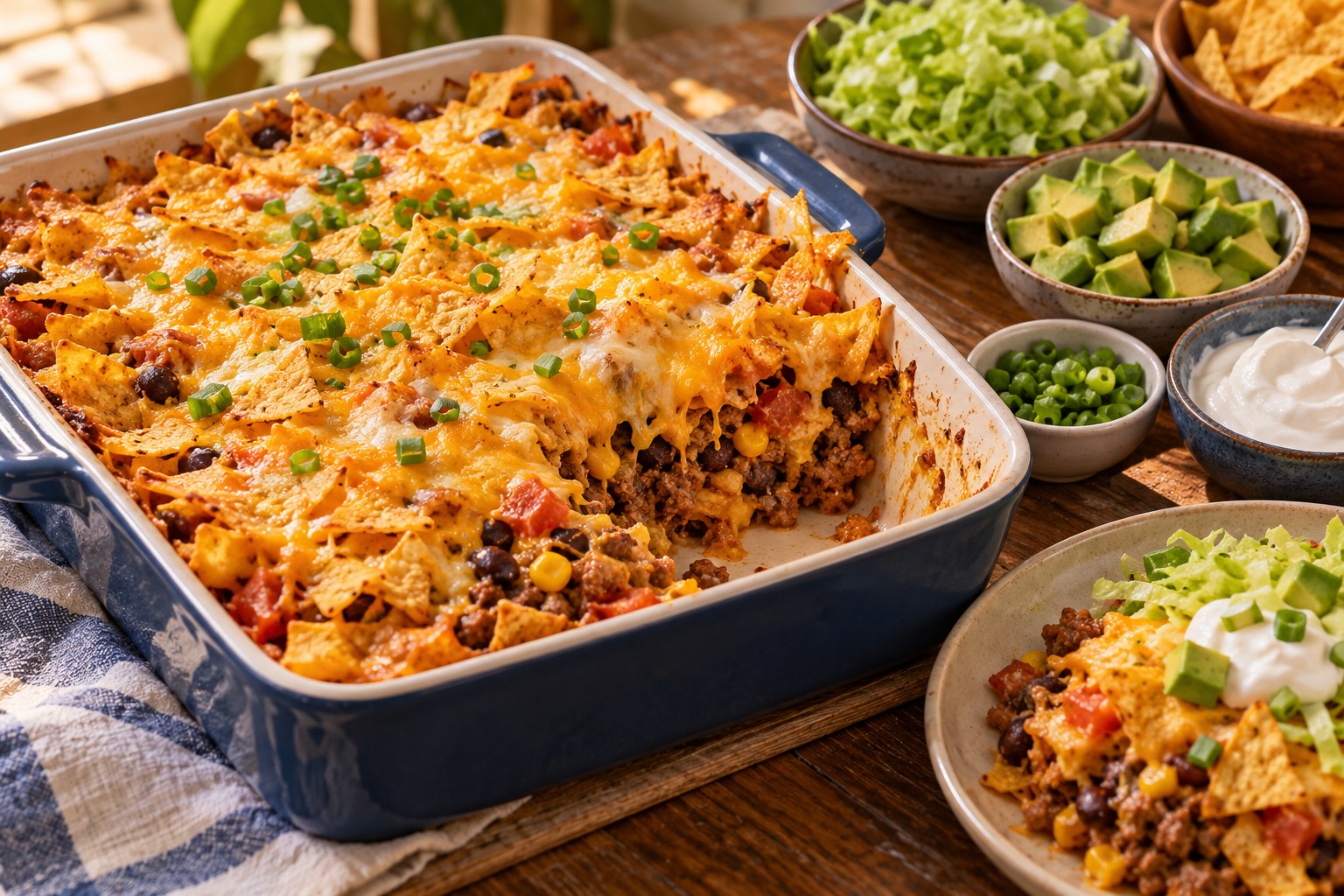
The published ingredient list specifies 500 g ground beef, a 400 g can of black beans, 150 g tortilla chips, and 300 g grated cheese blend. Its listed preparation and cooking times are 20 and 25 minutes, respectively, excluding serving and cleanup. That is not a meal assembled in just a few minutes, but it is practical for a family dinner when you can cook the filling while the oven heats.
What makes the texture work?
The method builds layers rather than stirring everything together. Cook the beef safely with onion and garlic, add seasoning, tomatoes, beans, and corn, then distribute chips, filling, and cheese through the baking dish. Covering the first stage helps heat the layers; uncovering near the end lets the final cheese topping melt and colour. Extra raw chips offered at the table restore crunch because chips inside a moist casserole naturally soften as it sits.
Do not expect every layer to remain crisp. Moist filling, tomato juice, and hot cheese will soften some chips, which is part of the comforting casserole texture. If you want clear crunch on every serving, keep a separate bowl of fresh chips and add them immediately before eating. Resist the temptation to bake lettuce or avocado into the dish: those belong among the fresh finishing toppings.
Ways to serve it well
Set out toppings in small bowls so guests can customize their plates. For a bright accompaniment, use Authentic Guacamole, which is made with ripe avocado, lime, tomato, red onion, jalapeño, cilantro, cumin, and garlic. Offer a milder option if some guests dislike heat. A simple salad or crisp vegetables alongside the warm casserole helps the meal feel balanced.
For food safety, treat the ground beef as raw meat until fully cooked, prevent cross-contact with ready-to-eat toppings, and refrigerate leftover casserole promptly. The casserole and cool toppings should be stored separately. On the following day, reheat a portion thoroughly and add fresh lettuce and chips only after it is hot.
2. Basque Cheesecake: A deeply browned top and creamy centre
Open the Basque Cheesecake (Tarta de Queso) recipe.
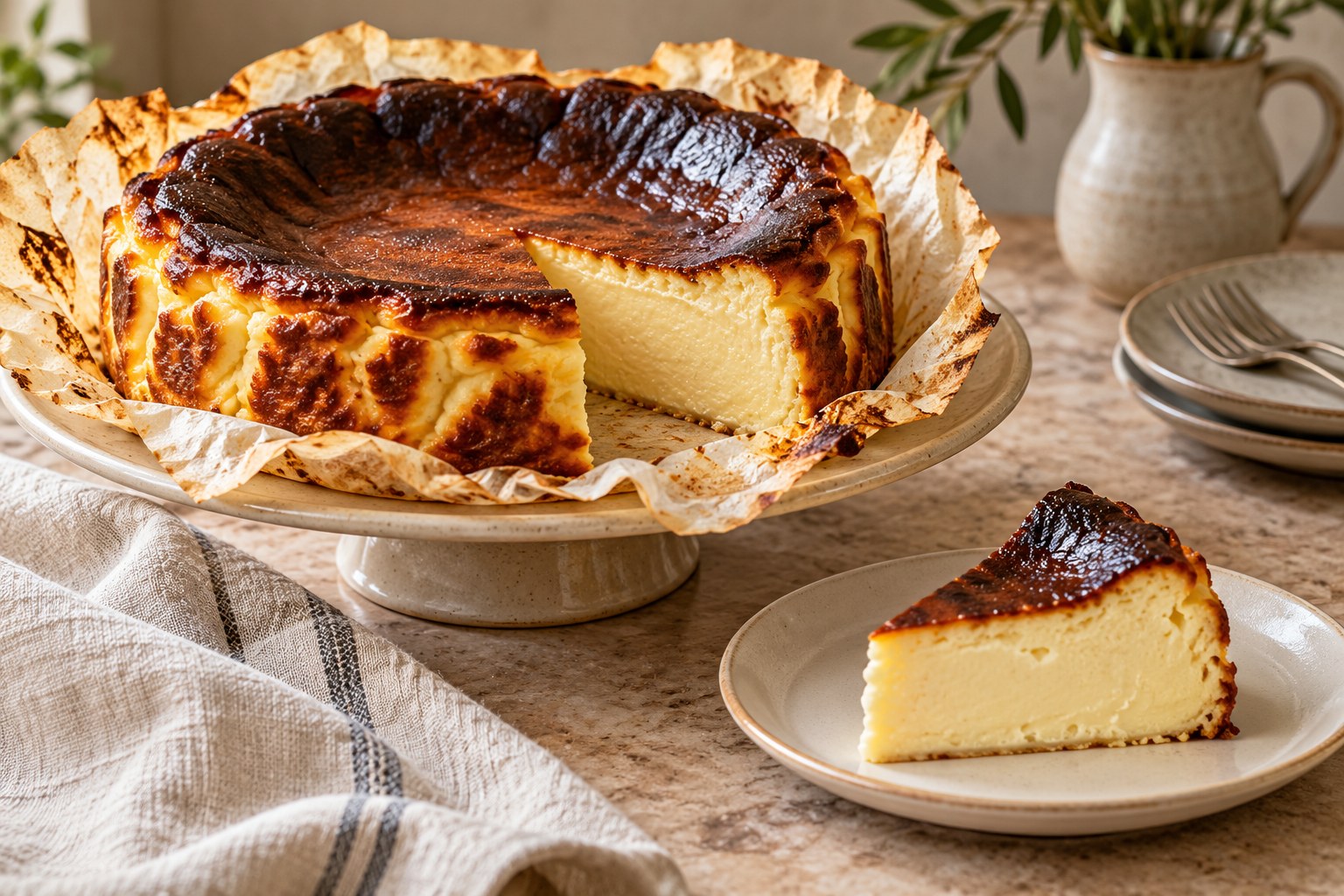
Basque-style cheesecake makes a dramatic dessert without a traditional biscuit crust. Its top is deliberately dark and caramelized, while the interior is rich, smooth, and custard-like once properly cooled. The rustic parchment folds are part of its appearance, not a decorating mistake. It is an excellent choice when you want a centrepiece dessert but would rather focus on one batter than build several separate layers.
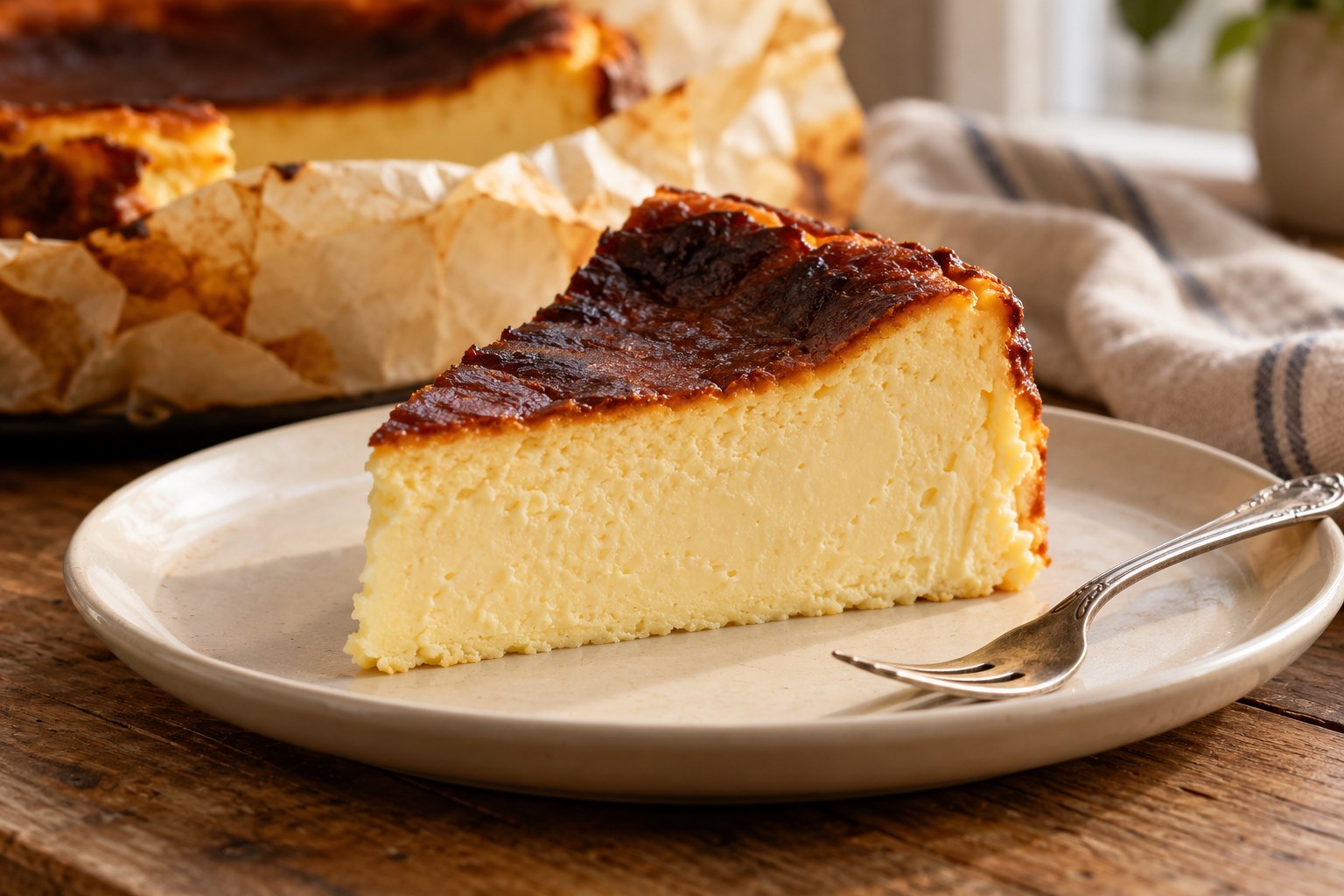
The linked recipe includes 600 g cream cheese, 200 g sugar, four eggs, 300 ml heavy cream, and 25 g all-purpose flour, along with vanilla and salt. That small amount of flour matters: the published cheesecake is not gluten-free as written, even though Basque cheesecakes are sometimes discussed as flourless. Its card lists 20 minutes preparation and 45 minutes baking, followed in the method by cooling and at least four hours of refrigeration.
The parchment and the batter
The parchment should line the base and rise above the springform sides because the cheesecake can lift as it bakes. Use the pan size and parchment arrangement specified by the recipe. Crumpled, overlapping parchment creates the distinctive ruffled edge and helps with removal. A shallow lining that stops below the pan rim can cause problems if the batter rises higher than expected.
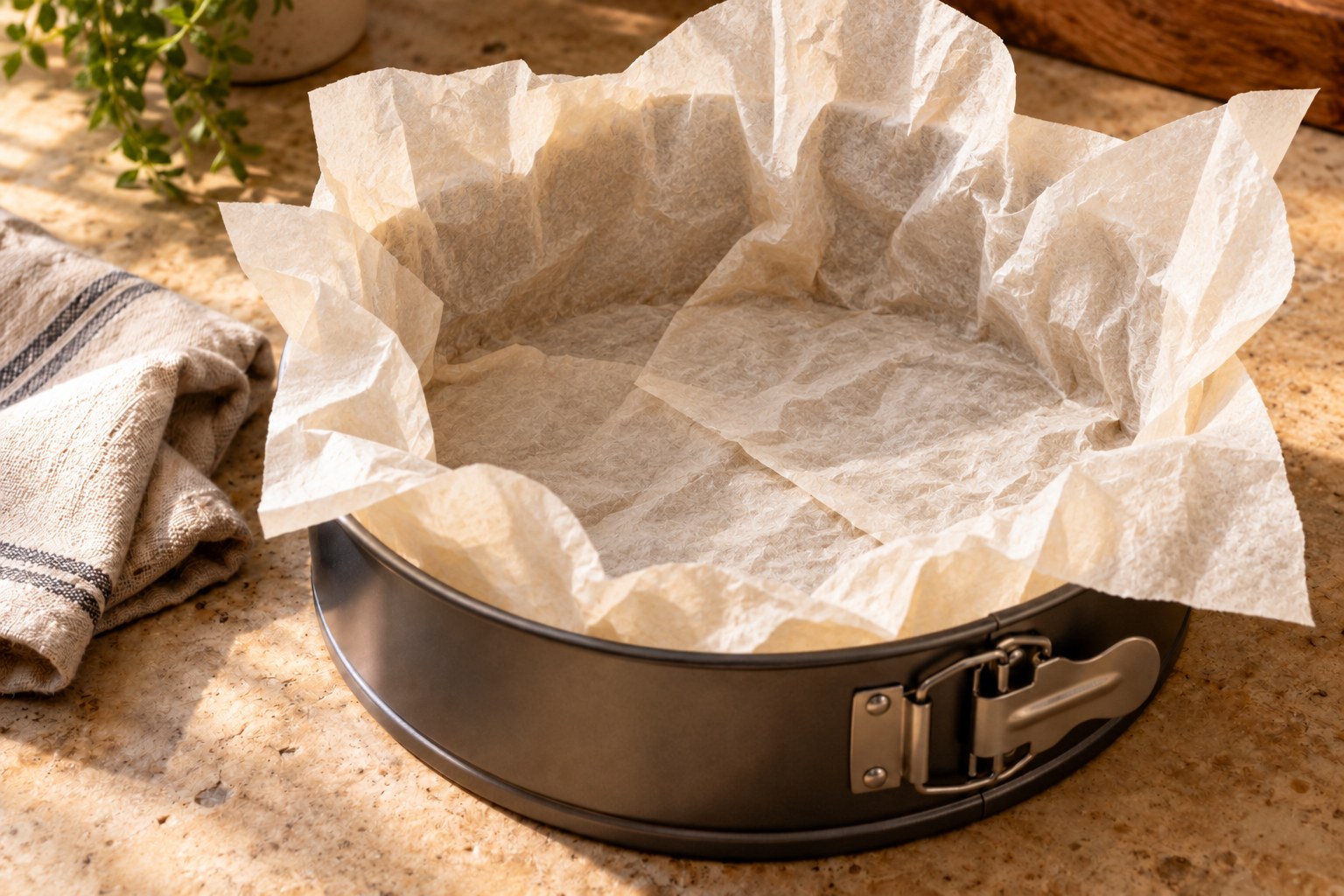
Room-temperature cream cheese mixes more smoothly than cold blocks. Beat until smooth, add sugar and eggs as directed, then mix in cream and vanilla. Sift in the listed flour rather than assuming it will dissolve without lumps. Overmixing late in the process can introduce unnecessary air, making the cake rise and fall more abruptly. Following the method's gradual ingredient additions helps keep the batter cohesive.
When is it actually done?
The recipe bakes at 220°C (425°F) and aims for a very dark upper surface with a visibly wobbly centre. The top may look almost overdone to someone accustomed to pale cheesecake; that contrast is the point. However, a dark top does not mean it is ready to cut straight from the oven. Cooling and chilling allow the interior to firm up and slice cleanly.
Allow the cheesecake to cool as specified, then refrigerate for the recommended time. For neat slices, use a clean warm knife and wipe it between cuts. Serve simply with berries or no garnish at all. Because it contains eggs and dairy, keep it refrigerated when not serving. This is a plan-ahead dessert—not a last-minute dessert just because the mixing steps are short.
3. Air Fryer Steak: Herb butter and careful doneness
Open the Air Fryer Steak recipe.
A well-seasoned steak is an appealing way to use an air fryer, especially when access to an outdoor grill is limited. The published recipe centres on two ribeyes of approximately 300 g each, olive oil, sea salt, black pepper, garlic powder, fresh rosemary and thyme, plus an herb butter made with softened butter and garlic. The optional richness from that butter is part of the finished dish; it should not disappear from dietary descriptions.
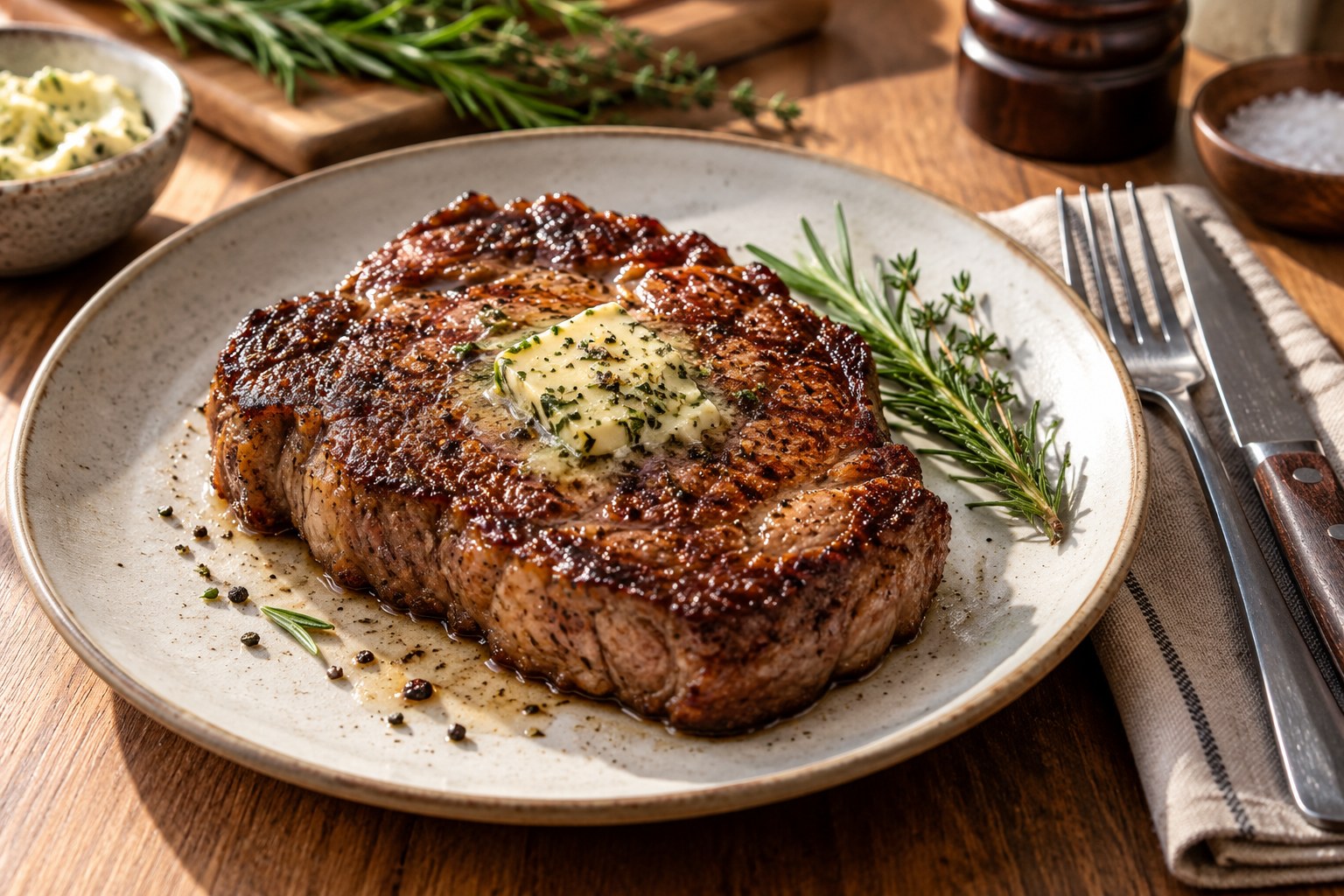
The recipe card lists 15 minutes prep and 12 minutes cooking, but its method also calls for taking the steaks out before cooking and preparing the herb butter. Actual elapsed time may be longer. Steak thickness, starting temperature, and air-fryer model affect results, so a statement like “perfect in under 15 minutes every time” is not dependable.
Surface moisture and the basket
Drying the exterior before seasoning helps the surface brown rather than steam. Use enough space between the steaks for air to circulate. An air fryer produces a browned crust differently from a very hot cast-iron pan or open grill; it does not create automatic grill marks, and the appearance will vary with the cut and appliance.
The herb butter can be prepared while the steaks cook. Add it at the point prescribed by the recipe so fresh garlic and herbs do not burn prematurely. Keep raw-meat tools separate from the butter or vegetables that will be served without further cooking. Do not place cooked steak onto the same unwashed plate used for raw meat.
Cook to a measured result
Use a food thermometer and current safe-temperature guidance for the specific cut rather than a fixed time alone. The steak continues changing temperature while it rests, and thicker pieces need different treatment from thin ones. Let it rest as the recipe advises, then slice across the grain for more tender bites.
Pair steak with Air Fryer Asparagus or Best Mashed Potatoes. Those are separate recipes with their own preparation requirements, so plan the sides before the steak is nearly finished. For a second steak-specific comparison, the site also has an Air Fryer Ribeye Steak recipe with different listed timings and quantities; don't accidentally combine the two methods.
4. Air Fryer Pork Chops: A simple savoury dinner
Open the Air Fryer Pork Chops recipe.
Pork chops are useful on busy nights because the seasoning can remain uncomplicated. The published formula uses four boneless pork chops, each around 150 g and 2.5 cm thick, plus olive oil, garlic powder, paprika, thyme, salt, pepper, and optional brown sugar. The original blog described bone-in chops and a brining step as if these belonged to the linked recipe; they do not.
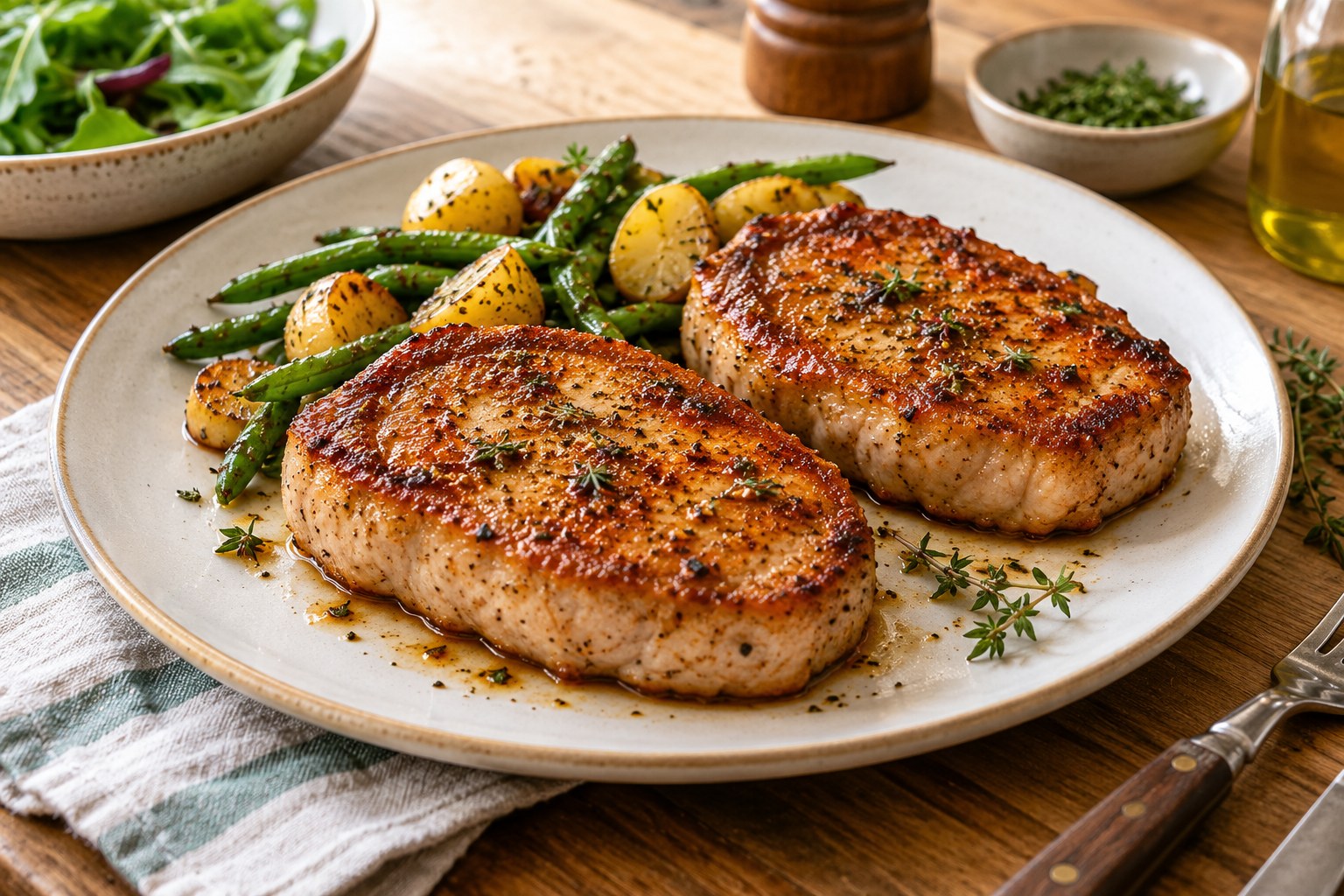
The recipe card lists 10 minutes preparation and 12 minutes cooking. Those values are guidance, not a substitute for checking doneness. A thin boneless chop may cook differently from a very thick one, and a bone-in substitution could change timing considerably. Work with similarly sized pieces if possible so the family can eat together without one portion becoming dry while another is still cooking.
The secret is not overcomplicating it
Dry the chops, mix the stated dry seasonings, and coat them as the full recipe directs. A modest amount of oil helps distribute seasoning and promotes browning. Optional sugar can deepen surface colour, so watch for browning that happens before the centre is ready. Unlike a heavily breaded chop, this recipe lets the meat and seasonings remain the focal point.
Choose a cooking temperature and doneness check based on a reliable food thermometer and up-to-date food-safety guidance. Avoid repeatedly cutting into the meat to judge it by colour; each cut releases moisture and does not guarantee safety. Let the chops rest before serving if directed. If one chop is noticeably thicker, do not assume both will finish at exactly the same time.
What to put on the plate
Fresh green vegetables, a potato side, or a grain are sensible companions. A squeeze of lemon or a separately prepared sauce can add brightness without overwhelming the paprika and thyme. Leftover pork can be used in a new meal if cooled, refrigerated, and reheated safely; it should not be left on the counter while everyone finishes eating.
This recipe earns a place in a weeknight rotation precisely because its ingredients are familiar. It does not need fictional brining instructions or a claim that it always comes out perfectly juicy. Repeat the same cut, thickness, and technique to understand what works in your air fryer.
5. Air Fryer Salmon: Lemon, dill, and a delicate finish
Open the Air Fryer Salmon recipe.
Salmon has a distinctive flavour that works well with simple seasoning. The What’s Baking? version uses four fillets, approximately 150 g each, olive oil, lemon juice and zest, garlic, dill, paprika, salt, and black pepper. The listed 10 minutes preparation and 12 minutes cooking make it a plausible option for a relatively quick dinner, although preheating, side dishes, and differing fillet thickness can add time.
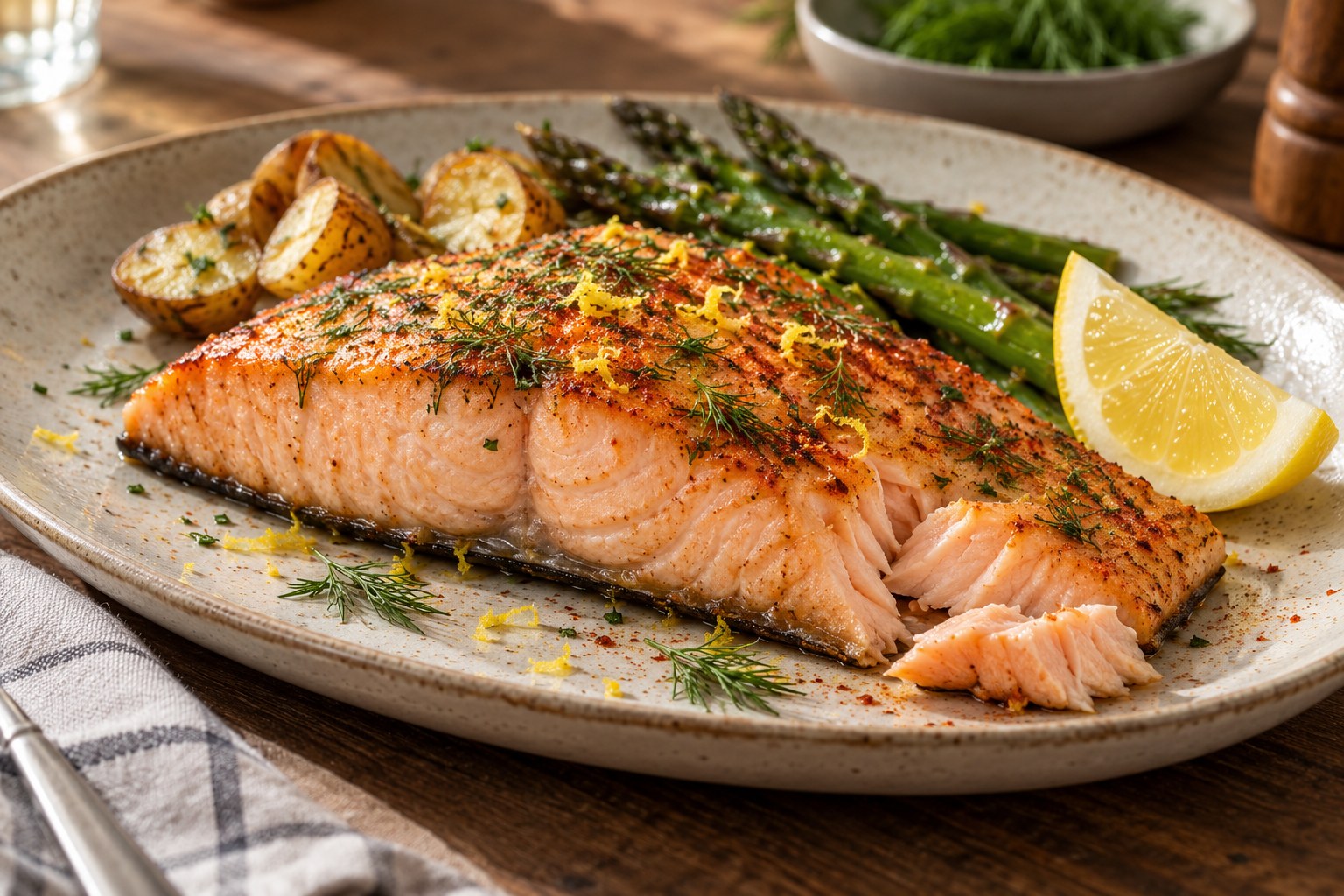
Keep the fish intact
Salmon can dry out when cooked beyond the desired safe point. Gently pat the fillets dry, distribute the seasonings, and place the fish with sufficient room for circulating air. Skin-on and skinless fillets can behave differently, as can thick centre-cut pieces and tapered tail pieces. If using frozen fillets, follow safe thawing and cooking instructions rather than assuming the same clock time applies.
A digital thermometer helps determine when the thickest section is cooked safely; colour alone is not a complete safety test. Lift the fish gently to preserve its shape. Avoid turning a delicate fillet repeatedly just to mimic the technique used for chicken or steak. Keep raw fish juices away from salads and other ready-to-eat sides.
Three ways to serve the same basic recipe
The listed lemon and dill combination is a natural starting point. Pair it with How to Cook Fluffy Quinoa and a green vegetable for a grain bowl, or use Air Fryer Asparagus if a second air-fryer component is convenient. Remember that two air-fryer recipes may require sequential batches unless you have separate cooking zones.
For a family dinner, a side of Best Mashed Potatoes creates a comforting plate. Alternatively, add cooked salmon to a vegetable-based salad and serve dressing separately. If you want maple-mustard or spicy-honey flavour, treat those as unverified variations unless you are following a separate tested recipe with explicit amounts; the published salmon formula is lemon-dill.
Salmon is best served fresh, and leftovers require prompt refrigeration. Reheating gently can reduce drying, but food safety still takes priority. This is a satisfying meal precisely because a small number of well-chosen ingredients can do the work.
6. Air Fryer Buffalo Cauliflower: A crunchy, spicy party bite
Open the Air Fryer Buffalo Cauliflower recipe.
Buffalo cauliflower is an appealing option for parties because it offers heat, crunch, and the familiar tang of buffalo sauce without using chicken. The published recipe coats roughly 600 g cauliflower florets with a batter made from 100 g all-purpose flour, seasonings, and 200 ml plant-based or regular milk. It also uses buffalo sauce, olive oil or cooking spray, with optional blue cheese or ranch dressing.
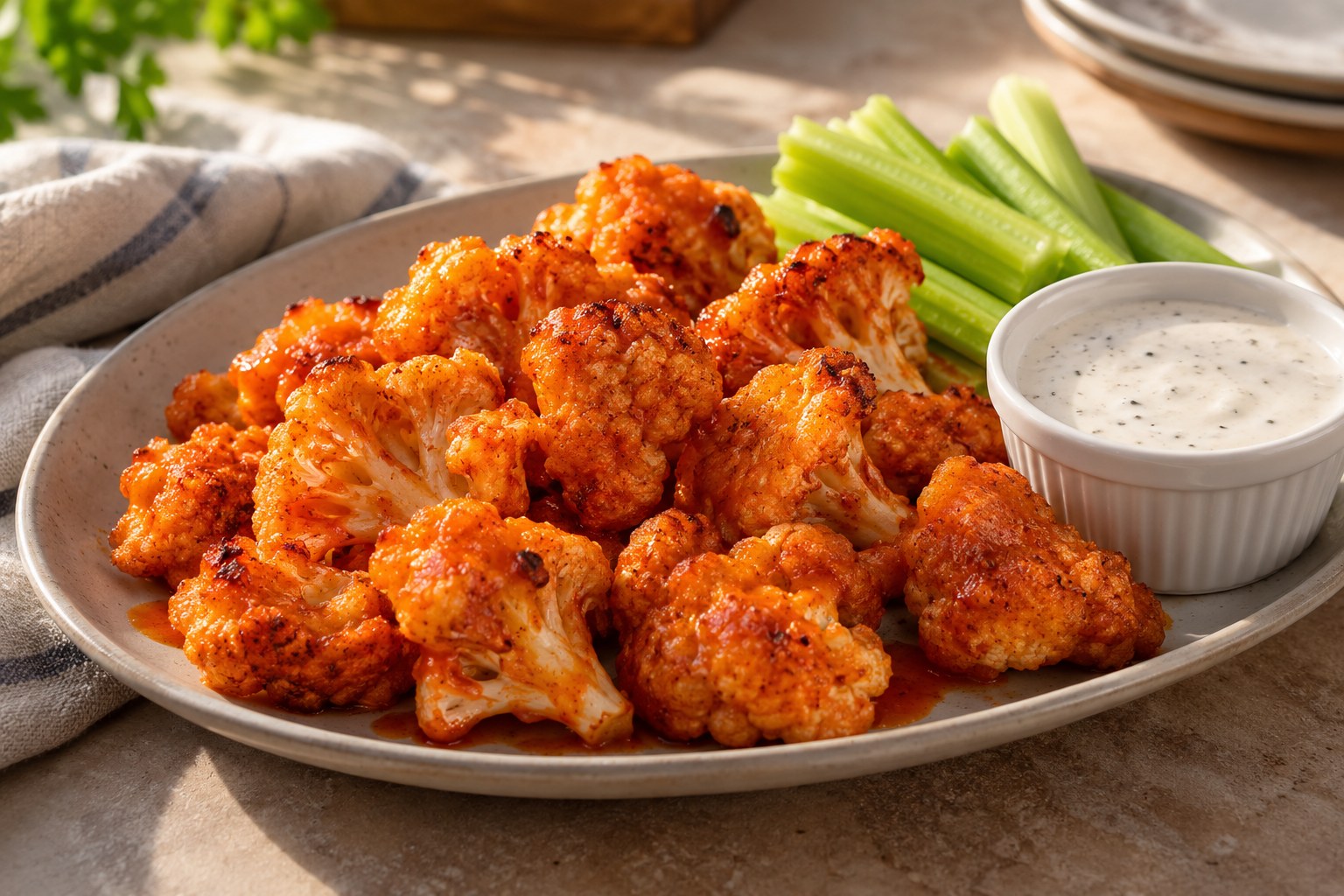
Vegetarian is not the same as vegan. The method describes buffalo sauce containing hot sauce and melted regular or plant-based butter, and it suggests dairy-based dips. Whether the finished plate is vegan depends on the specific butter, milk, sauce, and dip chosen. The wheat flour also means the published coating is not gluten-free as written.
Why a thin coating matters
The batter should cling to each floret without forming a thick soggy layer. Uniform cauliflower pieces cook more evenly, and patting them dry helps the coating adhere. Arrange the florets in a single layer with space between them; a piled basket tends to trap steam rather than produce crisp edges. Small machines may require several batches beyond the listed 15 minutes prep and 20 minutes cooking.
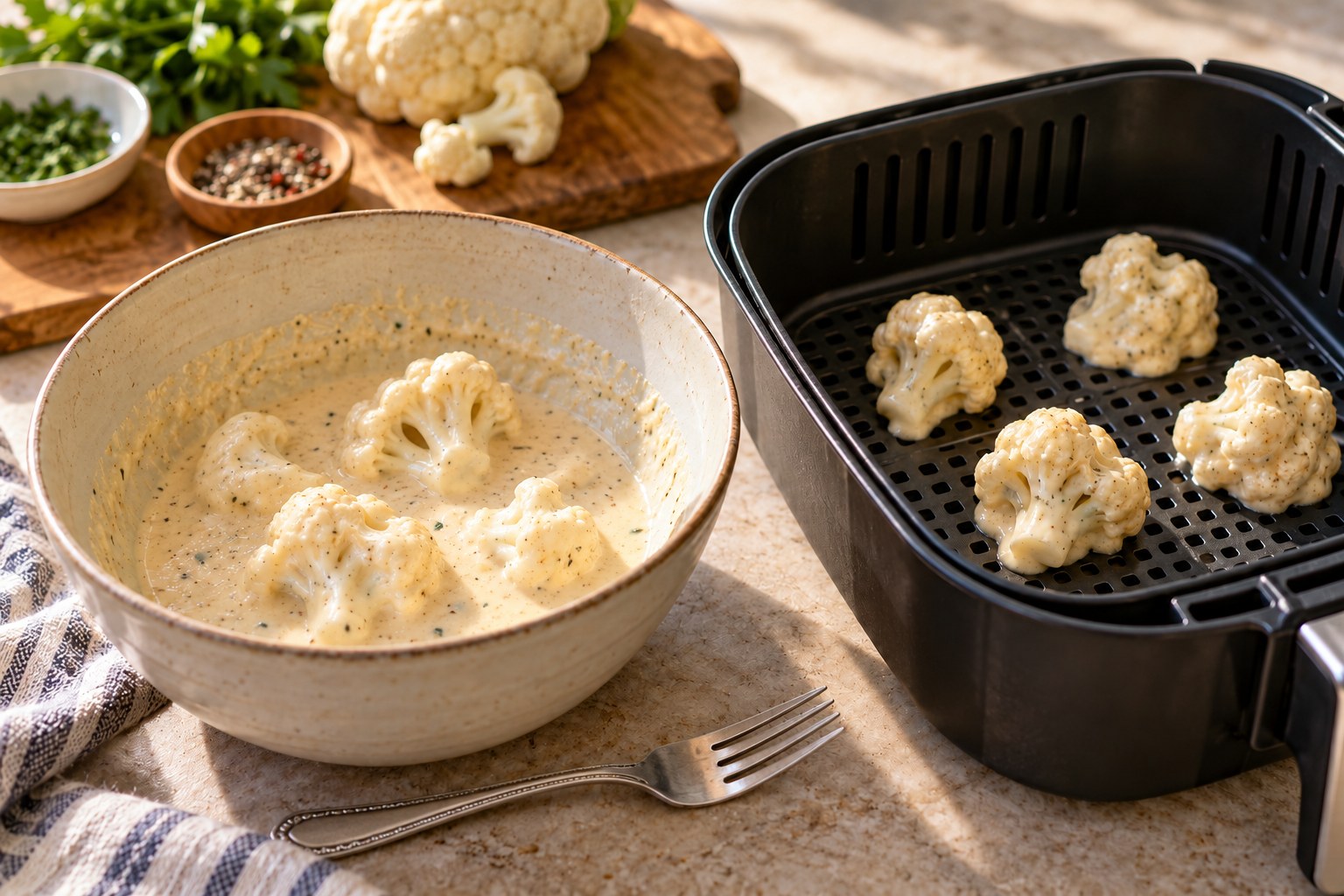
The published method first cooks the coated florets, then tosses them in buffalo sauce and returns them briefly to the appliance. That two-stage approach helps create a sticky finish while retaining some texture. Add extra sauce at serving if desired, but expect heavily sauced cauliflower to soften over time. This is a “serve right away” dish rather than the best choice for a buffet that sits untouched for hours.
Serve thoughtfully
Offer celery sticks or another cooling vegetable beside the spicy bites, plus a dressing that fits the guests' dietary needs. Heat tolerance varies, so keep an extra sauce bowl separate instead of making every floret extremely spicy. For a larger crowd, cook in batches and refresh small platters rather than leaving a big bowl out for an extended period.
This snack shows why correct recipe labels matter. It is a cauliflower-based alternative to buffalo wings, but not automatically a low-calorie, vegan, gluten-free, or protein-rich main course. Its strength is in its texture and flavour, not a claim that it fits every diet.
7. Air Fryer Grilled Cheese Roll-Ups: Small, cheesy, and satisfying
Open the Air Fryer Grilled Cheese Roll-Ups recipe.
These compact roll-ups turn familiar bread and cheese into a snack that can be picked up and dipped. The published recipe uses eight slices of white sandwich bread, 120 g grated cheddar, 30 g melted butter, and optional garlic powder or dried herbs. Its card lists 10 minutes preparation and eight minutes cooking, but the number that fits in your fryer may affect total time.
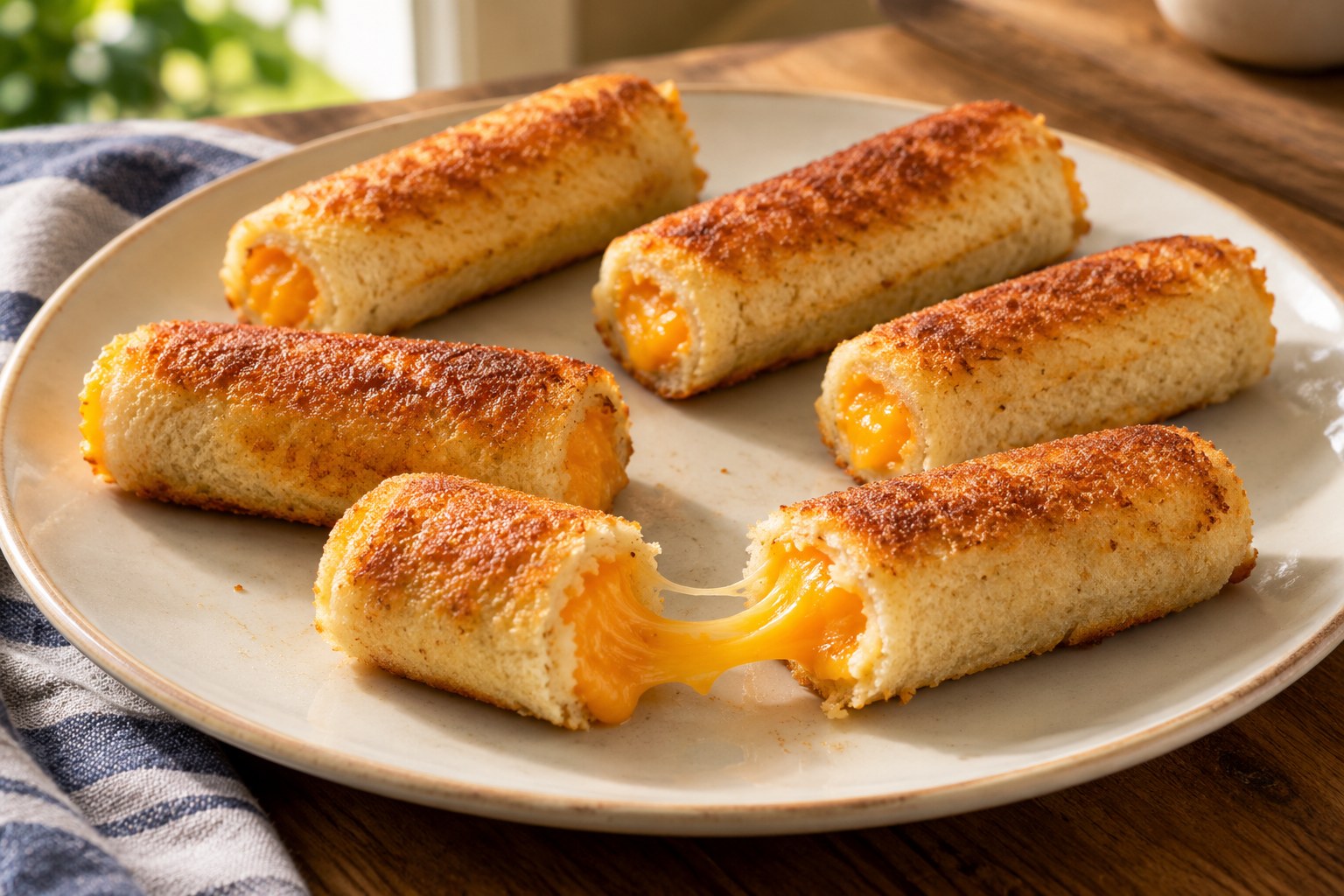
Flattening the bread makes it easier to roll tightly without cracking. Keep the cheese reasonably distributed so one end of the roll is not overloaded while the other is empty. Arrange with enough space for air to reach the sides, and watch for cheese escaping from the seams. Some leakage is natural with melting cheese; overfilling can make it worse.
Crisp outside, soft inside
The butter promotes browning, while warm cheddar gives the centre its familiar pull. The trick is to avoid overcooking simply to make the exterior darker. Once the bread looks crisp and the cheese has melted, serve while warm. A small bowl of tomato-based dipping sauce is a natural companion, but do not pretend that a separate sauce appears in the listed recipe ingredients.
The original article suggested combinations such as Gouda with apple or pepper jack with avocado. Those can be fun ideas for later testing, not established versions of the published cheddar formula. Different cheeses melt and release moisture differently, and wet fillings can make rolled bread collapse. Begin with the original recipe before experimenting.
Where they fit on a menu
Serve the roll-ups as a snack, party appetizer, or component of a lunch with vegetables and fruit. They contain wheat, milk, and butter as written, so label them clearly when feeding guests with allergies. If preparing them in advance, expect some loss of crispness; reheat appropriately and keep perishable ingredients safely chilled before serving.
The appeal here is familiarity and shape. Children and adults may enjoy a dish they can hold, but it is not a high-protein dinner simply because it contains cheese. Pair it with other meal components as appropriate.
8. Air Fryer Donuts: A real yeast-baking project
Open the Air Fryer Donuts recipe.
A soft glazed yeast doughnut is a different project from a biscuit-style quick doughnut. The linked What’s Baking? recipe uses 350 g all-purpose flour, 210 ml warm milk, active dry yeast, sugar, butter, an egg, vanilla, and salt, with a powdered-sugar glaze or cinnamon-sugar finish. The dough is mixed, kneaded, allowed to rise, rolled, cut, allowed to rise again, and then air-fried. All that work is part of the result.
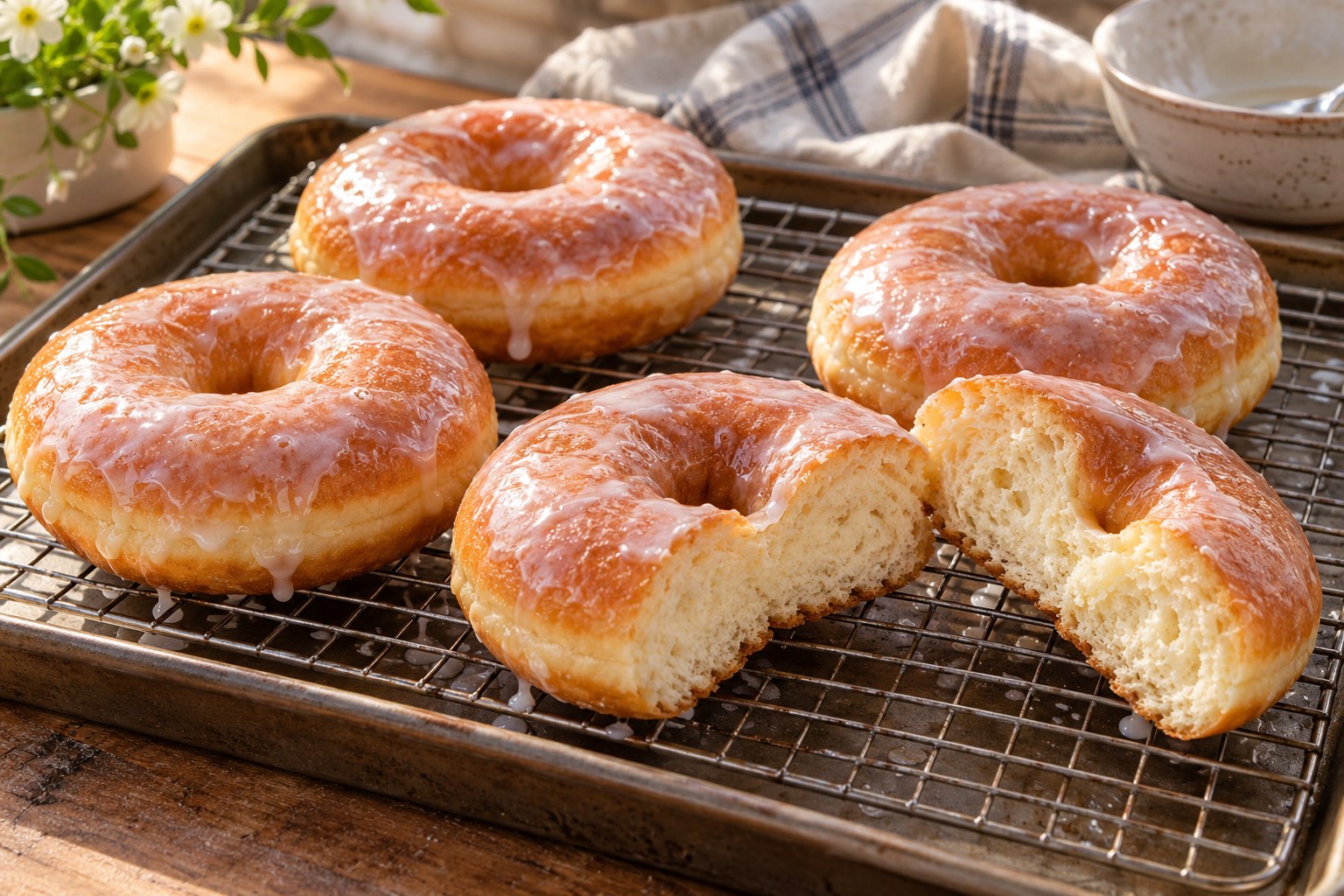
The card gives two hours of preparation including rising time, plus eight minutes of cooking. Its method calls for a first rise of about an hour and a second rise of roughly 30–45 minutes. Therefore it is misleading to market these as an eight-minute dessert without explaining the fermentation and shaping. It is better to plan them for an unhurried weekend, or begin early if they are intended for brunch.
Why yeast and dough handling matter
Yeast helps the dough rise by producing gas during fermentation. Warm—not hot—milk encourages activity. Thorough mixing and kneading help build the structure that traps that gas, while sufficient rising time gives the dough its light texture. A rushed first or second rise can leave dense rings that no amount of glaze will fix.
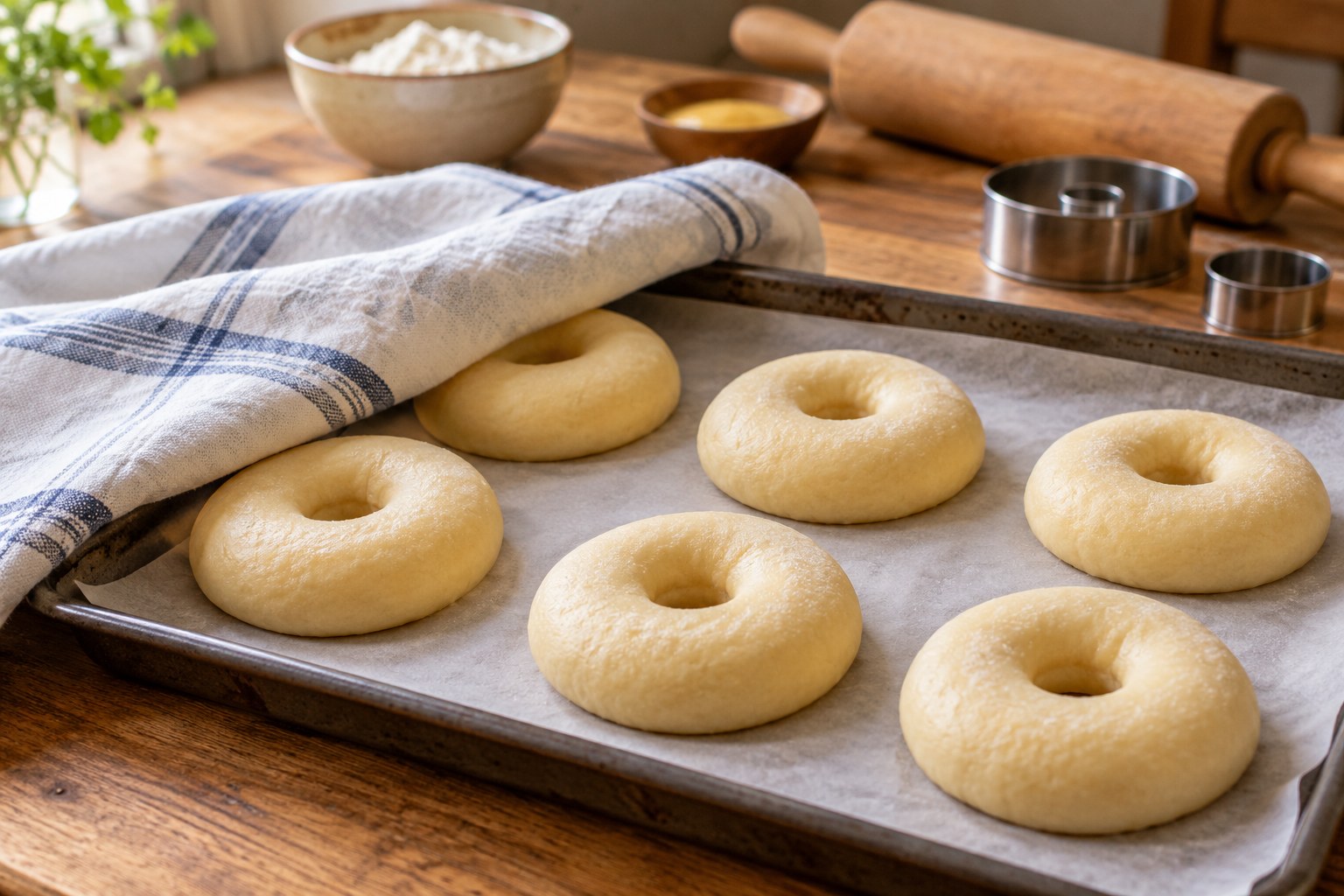
Roll dough evenly so the doughnuts cook at comparable speeds. Keep cut pieces covered during the second rise, and arrange them with room around each in the air-fryer basket. Doughnut holes are smaller and may cook more quickly than the full rings, so check them separately. Avoid repeatedly rearranging fragile risen dough at the last minute.
Glaze for a polished finish
The published glaze combines powdered sugar, milk, and vanilla. Aim for a coating that clings while still dripping smoothly; use the listed method for adjustment. Dipping doughnuts when they are warm but not piping hot lets the glaze coat more predictably. For cinnamon sugar, follow the recipe's instruction to coat warm doughnuts so the topping adheres.
The original blog claimed the recipe uses 90% less oil than deep-frying, but that percentage was not verified for this recipe and is inappropriate as a guarantee. Air frying avoids immersion in deep-frying oil, yet ingredient fat, sugar, and portion size still matter. These are dessert doughnuts, and that is perfectly fine—describe them accurately and enjoy them for what they are.
Eat yeast doughnuts close to when they are made for the best texture. If packaging them, let the glaze set fully so it does not smudge inside the container. A pastry box with room between pieces is more practical than stacking fresh glazed doughnuts.
9. Air Fryer Mozzarella Sticks: The importance of freezing twice
Open the Air Fryer Mozzarella Sticks recipe.
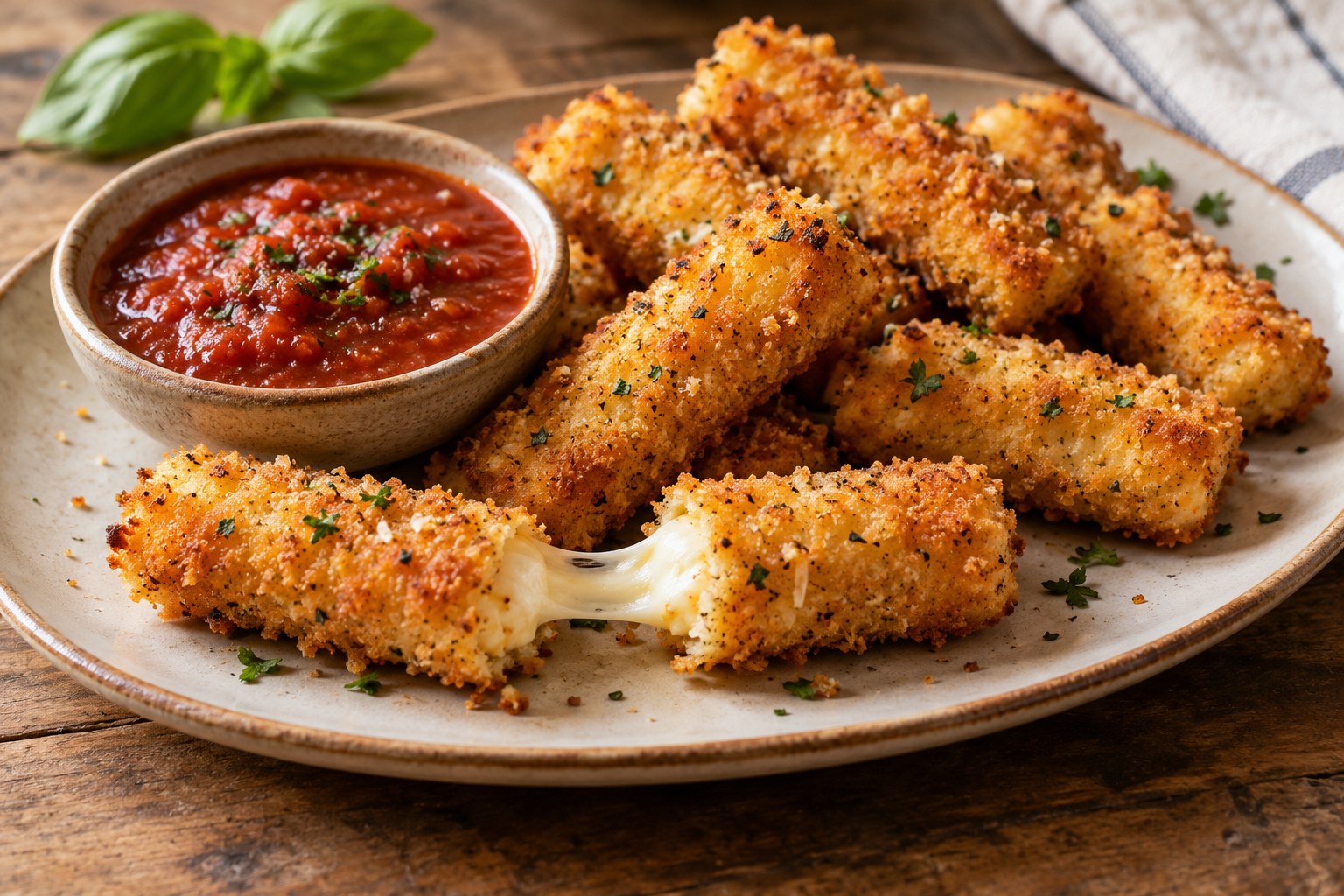
Mozzarella sticks are a test of timing: the coating should become crisp before the cheese inside escapes. The published formula includes 12 mozzarella string cheese sticks cut in half, wheat flour, eggs, milk, panko breadcrumbs, Parmesan, seasonings, cooking spray, and marinara sauce for serving. The recipe card lists 20 minutes prep and eight minutes cooking, but its method also includes two freezing stages that extend elapsed time substantially.
The two-stage freezer method
First, the cut cheese pieces go into the freezer for at least 30 minutes. Then each piece is coated in flour, egg mixture, and seasoned crumbs. The method recommends an optional second coating for stronger coverage. The breaded pieces return to the freezer for at least one hour, or overnight, before air frying. These steps are not an optional “hack” invented for the blog; they appear in the linked recipe.
Freezing helps the exterior cook before the centre becomes completely molten. If you skip the chilled stages, the cheese may leak out of gaps while the crumbs are still pale. A consistent layer of breading also matters: exposed cheese is a weak point. Set up the coating ingredients in an assembly line and handle a few pieces at a time rather than warming all of them on the counter.
Cooking without losing the cheese
Preheat as directed, arrange frozen sticks in a single layer, and watch closely near the end. The recipe notes that they do not need flipping partway through. Follow the appliance and basket guidance, especially when using liners. Remove carefully and allow the hot cheese to settle briefly before serving. A cheese pull can be tempting, but the inside can burn a mouth when eaten immediately.
Serve with the linked recipe's warm marinara. These are not gluten-free because of the flour and panko, and they contain dairy and eggs. If guests have allergies, read every packaged ingredient and consider cross-contact. For a party, prepare and freeze the sticks in advance, then air-fry in small fresh batches. That preserves the signature crunchy exterior far better than cooking everything hours before guests arrive.
10. Air Fryer French Fries: Soaking, drying, and an even cut
Open the Air Fryer French Fries recipe.
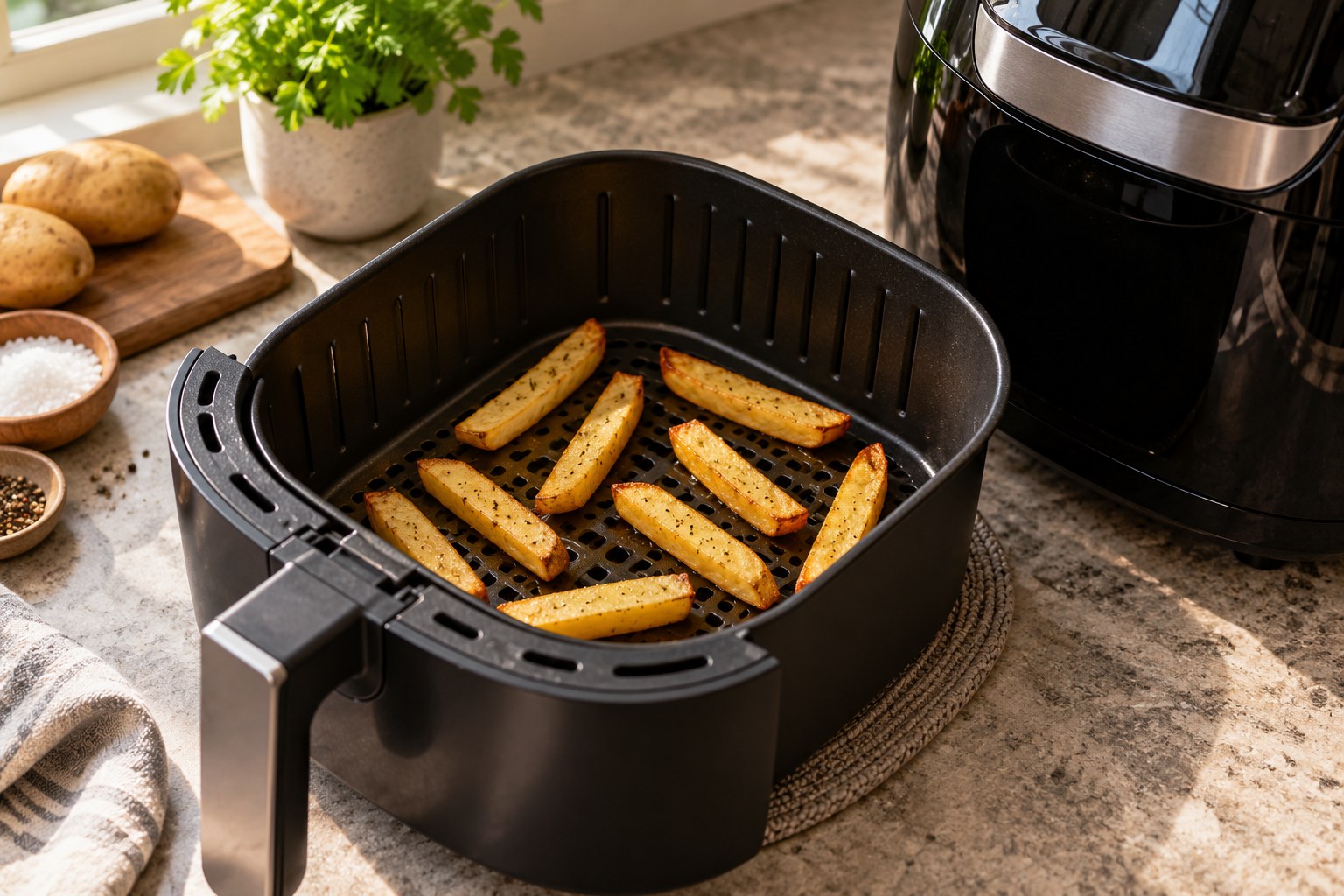
Homemade fries can be an excellent complement to burgers, steak, or a simple dipping sauce. The What’s Baking? recipe uses 750 g russet potatoes, olive oil, salt, pepper, and optional garlic powder or herbs. The original blog promised “no soaking,” but the published method explicitly calls for at least 30 minutes soaking in cold water, followed by careful draining and drying.

The recipe card lists 15 minutes preparation and 15 minutes cooking, but the soaking instruction increases elapsed time. This is a good example of why a short recipe-card summary should never override the numbered method. Plan the soak while preparing the rest of dinner, or choose another side if there is truly no time for that step.
Why the cut matters
Cut potato sticks to similar thickness so they finish at roughly the same time. Thin pieces brown faster than thick ones. The recipe uses approximately one-centimetre sticks; wildly different sizes can leave some dark and hard while others remain soft in the middle. Rinsing and soaking help remove surface starch, and thorough drying reduces the steam that can interfere with crisping.
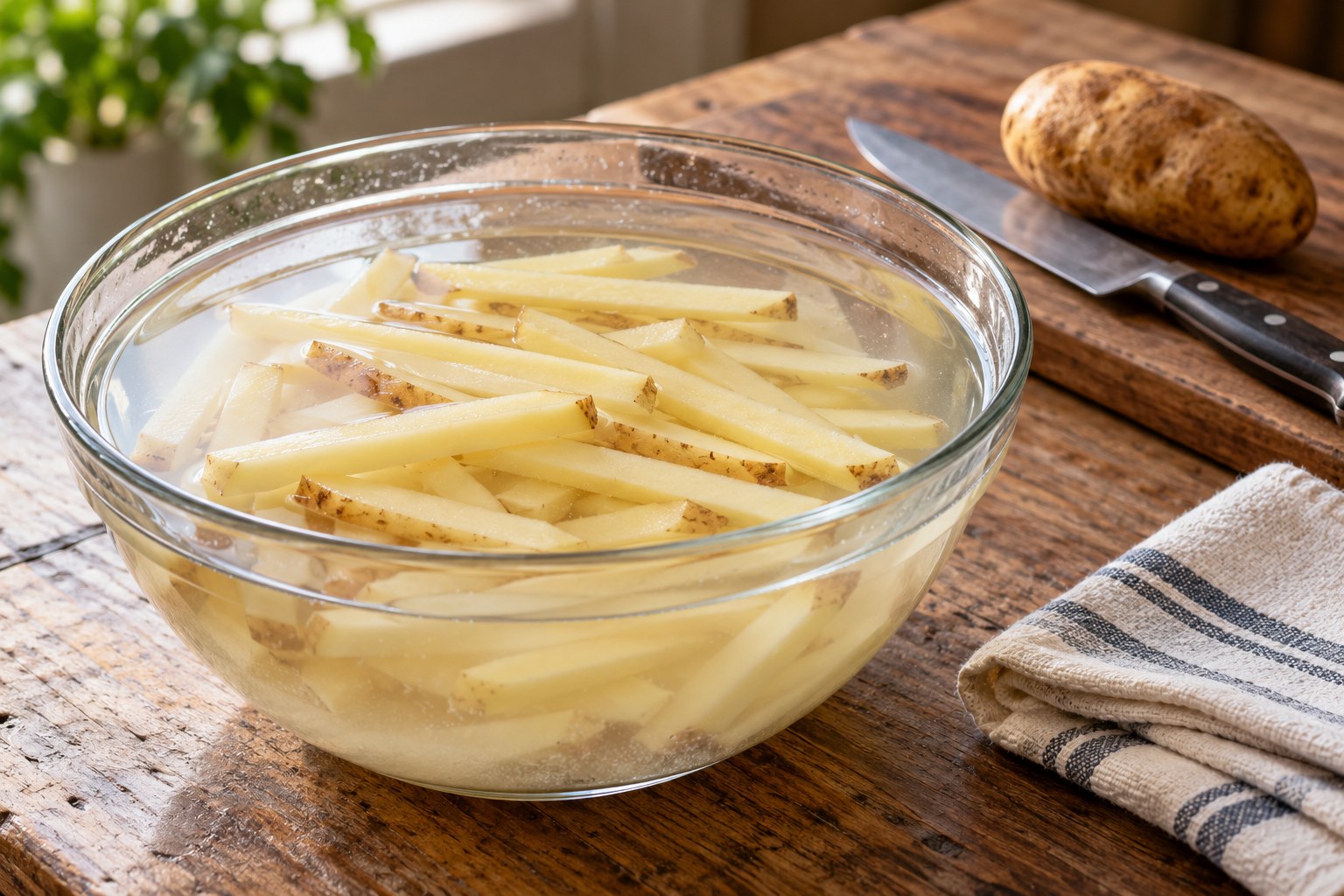
Use the oil quantity specified, toss to coat evenly, and avoid cramming all the potato into a basket that cannot hold it in a reasonably spread layer. The method includes shaking or turning partway through. Smaller air fryers may need batches, making cooking longer than the stated fifteen minutes. If fries are pale, consider crowding and moisture before simply raising the heat.
Season while hot
Season immediately after cooking, when the light surface oil helps salt and herbs stick. Serve straightaway for the best contrast of crisp exterior and soft interior. Avoid piling the fries into a deep closed container for a long period, because trapped steam will soften them. If you need to hold a batch briefly, follow the appliance or oven's safe keeping instructions rather than leaving it at room temperature indefinitely.
Air fryer fries are a potato side, not a replacement for vegetables or protein. Serve with an appropriate main dish and choose portion sizes that work for your household. The recipe's strength is a controllable homemade approach, not a claim of guaranteed restaurant perfection with zero preparation.
A three-day plan for trying the recipes without getting overwhelmed
If you want to try several recipes during one weekend, choose dishes that use different equipment and have compatible waiting periods. You do not have to prepare all ten at once. A small, realistic menu is more useful than making three elaborate dishes that all need your attention at precisely the same time.
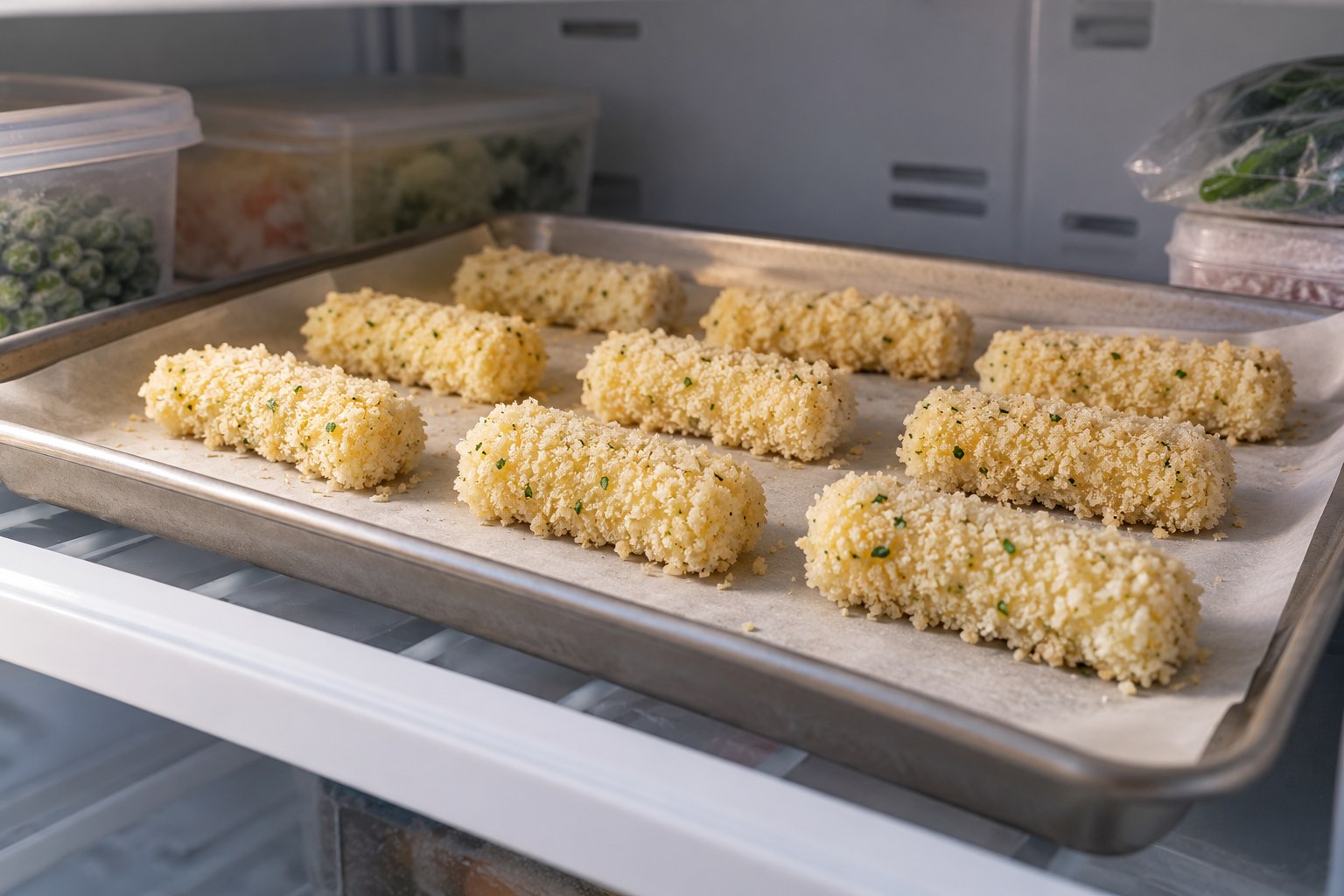
Friday evening: Check the shopping list for the chosen recipes, especially perishable fish, steak, dairy, and eggs. If Basque cheesecake is part of the weekend, buy enough cream cheese and allow the recommended ingredients to reach their proper mixing temperature on baking day without leaving perishable foods unrefrigerated for unsafe periods. Review pan, springform, mixer, and refrigerator-space requirements. If you want mozzarella sticks for Saturday, assemble and freeze them according to their two-stage method; this makes cooking day much easier.
Saturday: Start with Basque cheesecake if dessert is planned, because baking, cooling, and at least four hours of refrigeration follow mixing. Prepare the Walking Taco Casserole for the main meal, keeping its fresh toppings separate until serving. Air-fry the mozzarella sticks shortly before guests eat instead of trying to keep them crisp for hours. If serving a vegetable snack alongside the cheese sticks, choose buffalo cauliflower and cook it in small batches.
Sunday: Make air-fryer doughnuts as a project rather than squeezing them between errands. Their first and second rises need time, but those intervals can be used to clean the kitchen and get the glaze ingredients ready. For a simpler alternative, make salmon or pork chops for dinner and prepare a vegetable side while the air fryer cooks the main ingredient. If you want fries, begin soaking the potatoes early rather than discovering the soaking step when dinner is nearly due.
For each cooking session, read the full recipe from top to bottom, place the necessary ingredients on the counter, and identify any advance work. That includes freezing cheese sticks, proofing yeast, softening cream cheese, soaking potatoes, or preparing raw meat safely. These small checks prevent the most avoidable kitchen surprises.
How to shop across ten very different recipes
The ten recipes do not form one unified weekly shopping list, so avoid purchasing every ingredient simply because it appears in the roundup. First select the two or three dishes you actually intend to make. Then review the recipe-card serving counts to determine whether a full batch is useful. A cheesecake that makes ten slices is very different from an air-fryer steak recipe for two people.
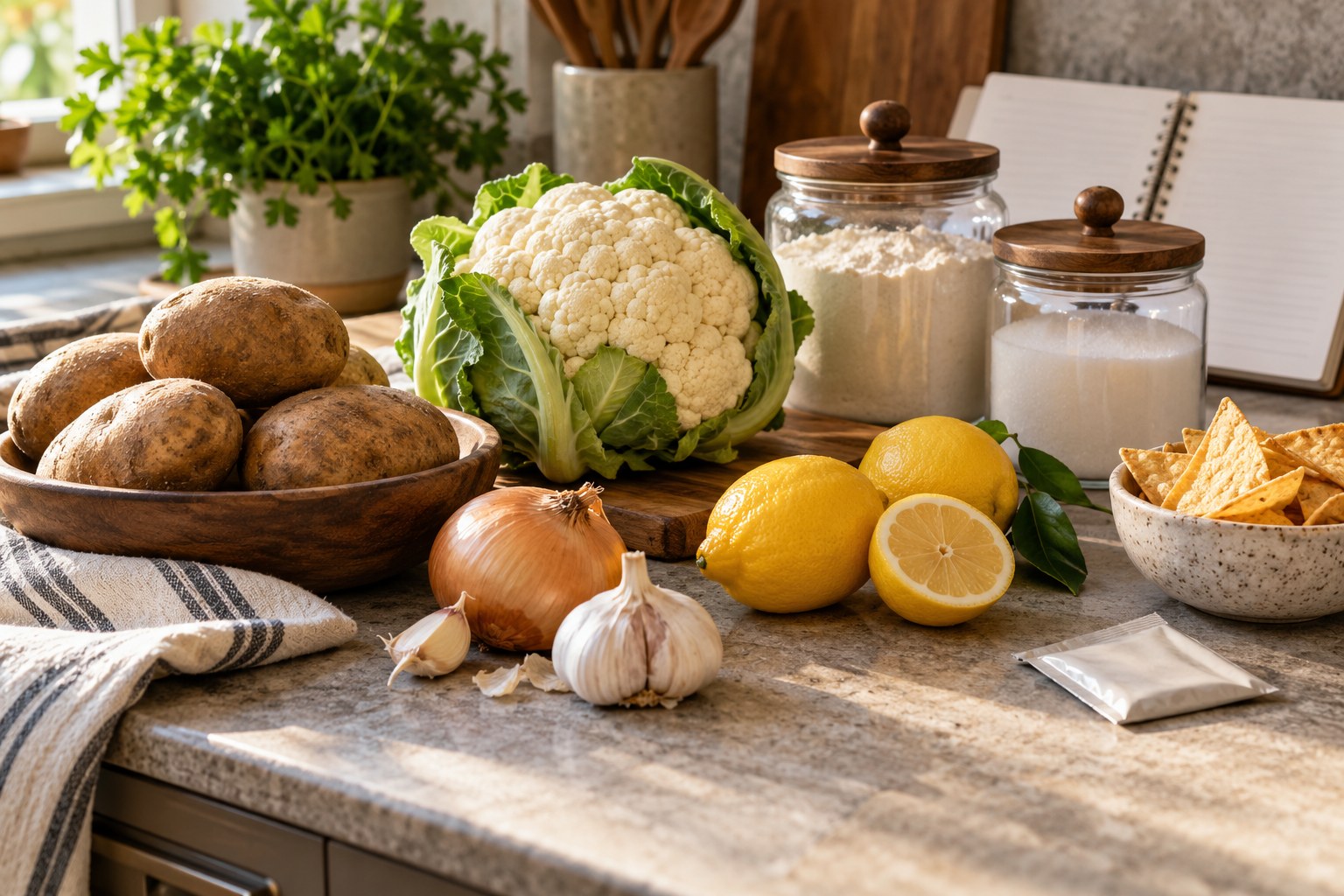
Group your chosen ingredients by grocery section. Produce may include potatoes, cauliflower, lemons, lettuce, avocados, onions, garlic, and herbs. Refrigerated items may include cream cheese, heavy cream, cheddar, mozzarella, butter, milk, and eggs. Proteins may include beef, pork chops, steak, or salmon. Pantry staples may include tortilla chips, beans, tomatoes, flour, yeast, breadcrumbs, sugar, seasonings, and cooking oil.
Check ingredient overlap carefully. The casserole and guacamole both use onion and fresh toppings, while mozzarella sticks and cauliflower each use flour-based coatings but in very different proportions. The cheesecake and doughnuts both use eggs and dairy, yet the quantities and methods are not interchangeable. Buying one extra large bag of flour may be practical; treating every recipe as a free-form substitute is not.
When shopping for guests, keep allergies and dietary restrictions visible. Basque cheesecake contains wheat flour, eggs and dairy; mozzarella sticks use wheat, eggs, and dairy; the buffalo cauliflower coating uses wheat and its sauce may contain butter. The casserole includes beef, cheese, and tortilla chips whose packaging deserves inspection. Read labels and the full recipe rather than inferring safety from broad category names such as “vegetarian” or “grain-free.”
Food safety when the menu includes meat, fish and dairy
An air fryer is an efficient cooking appliance, but it does not make food safe by itself. Health Canada's safe cooking temperature chart distinguishes whole cuts of beef, pork, fish, ground meat, and other foods. Use a clean digital food thermometer in the thickest appropriate section and follow the category relevant to your recipe. Do not decide that a ground-beef casserole is safe just because its cheese has browned.
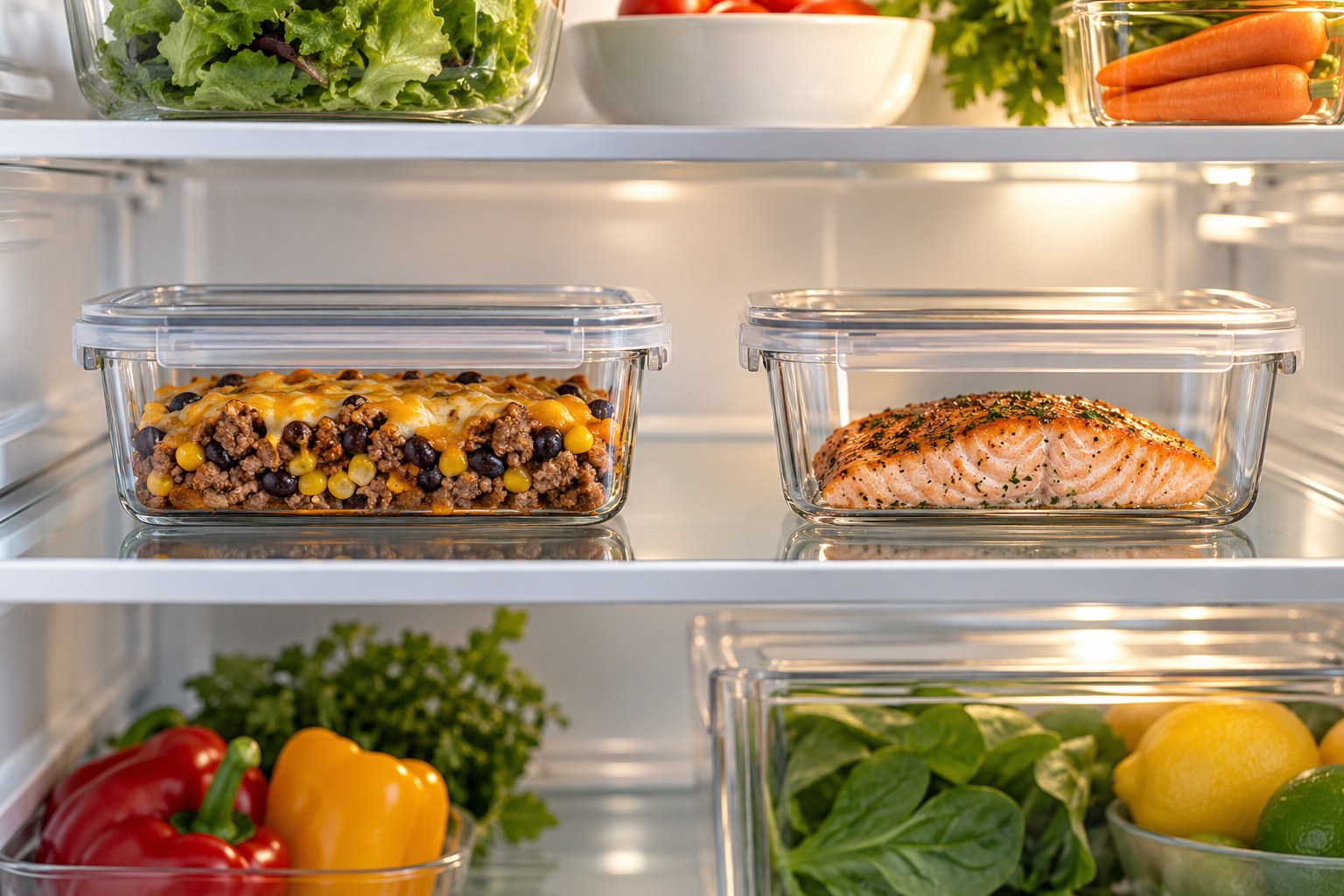
Raw-meat preparation needs separate boards, clean utensils, and handwashing. Keep raw steak or pork away from salad toppings, and do not reuse a plate that held uncooked fish for finished salmon. Avoid tasting raw dough or cheesecake batter because they may contain uncooked eggs and flour. Prepared dishes should be served and stored according to their ingredients, not the appliance used to cook them.
The Health Canada leftovers guide advises prompt chilling, shallow containers, and refrigeration of leftovers for two to three days or freezing for later, with reheating to 74°C (165°F). Refrigerated cheesecake, meat casserole, salmon, cheese sticks, and fresh dairy dips require particular attention. Don't rely on smell or appearance alone to determine whether leftovers are safe.
Some dishes also need texture-specific planning. Store the warm casserole separately from fresh chips and lettuce; keep glazed doughnuts away from moisture that makes the finish sticky; refrigerate cheesecake until serving; cook frozen mozzarella sticks from their properly prepared state rather than leaving them thawing on a counter. Good storage protects both safety and the experience you wanted from the recipe.
Common cooking and baking problems—and what they mean
My casserole chips have become soft. Did I do something wrong?
Not necessarily. Tortilla chips inside a moist, tomato-based casserole absorb steam and sauce. That softness is expected to some degree. The solution is to follow the published layering method and offer extra fresh chips at the table. Adding lettuce and guacamole after baking also preserves contrast. If the casserole seems watery rather than simply soft, examine whether the filling was cooked and thickened as directed.
My cheesecake is dark outside but wobbly in the middle.
Basque cheesecake is supposed to have a strongly caramelized surface and a centre that jiggles before it sets. Compare the appearance to the actual recipe's doneness cues, then allow the specified cooling and refrigeration. Cutting it immediately can make a correctly baked cheesecake appear underdone. If it is unusually liquid even after chilling, review pan size, baking temperature, ingredient weights and oven accuracy before changing the formula.
My steak looks browned but I am uncertain whether it is cooked safely.
Use a food thermometer instead of guessing from surface colour. Air fryers can brown the exterior before the centre reaches its target. Thickness, meat category and appliance behaviour all matter. Refer to Health Canada's safe temperatures and use the appropriate guidance for the particular product. Treat a mechanically tenderized steak differently where the guidance requires it.
The cauliflower lost its crunch as soon as I added sauce.
Liquid sauce softens a crisp coating over time. Follow the method's two-stage saucing approach, avoid an overloaded bowl, and serve promptly. If you need it for a gathering, keep some extra buffalo sauce separate and refresh smaller batches rather than preparing one enormous sauced tray well in advance.
My yeast doughnuts are dense rather than airy.
Check the yeast freshness, milk temperature, kneading, and rising stages. The published doughnut recipe requires two rises, so a rushed schedule can affect structure. Dense doughnuts may also come from rolling too thin or handling risen pieces roughly. Make only one adjustment on the next batch so you can identify the cause.
Cheese is leaking out of my mozzarella sticks.
Confirm that both freezing stages were completed and that the breading completely covers the cheese. A thin spot in the coating may open before the outside is crisp. Do not crowd the basket or extend cooking just to chase a darker crust. Watch for early leakage and remove the sticks when they reach the published recipe's finish cues.
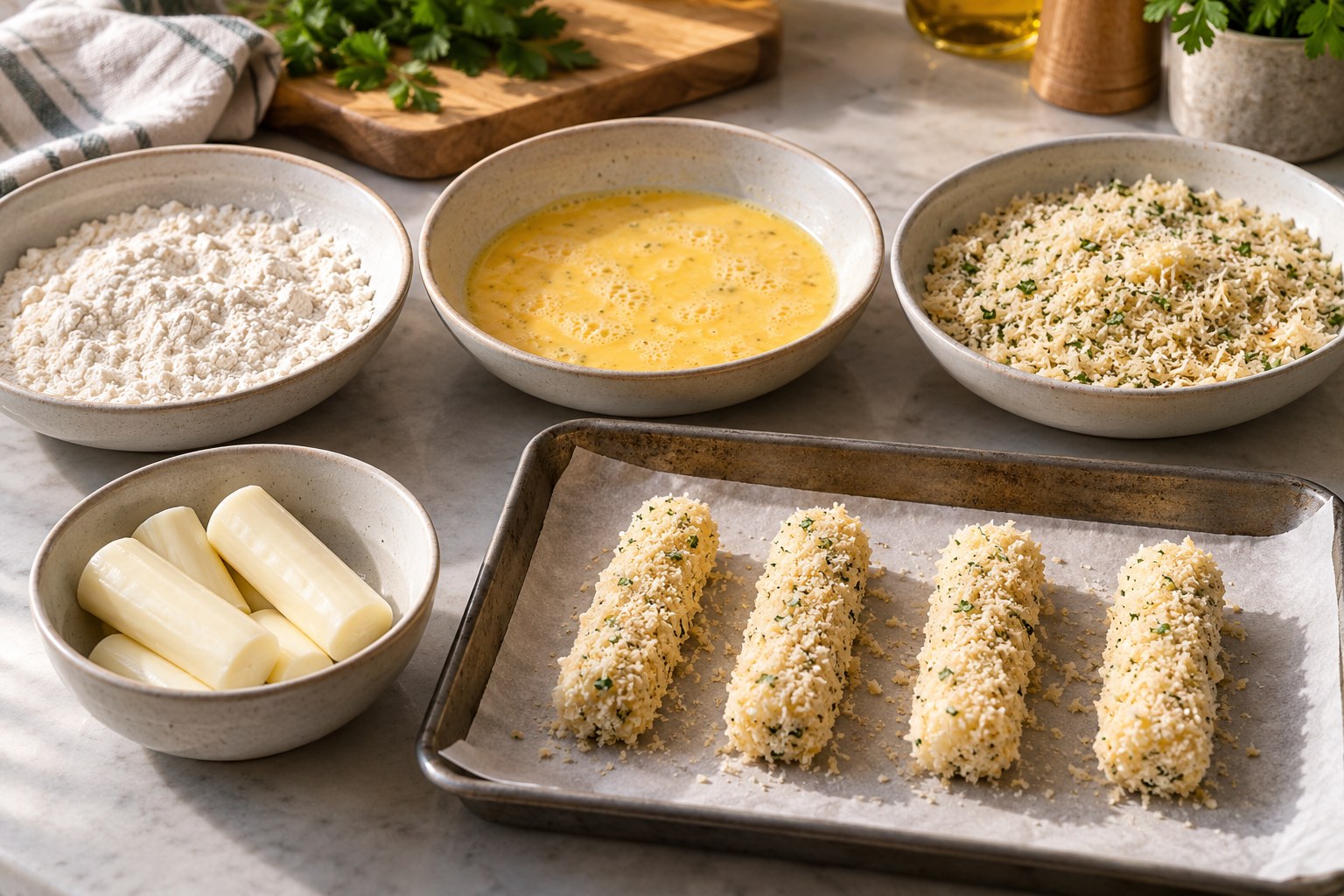
My fries are soft or unevenly cooked.
Check thickness first, then moisture and basket spacing. The recipe specifically calls for soaking and thorough drying; skipping either may change the result. Work in batches when the appliance is small. Season while hot and serve promptly rather than trapping the steam under a lid.
Frequently asked questions
Which of these recipes is the best one for beginners?
Walking Taco Casserole is approachable for cooks comfortable browning ground beef and using an oven. Air-fryer pork chops or salmon may be good starting points for people with an appropriate food thermometer and basic raw-food handling skills. The roll-ups are simple to assemble. Macarons are not in this particular ten-recipe roundup, while the yeast doughnuts require more patience and familiarity with rising dough.
Are all of these recipes ready in 30 minutes?
No. The cheesecake needs baking, cooling, and hours of chilling. Doughnuts require two yeast rises, mozzarella sticks need freezing, and french fries are soaked before cooking. Even the faster air-fryer recipes have preparation and possible preheating or batching. Look at the individual recipe's complete method before planning a serving time.
Can I make a whole menu in one air fryer?
You can prepare several components sequentially, but temperature requirements and basket capacity vary. Salmon, potato fries, and mozzarella sticks should not automatically be cooked together at the same temperature. Plan one item at a time unless your appliance provides truly separate cooking zones and the directions support using them.
Are these recipes gluten-free or dairy-free?
Not as a collection. Cheesecake includes all-purpose flour, cream cheese and cream; cheese sticks include breading and dairy; roll-ups use wheat bread and cheese; doughnuts use wheat, milk, butter and egg. Review the individual ingredients and check packaging for allergen concerns. A substitution may need a tested recipe adaptation.
Can I serve these dishes at a party?
Yes, with planning. Casseroles are useful as a shared main; mozzarella sticks and buffalo cauliflower are best served in fresh small batches; cheesecake can be prepared ahead and refrigerated. Follow safe hot- and cold-holding requirements and avoid leaving perishable items out all evening.
Is air frying automatically healthier than other cooking methods?
No. Using hot circulating air instead of deep frying may reduce the added oil required by some recipes, but the meal's nutrition depends on its ingredients, amounts, toppings, and servings. Doughnuts remain sweet desserts, and cheese roll-ups remain a cheese-and-bread snack. Avoid universal percentage claims unless they come from a measured comparison for a specific recipe.
What should I cook first if I only have one evening?
Pick one central dish and one manageable accompaniment. For example, prepare salmon with already planned vegetables, or make the taco casserole with simple fresh toppings. Save proofed doughnuts, chilled cheesecake, and double-frozen mozzarella sticks for a day when their longer schedule is an advantage rather than an obstacle.
Final thoughts: The best recipe is the one that fits your day
The goal of a must-try list is to introduce useful ideas, not suggest that every recipe is equally quick, healthy, or suitable for every guest. Walking Taco Casserole brings a table together; lemon-dill salmon and seasoned pork chops help with ordinary dinners; buffalo cauliflower and mozzarella sticks make gatherings more playful; Basque cheesecake and yeast doughnuts reward a more leisurely baking session.
Choose a recipe for its real strengths. Read its ingredients, account for all resting, soaking, freezing or chilling stages, and use reliable food-safety checks. When you are ready for more, browse the full What’s Baking? recipe collection or the casserole guide. A recipe that delivers what it promises is much more valuable than a dramatic headline—and considerably more satisfying to cook.
IN PICTURES
From the baking notebook
FROM THE RECIPE BOX


