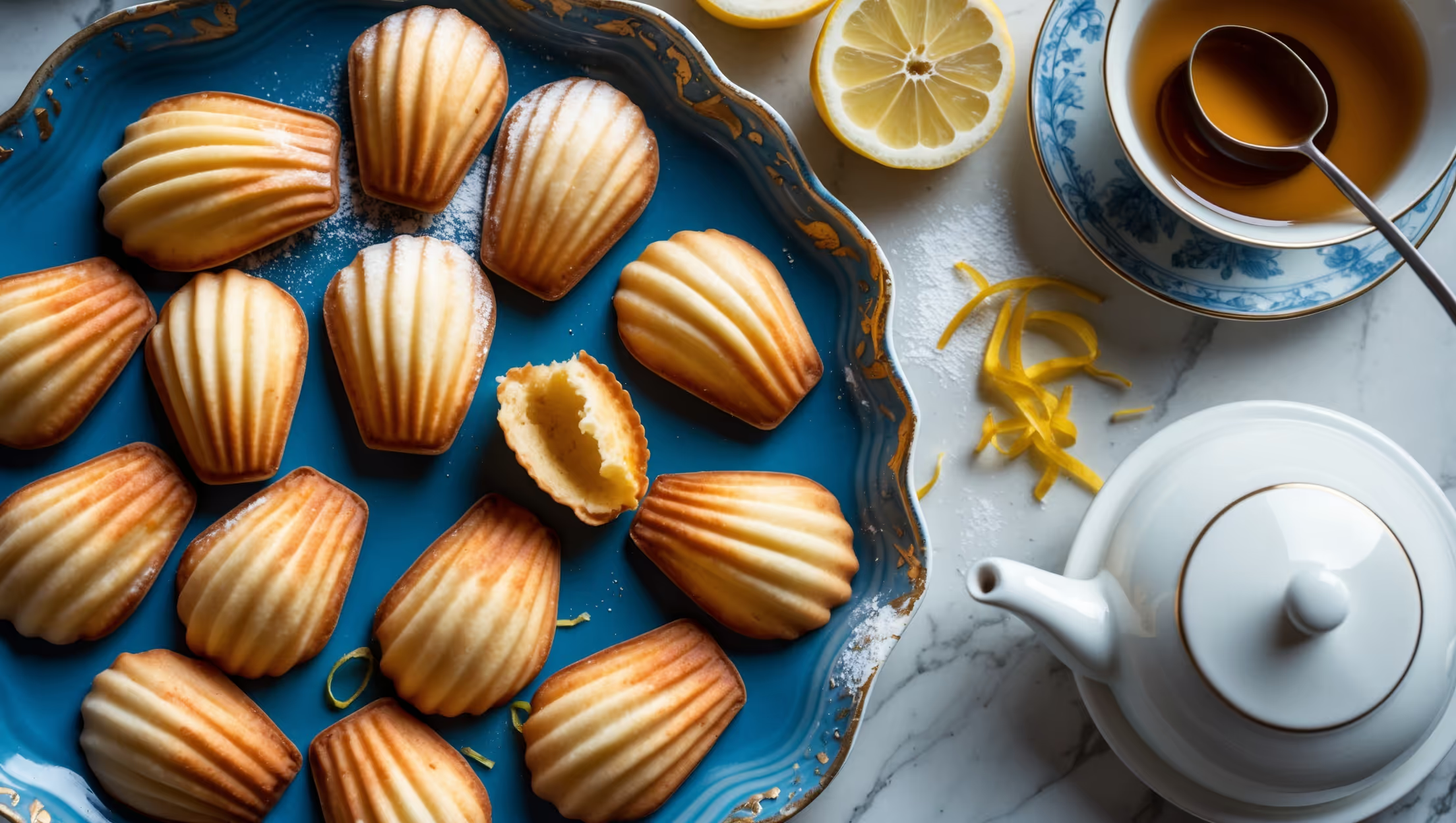
Directions
<ol class="no-list-style"><li class="MethodStepper"><h4 class="step-title">Step 1</h4>Melt the butter in a small saucepan over medium-low heat until it just melts and starts to foam slightly. Remove from heat and set aside to cool slightly but remain liquid. This melted butter will provide that rich, unmistakable flavor that defines authentic madeleines.</li><li class="MethodStepper"><h4 class="step-title">Step 2</h4>In a stand mixer fitted with the whisk attachment (or using a hand mixer), beat the eggs and sugar on medium-high speed for about 5 minutes until the mixture becomes very pale and thick. The ribbon test is your guide here – when you lift the whisk, the batter should fall back and leave a ribbon that sits on the surface for a few seconds before disappearing.</li><li class="MethodStepper"><h4 class="step-title">Step 3</h4>Add the vanilla extract and lemon zest to the egg mixture and beat briefly to incorporate. The lemon zest isn't traditional in all recipes, but it adds a beautiful fragrance that enhances the buttery flavor without overpowering it.</li><li class="MethodStepper"><h4 class="step-title">Step 4</h4>In a separate bowl, sift together the flour, baking powder, and salt. Gently fold this dry mixture into the egg mixture using a spatula, maintaining as much air as possible. Work in three additions, folding just until no streaks of flour remain.</li><li class="MethodStepper"><h4 class="step-title">Step 5</h4>Add about ¼ cup of the batter to the cooled melted butter and stir to lighten the butter. Then gently fold this mixture back into the main batter. This technique prevents the butter from sinking to the bottom and ensures even distribution without deflating your batter.</li><li class="MethodStepper"><h4 class="step-title">Step 6</h4>Cover the batter with plastic wrap, pressing it directly onto the surface to prevent a skin from forming. Refrigerate for at least 1 hour, preferably 2-3 hours (or overnight). This resting period is crucial – it allows the flour to hydrate properly and chills the batter, which is key to developing that characteristic hump during baking.</li><li class="MethodStepper"><h4 class="step-title">Step 7</h4>When ready to bake, preheat your oven to 190°C (375°F). Brush each madeleine mold thoroughly with melted butter, then dust lightly with flour, tapping out any excess. The proper preparation of the pan is essential for the madeleines to release easily and develop their signature ridged shape.</li><li class="MethodStepper"><h4 class="step-title">Step 8</h4>Spoon or pipe the chilled batter into the molds, filling each about ¾ full. Don't spread the batter – it will spread naturally during baking. The cold batter hitting the hot oven creates thermal shock, which helps form the characteristic hump.</li><li class="MethodStepper"><h4 class="step-title">Step 9</h4>Bake in the preheated oven for 8-10 minutes, until the edges are golden brown and the centers spring back when touched lightly. The madeleines should have a pronounced bump in the middle – this is the sign of properly made madeleines!</li><li class="MethodStepper"><h4 class="step-title">Step 10</h4>Immediately tap the pan firmly against a countertop to release the madeleines. Transfer them to a wire rack to cool slightly. Dust with icing sugar while still warm. Madeleines are best enjoyed fresh, within hours of baking when the contrast between the crisp edges and tender center is at its peak.</li></ol>