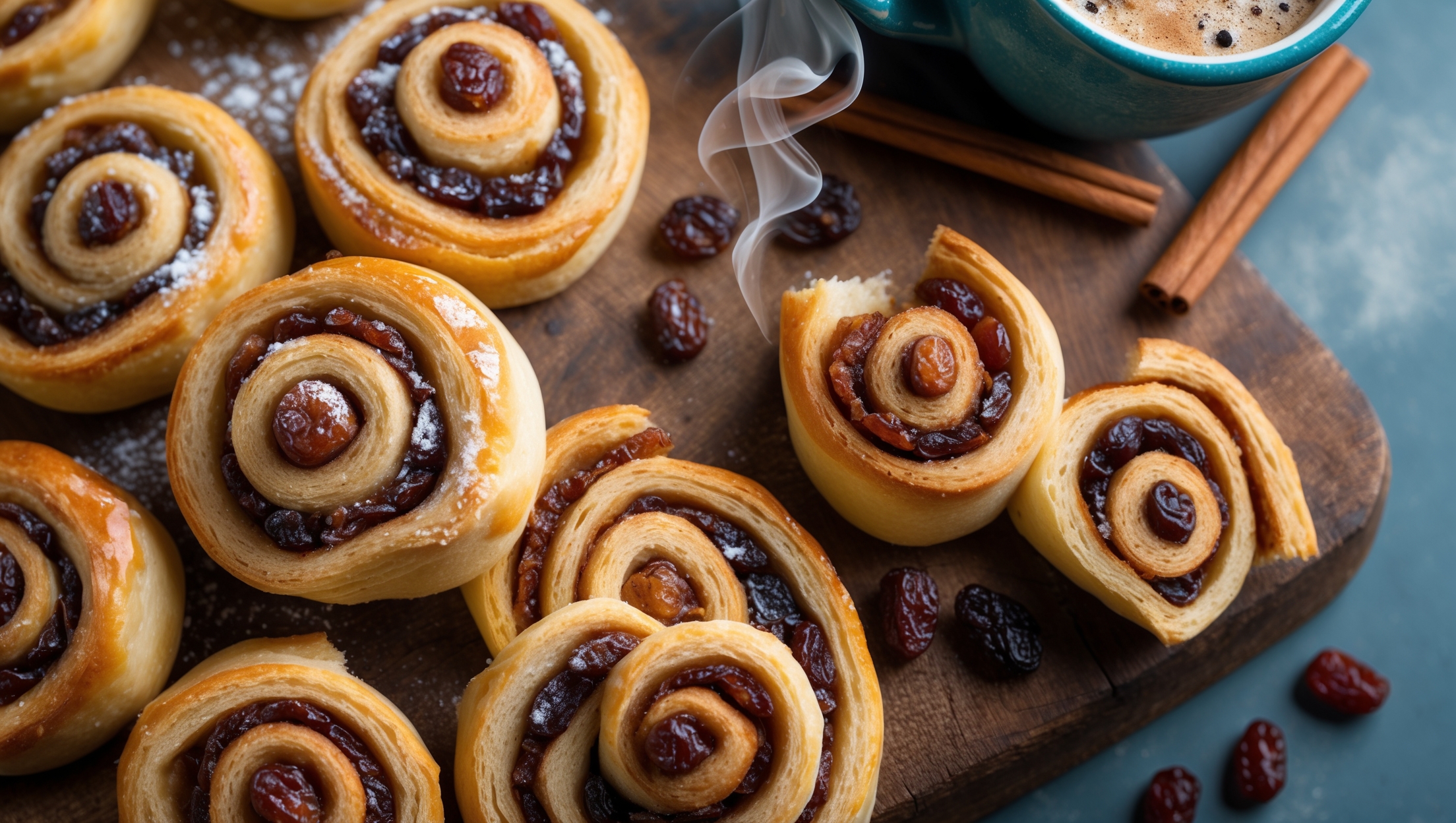
Directions
<ol class="no-list-style"><li class="MethodStepper"><h4 class="step-title">Step 1</h4>Begin by making the pastry dough. In a large bowl, whisk together 300g flour, 2 tbsp granulated sugar, and 1/2 tsp salt. Add the 200g cold cubed butter and use your fingertips or a pastry cutter to work it into the flour until the mixture resembles coarse breadcrumbs with some pea-sized butter pieces remaining. These butter pockets will create flaky layers as the pastry bakes.</li><li class="MethodStepper"><h4 class="step-title">Step 2</h4>Mix the ice-cold water with vanilla extract, then drizzle it over the flour mixture, stirring with a fork until the dough just begins to come together. Be careful not to overmix – you want to handle the dough minimally to keep it tender. Gather the dough into a ball, flatten into a disc, wrap in plastic, and refrigerate for at least 1 hour. Chilling relaxes the gluten and firms up the butter, which is essential for flaky pastry.</li><li class="MethodStepper"><h4 class="step-title">Step 3</h4>While the dough chills, prepare your filling by mixing the brown sugar and ground cinnamon in a bowl. If your raisins are particularly dry, place them in a small bowl, cover with hot water, and let sit for 5 minutes to plump them up. Drain thoroughly and pat dry with paper towels before using.</li><li class="MethodStepper"><h4 class="step-title">Step 4</h4>Preheat your oven to 190°C and line a baking sheet with parchment paper. On a lightly floured surface, roll the chilled dough into a rectangle approximately 30cm × 40cm and about 5mm thick. Keep the dough moving as you roll to prevent sticking, and try to maintain even pressure for uniform thickness.</li><li class="MethodStepper"><h4 class="step-title">Step 5</h4>Brush the rolled dough with melted butter, leaving a 2cm border along one long edge. Sprinkle the cinnamon-sugar mixture evenly over the buttered surface, then scatter the raisins on top, gently pressing them into the dough to help them adhere.</li><li class="MethodStepper"><h4 class="step-title">Step 6</h4>Starting from the long edge (opposite from the border you left), tightly roll the dough into a log. The tighter your roll, the more defined your pinwheel spirals will be. When you reach the edge with the clean border, brush it lightly with water and seal the roll. Place the log seam-side down and refrigerate for 15 minutes to firm up, making it easier to slice without squashing.</li><li class="MethodStepper"><h4 class="step-title">Step 7</h4>Using a sharp knife, trim the uneven ends, then cut the log into 12 equal pieces, about 3cm thick each. For the cleanest cuts, use a gentle sawing motion and wipe your knife between cuts. Place the pinwheels cut-side up on the prepared baking sheet, leaving space between each for expansion.</li><li class="MethodStepper"><h4 class="step-title">Step 8</h4>Brush the tops of the pinwheels with beaten egg and sprinkle with demerara sugar for a crunchy, caramelized finish. Bake in the preheated oven for 18-20 minutes, until golden brown and the pastry is cooked through. The filling may bubble slightly – this is perfect!</li><li class="MethodStepper"><h4 class="step-title">Step 9</h4>Allow the pinwheels to cool on the baking sheet for 5 minutes before transferring to a wire rack. This brief resting period allows the filling to set slightly so it doesn't all run out. Serve warm or at room temperature. These pinwheels are best enjoyed the day they're made but can be stored in an airtight container for up to 2 days. To refresh, warm them in a 150°C oven for 5 minutes.</li></ol>