
On this page
A good vegan meal-prep routine should make tomorrow's dinner easier—not turn Sunday into an exhausting cooking marathon. An air fryer can help because it gives tofu, chickpeas, potatoes, and vegetables browned edges in a compact appliance. But the real trick is knowing what to cook ahead, what to store separately, and what to crisp up just before eating. Food that is wonderful straight from the basket does not always stay crunchy after two days in a covered container.
This guide is for anyone looking for vegan air fryer meal prep ideas that work in an ordinary kitchen. You'll learn how to combine a few dependable components into lunches and dinners, use your air fryer efficiently without overcrowding it, keep food safe, and avoid the soggy-leftover problem. We'll also show you several published What’s Baking? recipes that are genuinely plant-based as written, along with suggestions for serving them throughout the week.
Not every air-fried dish is oil-free, and not every air-fryer recipe is vegan. Both points matter. An air fryer moves hot air around food; it does not automatically remove the oil in a recipe or make egg, cheese, and meat ingredients plant-based. We will be precise about the recipes and adjustments rather than promise miraculous results.
Vegan air fryer meal prep at a glance
- Best make-ahead proteins: Firm tofu, cooked legumes, and sturdy bean-based patties or balls, when prepared according to suitable recipes.
- Best vegetables to air fry ahead: Sweet potatoes, cauliflower, carrots, and Brussels sprouts. They soften in storage but often reheat pleasantly.
- Best items to assemble fresh: Salad greens, avocado, soft tortillas, crisp lettuce, and sauces that make crunchy food soggy.
- Best strategy: Prepare one protein, two vegetables, one grain, and one versatile sauce. Mix them into different meals rather than cooking five completely separate recipes.
- Storage priority: Chill cooked leftovers promptly, label them, and use refrigerated leftovers within two to three days or freeze them for later, following Health Canada's guidance.
- Reheating priority: Heat leftovers thoroughly to 74°C (165°F) with a food thermometer; don't judge safety by a browned crust alone.
Why the air fryer can make plant-based meal prep simpler
It is a useful tool, not a shortcut for every ingredient
An air fryer is effectively a small, fast-moving hot-air oven. That can be an advantage for a portion of seasoned tofu or a tray of cauliflower florets, especially when you do not want to heat a large oven. It can help brown edges and make small batches manageable. Actual speed depends on the machine, amount of food, size of pieces, preheating, and whether you must cook multiple batches. A crowded air fryer might take longer overall than a roomy conventional oven, so avoid the claim that it always cooks in half the time.
Its limitation is capacity. A deep pile of wet vegetables traps steam and prevents even browning. For more consistent results, use a loose, mostly single layer whenever the individual recipe calls for it. In a small basket, several short batches may be better than one overloaded batch. Follow the appliance instructions about liners, maximum loads, and safe cookware; do not cover important airflow openings.
Air frying and meal prepping are two different skills
Air frying is a cooking method. Meal prepping is a storage and planning method. Successful air fryer vegan meals for the week require both. A bowl built with crispy tofu, rice, cucumber, and peanut sauce may be delicious immediately, but storing everything together can soften the tofu and waterlog the rice. Keep the tofu in one container, the sauce in another, and fresh vegetables ready for assembly. On the day you eat, warm only the portion that needs warming.
Consider texture when choosing what to make. Roasted sweet potato cubes can be intentionally tender even after refrigeration. Cauliflower and sprouts lose some crunch as they sit. Crunchy coated tofu is best reheated shortly before serving rather than expected to remain crisp in the refrigerator. Build menus around what tastes good after storage instead of pretending all leftovers retain freshly cooked texture.
The energy and cleanup benefits depend on how you use it
A small air fryer can be convenient for a quick batch, and the basket is often easier to clean than multiple oven trays. But efficiency is personal: if you need five consecutive batches to feed a large family, the oven may be more practical. Plan the order of ingredients to minimize washing and avoid cross-contact. Clean the basket between strongly flavored or allergen-containing preparations as needed, following the manufacturer’s instructions.
Build a vegan meal-prep formula before picking recipes
A useful plate contains several elements. The air fryer does not need to cook all of them.
1. Choose a satisfying plant protein
Extra-firm tofu is particularly convenient because it can be diced, seasoned, and browned. Beans and lentils also provide substance and variety, whether served warm or used in a separate salad or stew. Tempeh may work well if you enjoy its nutty flavor, but timing and seasoning should come from a suitable recipe rather than a guessed universal setting.
A practical starting point is the Air Fryer Tofu Recipe on What’s Baking?. The published ingredient list uses extra-firm tofu, cornstarch, olive oil, garlic powder, onion powder, smoked paprika, salt, and pepper. It is plant-based as written. The recipe calls for pressing, coating, and air frying the tofu; follow its own cooking directions rather than treating a brief summary as a replacement.
2. Pick one substantial vegetable or starch
Sweet potatoes are a friendly prep ingredient because they bring sweetness and body to a bowl. The Air Fryer Sweet Potato Cubes use evenly cut sweet potatoes, olive oil, smoked paprika, garlic, onion powder, thyme, and other seasonings. They are suitable as a vegan component. A batch can become a side dish, a grain-bowl topping, or part of a wrap with beans and greens.
Other possibilities include cooked grains, pasta, noodles, or roasted potatoes prepared by appropriate methods. You can cook rice or quinoa on the stovetop while the air fryer works on the other components. There is no benefit to forcing every element through one small basket just to call the meal an air-fryer dish.
3. Add a colorful vegetable
Broccoli, cauliflower, carrots, and Brussels sprouts are useful for warm meal-prep bowls. What’s Baking?’s Air Fryer Cauliflower Recipe is a vegan example made with cauliflower, olive oil, cornstarch, cumin, paprika, garlic, and parsley. The cornstarch assists with the coating, while space around the florets helps avoid steaming.
You can also use Air Fryer Brussels Sprouts, but omit the optional Parmesan cheese and check that any prepared balsamic glaze has ingredients you want to use. The base vegetable preparation is plant-based when the optional dairy topping is skipped. Always check the individual recipe rather than assume a vegetable in the name means the entire recipe is vegan.
4. Keep a fresh element and a sauce separate
A finished bowl feels more interesting with cucumber, herbs, shredded cabbage, chopped tomatoes, or salad leaves. Choose what is available and what stores well. Delicate greens should generally stay away from hot components until serving; avocado is especially likely to brown or soften once cut.
Make one versatile sauce, such as a tahini-lemon dressing or a simple soy-ginger dressing. If using packaged sauce, read labels for dairy, fish-derived ingredients, honey, or allergens as relevant. Store the sauce separately so you can serve a bowl warm one day and make a cold salad the next. If preparing food for someone with a sesame, soy, wheat, or nut allergy, choose substitutions and check cross-contact carefully; vegan does not mean allergen-free.
Five reliable air fryer recipes and meal-prep pairings
1. Crispy air fryer tofu for bowls, wraps, and noodles
The Air Fryer Tofu Recipe is one of the clearest anchors for a plant-based meal-prep plan. The original recipe calls for 400 g extra-firm tofu and serves two, so scale ingredients only as much as your air fryer can handle without crowding. Pressing the tofu helps remove surface moisture. A small amount of starch and oil supports browning, but don't describe this recipe as oil-free because its published ingredient list includes olive oil.

For Monday, combine tofu with cooked brown rice, steamed greens, sliced cucumber, and sauce. For a second meal, place warmed tofu into a tortilla with shredded cabbage and a tangy dressing. Another day, add it to noodles with raw vegetables, tossing just before eating. These are assembly ideas, not claims that the original recipe has been tested in every combination.
Prep smarter: Keep the tofu separate from wet sauces and juicy vegetables. In the fridge, the coating will soften; that is normal. Reheat only the portion you plan to eat, following food-safety guidance, and then add the cold elements. For packed lunches without reheating access, consider a tofu-and-grain salad that is designed to be eaten cold instead of expecting a crisp coating.
2. Smoky air fryer sweet potato cubes
The Air Fryer Sweet Potato Cubes Recipe uses approximately 2 cm cubes so they cook relatively evenly. The recipe features olive oil, smoked paprika, garlic and onion powders, thyme, optional cayenne, and salt. It is a flavorful component rather than a complete meal on its own.

Use the cubes with black beans, quinoa, and a lime dressing for a hearty lunch. For dinner, add them to a bowl with air-fried cauliflower and warmed lentils. They can also form the base of a quick salad with spinach and chopped herbs. If the cubes are refrigerated, expect some softening; they may regain browned edges during reheating, but they will not necessarily return to the exact texture they had fresh from the basket.
Prep smarter: Cut the potatoes evenly. If the basket is crowded, split the recipe into batches. Label your containers by cooking date, and freeze portions if your plan extends beyond the recommended refrigerated-leftover window. Avoid storing freshly hot food in one very deep, tightly sealed container that cools slowly.
3. Spiced cauliflower for meal bowls and easy sides
The Air Fryer Cauliflower Recipe combines cauliflower florets with olive oil, cornstarch, paprika, cumin, garlic, and parsley. It is vegan according to its published ingredients. The result makes a useful warm side, a filling for pita with hummus, or a topping for a chickpea-and-grain bowl.

Cauliflower is more delicate than sweet potato. Water clinging to the florets increases steaming, and small pieces may brown before large ones are tender. Dry the florets, cut them into similar sizes, and follow the recipe's instructions. If cooking several batches, keep the same amount of space in each batch for more consistent results.
Prep smarter: Store it without a wet dressing. For a cold lunch, use the cauliflower in a salad where a softer texture makes sense. For a hot dinner, reheat a portion until thoroughly hot, then add lemon and herbs. If you want a saucy buffalo-style variation, don't link readers to a buffalo cauliflower recipe as automatically vegan: some versions use dairy butter, dairy dressing, or milk.
4. Balsamic Brussels sprouts—with a necessary vegan adjustment
Brussels sprouts take on a more mellow, toasted flavor as their cut faces brown. The Air Fryer Brussels Sprouts Recipe uses Brussels sprouts, olive oil, garlic, seasoning, and balsamic glaze. Its ingredient list also includes optional Parmesan, which must be omitted or replaced with an appropriate vegan alternative for a fully plant-based meal.
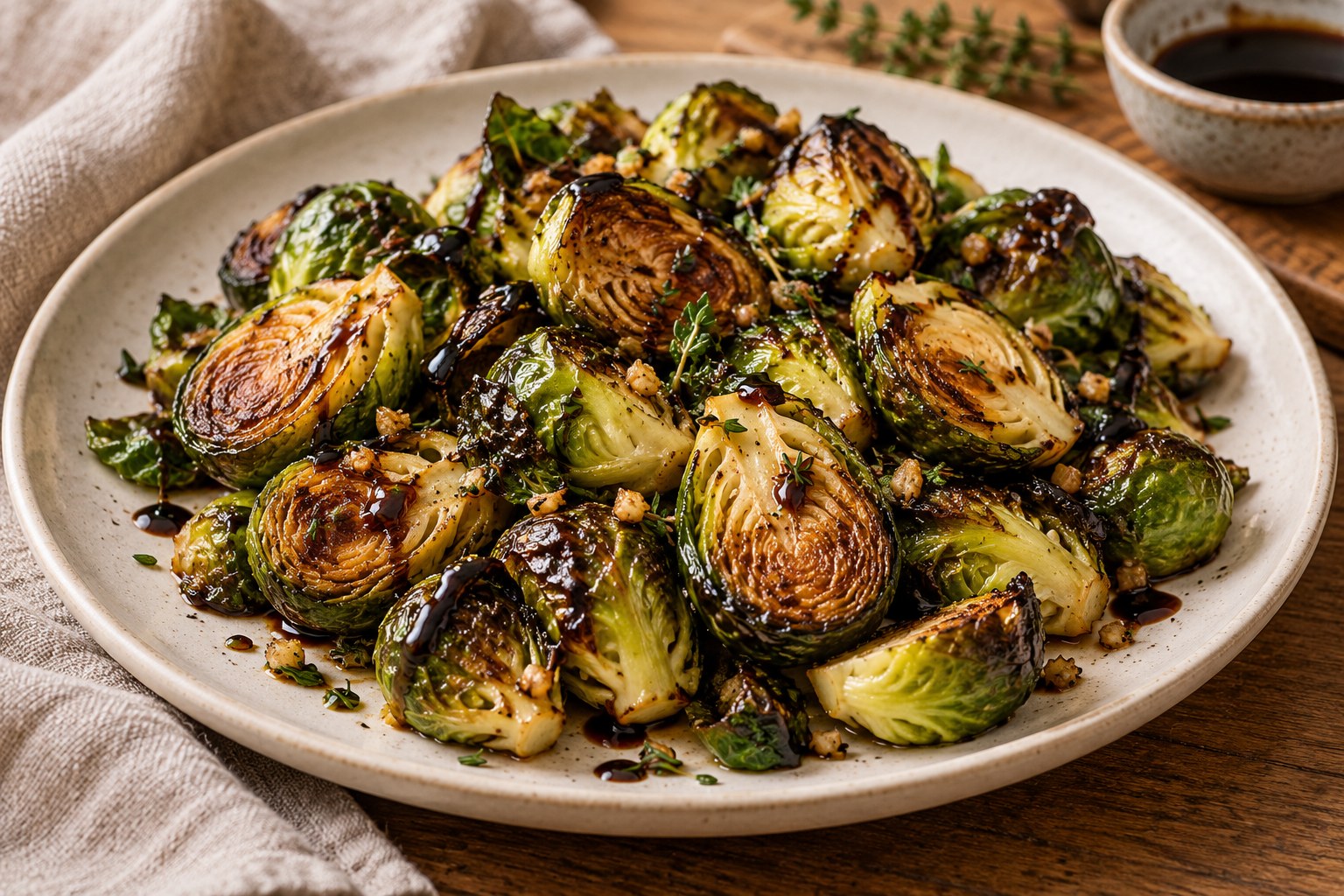
Pair sprouts with barley, lentils, and a mustard dressing, or serve them next to tofu and mashed potatoes. If using a reduction of plain balsamic vinegar instead of a store-bought glaze, follow the published recipe for the method and account for the different sweetness and consistency. A drizzle goes further than soaking an entire container of cooked sprouts.
Prep smarter: Leave the balsamic glaze separate until eating if you want to preserve the most texture. Because leaves can loosen and darken quickly, monitor the basket rather than relying on an exact time from a different appliance.
5. Baked falafel as a separate make-ahead option
Falafel is excellent with crisp vegetables, pita, and hummus, but accuracy matters here. What’s Baking? has a Homemade Baked Falafel Recipe; it is written for the oven, not the air fryer. The recipe starts with dried chickpeas soaked overnight and includes olive oil. It is vegan as written, but it should not be relabeled “air fryer falafel” or “oil-free falafel” without a tested adaptation.

The oven recipe still fits a useful meal-prep workflow. Make the falafel using its own directions while the air fryer prepares sweet potatoes or cauliflower, then combine portions with fresh vegetables, grains, and a lemony dressing. That is a more reliable plan than inventing an air-fryer temperature or claiming a particular protein amount not supported by a nutrition calculation.
Prep smarter: Refrigerate cooked falafel promptly in shallow containers. Freeze extra cooked portions if you will not eat them within two to three days. Reheat thoroughly when serving; the precise time depends on size, starting temperature, and equipment.
Recipes you should not accidentally label vegan
A trustworthy plant-based guide should help readers avoid surprisingly common errors. Several older links in the original version of this article lead to recipes that are not vegan as currently written. Rather than hide that issue, here is what to check:
- Air Fryer Taquitos list shredded chicken and cheese. They are not vegan unless an appropriately developed alternative version replaces the non-vegan ingredients.
- Air Fryer Egg Rolls include meat as an option and a beaten egg for sealing. A tofu filling and egg-free sealing method would require a separate, properly written vegan variation; even the wrapper ingredients need checking.
- Vegetarian Stuffed Peppers contain grated dairy cheese. “Vegetarian” and “vegan” are not interchangeable labels.
- Air Fryer Buffalo Cauliflower allows regular milk and uses a butter-based sauce in its description, with optional dairy dressing. Do not list it as vegan without specifying and verifying the substitutions.
The safest approach for beginners is to choose a published plant-based recipe and follow it as written. For broader substitutions, our How to Convert Any Recipe Into a Vegan One explains why a swap that works for one dish may not work for another.
A realistic Sunday meal-prep workflow
Before you cook: Plan the number of meals you truly need
Don't automatically cook seven days of refrigerated food on Sunday. Health Canada's general leftovers guidance is to eat refrigerated leftovers within two to three days, or freeze them for later. A practical approach is a short Sunday batch, followed by a small midweek refresh, with some portions frozen from the beginning. Your shopping list can cover more days than your refrigerator plan.
Decide how many lunches and dinners are needed, whether anyone has allergies, whether you will have microwave or air-fryer access at work, and how much refrigerator or freezer space is available. If you are packing a meal for later, plan how to keep it cold until eating. A thoughtfully prepped three-day plan is better than seven containers you cannot store or eat safely.
Step 1: Prep ingredients that require waiting
Press the tofu according to its recipe and rinse or cut produce as appropriate. Start any grain that needs simmering on the stove. Set out clean, shallow containers and write the prep date on labels before the food is ready. If making the baked falafel, remember that the original recipe requires dried chickpeas soaked well in advance; it isn't a spontaneous 15-minute project.

Keep your cutting board and knives clean, and handle allergens appropriately. Thoroughly dry vegetables that need browning. Before turning on the air fryer, read the specific recipe and appliance instructions, especially the basket capacity and temperature guidance. This avoids discovering halfway through that you planned more food than the basket can fit.
Step 2: Cook one neutral component first
Sweet potato cubes or plain-ish seasoned vegetables are often good first batches because they do not leave a sticky, sugary sauce behind. Cook the portions in appropriately spaced batches. For another round, make the tofu using its prescribed method. Cleaning between batches may be worthwhile if the next dish has strong flavors or an allergen that must not touch another person's meal.
Use a timer, but inspect texture too. Air fryers vary significantly. The goal is an evenly cooked piece, not a magic number that works in every machine. If you're preparing refrigerated portions, there is no need to leave cooked food on the counter for hours “to cool completely.” Divide food into shallow containers and refrigerate promptly in accordance with food-safety guidance.
Step 3: Build a few different combinations
Put a portion of grains and vegetables into one container; keep crispy tofu separately if convenient. Mix up another serving with sweet potatoes, beans, and greens, and a third with cauliflower and lentils. These combinations share ingredients without tasting exactly the same once you change the sauce or seasoning at serving time.
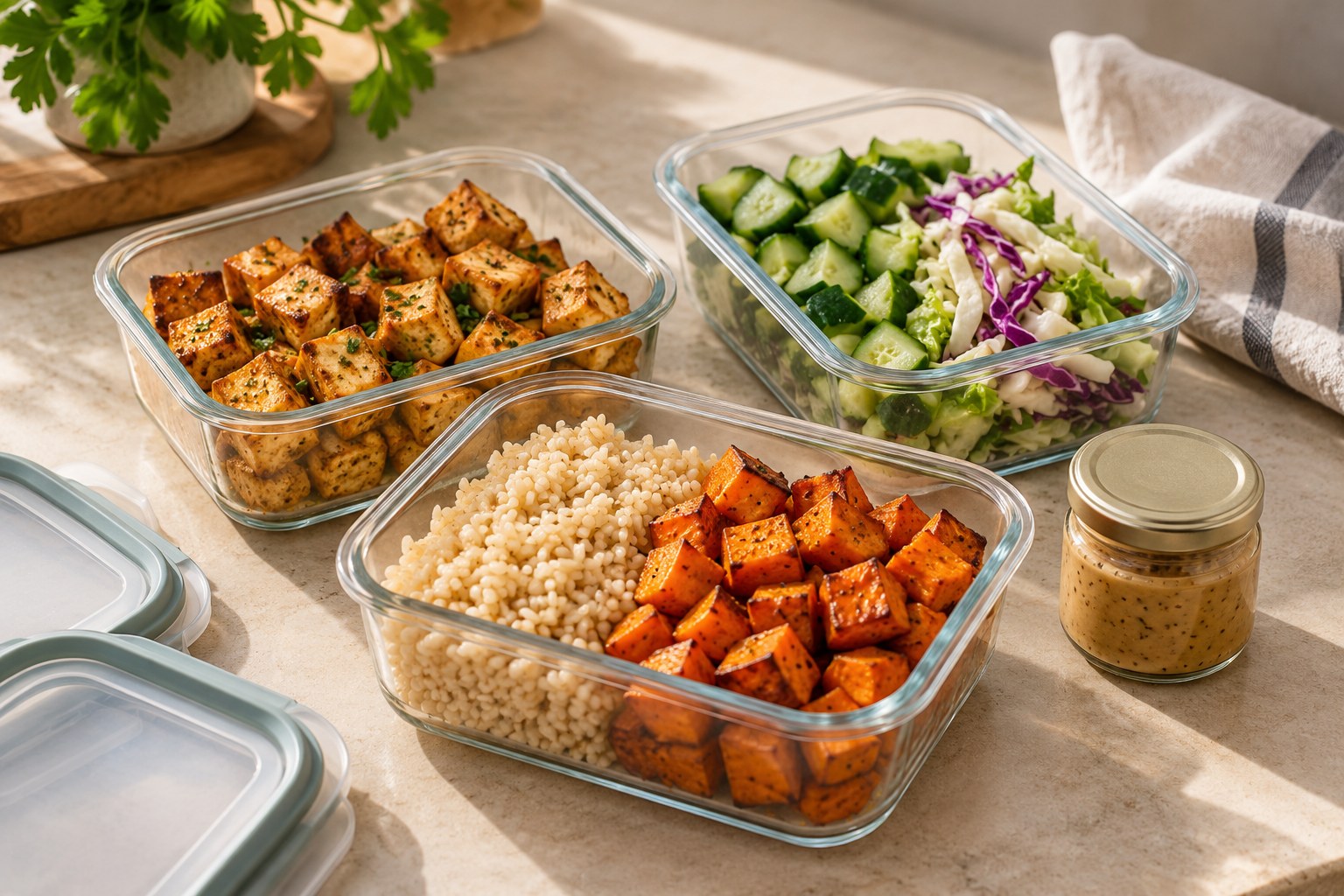
Store dressings in sealed, separate containers. Keep fresh salad ingredients chilled and apart from warm components until they are cooled and ready to assemble. If you are freezing a portion, label it with the contents and date. Only freeze meals that are suitable for freezing; many crisp raw greens are best added fresh, not frozen with the meal.
Step 4: Plan a midweek refresh
Later in the week, prepare another smaller set of cooked components or thaw a previously frozen portion using safe methods. That could be another batch of tofu, a vegetable you found on sale, or fresh rice and lentils. Repeating the process in smaller amounts can preserve quality while reducing spoilage.
This is also where an air fryer shines: you can cook a modest amount without a long recipe project. You do not need a photographic spread of 15 containers. You need meals that fit your appetite, schedule, and safe storage capacity.
A flexible seven-day vegan air fryer meal plan
Use this as a planning example, not instructions to refrigerate one Sunday batch for an entire week. Prepare food within safe storage windows, freeze future servings, and cook or refresh the components midweek. Each meal idea can be adapted to budget, availability, and portion needs.
Monday: Crispy tofu rice bowls
Cook the verified air-fryer tofu recipe and serve a portion with rice, steamed greens, shredded carrots, and a little sesame-free or sesame-based sauce according to your needs. Store the sauce separately. Save additional cooked tofu only if you can chill and use it within the recommended interval, or freeze appropriate portions.
Tuesday: Sweet potato and black bean lunch bowls
Pair air-fried sweet potato cubes with drained black beans, cooked quinoa, fresh tomato, and lime. Add sliced avocado just before eating rather than storing cut pieces through multiple days. Serve hot or cold according to how the ingredients were safely chilled and handled.
Wednesday: Cauliflower pita pockets
Warm an appropriate portion of air-fried cauliflower and tuck it into pita with hummus, cucumber, and greens. Pack the bread and wetter vegetables separately if preparing a work lunch. Refresh the cooked components or use properly frozen portions rather than stretching Sunday's refrigerator leftovers beyond recommended storage.
Thursday: Balsamic Brussels sprouts and lentils
Prepare the Brussels sprouts without the optional dairy Parmesan. Spoon them over cooked lentils and a grain of your choice; add balsamic near serving. A few herbs or toasted seeds make a different flavor profile from the first half of the week.
Friday: Tofu noodle bowl
Air fry a fresh batch of tofu or safely reheat a previously frozen portion. Add noodles, shredded cabbage, and a ginger-soy dressing. Make sure the sauce suits the diners' allergen needs. This meal is easy to assemble when you have vegetables prepped and noodles ready.

Saturday: Sweet potato brunch hash
Air fry small sweet potato cubes following the linked recipe, then serve with warm beans, sautéed spinach, and salsa. This is a brunch idea rather than a tested recipe with fixed cooking times. Use the air fryer for the potatoes and a pan for whatever works better on the stovetop.
Sunday: Falafel platter and next week's plan
Use the published oven-baked falafel recipe, not an unverified air-fryer conversion, alongside pita, cucumbers, herbs, and hummus. If you want a quick dessert or something baked for later, choose a separate verified recipe. Review what you actually ate this week before deciding how much to prepare next time.
Keeping vegan meal-prep food safe
Refrigerating cooked plant-based food
Plant-based food can still cause foodborne illness. Cooked rice, beans, tofu, and vegetables are perishable once prepared. Health Canada advises refrigerating or freezing leftovers within two hours and using refrigerated leftovers within two to three days, or freezing them. Place food in clean, shallow containers to help cool it quickly. Keep the refrigerator at a safe temperature and date the containers.
Do not rely on smell or appearance to decide whether refrigerated food has become unsafe. The fact that a meal contains no meat does not extend its safe refrigerator life indefinitely. If a dish sat out for too long or you are unsure about its storage history, do not take a chance.
Freezing portions for later in the week
Freezing is a helpful part of advance planning. Portion the cooked food, cool and refrigerate promptly, then freeze containers that are suitable for your freezer. Keep crunchy toppings, fresh herbs, raw lettuce, and sauces separate when texture matters. Frozen tofu and vegetables may change texture, sometimes becoming softer or more porous; experiment with the combinations you enjoy rather than promising they will be identical to freshly cooked food.

Label each container with what it contains and when it was prepared. Follow food-safety instructions for thawing. Freezer quality varies with packaging and the meal, so avoid assigning an unsupported single freezer-life promise to every dish in a mixed recipe list.
Reheating safely in an air fryer
Air fryers are convenient for reheating small portions, especially tofu and roasted vegetables. Arrange food so hot air can circulate and follow your appliance's safe-use directions. For leftover meals, check that the center reaches 74°C (165°F) with a food thermometer. Brown edges do not prove the inside is hot enough. Larger portions and chilled dense foods may require more time than a small handful of vegetables.
If the food is extremely dry, consider whether an air fryer is even the right reheating method. A covered pan or microwave with a little moisture can be better for grains and saucy dishes. Reheat only the portion you are going to eat, and avoid repeatedly reheating the same leftovers. For additional detail, consult Health Canada's food safety tips for leftovers.
Packing for work or school
Choose leak-resistant containers for sauces and a separate container for foods you want crisp. Use an insulated lunch bag and a suitable cold source when refrigeration is not available, and follow safe holding practices rather than assuming food is protected because the lid is closed. If a meal will be eaten without reheating, deliberately make it a cold grain-and-bean bowl, pasta salad, or another suitable cold lunch.

Be careful with vague “kid-approved” claims. Food preferences vary, and spice levels and shapes should be adjusted for the actual people eating. For school settings, follow local allergy and food policies, which might restrict nuts, sesame, or other common ingredients.
How to prevent soggy air fryer leftovers
Remove excess moisture before cooking
Wet surfaces steam more readily. Pat tofu dry after pressing and dry washed cauliflower well before coating. When vegetables are very wet, adding starch or oil will not magically make them crisp. The food's inherent moisture also matters: zucchini releases water more easily than a sweet potato cube, so it is not surprising that zucchini leftovers soften quickly.
Leave space in the basket
Hot air needs a path around the pieces. A single layer lets more surface area brown; stacked food tends to cook unevenly. If you are cooking for four and the recipe fits two, make two batches rather than forcing all the food into the basket. Batch size also explains why a large oven may sometimes outperform a smaller air fryer for meal prep.

Season and sauce at the right stage
Dry spices can be added before cooking in the manner a recipe specifies. Sticky glazes often brown quickly and may be better added toward the end or after cooking, depending on the recipe. Wet sauces usually belong on the finished meal rather than the refrigerated crispy component. This creates a more satisfying meal even when leftovers are no longer perfectly crunchy.
Cool and store responsibly
Storing food while moisture is trapped can soften crusts, but leaving perishables sitting out until they are completely cold is not a safe solution. Put cooked foods into shallow containers, refrigerate promptly, and follow Health Canada's cooling instructions. If a recipe requires especially crisp results, cook that element fresh and prep the grains and vegetables ahead instead.
Reheat by texture, not just habit
A small bowl of firm tofu might re-crisp in an air fryer, but a very saucy curry will likely be better in a pan. A dry potato cube may need a slightly different approach from a tender one. Regardless of method, safe reheating temperature comes first. Use short checks to avoid scorching outer edges while ensuring the center is thoroughly hot.
Budget-friendly vegan air fryer grocery list
The most economical shopping list is often a flexible set of ingredients instead of five specialized recipes. Consider extra-firm tofu, dried or canned beans, lentils, sweet potatoes, cauliflower or another sturdy vegetable, cabbage or greens, rice or another grain, onion and garlic, a lemon or lime, and a few seasonings such as smoked paprika, cumin, and pepper. Buy only as much perishable produce as you can store and use.

If tofu is expensive, beans and lentils can carry more meals while tofu becomes a smaller topping. Frozen vegetables can be useful when fresh produce is poor quality or overpriced, though the water they release may affect crispness. Cook some frozen vegetables by methods that suit them best instead of forcing every bag into the air fryer.
Plant-based sauces can be simple. Mix lemon juice, tahini, water, and seasonings for one dressing; use a soy-and-ginger combination for a different flavor, checking allergens and labels. You can also finish warm vegetables with olive oil and herbs. Do not let a long sauce-shopping list defeat the purpose of easy preparation.
Troubleshooting common air fryer meal-prep problems
My tofu is soft rather than crispy
First check whether it was pressed and dried according to the recipe and whether the basket was crowded. Also consider when you are judging it: freshly cooked tofu should be crisper than tofu stored under sauce for two days. Cornstarch and oil help the verified tofu recipe brown, but neither guarantees permanent crunch. Keep wet sauces separate and reheat a suitable portion before eating.
My vegetables look burned outside but are firm inside
Pieces may be too large, uneven, or exposed to a temperature inappropriate for your appliance or recipe. Try uniform pieces and check them earlier. Use the cooking directions for the specific vegetable rather than applying tofu settings to everything. Very dense vegetables may need smaller cuts or a different cooking approach.
My lunches all taste the same
Keep the core ingredients and vary the finishing flavors. Tofu with rice, cucumber, and soy-ginger dressing feels different from tofu wrapped with cabbage and a lemony spread. Sweet potatoes work with beans and lime, or with greens and a mustard-based sauce. Add herbs and fresh texture at serving time instead of making five complicated base recipes.
My air fryer is too small for batch cooking
Use it for the items that benefit most from hot-air browning and make grains, beans, soups, and sauces elsewhere. A sheet-pan oven batch may be more sensible for a large amount of vegetables. The goal is an efficient meal plan, not proving you can cook every component in one machine.
My reheated food is dry
Some foods lose moisture during repeated heating. Avoid repeatedly reheating an entire batch. Warm only the portion you will serve and consider the microwave or a covered pan for grains and saucy foods. For tofu or vegetables where some browning is desirable, check more frequently so they don't dry out while heating through.
I'm not sure whether a linked dish is vegan
Read the complete ingredient list, including wrappers, sauces, toppings, and optional garnishes. A vegetable-based title is not proof that the dish is vegan. Cheese, eggs, butter, honey, or meat broths can appear in recipes that otherwise contain mostly plants. Prefer recipes explicitly written without animal-derived ingredients, and check the actual current ingredient list.
Frequently asked questions about vegan air fryer meal prep
Can I make five days of vegan lunches on Sunday?
You can plan five days of lunches, but that does not mean storing all five days of cooked food in the refrigerator. Follow Health Canada's recommendation to eat refrigerated leftovers within two to three days, or freeze them for later. A Sunday batch plus a midweek refresh is a useful pattern. Keep perishable lunches properly chilled until eating.
Do I have to use oil to air fry vegetables?
Some air-fryer methods use little oil, and some can be adapted, but the specific published What’s Baking? recipes recommended here list oil. Removing it may change how spices stick and how the surface browns. Do not market those recipes as oil-free unless a genuinely tested oil-free version exists.
Is air-fried tofu a complete meal?
Tofu is a useful protein component, not necessarily an entire lunch by itself. Add grains, vegetables, beans, fruit, or other foods to suit your appetite and nutrition needs. This article provides meal-assembly ideas; it does not assign unsupported nutritional figures to individual bowls.
Can I put frozen leftovers straight in the air fryer?
Some properly frozen foods can be reheated from frozen, but results depend on the dish and the appliance's directions. Dense portions may heat unevenly. Follow safe reheating practices and confirm leftovers reach 74°C (165°F) throughout. A microwave or oven may be better for a large or saucy portion.
What keeps air-fried tofu crunchy in a lunchbox?
The closest you will get is keeping it dry and separate from sauces until eating, then reheating it if appropriate and safe. An airtight lunchbox preserves food but doesn't suspend moisture changes. For a lunch without reheating access, choose a recipe combination that tastes good cold rather than relying on lasting crunch.
Can I use parchment paper or foil in an air fryer?
Only if your specific appliance permits it and the material does not block airflow or contact heating elements. Never put loose paper in an empty basket during preheating where moving air might lift it. Consult the manufacturer's instructions rather than copying a blanket rule from another air-fryer model.
Are vegan air fryer recipes always healthier?
No cooking method or dietary label guarantees a particular nutritional outcome. Ingredients, portions, sauces, and the rest of the meal all matter. Air frying can use less oil than deep frying in some preparations, but some air-fried recipes still use oil, sugar, or rich toppings. Choose foods you enjoy and consider the full meal rather than relying on the appliance as a health claim.
What is the best beginner meal to try?
Start with Air Fryer Tofu if you enjoy tofu, or Air Fryer Sweet Potato Cubes if you want a forgiving vegetable side. Follow the published recipe, learn how your own appliance cooks, and build one meal around the result. Save the more complicated multi-component combinations for later.
A practical finishing checklist
Before you declare meal prep complete, confirm that you've made a realistic number of servings, used published recipes accurately, cooled perishable ingredients promptly, written dates on containers, and set aside anything intended for freezing. Keep sauces and crisp toppings separated when practical. Make sure lunches can stay cold until needed, and plan safe reheating rather than guessing at a universal number of air-fryer minutes.
Most importantly, ask whether the meals still sound appetizing. A fridge full of identical containers is not a success if nobody wants to eat them. Preparing one good protein, a couple of vegetables, and an adaptable sauce is often a better foundation than a week of elaborate meals cooked in one afternoon.
Final thoughts: Make the air fryer one helpful part of your routine
Vegan meal prep becomes easier when you stop expecting every air-fried bite to stay crispy for days. Use the machine where it is strongest: browning tofu, sweet potatoes, cauliflower, and other sturdy vegetables in sensible batches. Combine those components with grains, beans, fresh produce, and separately stored sauces. Refrigerate or freeze leftovers safely, and refresh the cooking midweek rather than stretching food beyond recommended storage times.
For your next batch, begin with the verified Air Fryer Tofu Recipe and Air Fryer Sweet Potato Cubes, then assemble two different meals with what you already have. A small, repeatable routine is more useful than a dramatic “meal prep hack” that doesn't work in real life.
Food-safety reference: Health Canada — Food safety tips for leftovers. Advice here is general food-safety guidance, not a substitute for an appliance manual or a tested individual recipe.
IN PICTURES
From the baking notebook
FROM THE RECIPE BOX


