
On this page
A good pancake should have a tender centre, lightly golden edges, a pleasant flavour, and enough structure to lift from the pan without collapsing. Those qualities can be more challenging when you make pancakes without wheat flour, but they are achievable with careful mixing and controlled heat. The trick is not simply to replace all-purpose flour with a nut or coconut flour. It is to understand how eggs, liquid, fat, baking powder, resting time, and pancake size work together.
If you are searching for fluffy keto pancakes, this guide helps you make sense of the What’s Baking? Keto Pancakes (Almond Flour or Coconut Flour) recipe, choose the flour that suits you, and avoid common problems such as fragile pancakes, dry centres, and over-browned surfaces. It also explains toppings, dietary considerations, and sensible meal preparation. The recipe link is the source of the actual published ingredient listing and method; the troubleshooting and alternatives below are editorial guidance, not a claim that every adaptation has been kitchen-tested.
A note on expectations: these pancakes are wheat-flour-free in their published ingredient list, not identical to a traditional buttermilk pancake. Almond flour tends to make them rich and tender; coconut flour absorbs liquid more aggressively. Neither variation contains wheat gluten to build a stretchy network. Delicious pancakes can still result, but expect a somewhat different crumb and handle them gently.
Start with the actual What’s Baking? recipe
The linked Keto Pancakes recipe lists the following ingredients for eight small pancakes, approximately two per serving:
- Flour: 120 g almond flour or 60 g coconut flour. These are alternative versions, not ingredients to combine.
- Eggs: Four large eggs.
- Liquid: 60 ml unsweetened almond milk, or another suitable low-carbohydrate milk.
- Fat: Two tablespoons melted coconut oil, plus a little more for cooking.
- Flavour: One teaspoon vanilla extract and optional quarter teaspoon cinnamon.
- Leavening: Half a teaspoon baking powder.
- Seasoning: Quarter teaspoon salt.
- Sweetener: Two tablespoons erythritol or monk-fruit sweetener as listed on the published recipe card.

The published method whisks the eggs until slightly frothy, adds the wet ingredients, then the dry ingredients, rests the batter briefly, and cooks small portions on a medium-low nonstick pan. It suggests about a quarter cup of batter per pancake and careful flipping only once the underside is set. The published timing is five minutes of preparation and ten minutes of cooking, but actual total time depends on pan size, heat, how long your batter takes to settle, and whether you cook in batches.
An important correction to the old blog: it gave separate homemade ingredient lists that did not match this recipe. Its two-egg almond version and three-egg coconut version were not the same formula as the linked four-egg recipe. To keep a single dependable reference, follow the recipe card for quantities rather than mixing pieces from both lists.
Why low-carb pancake batter behaves differently
Traditional pancakes use wheat flour to form a batter with starch and gluten-forming proteins. During cooking, bubbles expand, the flour structure sets, and the pancake holds its shape. The exact texture depends on ingredients and technique, but wheat flour offers structural properties that neither ground almonds nor coconut flour reproduces directly.
Almond flour is made from ground almonds. It brings natural fat, a nutty flavour, and a relatively tender texture. Because it does not behave like all-purpose flour, an almond pancake may need more delicate handling, especially before the centre has set. Very coarse almond meal can yield a grainier bite. Finely ground blanched almond flour tends to produce a more uniform batter.
Coconut flour is a different ingredient altogether. It has a distinctive aroma and absorbs substantially more liquid than almond flour. Celiac Canada's gluten-free flour guide notes its high absorbency. This is why the site's recipe specifies 60 g coconut flour instead of 120 g almond flour. Swapping equal weights or equal cup volumes would not be a sensible starting point.
Eggs do a great deal of work in both versions. They contribute moisture and proteins that firm as the batter cooks, helping small pancakes hold together. The coconut oil contributes richness, while baking powder supplies leavening. None of these ingredients can rescue batter from excessive pan heat or flipping before the centre is stable, which is why the cooking process matters as much as the ingredient list.
Almond flour versus coconut flour: Which should you choose?
Choose almond flour if you enjoy a mild nut flavour and want a relatively tender result. It is a practical first choice for people who have not cooked with either flour, provided tree nuts are safe for them. Seek out finely ground almond flour rather than expecting visibly coarse almond meal to make an identical pancake.
Choose coconut flour if you need to avoid almonds and coconut is appropriate for your household. Coconut flour is not automatically safe for everyone with tree-nut allergies or other food allergies; individual needs and the specific product label matter. It can create a thicker, more absorbent batter, so watching consistency and handling the pancakes gently are especially useful.

Neither version is automatically a good choice for every dietary need. The published pancakes contain four eggs. The almond version also contains almonds, and the original milk option is almond milk. The fat is coconut oil. Labels on sweetener blends, baking powder, extracts, and packaged flour require checking if you are cooking for celiac disease or a specific allergy.
For readers who simply want a pancake without wheat flour rather than a low-carbohydrate eating plan, the site also offers Flourless Banana Pancakes. They use bananas and eggs and are a different, naturally sweeter recipe—not a substitute with equivalent carbohydrate content. Another alternative is High-Protein Banana Pancakes, which use banana, oat flour, protein powder, yogurt, and other ingredients. Those are not the same keto formula.
A reliable preparation sequence
1. Read the whole recipe before starting
Put out the measured ingredients, a bowl for wet ingredients, a bowl or small container for dry ingredients, a whisk, a flexible spatula, a lightly oiled nonstick pan, and a serving plate. Use the published measurements, especially when switching between almond and coconut flour. Check that baking powder is within its best-before period and has been stored dry.
If you intend to make both versions, treat them as two separate batches rather than mixing the flours indiscriminately. Before cooking for guests with allergies, confirm that every ingredient and your utensils are suitable for them.
2. Whisk the eggs thoroughly
Whisk the four eggs until the mixture is uniform and a little frothy. This helps distribute the egg proteins and incorporates some air. You do not need to whip the eggs into dramatic peaks for this published method. Excessive whipping is not a shortcut to a guaranteed fluffy pancake if the batter later becomes uneven or the pancakes are cooked too aggressively.

3. Add milk, cooled melted coconut oil, vanilla, and sweetener
The melted coconut oil should be fluid but not hot. If it is very hot, let it cool before whisking it into the eggs. Add the milk, vanilla, and listed sweetener; stir until the mixture is reasonably smooth. Depending on the temperatures of the ingredients, coconut oil may form small flecks when it encounters cold milk. Minor flecks are not necessarily a ruined batch, but bringing the ingredients closer in temperature can make mixing easier.
Taste the finished cooked pancake before changing sweetener levels in later batches; do not sample raw egg batter. Different sweetener products can taste very different, and some blended monk-fruit products contain other ingredients that change sweetness or carbohydrate content.
4. Combine the dry ingredients separately
Mix your chosen flour with the baking powder, salt, and optional cinnamon. Break up dry pockets before adding them to the egg mixture. This reduces the temptation to whisk the finished batter excessively just to remove a few clumps.
5. Mix until combined, then observe
Add the dry ingredients to the wet mixture. Stir so no obvious flour pockets remain, scraping the bottom of the bowl once or twice. The finished texture may be unlike wheat pancake batter. In the almond version, you may see a little texture from the ground nuts. In the coconut version, the batter will generally be more absorbent and may continue thickening as the flour hydrates.

Do not chase a particular social-media image of batter with an arbitrary amount of added liquid. The goal is a portion that can be placed in the pan and spread into a small round without immediately running into a thin puddle or sitting as a hard mound. The first pancake can act as a practical consistency check.
6. Give the batter a short rest
The published recipe calls for a brief two- to three-minute rest. Allow it to stand while the pan heats gently. This gives the ingredients time to hydrate and lets bubbles appear. If the coconut-flour batter becomes substantially thicker during this time, that is consistent with the flour's absorbency. The recipe allows a small splash of additional suitable milk if needed. Add any adjustment gradually and recognize that a changed formula is an adaptation, not a guaranteed tested result.
7. Preheat a medium-low nonstick pan
High heat is one of the easiest ways to make these pancakes seem unsuccessful: the outside darkens quickly while the centre stays wet or breaks during flipping. Start with medium-low heat and adjust based on your stove and pan. A little cooking oil is enough to reduce sticking; a swimming pool of oil will not improve the crumb.
Avoid overcrowding the skillet. One or two small pancakes are easier to manage than several large rounds. If the first pancake browns almost immediately, reduce the heat before continuing.
8. Pour smaller rounds
The published recipe suggests roughly 60 ml, or a quarter cup, of batter per pancake. The stated goal is a round approximately 10 cm (4 inches) across. The exact size will vary with batter thickness. Keep the rounds small enough for a flexible spatula to support most of each pancake when flipping.

An extra-large pancake may tear even when its flavour is excellent. Begin small, then decide whether your pan, batter, and flipping technique can support larger portions another day.
9. Let the first side establish structure
Watch for the edges to become less glossy and the base to develop a golden colour. The site's recipe gives roughly two to three minutes on the first side, but visual cues matter more than the clock. Bubbles alone are not always a dependable signal in a batter with no wheat gluten, especially if the eggs and flour proportions differ from standard pancakes.
Slide a thin spatula beneath an edge and assess whether the centre can move without stretching or folding. If it still looks soft, wait a little longer at a controlled temperature. A slightly slower first side is often easier than trying to flip an unset pancake.
10. Turn gently and finish cooking
Support the pancake broadly with the spatula, turn it once with a confident movement, and cook the other side until golden and fully set. The published recipe gives roughly one to two minutes after flipping. Larger or thicker rounds may need additional time. The inside should not contain visibly raw batter, especially because the formula includes eggs. If necessary, lower the heat and let the centre finish rather than turning the burner up to rush the process.
Transfer finished pancakes to a clean plate and repeat with the remaining batter. When making several batches, keep them warm as the recipe suggests, but avoid leaving cooked food at unsafe temperatures for prolonged periods.

The first pancake is a useful diagnostic test
Before pouring all the batter, cook one small pancake and check its texture. A test pancake tells you more about your particular pan and flour than a fixed promise of “perfect in fifteen minutes.” Examine the colour, centre, and ability to lift without tearing.
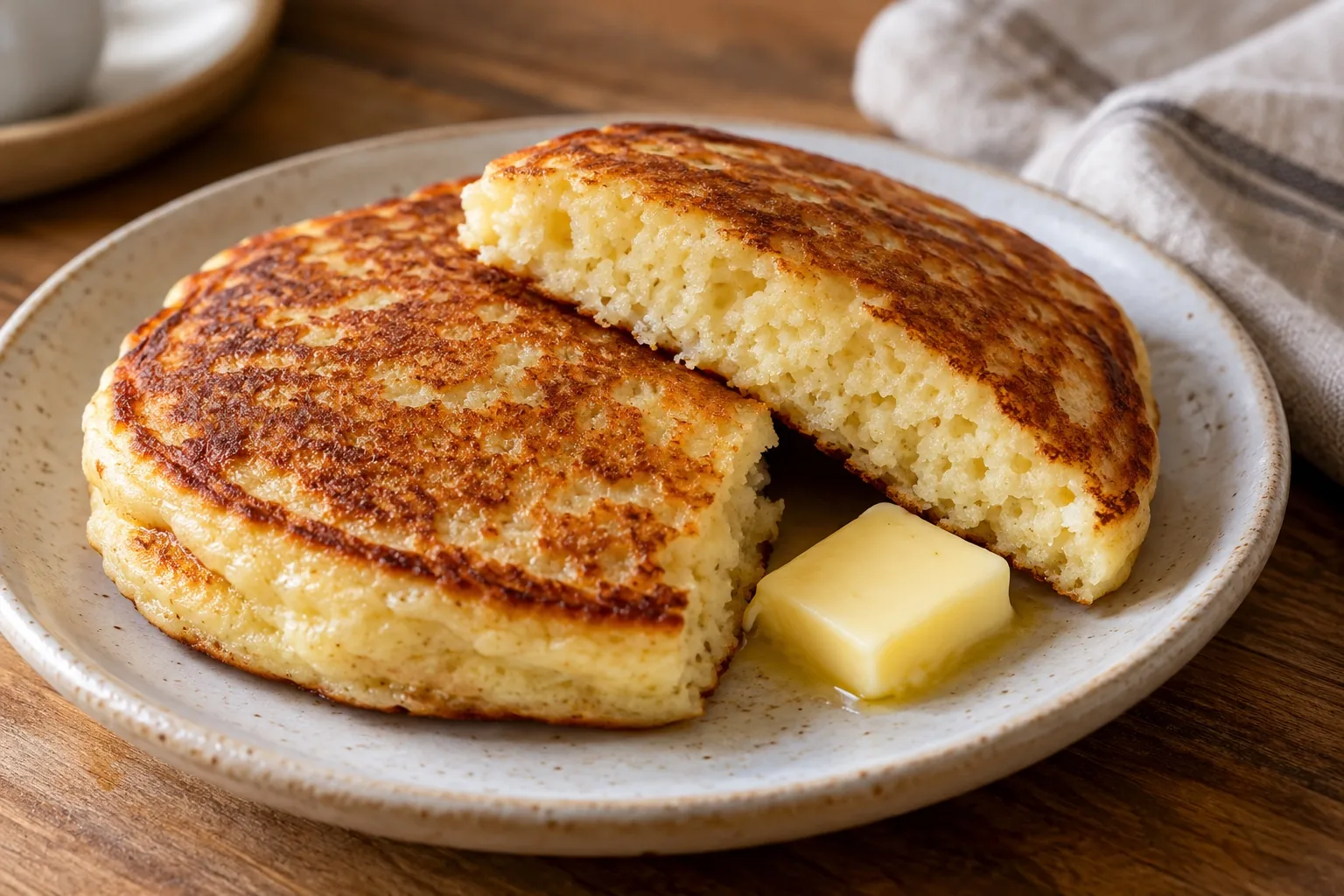
If the pancake is dark on the outside but soft in the middle, the heat is probably too high or the round is too thick. Reduce heat, use a slightly smaller portion, and allow more time. If it tears while turning, wait until the edges are firmer or use a wider, thinner spatula. If the texture is dry, avoid adding more flour automatically, and check whether you overcooked it.
Take notes if you intend to repeat the recipe. A single line—“medium-low, small scoop, slightly longer first side”—can be more useful than buying extra ingredients or trying a new flour with every batch.
How to get fluffier pancakes without making unsupported promises
Baking powder supports leavening, but it does not work independently of moisture, eggs, batter thickness, and cooking temperature. Fresh baking powder distributed evenly through the flour is a sensible starting point. Frothy eggs can help, but whipping them for many minutes is not necessary for the linked method.
Try three repeatable habits: mix the batter uniformly, rest it briefly, and use gentle heat. Resist repeatedly pressing a pancake down with a spatula while it cooks. Pressing flattens an already delicate product and is not needed to check doneness.
If you prefer tall, thick pancakes, experiment cautiously with smaller scoops rather than simply adding more flour. Increasing almond or coconut flour may alter moisture balance and can create a dry or heavy pancake. In particular, coconut flour is not a one-for-one thickening ingredient. Any major formula change would need its own recipe testing.
It also helps to adjust expectations: a well-made almond-flour pancake can be delicate and rich rather than lofty in the way a restaurant buttermilk pancake might be. Tender and evenly cooked is a more reliable goal than an exaggerated height claim.
Pancake troubleshooting: Common problems and useful fixes
The pancakes fall apart when I flip them
Most often, they were flipped before the centre had set or made too wide for the spatula. Keep the rounds smaller, allow enough time on the first side, and use a flexible spatula with broad support. Check that you followed the egg quantity on the recipe card. If you combined pieces of a different recipe with this one, ingredient balance may be the reason they are fragile.
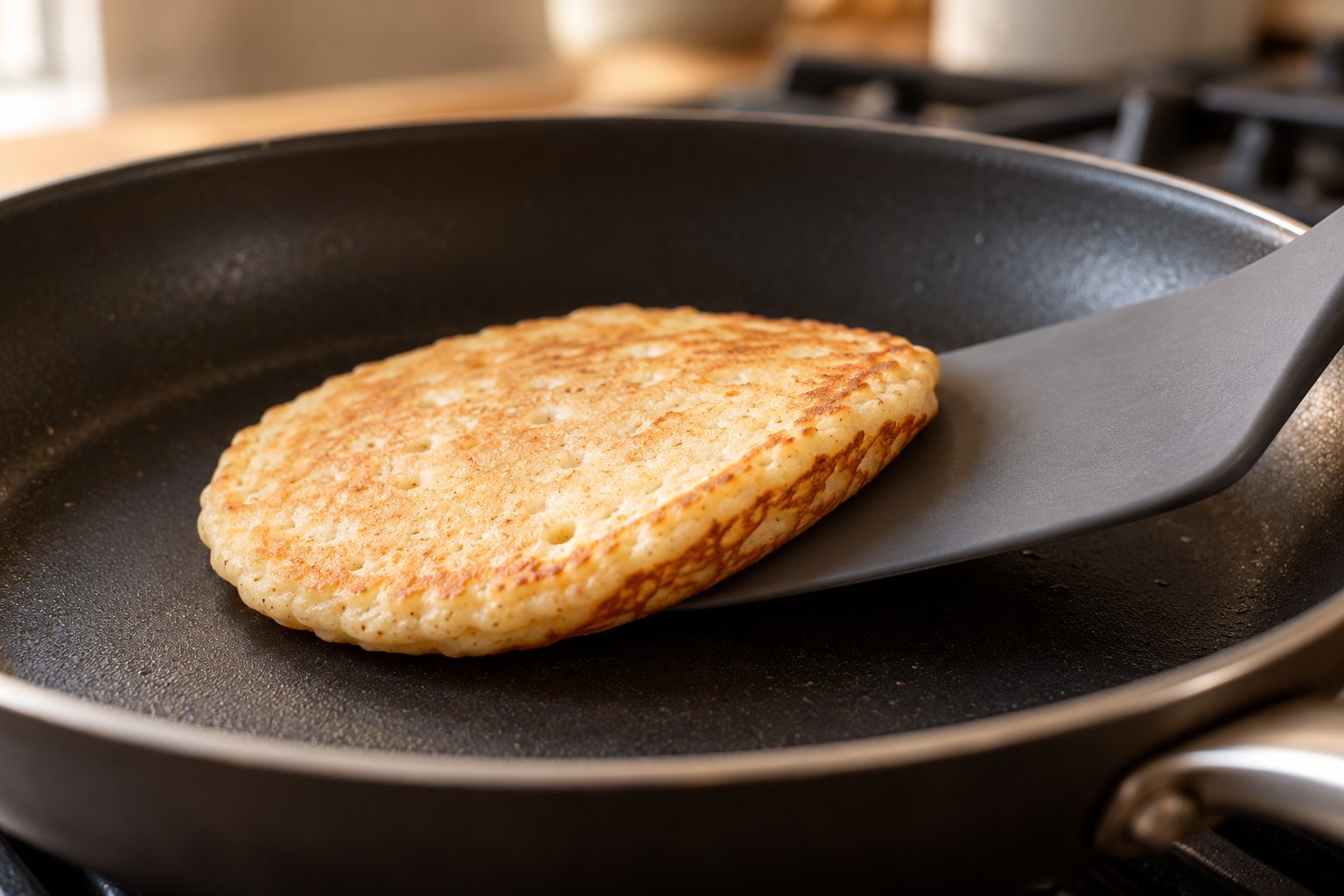
The pancakes look golden but the middle is wet
Turn down the heat and let the centre cook slowly. Pour a smaller amount of batter for the next pancake. Avoid pressing down hard, as that can damage the structure. Cook eggs thoroughly; a nicely browned exterior is not evidence that the centre has finished cooking.
The coconut-flour batter becomes a thick paste
Coconut flour takes up considerably more moisture than almond flour. Check that you used the published 60 g coconut flour, not the 120 g almond-flour quantity. Allow the specified brief rest before judging the final consistency. If it is too thick to portion sensibly, the recipe permits a modest additional splash of milk. Add slowly and record what you changed, since the adjustment has not been independently tested here.
The almond-flour pancakes are greasy
Almond flour already contributes fat. Check that the melted coconut oil was measured, that the pan is only lightly oiled, and that the pancakes have adequate time to set. Excess added oil can make the finished surface feel heavy and cause uneven browning. If cooking several batches, wipe out excess oil before adding the next portion.

The pancakes taste strongly of egg
Four eggs are an important structural element of the published recipe, so a noticeable egg flavour is possible. Vanilla and the optional cinnamon can balance the flavour. Choose a topping that complements the pancakes rather than adding so much syrup that it masks everything. Do not simply halve the eggs and expect the same texture; that creates an untested formula.
The pancakes are dry or crumbly
Check the flour quantity and cooking temperature. A dry coconut-flour pancake may reflect over-absorption, while a dry almond-flour pancake may have been cooked too long. Use the correct flour weight and start with smaller rounds. Do not keep cooking just to achieve a deep-brown crust if the interior is already set.
The outside burns before bubbles appear
The pan may be too hot, especially if it has held heat through several batches. Remove it briefly from the burner, lower the heat, and use a smaller amount of oil. Cook by visual cues rather than waiting indefinitely for a picture-perfect pattern of surface bubbles.
The pancakes stick even in a nonstick pan
Preheat gently and use a small amount of cooking fat. A scratched, worn, or unsuitable pan can make turning difficult. Before scraping aggressively, let the underside establish a crust so the pancake releases more easily. Avoid metal utensils on nonstick finishes if the manufacturer advises against them.
The result feels dense, not fluffy
Make sure baking powder is present and evenly mixed, and the batter was not left for an unnecessarily long time before cooking. Check that the rounds are small enough to cook evenly. Some density is normal with nut- or coconut-based batters. If the centre is fully cooked and tender, the pancakes need not resemble wheat-based diner pancakes to be successful.
Sensible topping ideas and what each one changes
The right topping makes a simple pancake breakfast feel finished. Keep in mind that “sugar-free” and “low-carb” are product-specific claims, not guaranteed by a topping's name. Read labels if carbohydrate intake matters to you, especially with sweetener blends and syrups.
- A few fresh berries: provide brightness and contrast with the richer pancake. Portion according to preference and individual dietary needs.
- Cinnamon or vanilla: adds aroma without requiring a complicated topping recipe.
- Plain yogurt: creates a tangy contrast. Dairy yogurt contains lactose, so its carbohydrate content is not zero; use an appropriate alternative when needed.
- A modest spoonful of nut butter: can add richness, but peanut and tree-nut allergies matter. Almond pancakes already contain a tree nut.
- Unsweetened toasted coconut: complements coconut flour's flavour, though it changes texture and may not suit all allergies.
- A small amount of syrup or sweetener-based topping: follow the product label and the dietary plan being used, rather than trusting the word “keto” on a menu.

If you are serving people with different preferences, set toppings in separate bowls and let them choose. This also makes it easier to keep one batch of pancakes suitable for someone who needs a particular ingredient excluded, although allergy-related cross-contact precautions remain essential.
How to build a more complete breakfast around pancakes
Pancakes may be the centre of a meal, but they do not need to supply every food group. Add suitable fruit, a protein-containing component if appropriate, and a beverage such as water or unsweetened tea. The best combination depends on appetite, health needs, and the rest of the day's meals.

For an alternative breakfast idea, the site has Keto Egg Muffins (Veggie or Sausage). These contain eggs, heavy cream, and cheddar, plus the chosen vegetable or sausage variation. They are a separate savoury recipe rather than a topping or an ingredient in the pancake formula.
The site's Keto French Toast (Almond Flour Bread) is another weekend option, but it begins by preparing almond-flour bread and a French-toast coating. It is more involved than heating a ready-made piece of bread in a skillet. Use the actual linked recipe if you prefer that style of breakfast.
The 7-Day Keto Diet Plan offers a separate set of meal ideas. It is a planning resource, not a medical prescription and not proof that any single pancake or breakfast will place a person in ketosis.
Are these pancakes gluten-free, keto, or allergy-friendly?
The listed ingredients do not include wheat flour. That makes the recipe potentially suitable for someone avoiding wheat, but the word gluten-free should not be used casually when preparing food for a person with celiac disease. Check that all relevant packaged ingredients are appropriately labelled and keep preparation surfaces and utensils free from cross-contact. Celiac Canada explains gluten-free labelling and cross-contact.
These pancakes are not egg-free. The almond version is not tree-nut-free. The recipe's default milk choice also contains almonds, and coconut oil is part of the formula. If someone needs to avoid one of those ingredients, do not guess that a substitution will retain the published texture or meet their allergy requirements. Choose a verified recipe designed for their dietary restrictions or seek expert guidance when managing a serious allergy.
Similarly, keto refers to the intended style of recipe, not a validated guarantee of particular carbohydrate totals after substitutions and toppings. The recipe card includes a displayed calorie figure, but the former blog listed 110 calories, 9 g fat, 5 g protein, and 2 g net carbohydrate per pancake without a reliable ingredient-by-ingredient calculation. Those figures should not be repeated as verified nutrition facts.
If precise carbohydrate counting is medically important, calculate the actual products, weights, sweetener formulation, and final yield using a dependable nutrition source, or work with an appropriate health professional. Different brands and batch yields can change the result. A recipe label cannot replace individual dietary advice.
Understanding sweeteners in a low-carb pancake batter
The published recipe calls for two tablespoons erythritol or monk-fruit sweetener. In stores, monk-fruit sweeteners are often blended with other ingredients, and their sweetness may not match one another measure for measure. Some dissolve differently, can create cooling sensations, or produce textures that vary after cooking.

Follow the recipe card as your baseline and read the package for the specific product. Avoid assuming that one spoonful of an unfamiliar concentrate is equivalent to one spoonful of a granulated blend. When adjusting future batches, change only one factor at a time so you can tell whether the outcome came from the sweetener, flour, or cooking method.
If you prefer less sweetness, a lightly sweetened pancake with berries or cinnamon may be more appealing than a syrup-soaked stack. For families with children or people using a medically prescribed nutrition plan, do not assume that a specialty sweetener is universally necessary or suitable.
A practical make-ahead and storage approach
Pancakes are easiest to manage when you separate batter preparation from cooked pancake storage. The original recipe includes raw eggs, so avoid treating the uncooked batter as an indefinitely refrigerated meal-prep item. Preparing dry ingredients separately in advance is straightforward, but add the wet ingredients and cook close to serving when possible.
For cooked pancakes, let them stop steaming, then move them promptly to suitable containers. Health Canada's leftovers guidance recommends refrigerating cooked leftovers promptly, using refrigerated leftovers within two to three days, or freezing portions for later. Do not leave cooked pancakes on the counter for extended periods, and do not rely on smell alone to decide whether food is safe.
If freezing, separate cooled pancakes with small sheets of parchment so you can remove only the portions you need. Use a labelled freezer-safe container or bag, remove excessive air, and record the date. Quality may change with freezing, particularly for delicate low-wheat or wheat-free textures; this is a convenience option, not a promise that reheated pancakes will taste freshly cooked.

Thaw frozen portions safely in the refrigerator or use an appropriate reheating method. Reheat cooked leftovers thoroughly; Health Canada recommends 74°C (165°F) for leftovers. Do not repeatedly reheat the same serving. A skillet over gentle heat may help restore some surface texture, while a microwave may leave a softer pancake. Choose a method that heats the centre through without over-browning the exterior.
A realistic weekend pancake schedule
You do not need an elaborate brunch station. Start by gathering the actual recipe ingredients and choosing almond or coconut flour. Check allergies and prepare a clean pan. Whisk the eggs and wet ingredients, combine the dry ingredients, and rest the batter briefly while the pan warms.
Cook one test pancake and check the heat, texture, and ability to turn it. Make one adjustment if needed, then continue in small batches. Put toppings in simple bowls rather than building each person's plate before they are ready to eat. Serve the pancakes soon after cooking, when their edges and centres are at their best.
If you're entertaining a larger group, decide in advance whether the pan fits two pancakes or only one. The published recipe makes eight pancakes; cooking them in batches may extend the total elapsed time. Preparing fruit and setting the table first prevents cooked pancakes from cooling while you finish the rest of brunch.
For a weekday breakfast, consider cooking and freezing an extra batch at another time, then reheating individual portions safely. An alternative is a different quick breakfast entirely—there is no need to turn every weekday into pancake morning.
Frequently asked questions about keto pancakes
Can I replace almond flour with coconut flour in equal amounts?
No. Coconut flour is more absorbent, and the published recipe specifically changes 120 g almond flour to 60 g coconut flour. Follow that distinction and assess batter consistency after its short rest. Further substitutions require testing.
Why does the recipe use four eggs?
Eggs supply moisture and structure in batters that do not rely on wheat gluten. Removing them or substituting them casually can change how the pancakes set and whether they can be flipped. The linked recipe's four-egg formula is the correct reference for this article.
Do I need an electric mixer?
No. The published method uses a whisk and asks for slightly frothy eggs. A hand whisk is sufficient for the described steps. A blender may change the batter texture, so use it only as a deliberate adaptation rather than assuming it is identical.
Can I use almond meal instead of finely ground almond flour?
Almond meal is often coarser and may include skins, so it can produce a grainier texture. Finely ground almond flour better matches the smoothness readers usually want in small pancakes. The linked ingredient is almond flour; a different grind is a variation.

How do I know when it is time to flip?
Look for a visibly set edge, a golden underside, and a centre that can lift without tearing. Allow approximately the recipe's two to three minutes on the first side, but adjust for the actual pan. Small pancakes are easier to flip than oversized rounds.
Why is the coconut version thicker?
Coconut flour absorbs more liquid than almond flour. The recipe already accounts for some of that difference through the smaller flour quantity. Let the batter rest briefly and make only gradual adjustments if the recipe's recommended consistency is not reached.
Can I make the pancakes without baking powder?
Baking powder helps create lift. Omitting it may produce a denser result, and the published recipe does not provide a verified replacement formula. For the texture promised in this guide, include the amount specified.
Are keto pancakes suitable for someone with celiac disease?
They may be suitable if every ingredient is safely gluten-free and cross-contact is prevented, but the recipe title alone cannot establish that. Check product labels and follow medical guidance for celiac disease. Almond and coconut flours do not contain wheat as ingredients, but packaging and preparation still matter.
Are these pancakes nut-free?
Not the almond version. The recipe uses almond flour and its default unsweetened almond milk. Coconut flour is a different option, but it is not a blanket guarantee of allergy safety. Review every ingredient and allergen precaution for the person who will eat the pancakes.
Can I make the pancake batter the night before?
The recipe is designed for a short rest and immediate cooking rather than overnight batter holding. Eggs need proper food-safety handling, and the flour can change texture as it hydrates. Preparing the dry mix separately is a more predictable make-ahead step.

How long do cooked pancakes keep?
For food safety, follow Health Canada's guidance: refrigerate promptly, use within two to three days, or freeze for later. Cool the pancakes appropriately and keep them in a clean covered container once chilled.
Is the old blog's claim of two grams of net carbs per pancake correct?
It has not been verified from the actual flour brands, sweetener blends, egg sizes, toppings, and yield. Do not treat the old two-gram figure as calculated nutrition. If you track carbohydrates, calculate your own batch from the products you use or use professionally verified information.
What if I do not want a strict keto diet?
You can enjoy the recipe as an alternative kind of pancake without adopting a ketogenic meal plan. If you want wheat-free pancakes with fruit sweetness instead, the site's Flourless Banana Pancakes are a different recipe option, though not necessarily low in carbohydrates.
Final thoughts: Make the small pancakes well
The secret to better fluffy keto pancakes is surprisingly unglamorous: use the same formula as the linked recipe, weigh the correct flour, whisk the eggs, rest briefly, preheat gently, and cook small pancakes until the centres set. Almond flour and coconut flour give different results, and that difference is worth understanding rather than covering up with a claim that they work exactly like wheat flour.
Start with the What’s Baking? Keto Pancakes recipe, make one test pancake, and adjust your pan heat before changing your ingredient ratios. Pair the finished pancakes with toppings that suit your preferences, check allergens, and keep nutrition claims grounded in real measurements. For more breakfast options, explore Keto Egg Muffins or the 7-Day Keto Meal Plan. A delicious plate begins with a reliable method, not an exaggerated promise.
An illustrative batter texture before cooking. AI editorial illustration.
Small portions leave room to turn the pancakes. AI editorial illustration.
IN PICTURES
From the baking notebook
FROM THE RECIPE BOX


