
On this page
A few carefully chosen pantry ingredients can take you far beyond the meals printed on their packaging. Black beans can become the foundation of a satisfying burger or add body to chocolate desserts. Cashews can blend into creamy sauces that coat pasta, vegetables and baked dishes. Hearts of palm, with their delicate strands and mild flavour, can bring a seafood-style texture to an entirely plant-based casserole. Each ingredient has its own strengths—and knowing those strengths is more helpful than calling every substitution a miracle.
This practical guide explores three creative routes from everyday ingredients to delicious food. You'll learn how to select and prepare each ingredient, when a swap works, what can go wrong, and which What’s Baking? recipes are genuinely plant-based as published. You'll also find concrete meal combinations, storage guidance, allergy considerations, and ideas for extending one pantry staple into several distinct dishes.
A note about our recipe links: A number of older articles described recipes as vegan even though their published ingredients include eggs, dairy or seafood. We have checked the relevant recipe cards for this guide. When a linked recipe contains animal products, it is labelled clearly as a non-vegan starting point, not presented as vegan food. Where we suggest an adaptation, it is a cooking idea rather than a tested replacement recipe.
At a glance: Three pantry ingredients, three very different jobs
- Black beans: Structure, moisture and a hearty texture in savoury patties; smooth body in certain brownie batters. They are not an automatic egg substitute.
- Cashews: Fat and thickness for blended sauces, dressings and casserole bases. Their smoothness depends on soaking, blending and liquid balance.
- Hearts of palm: Tender, shreddable pieces for salads, fillings and seafood-style dishes. Their mild flavour needs deliberate seasoning, and their protein content is not comparable to fish or legumes.
The best way to begin is to pick one ingredient, master a reliable preparation, and then change one flavour or serving style at a time. A pantry ingredient is flexible, but it does not behave identically in every dish.
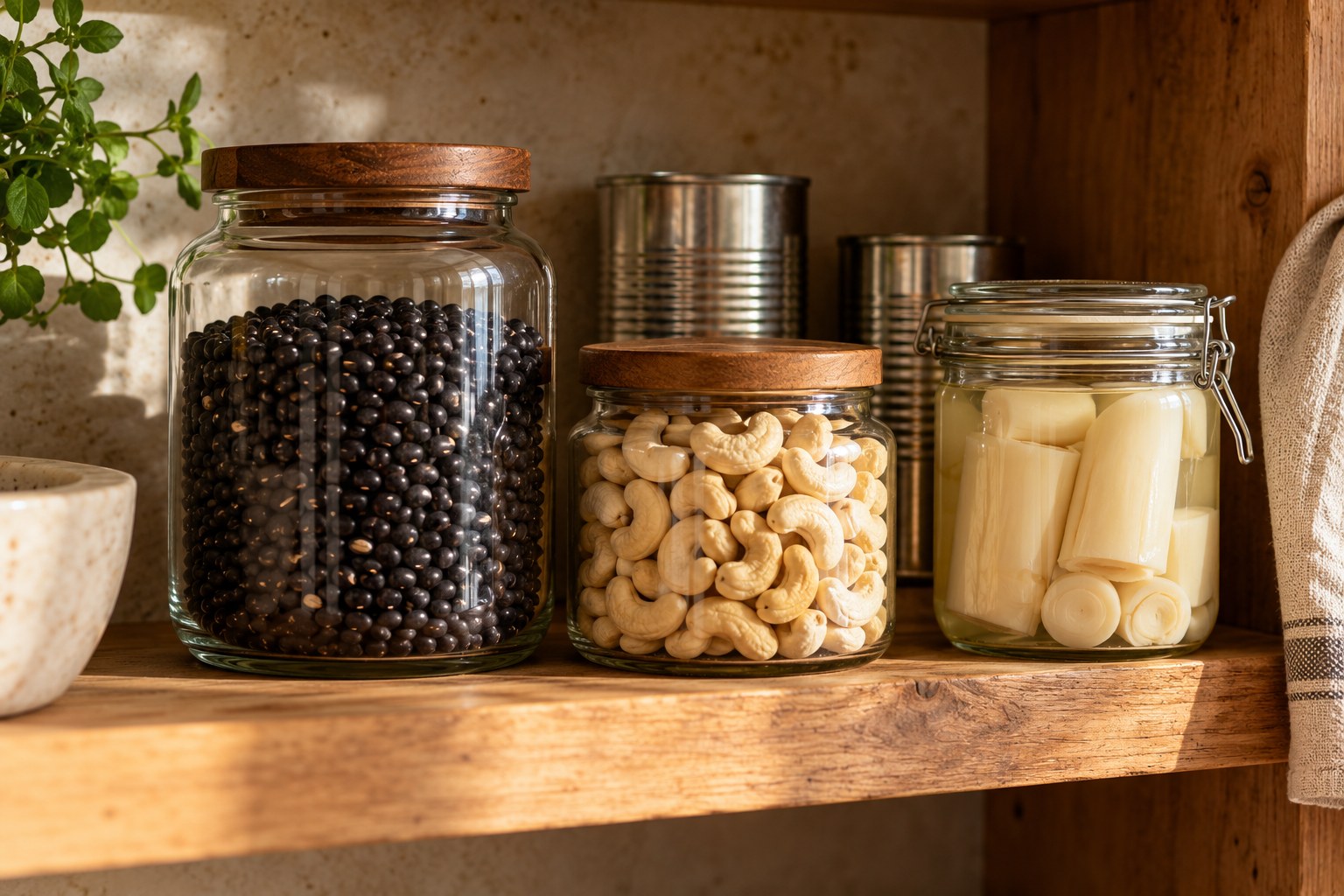
First pantry staple: Black beans beyond burritos
Black beans are familiar in soups, rice bowls and tacos, yet their ability to hold moisture and take on seasoning makes them useful in less expected places. Drain and rinse canned beans for burgers and many desserts; keep some cooking liquid for soups if a recipe calls for it. The beans have a gentle, earthy flavour that pairs with smoked paprika, cumin, garlic, citrus and chocolate, but those pairings do not erase the bean flavour entirely. A convincing result relies on choosing a dish in which the beans' texture is an advantage.
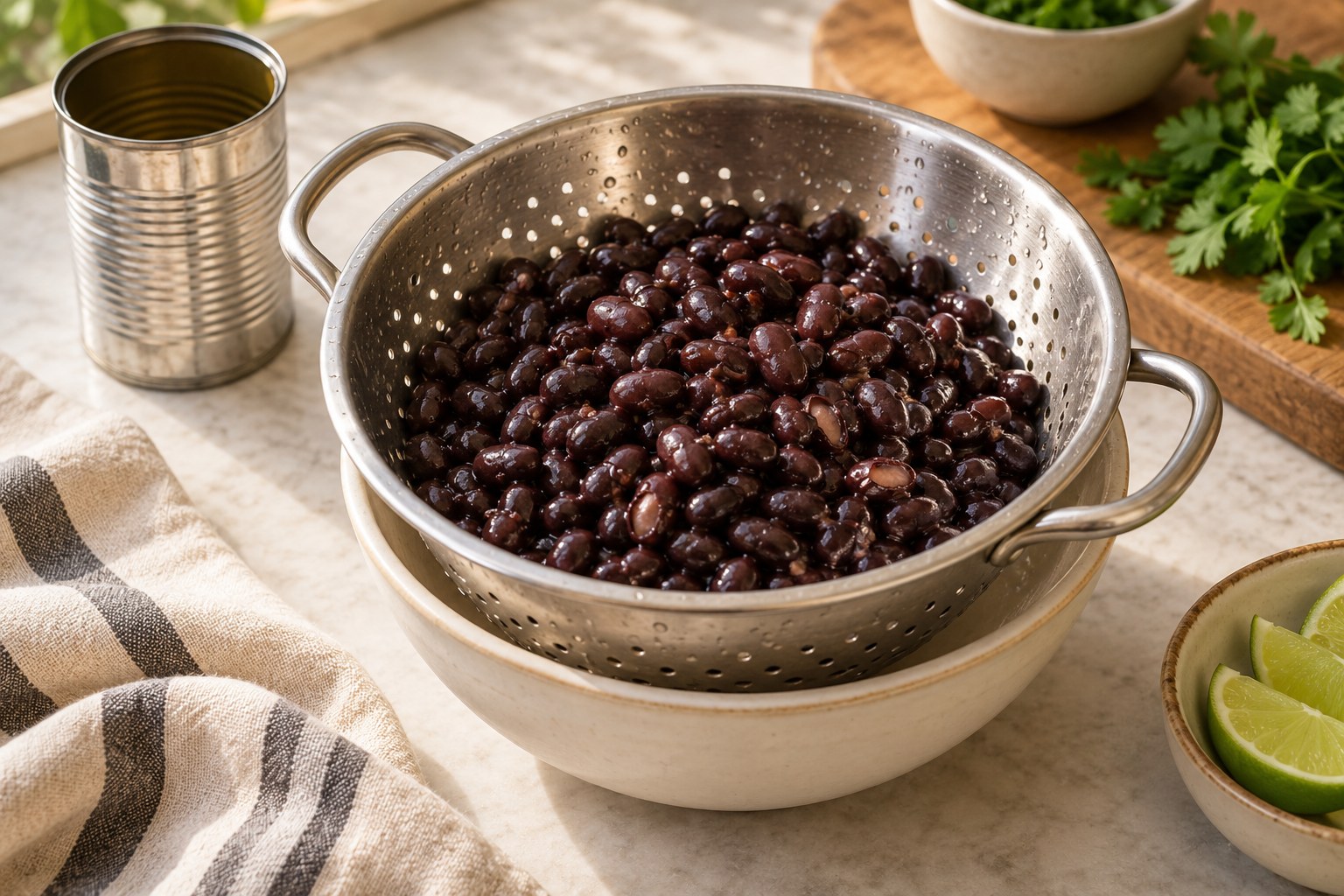
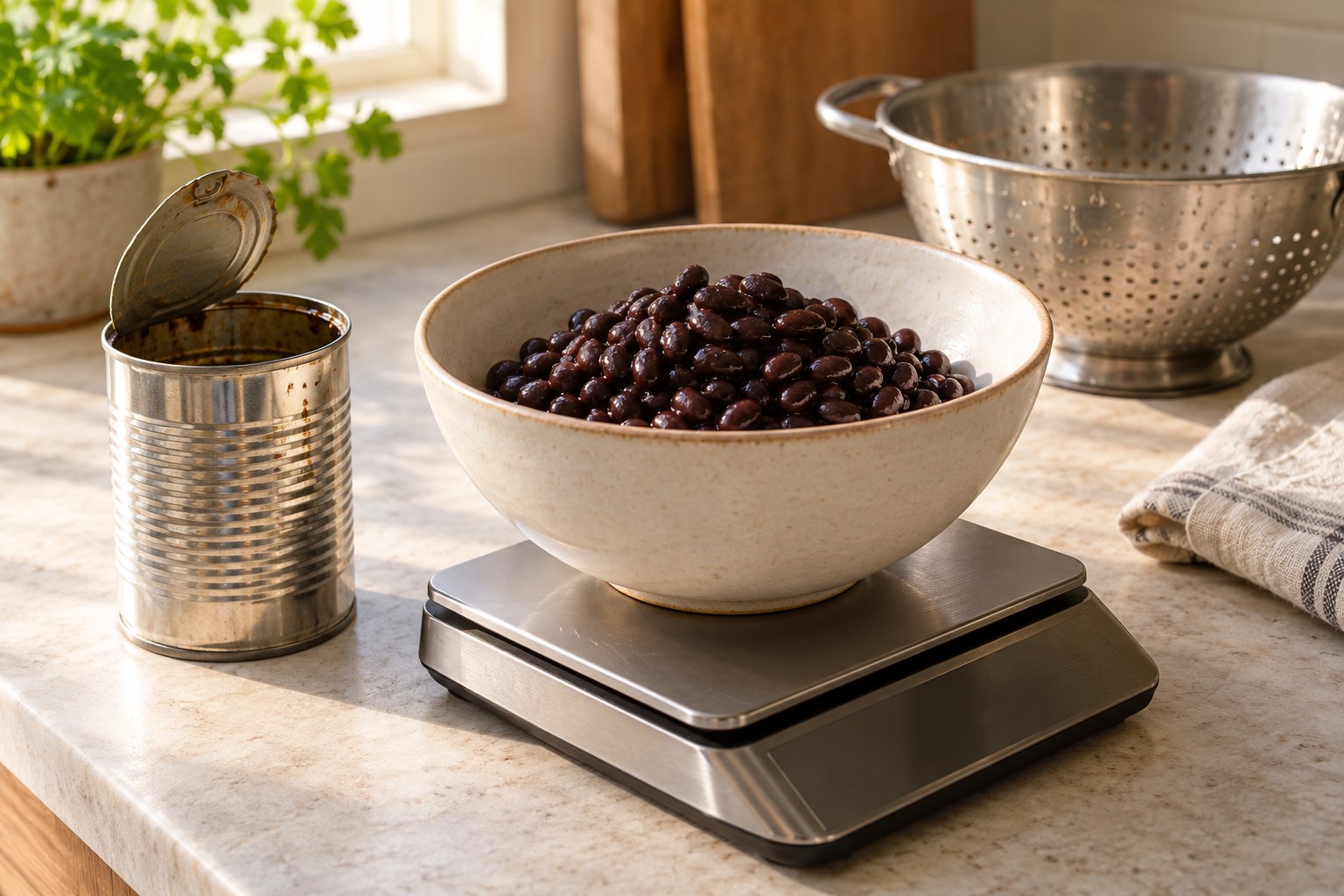
Canned beans are convenient because they are already cooked. Dried beans offer control over seasoning and texture but need appropriate soaking and thorough cooking according to reliable instructions. Do not use uncooked or merely soaked dried beans in a brownie batter or burger mixture. Whatever you choose, taste the beans before adding intense seasonings: excessively salty canned beans or strongly seasoned leftovers can change the finished dish.
Idea one: Brownies made with black beans
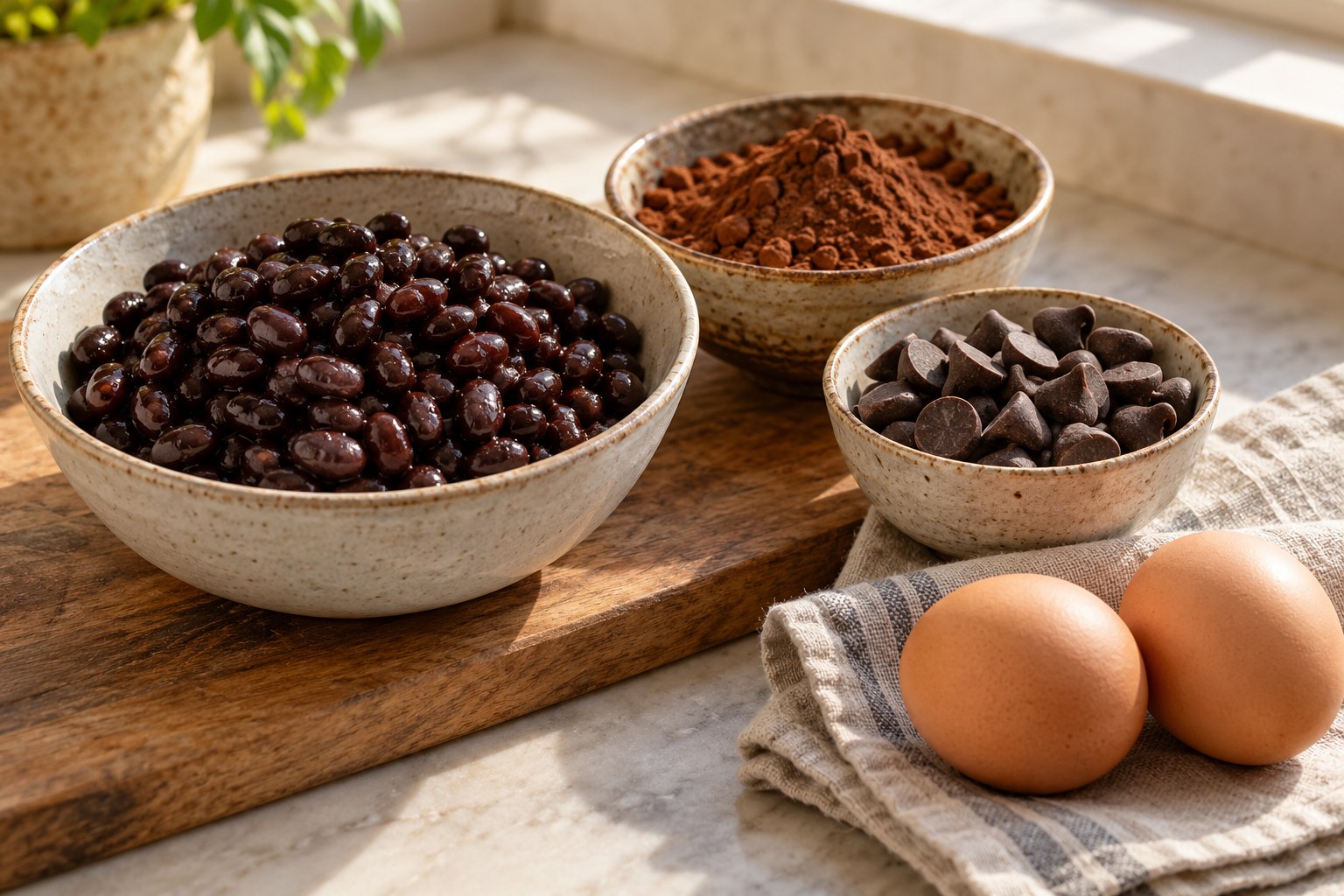
Blended black beans can give brownies a dense, moist texture. Their starch and fibre help create body, while cocoa and chocolate contribute most of the familiar brownie flavour. The goal is a smooth batter; visible bean skins or a grainy paste will make the final texture noticeably different from a traditional flour-based brownie. A food processor or sufficiently powerful blender is usually more effective than mashing with a fork for this particular application.

Important recipe distinction: Our published Black Bean Brownies Recipe contains two eggs. It is not vegan as written. You can read it to understand the idea of bean-based brownies, but replacing those eggs requires a suitable, separately tested vegan formula. Swapping in flaxseed or aquafaba without adjusting the rest of the batter could change the structure, rise and sliceability. This article does not claim that such an adaptation has been tested.
For a genuinely plant-based dessert, look for a recipe that was developed without eggs and dairy from the start. Even within vegan baking, “fudgy” is not identical to “undercooked”: the middle should set according to the recipe instructions before the brownies are served. Let chocolate-based bakes cool adequately so their structure can firm up before slicing. An impatient cut often creates ragged squares regardless of the ingredients used.
What makes a good black-bean brownie?
Think about four elements: bean consistency, chocolate intensity, fat balance and setting time. Beans supply moisture and density, cocoa adds the expected flavour, fat contributes tenderness and richness, and cooling gives a soft centre a chance to become sliceable. Too much bean purée in a recipe not built around it may yield a gummy texture. Too little cocoa can allow the earthy bean notes to stand out. Neither problem is solved by baking indefinitely.
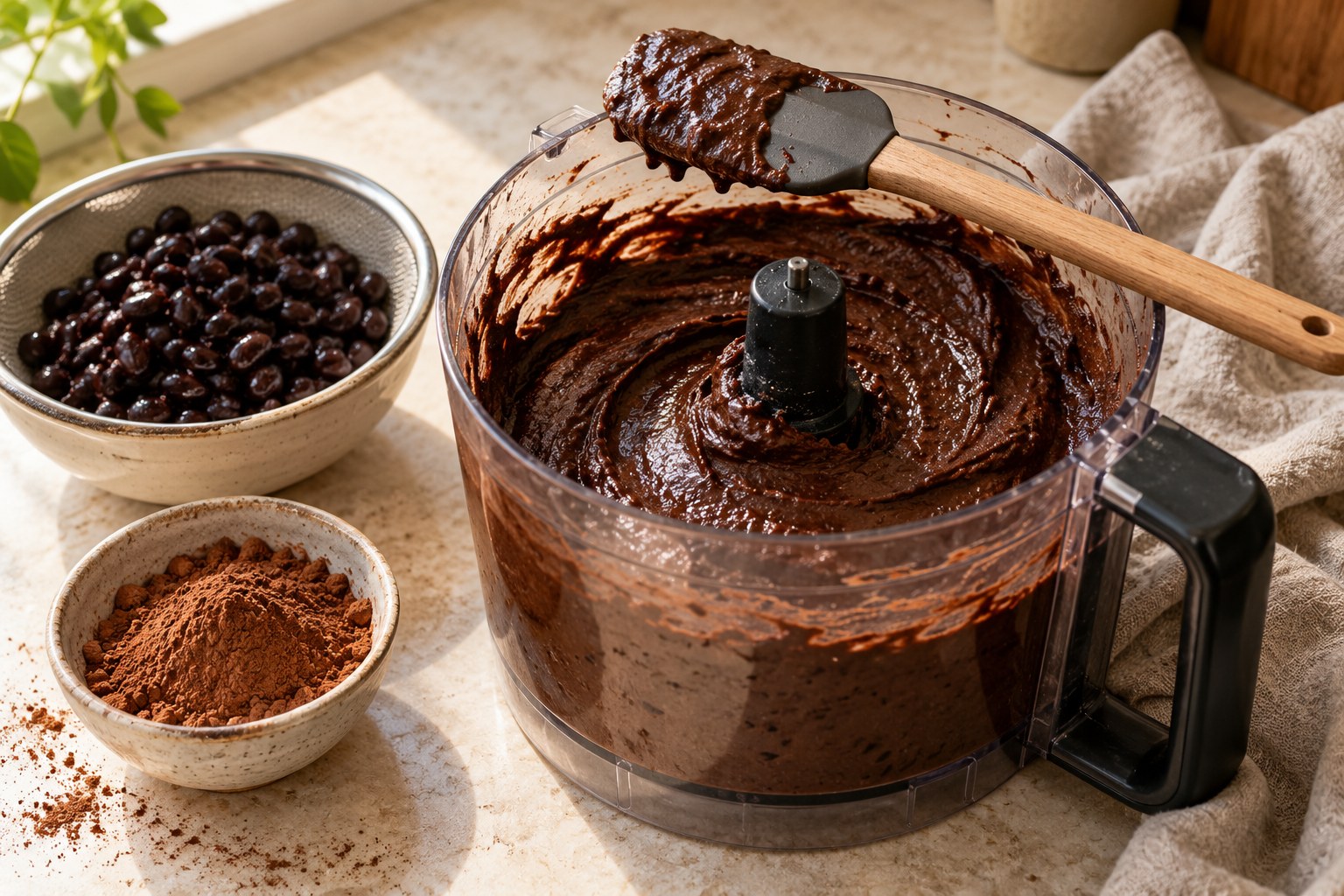
Use a tested ingredient ratio, and measure consistently. A large can of beans may contain more liquid than another brand; the weight after draining is more useful than the total can weight. If a recipe specifies rinsed and drained beans, don't pour in the can liquid as an extra ingredient. If you want a nut-free brownie, also check the other ingredients and manufacturing labels instead of assuming beans make the whole dessert allergen-free.
Idea two: Savoury black-bean burgers
Black beans work exceptionally well in burgers because their mashed pieces help form a patty without requiring the flavour of meat. The technique is to combine a soft component with one that gives structure. Coarsely mashed beans provide tenderness; oats or breadcrumbs absorb some moisture; sautéed vegetables provide flavour; and the binder makes the mixture hold together. Cooking down onions and peppers before mixing reduces unwanted water.

Our published Black Bean Burger Recipe uses two eggs, and its serving suggestions include optional cheese. It should not be marketed as a vegan burger. For a vegan variation, use a recipe formulated around plant-based binders and confirm that the breadcrumbs and buns contain no dairy or egg ingredients. A binder may involve ground flaxseed mixed with water, but the required quantity depends on the moisture and proportions of the recipe—not simply the number of eggs removed.
Chill patties if they feel fragile before cooking. Turn them only after the underside forms a crust; moving them repeatedly can cause breakage. A skillet often offers reliable browning, while an air fryer can work if the mixture is sturdy enough and the basket is handled gently. Avoid promising an exact cook time for an untested vegan modification. Instead, follow the tested recipe you choose and adjust only after observing its results.
How to fix black-bean patties that fall apart
A crumbling burger is usually a texture problem rather than a flavour problem. It may contain too little binder, too little starch, or bean pieces that were left entirely whole. A mushy burger is often too wet, too finely puréed, or insufficiently browned. You want some visible bean texture while still having enough cohesive mixture to shape a patty. The mixture should compress into a disk without oozing or cracking dramatically at the edges.
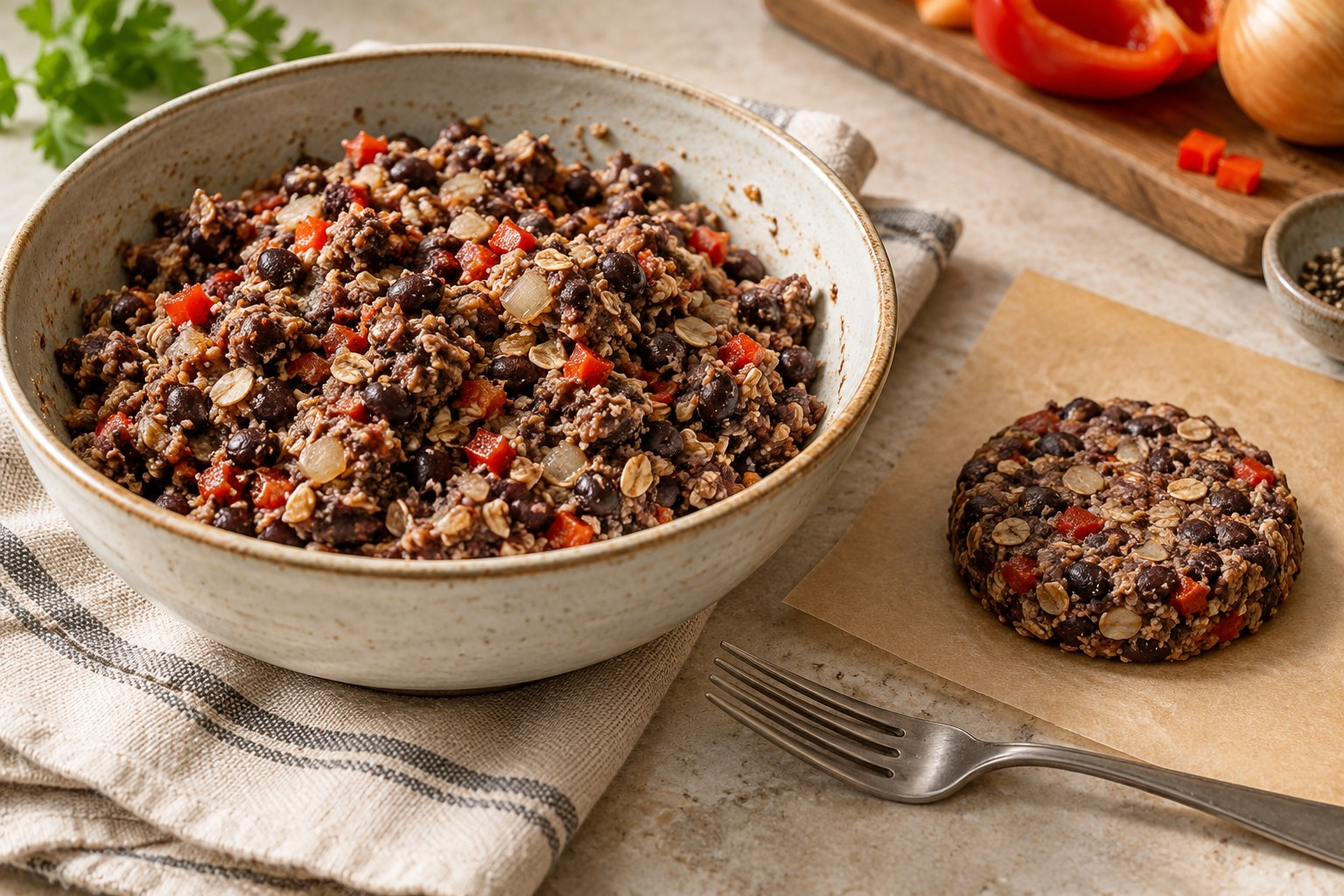
If you're adapting a formula, start by draining beans thoroughly and cooking wet vegetables before mixing. Rest the mixture so dry ingredients can hydrate. Form a small test patty before committing to an entire batch; it is much easier to adjust a bowl of mixture than to rescue several broken burgers from the pan. Season boldly with cumin, smoked paprika, garlic and an acidic finishing sauce, but don't let seasoning distract from getting the physical structure right.
More savoury black-bean combinations
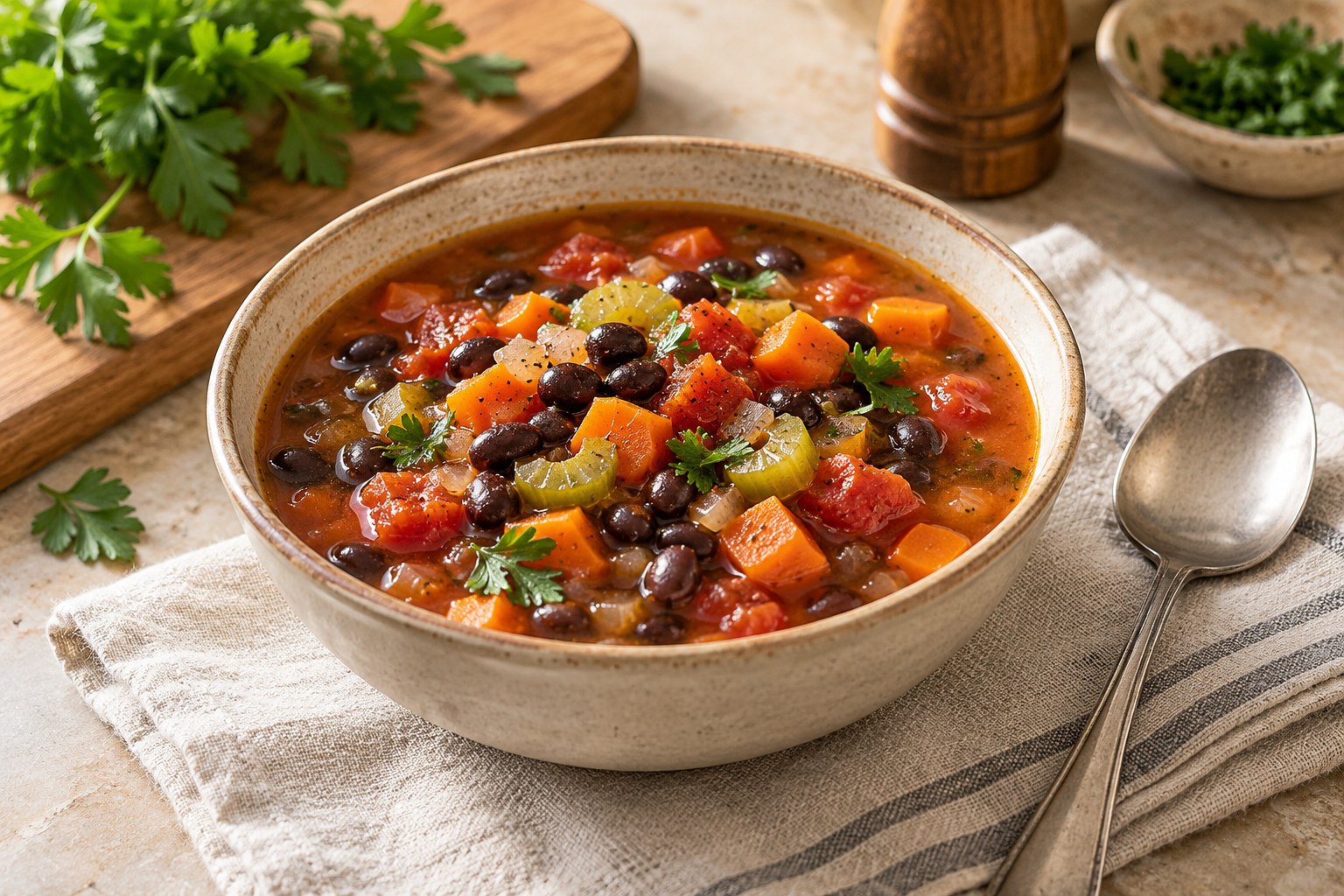
Try a bowl of beans with roasted sweet potatoes, crisp cabbage, avocado and lime. Or spoon seasoned beans over toast with tomato salsa for a quick lunch. Fold whole beans into a vegetable soup near the end of cooking so they keep their shape. These are simple serving ideas, not links to tested What’s Baking? recipes, and their proportions can be adjusted to suit what you have available.

Beans are also useful for stretching a meal across several days. Cook a batch and use one portion in rice bowls, another in soup, and a third in a salad. Keep highly acidic dressings or crunchy toppings separate until serving. Changing the finishing ingredients—lemon, lime, herbs, pickled onions or chilli—keeps one basic preparation from tasting exactly the same at every meal.
Second pantry staple: Cashews as the foundation of creamy sauces
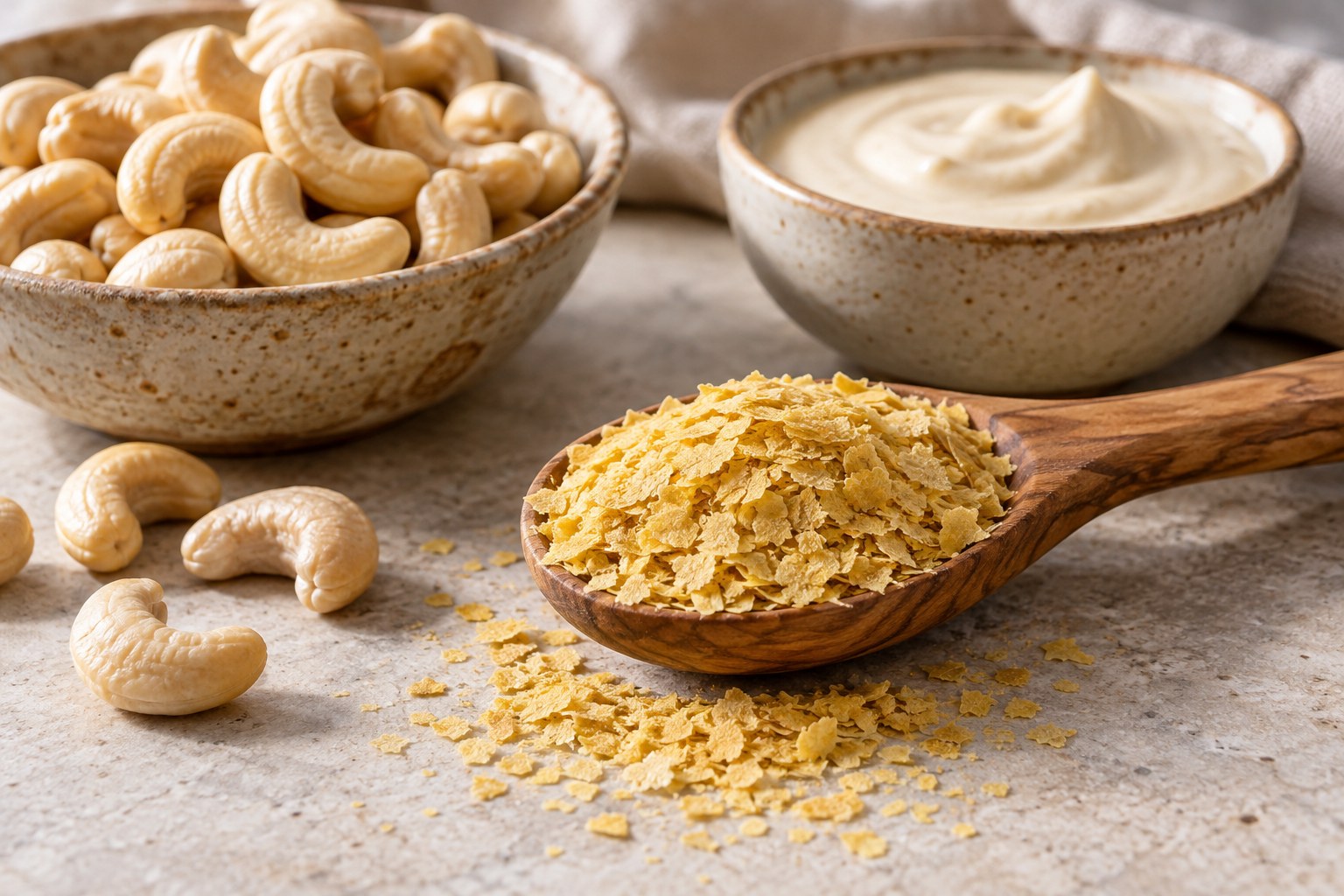
Raw, unsalted cashews blend into a smooth and relatively neutral base that can carry savoury flavours. Their natural fat provides richness, while blending produces a thick emulsion-like consistency. This makes them particularly useful in dishes where creaminess matters: pasta sauces, vegetable gratins, soups, dips and plant-based casseroles. It does not make them chemically identical to cream, cheese or butter, but it gives the cook a flexible texture to build upon.

Choose plain cashews for neutral sauces; salted or heavily roasted nuts introduce flavours that can be difficult to balance. If a recipe asks you to soak cashews, follow its instructions. Softened nuts are often easier for less powerful blenders to process. Some high-speed blenders can handle a shorter soak, but always consider the appliance's limits and the amount of liquid needed for a truly smooth result.
Idea three: Turn cashews into a pasta sauce
A basic cashew-based sauce usually combines softened cashews with liquid and seasonings. Lemon provides brightness, garlic contributes savouriness, and a little Dijon mustard or miso can round out the flavour. Nutritional yeast is sometimes used for a cheese-like note, but it is not what makes the sauce physically creamy. Thickness is influenced by cashew quantity, water content and blending. For the smoothest result, blend until no perceptible granules remain, then heat gently when the recipe calls for it.

Two of our verified plant-based recipes showcase this method: Vegan Mac and Cheese and Vegan Mac and Cheese Casserole. Both include cashews and nutritional yeast in their published ingredient lists. They are excellent examples of cashew-based dishes, but they should not be described as nutritional-yeast-free. The casserole also uses a starch thickener and a baked crumb topping; the regular mac and cheese combines cashews with vegetables for colour and body.
By contrast, our published Fettuccine Alfredo Recipe contains eggs in the fresh pasta and butter, cream and Parmesan in the sauce. It is not a vegan cashew Alfredo. If you want a cashew Alfredo-style dish, follow a separately developed plant-based recipe and describe it accurately rather than presenting this particular link as one.
Why cashew sauces sometimes turn grainy
Graininess usually means the nuts have not broken down sufficiently, though it can also come from ingredients added later. Try soaking as directed, using enough liquid for the blender blades to move the mixture, and processing in stages. Scrape the sides and test a small amount between your fingers. If it feels sandy, blend again before combining with pasta. Heating a gritty sauce rarely fixes the underlying particle size.
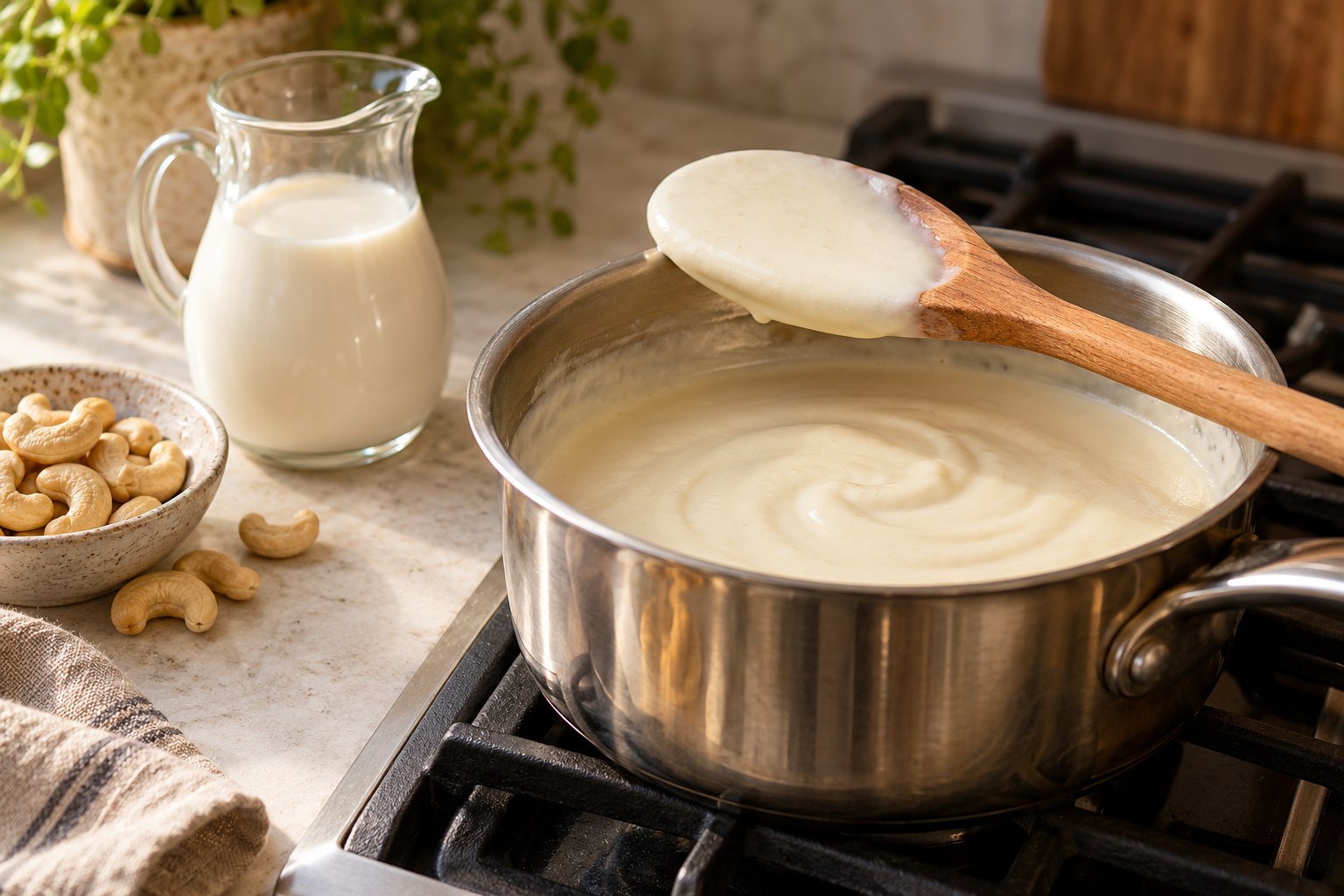
When a sauce feels thick and pasty rather than glossy, adjust gradually with plant milk, vegetable stock or reserved pasta water if the recipe permits. Add liquid in small amounts, stir well and allow the sauce to heat through before deciding it needs more. Dumping in a large amount of liquid at once can leave you with a thin coating that slides off the noodles instead of clinging to them.
How to keep the sauce flavour balanced
Creaminess alone does not create a satisfying pasta sauce. Rich ingredients often need contrasting notes: a little acidity to brighten them, salt to clarify flavours, or savoury elements such as miso or roasted garlic to add depth. Use one adjustment at a time and taste after each addition. Acid added early may seem strong before the starch from pasta and the richness of cashews have been incorporated.

If you dislike the flavour of nutritional yeast, choose a formula developed without it rather than removing a large amount from a recipe and expecting no effect. Roasted garlic, mild mustard, white miso and lemon can make a rich sauce interesting, but they create their own flavour profile rather than reproducing cheddar exactly. The most helpful description is “creamy cashew pasta sauce,” not a guarantee that nobody can distinguish it from dairy cheese.
A cashew-based baked dish worth trying
The published Vegan Scalloped Potatoes Recipe contains thinly sliced potatoes, raw cashews, unsweetened plant milk, olive oil, garlic, thyme, mustard and nutritional yeast. It demonstrates how one blended pantry staple can coat a layered vegetable dish, not just pasta. Follow its original instructions for potato thickness, baking and resting so the sauce and potatoes finish at the same time.

Cutting potatoes too thickly can leave the centres firm when the surface looks golden. Uneven slices can create a mixture of collapsing and undercooked layers. If using a mandoline, follow its safety instructions and use the guard. A sharp knife works too; consistency matters more than speed. Let the finished gratin stand briefly so the creamy sauce settles, and serve a vegetable or salad alongside for colour and contrast.
Cashews in dressings and soups
A thinner cashew blend can become a salad dressing when mixed with lemon, water, garlic and herbs. A thicker version can serve as a dip for roasted vegetables or crackers. For soups, cashew cream can lend body to vegetable purées without relying on dairy. These are adaptable cooking approaches rather than tested recipes with guaranteed quantities; the appropriate cashew-to-liquid ratio varies widely depending on the final use.

Begin with a small batch and add liquid gradually. A dressing should pour easily while remaining cohesive; a dip should hold a spoon mark; a soup enrichment should disperse smoothly rather than clump. Taste for salt and acidity after the final dilution. When a sauce thickens in the refrigerator, loosen it with a little clean water or suitable liquid before serving and check its storage time.
Nut allergies and alternatives
Cashews are tree nuts and are not suitable for someone with a cashew allergy. A sunflower-seed sauce or bean-based purée might offer a different creamy approach, but it isn't a guaranteed one-to-one substitute. Sunflower seeds can have a more distinct flavour and may require different soaking and blending; white beans can be lighter in fat and more starchy. Select a tested recipe designed for the alternative, particularly if the dish must accommodate a serious allergy.
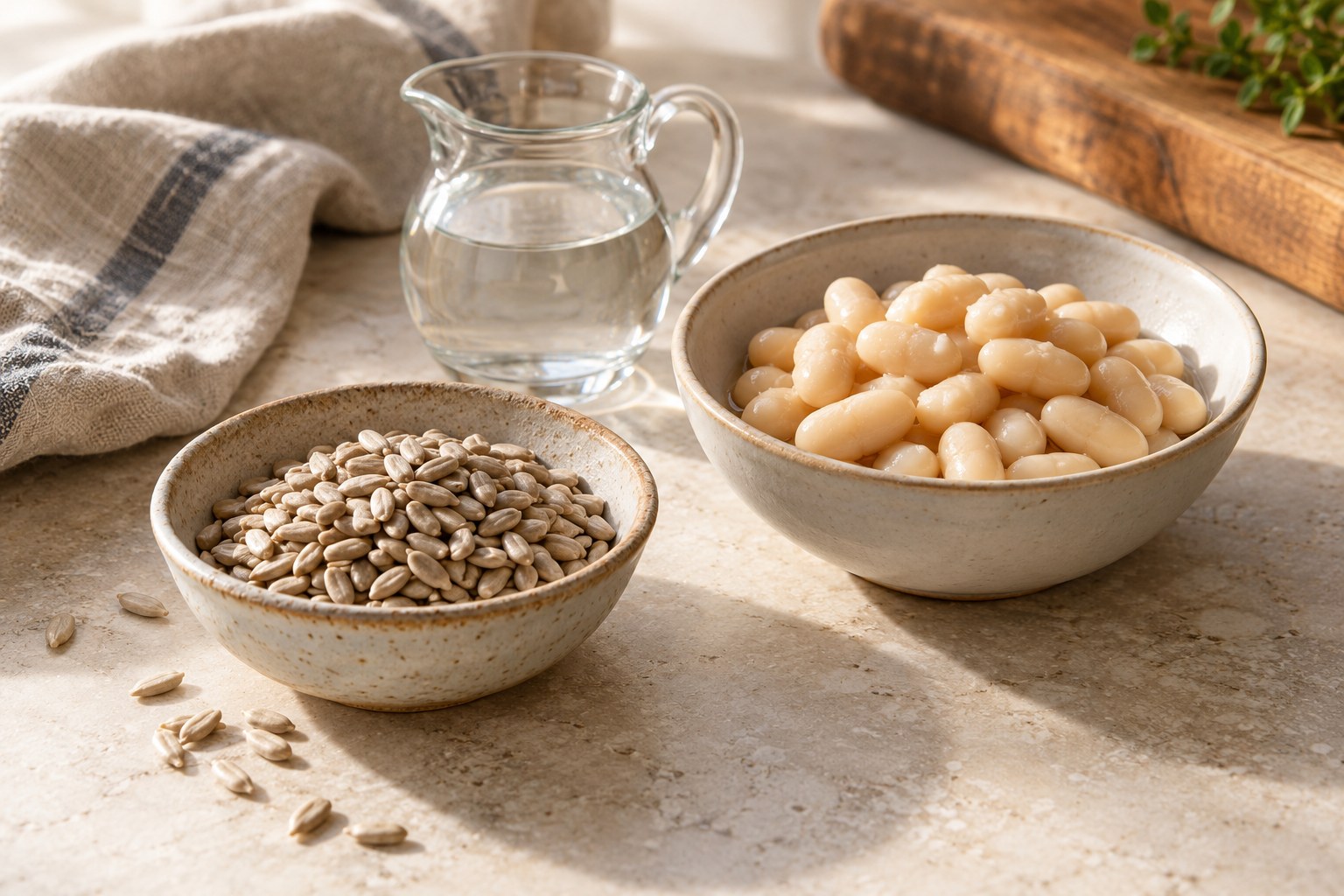
Allergen awareness also extends beyond the base ingredient. Vegan cheese, breadcrumbs, miso, sauces and pasta can contain allergens depending on the manufacturer. Read packaging carefully, prevent cross-contact in the kitchen, and avoid suggesting that a dish is universally allergy-friendly simply because it contains no dairy. “Plant-based” is an ingredient choice, not a promise that a food fits every dietary requirement.
Third pantry staple: Hearts of palm in seafood-style dishes
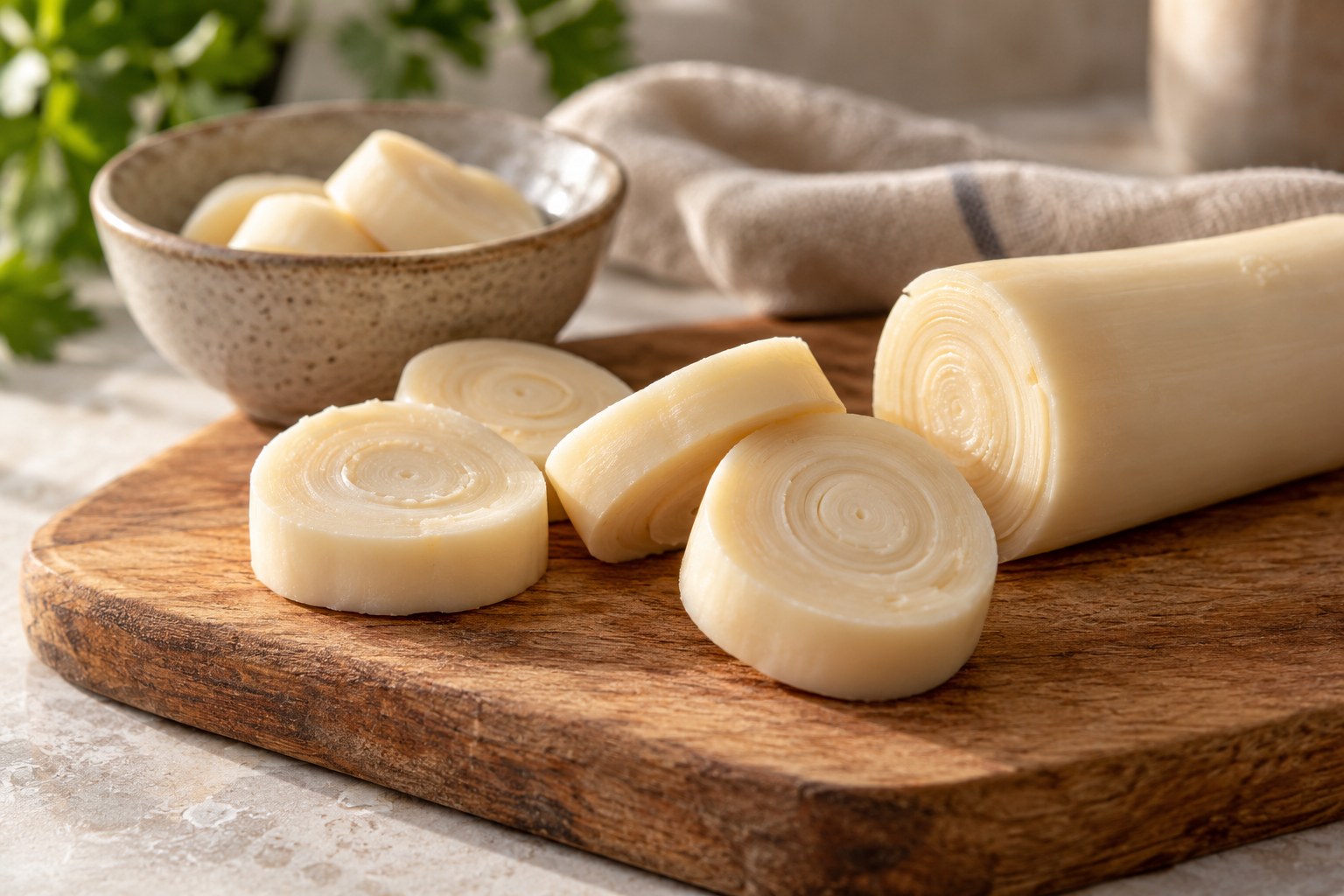
Hearts of palm are the tender inner portions of certain palm plants, commonly sold in cans or jars. They have a mild taste and a texture that can be sliced, shredded or flaked. That makes them useful in plant-based dishes inspired by seafood salads or casserole fillings. Their resemblance is primarily textural: hearts of palm do not supply the same protein or nutrients as fish, and they do not naturally taste like seafood.

Check the package liquid and seasoning before using. Some hearts of palm are packed in brine or an acidic liquid, which may add salt or tang. Drain well, rinse if appropriate for the recipe, and pat dry when you want browning or a less watery filling. Their delicate strands can break down when stirred vigorously, so fold them into finished sauces gently if the recipe is intended to preserve larger pieces.
The verified vegan casserole that brings all three ideas together
Our published Vegan Tuna Casserole Recipe uses hearts of palm as its seafood-style element, and cashews as part of the creamy sauce. It also includes pasta, peas, onion, garlic, vegetable stock, nutritional yeast, lemon, mustard, dill, optional nori and capers, plus a breadcrumb topping made with vegan butter. Its published ingredient list does not call for fish, eggs or dairy.

This is a strong example of purposeful substitution. Hearts of palm lend a flaky texture; the sauce supplies body and richness; capers and optional seaweed provide briny flavour; lemon brightens the dish. Each ingredient performs a different role. Rather than describing the dish as indistinguishable from tuna casserole, present it as a satisfying plant-based interpretation with recognisable comfort-food qualities.
When preparing it, follow the linked recipe for quantities and baking instructions. Ensure the hearts of palm are drained so the casserole doesn't become watery. Avoid breaking them into tiny fragments if you want noticeable flakes. Add the breadcrumb topping close to baking as instructed rather than letting it absorb moisture indefinitely in the refrigerator.
Building a seafood-style flavour without seafood
The familiar taste of many seafood dishes comes from more than the main protein. Salt, acidity, herbs, seaweed, capers, pepper and cooking methods all shape the result. A plant-based version can borrow those supporting flavours without claiming to be the same food. Nori adds a recognisably marine note; lemon and capers bring tartness and brine; dill gives an herbaceous finish. Taste carefully because one salty ingredient can amplify another.

This approach works especially well in a chilled salad or a creamy baked filling. For a simple salad concept, combine chopped hearts of palm with celery, chopped herbs, lemon and a suitable plant-based dressing. For a warm filling, keep the pieces larger and fold them into a sauce shortly before assembly. Those are general cooking ideas, not identical to a published What’s Baking? recipe, and the outcome will depend on the dressing and seasonings you choose.
Why the old crab-cake links were misleading
Two recipes previously linked from this article—Air Fryer Crab Cakes and another Air Fryer Crab Cakes variation—both specify real crabmeat and eggs. Neither is a vegan hearts-of-palm crab cake. The similarly linked Koji-Aged Butter Croissant Dough Lobster Wraps contains real lobster, butter, milk and egg. It is not a vegan lobster roll.
A hearts-of-palm cake can be a wonderful project, but it needs a purpose-built recipe with a suitable binder and enough structure to survive turning or air-frying. A seafood recipe that relies on egg and crab cannot be veganised simply by changing its title. If you want to experiment, look for a tested recipe that explicitly uses hearts of palm, plant-based mayonnaise and egg-free binding ingredients.
Texture tips for hearts of palm
The main risk is wateriness or excessive breakage. Large wet pieces can release liquid into a salad or casserole; over-shredded pieces can disappear into a sauce. A fork is helpful for teasing apart tender sections, while a knife is useful when you need short, even pieces for patties or fillings. Decide on the intended texture before you start cutting.
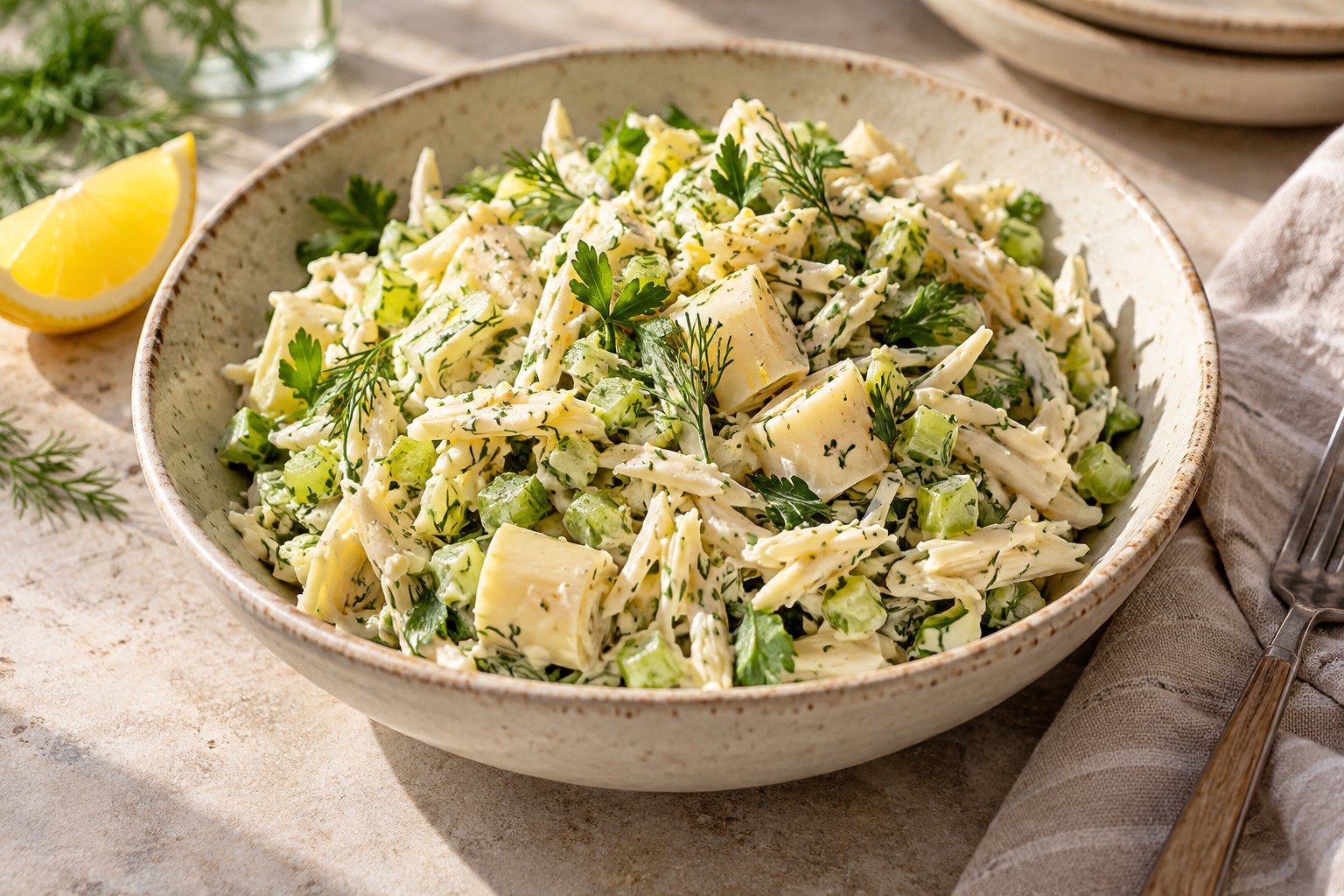
For a seafood-style salad, a combination of shredded and chopped pieces creates contrast. For a casserole, retain chunks large enough to remain noticeable beside pasta and peas. For patties, remove excess liquid and follow the tested binder ratio rather than guessing. A hot skillet or air fryer may improve browning on the outside, but browning isn't the same as structural stability.
A practical meal plan using all three ingredients
You don't need to use all three ingredients in every dish. A more natural approach is to assign each one a task during the week. Prepare a batch of black beans for bowls and soup. Make a small cashew sauce for a pasta dinner and vegetable side. Keep unopened hearts of palm ready for the casserole or a quick salad. One ingredient can appear twice without every meal becoming a repetitive “pantry challenge.”
Day one: Serve black beans with rice, roasted vegetables and a lime dressing. Keep the rice and beans chilled promptly after the meal, and store fresh toppings separately.
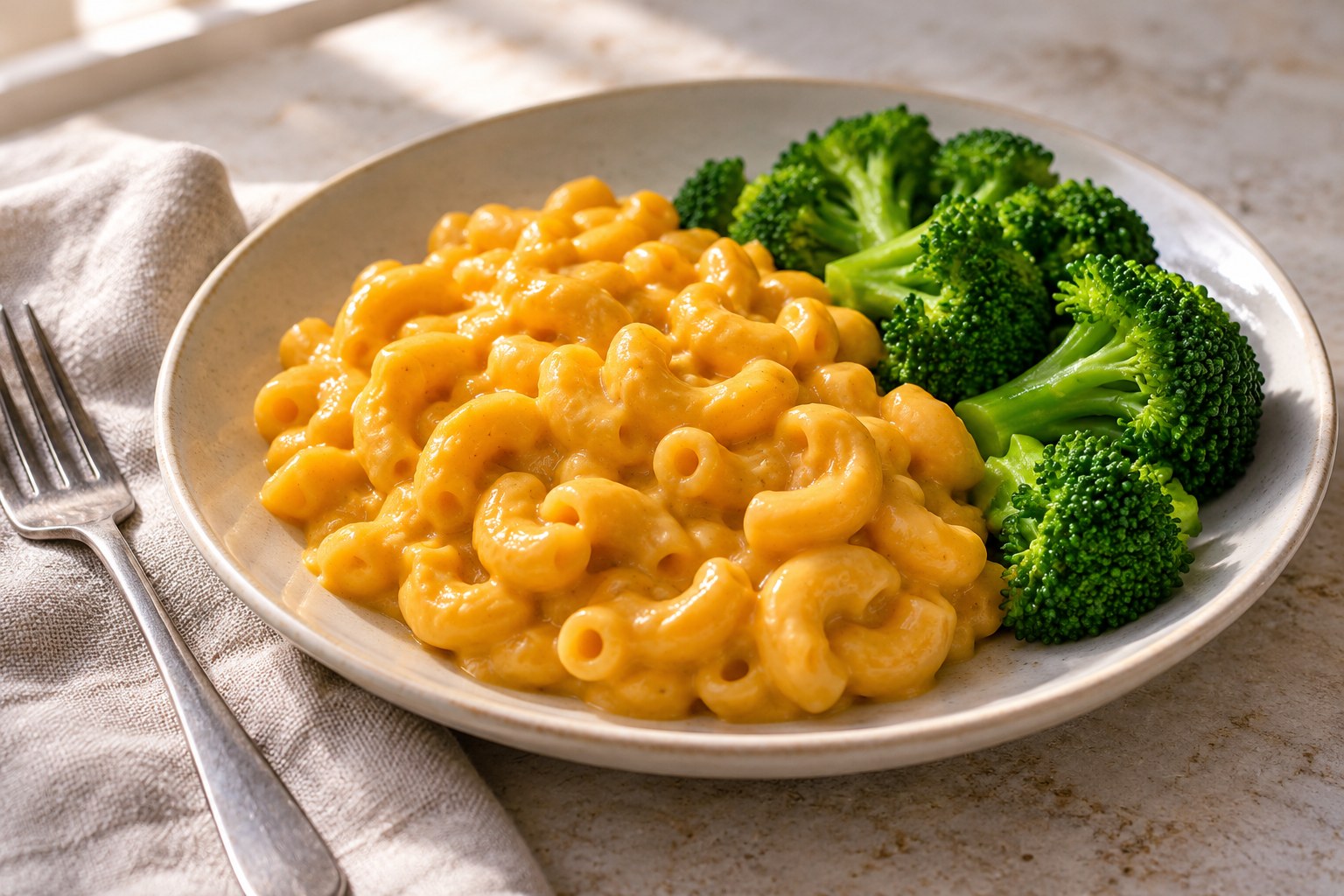
Day two: Make Vegan Mac and Cheese using the published recipe. Serve with steamed broccoli or a fresh salad; reserve extra sauce only if you can store it safely.
Day three: Prepare the published Vegan Tuna Casserole, using hearts of palm and cashew sauce. Portion leftovers promptly and avoid leaving the casserole on the counter for hours.
Day four: Use seasoned black beans in a wrap or salad bowl with crunchy vegetables and avocado. This is a serving concept rather than a newly tested recipe.
Day five: Bake Vegan Scalloped Potatoes as a weekend-style side, perhaps with sautéed greens and another protein source.
This is a flexible inspiration plan, not a directive to keep one batch of cooked food in the refrigerator for five days. Cook or freeze portions according to safe-storage recommendations and make fresh components as needed.
Storage, freezer and make-ahead guidance
Unopened shelf-stable cans belong in a cool, dry location, away from direct heat and moisture, and should be checked for damage. Once you open beans or hearts of palm, transfer leftover portions into clean, covered containers and refrigerate promptly. USDA food-safety guidance identifies a typical three-to-four-day refrigerator window for opened low-acid canned foods, including beans. Do not assume a week is safe simply because the product started in a can.

Cooked sauces and casseroles also need prompt cooling and refrigeration. Use shallow containers for large batches, and reheat leftovers thoroughly rather than repeatedly warming the entire batch. If you know you will not use a portion in time, freeze it early. Creamy sauces may change texture after thawing and sometimes need gentle stirring or a small amount of liquid to become smooth again. Freeze according to the actual prepared dish, not just the shelf-life of its individual ingredients.
Food-safety reference: USDA guidance on shelf-stable foods and opened cans. This guidance is a useful baseline; always follow the storage instructions on specific products and recipes.
Common mistakes when cooking with pantry staples
Mistake: Assuming a bean-based dessert is automatically vegan
A brownie can use black beans and still contain eggs, dairy chocolate or butter. Read the whole recipe rather than guessing based on its name or main ingredient. The word “bean” does not describe its binder or toppings.
Mistake: Treating cashews as an exact substitute for dairy cream
A cashew sauce behaves differently when heated, cooled or diluted. Its fat content, particle size and liquid ratio determine how it coats food. Follow a recipe formulated around cashews instead of replacing an identical weight of cream and expecting the same outcome.
Mistake: Calling any shredded heart of palm “vegan seafood”
Texture alone doesn't create a satisfying dish. Build flavour with herbs, citrus, appropriate salt and briny elements. Also remember that hearts of palm do not have the nutritional profile of fish.
Mistake: Overpromising taste and nutrition
Avoid claiming bean flavour is literally undetectable, every cashew sauce tastes like cheddar, or any plant-based interpretation tastes exactly like its animal-based inspiration. Taste preferences differ. Nutrition comparisons depend on actual quantities and serving sizes, not simply whether the recipe is vegan.
Mistake: Ignoring ingredient labels and allergens
Cashews are tree nuts, and store-bought breadcrumbs, chocolate, pasta, sauces and seasoning blends can introduce other dietary concerns. Review packaging when cooking for others and be specific about dietary restrictions. If someone has a serious food allergy, cross-contact precautions matter as much as the ingredient list.
Frequently asked questions
Can I use canned black beans for brownies?
Yes, when a tested recipe calls for cooked canned beans. Rinse, drain and measure them as directed. Their moisture level matters, so don't substitute the total canned weight for drained bean weight unless specified. The published What’s Baking? brownie recipe contains eggs and is therefore not vegan as written.
Can black beans replace eggs in baking?
Not as a universal one-to-one substitute. Beans can add body and moisture, but eggs perform several functions that vary by recipe. Start with a formula intentionally developed as egg-free, rather than assuming beans will provide the same structure and lift.
Do cashews need to be soaked?
Many creamy-sauce recipes instruct you to soak them to improve blending. Follow the linked recipe or your appliance guidance. Longer blending alone may not solve graininess if the mixture is too dry to circulate properly.
Is nutritional yeast required for a creamy sauce?
No. Creaminess can come from blended cashews and liquid. Nutritional yeast contributes flavour to many published dishes, however, and removing it may require additional seasoning. Both linked What’s Baking? mac-and-cheese recipes use nutritional yeast.
Are cashew sauces nut-free if I use sunflower seeds instead?
A sunflower-based recipe may be suitable for some people who avoid cashews, but that is a different formulation and must be assessed for all allergens. Do not assume an untested substitution will give identical texture or guarantee safety for everyone.
What do hearts of palm taste like?
They are mild and slightly vegetal, with a tender texture that can be flaked or shredded. Their ability to take on a sauce and seasoning makes them useful in seafood-inspired plant-based food, but they are not seafood and do not taste identical to it.
Do hearts of palm supply the same protein as tuna?
No. They can contribute texture in a tuna-style casserole, but protein and other nutrients need to come from the complete meal. The verified casserole also contains cashews, pasta and peas; readers seeking specific nutrition targets should consult calculated recipe data and appropriate professional guidance.
Can I use a conventional crab-cake recipe and swap in hearts of palm?
It may be possible to develop an adaptation, but the egg, seafood and moisture balance will change, so it is not a verified replacement. Use an established egg-free hearts-of-palm cake recipe if consistent results matter.
What is the easiest pantry-staple project for beginners?
For a no-fuss meal, start with seasoned cooked black beans in a grain bowl. For a more structured cooking project, follow a published vegan cashew pasta recipe. For a casserole, the verified vegan tuna-style version demonstrates how hearts of palm can work alongside a cashew sauce.
How do I avoid wasting leftovers?
Plan for a couple of uses, refrigerate promptly, label containers with the date, and freeze portions early if necessary. Keep crisp toppings and delicate herbs separate. Build a new meal around the ingredient rather than reheating exactly the same plate again and again.
Final thoughts: Let each ingredient do what it does best
Black beans bring body and savoury substance, cashews provide creamy richness, and hearts of palm offer a delicate, shreddable texture. None needs to masquerade as something it is not. The most creative cooking comes from understanding why a particular ingredient works in a dish, using a reliable recipe where precision matters, and being candid about when a modification has not been tested.
For your next pantry project, try the verified Vegan Tuna Casserole or Vegan Scalloped Potatoes. If the thought of black-bean brownies intrigues you, remember that the currently published Black Bean Brownies contain eggs; choose a tested vegan formula when that distinction matters. With clear recipes, accurate descriptions and a little curiosity, three humble ingredients can open many new possibilities.
IN PICTURES
From the baking notebook
FROM THE RECIPE BOX


