On this page
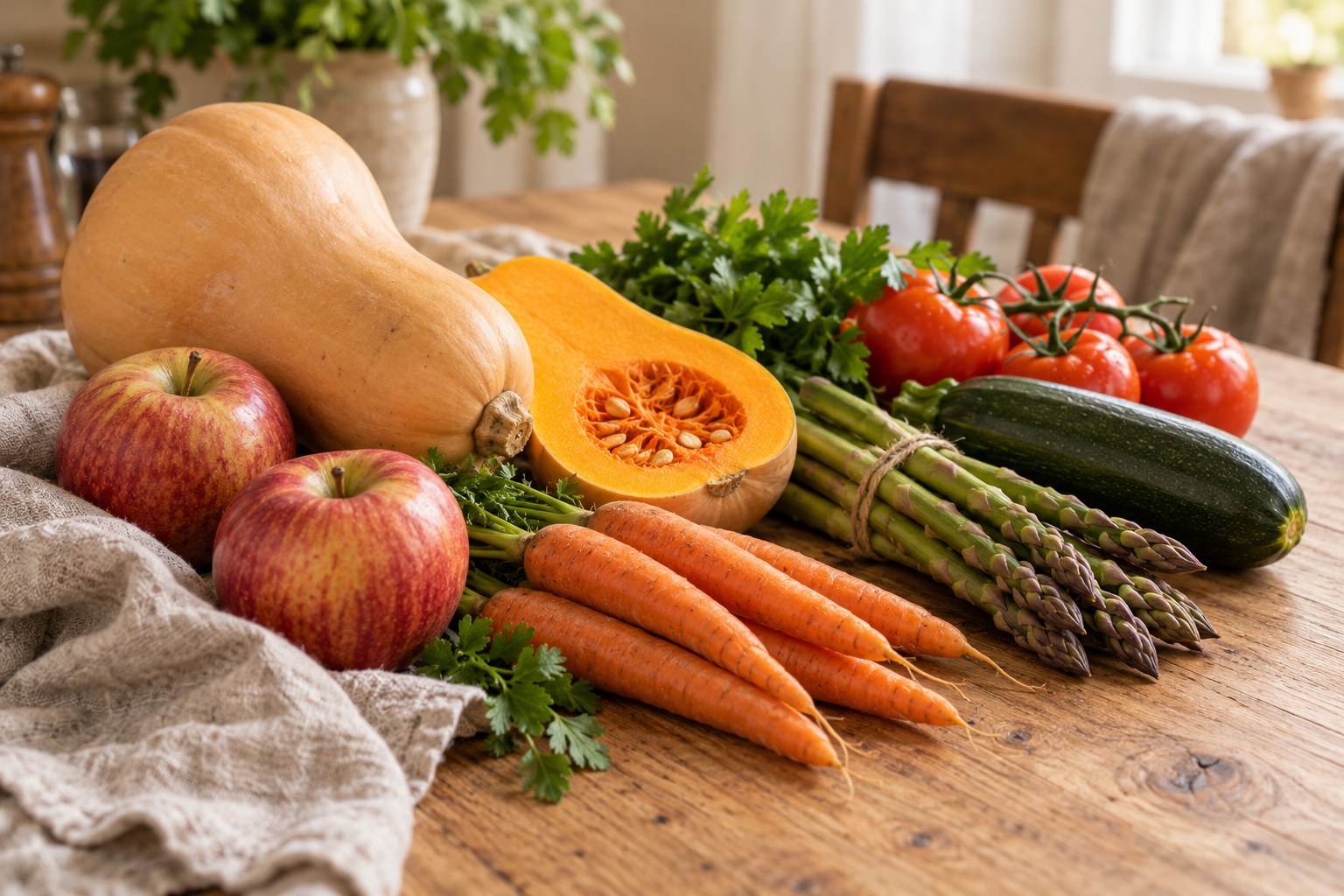
Eating with the seasons can make plant-based cooking feel endlessly creative. A bowl of tender spring greens calls for lemon and herbs; ripe summer tomatoes need little more than good olive oil and a pinch of salt; autumn squash loves gentle roasting and warm spices; and winter roots turn into hearty soups, pies, and casseroles. The same approach works for baking: let whatever looks appealing at the market suggest the flavor of your next loaf, muffin, cake, or dessert.
This guide brings together seasonal vegan recipes for every time of year, along with practical produce ideas, baking techniques, storage tips, and genuinely plant-based recipes from What’s Baking?. It is intended to help you decide what to make with the produce you have, not to insist that every ingredient is locally harvested in every month. Growing seasons differ greatly between regions; a berry available in a Canadian supermarket in February may have travelled far from its growing region, while frozen locally grown berries can be an excellent choice all winter.
Whether you are planning brunch, feeding a family on a weeknight, or baking something special for guests, start with the season and build a flexible menu around it.
Seasonal vegan cooking at a glance
- Spring: Asparagus, peas, leafy greens, radishes, rhubarb, and fresh herbs; think lemony bakes, light meals, and bright dressings.
- Summer: Zucchini, tomatoes, corn, berries, stone fruit, and tender vegetables; think quick cooking, fruit desserts, picnic food, and chilled dishes.
- Fall: Apples, pears, pumpkin, winter squash, cabbage, and root vegetables; think spiced muffins, roasted meals, soups, and comforting oven bakes.
- Winter: Stored potatoes, carrots, beets, parsnips, onions, squash, and frozen or preserved produce; think hearty casseroles, citrus-accented desserts, and pantry-friendly baking.
This is a planning guide, not a fixed harvest calendar. In a colder climate, spring harvests may begin later; greenhouse-grown, imported, frozen, and stored foods may make an ingredient available outside its local outdoor season. Ask at the market about origin if buying locally matters to you.
Why cook and bake with the seasons?
Better decisions begin with the ingredient, not the recipe
Seasonal cooking reverses the usual routine. Instead of deciding on a complicated dish and hunting down every ingredient, see what is affordable and in good condition first. If zucchini is abundant, bake a loaf or make a skillet dinner. If apples are plentiful, roast them, add them to oatmeal, or bake a simple fruit crumble. If there are no fresh berries worth buying, frozen berries can still make a bright sauce or filling.
That flexibility is particularly helpful in vegan cooking. Beans, lentils, tofu, grains, nuts, and seeds can supply dependable substance throughout the year, while vegetables and fruit contribute changing flavors, colors, and textures. The pantry anchors the meal; the season gives it character.
Taste and cost are possible benefits, not guarantees
Produce harvested close to ripeness can taste wonderful, but freshness and flavor depend on variety, transport, handling, and storage—not just the date. A perfectly ripe frozen fruit may give better baking results than underripe fresh fruit. Similarly, abundant local produce can be good value, but prices depend on weather, geography, supply, and the store. Compare price per unit and quality rather than assuming a seasonal label always means cheaper or better.
Seasonal does not automatically mean local, organic, or lower impact
Those are different ideas. A summer peach may be in season somewhere but imported where you live. Local greenhouse growing, transport, storage, and production methods all affect environmental impacts, so avoid sweeping claims that any single purchase is automatically sustainable. You can still reduce waste by planning portions, using edible stems and leaves when appropriate, and freezing ingredients before they spoil.
Build a reliable year-round vegan pantry
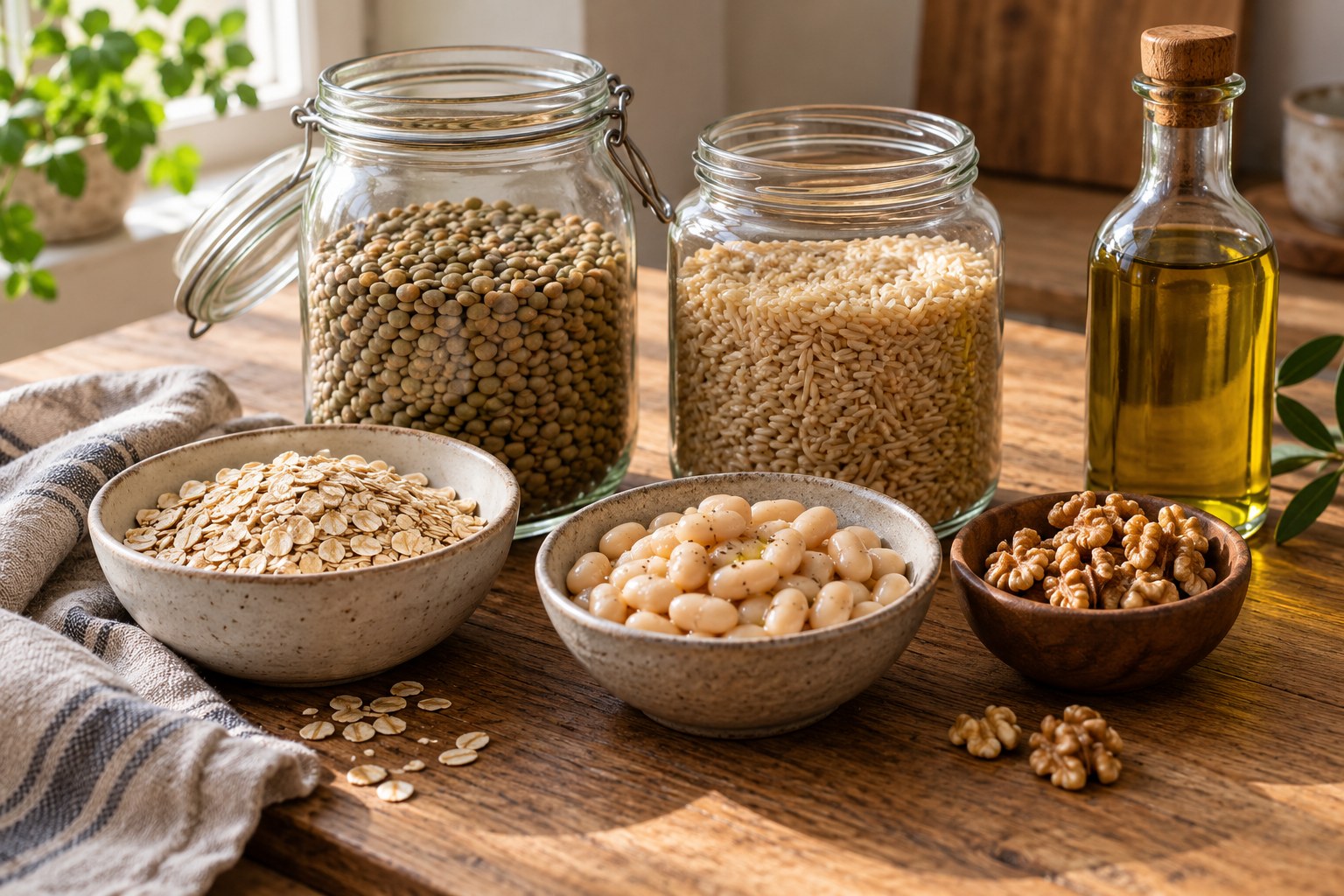
Fresh produce changes, but a few staples make it easy to cook through that change. Keep lentils and beans for soups, pies, salads, and skillet meals; rice, oats, pasta, and flour for economical bases; nuts, seeds, and nut or seed butters for texture and flavor; and unsweetened plant milk, neutral oil, and suitable vegan butter for baking. Dried herbs, cinnamon, smoked paprika, curry spices, vinegar, mustard, and citrus juice can transform familiar ingredients without creating a long shopping list.
For baking, check labels carefully. Some chocolate contains dairy, some pastry fat is animal-based, and some ready-made ingredients contain honey or gelatin. If cooking for an allergy, vegan labeling alone does not guarantee freedom from allergens or cross-contact. Choose an appropriate product and check the full ingredient declaration.
You do not need to buy every specialty substitute at once. Select a recipe that was developed to be vegan when possible, especially for delicate cakes, pastries, meringues, or custards. Our Beginner’s Guide to Vegan Baking explains why different substitutes work in different formulas.
Spring vegan recipes: Fresh herbs, greens, and bright baking
Spring meals tend to feel lighter, but lighter does not have to mean less satisfying. A generous grain bowl with asparagus, peas, lemon, and white beans is a complete starting point; toasted seeds or a spoonful of hummus make it more filling. Use fresh herbs near the end of cooking so their flavor stays lively. Radishes work raw for crunch, while roasted radishes become milder and softer.
What to look for in spring
Depending on where you live and how early the growing season starts, look for asparagus, spinach, tender greens, radishes, peas, spring onions, and rhubarb. Early spring in northern climates often leans on greenhouse greens and vegetables kept in storage. Rhubarb and asparagus may not arrive locally until later. Lemon provides a classic spring flavor in baking, but lemons are usually imported in much of Canada; they are a flavor pairing, not necessarily a local spring harvest.
Choose asparagus with firm spears and closed tips. For delicate leaves, look for crisp, unwilted greens. Rhubarb stalks should feel firm rather than limp. Wash produce under running water and dry greens before storage; never treat washing as a replacement for safe handling.
Spring dinner idea: Lemony asparagus, peas, and white beans
Cook small pasta shapes, farro, or another favorite grain. In a wide pan, briefly sauté sliced spring onion, then add asparagus pieces and a splash of water so they become tender without turning mushy. Fold in cooked white beans and peas. Finish with lemon zest, lemon juice, olive oil, chopped parsley, and freshly cracked pepper. For a creamy version, mash a spoonful of the beans with a little cooking liquid before combining everything.
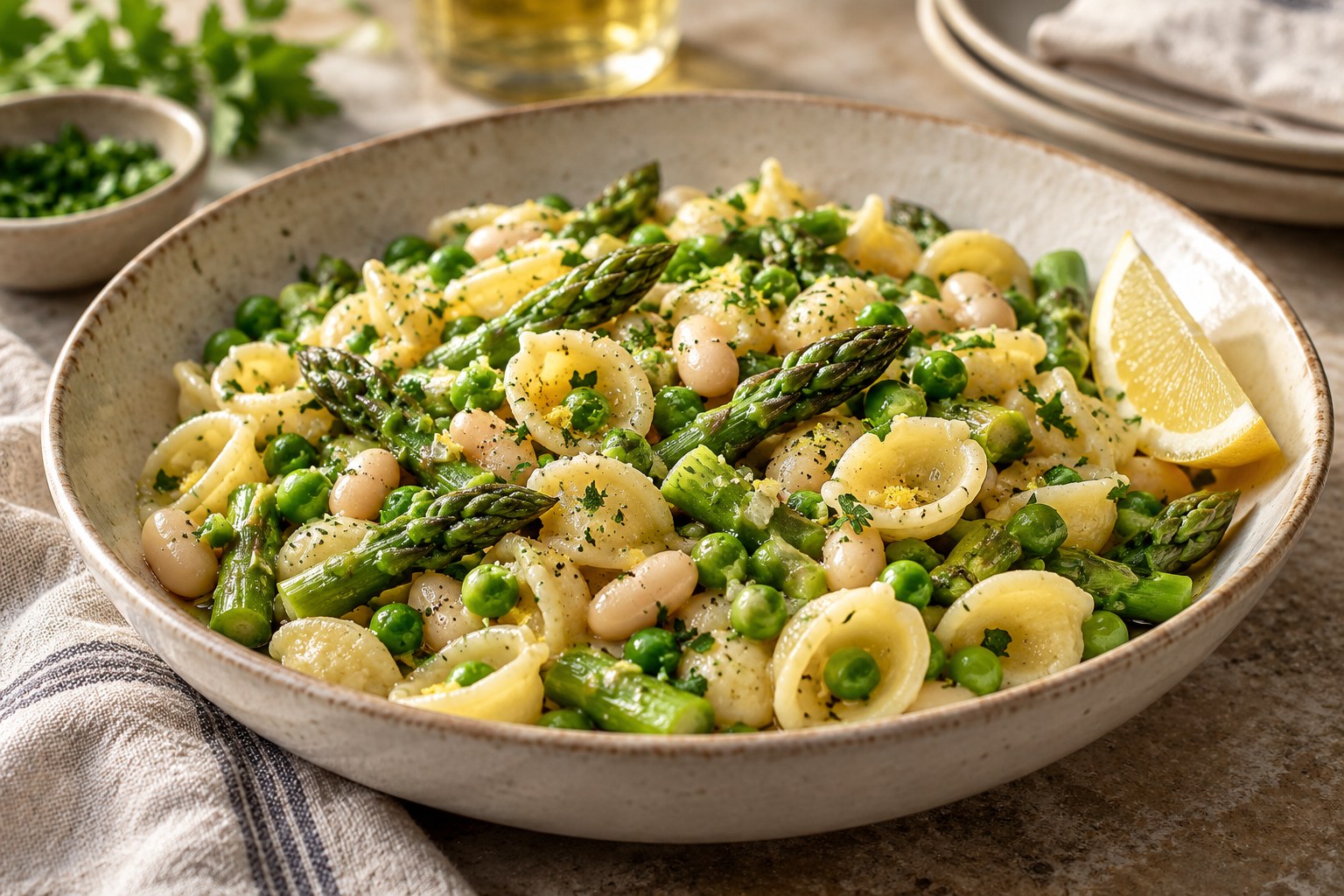
This is a flexible meal idea, not a tested standalone recipe: use the vegetables you have, and cook them until tender. Frozen peas are especially useful when fresh ones are expensive or hard to find. If asparagus is unavailable, green beans or broccoli are sensible alternatives, though cooking times differ.
Spring baking idea: Vegan lemon blueberry loaf
For a beautiful spring-inspired centerpiece, try the Vegan Lemon Blueberry Loaf. The published recipe uses plant milk, oil, lemon juice and zest, and blueberries—without eggs or dairy butter. Lemon brings brightness, while berries add little pockets of juicy fruit.

Blueberries are often a summer local harvest in Canada, even though a lemon-and-blueberry loaf feels perfect for spring brunch. You can make the recipe in spring with frozen berries or purchased fresh berries. Follow the recipe's instructions for using frozen berries without thawing, and avoid overmixing once flour and liquid meet. A thick, fully cooled loaf takes a glaze more neatly than a warm one.
Serve thin slices with tea, or pair the loaf with a savory vegetable brunch so the table has contrast. Keep the toppings simple: the lemon flavor should stay in the foreground.
Another spring-to-early-summer option: Vegan strawberry shortcake
When strawberries are flavorful and in good supply, the Vegan Strawberry Shortcake is a lovely choice. The actual published formula uses vegan butter in its shortcake biscuits, plant milk, strawberries, and coconut whipped cream. This is preferable to treating an ordinary dairy shortcake as vegan merely because it has fruit in it.
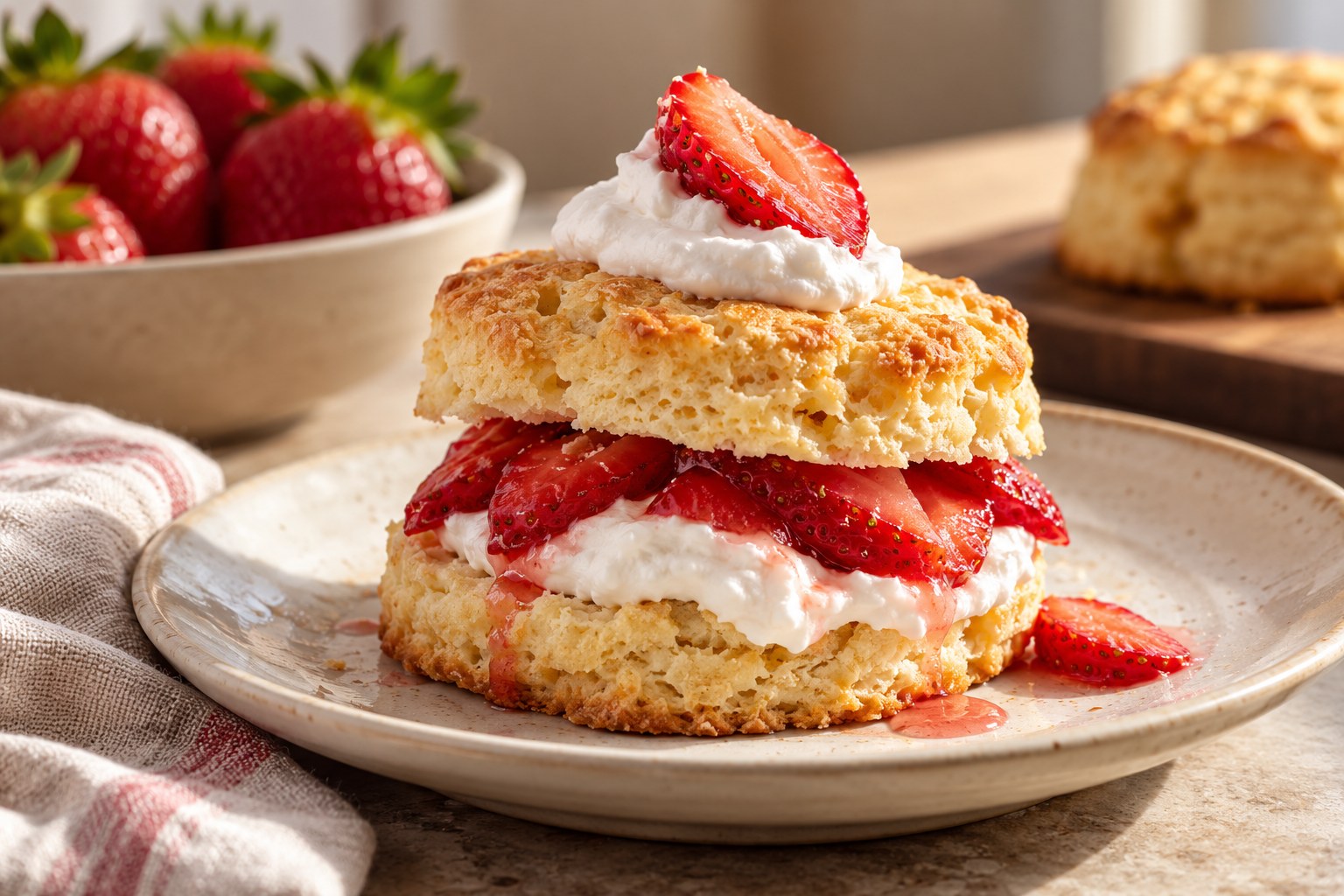
For best presentation, assemble close to serving. You can bake the shortcakes in advance, then add the sliced fruit and chilled topping later; assembling too early may soften the biscuits. If using frozen strawberries, their thawed texture works better as a saucy filling than as crisp slices. You can also use the Vegan Strawberry Shortcake Cupcakes for a more portable party dessert.
Spring meal and baking rhythm
Use tender greens early in the week, when their texture is best. Save sturdier asparagus and radishes for later meals. On the weekend, bake a citrus loaf or shortcakes, and portion leftovers appropriately. In a rainy week, a bright lemon dessert provides the seasonal mood even when fresh local fruit has not arrived.
Summer vegan recipes: Zucchini, ripe tomatoes, and fruit-forward desserts
Summer is the season for minimal fuss. Juicy tomatoes can anchor a toast or grain bowl. Zucchini takes well to roasting, grilling, and baking. Sweet corn adds texture to salads and skillet dishes, while berries and stone fruit can become simple baked desserts that barely need embellishment. On hot days, use the oven strategically: bake early, cook smaller portions, or choose a no-bake dessert.
Make the most of zucchini without watery results
Zucchini contains plenty of water, which is helpful in tender quick breads but can make fritters soggy. For a sauté or roast, spread pieces in a single layer so they brown rather than steam. For some fritters, grate and squeeze the zucchini as directed by the recipe. For a zucchini loaf, do not automatically squeeze out all the moisture: the amount of water is part of the formula, so follow that particular recipe's instructions.
Our Vegan Zucchini Oat Bread is a verified plant-based summer bake. It uses grated zucchini, oats, flour, maple syrup, plant milk, oil, and ground flaxseed. The result is a good example of vegetables contributing moisture without taking over the flavor. Warm spices, nuts, and oats give the loaf a breakfast-friendly character. Let it cool sufficiently before slicing so the crumb can set.

Recipe accuracy note: The site's separate Air Fryer Zucchini recipe includes an egg and Parmesan, so it is not vegan as published. For a vegan version of air-fried zucchini, use a separately tested egg-free, dairy-free recipe rather than assuming the existing one qualifies. That distinction matters when readers depend on the dietary label.
Summer dinner idea: Tomato, corn, and bean skillet
Sauté chopped onion or garlic in olive oil, add fresh corn kernels and diced tomato, and cook until the tomato releases a little juice. Stir in rinsed cooked beans and season with salt, pepper, smoked paprika, and herbs. A squeeze of lime balances sweetness. Serve over rice, tuck into tortillas, or spoon onto toasted bread. The whole point is to use peak-flavor ingredients without burying them under a heavy sauce.

This basic formula is adaptable: add zucchini, peppers, or greens if available, and adjust the cooking time. Corn from the freezer works when fresh ears are out of season. A chilled version with beans, corn, diced tomatoes, and a tart dressing also travels well when kept safely cold.
Summer dessert idea: Strawberry shortcake or fruit crumble
A soft shortcake with seasonal fruit is an obvious favorite, but a fruit crumble is equally flexible. Use ripe peaches, berries, plums, or a combination. Rather than assuming all fruits need the same thickener, remember that juicy berries and very ripe stone fruit can release different amounts of liquid. A wide baking dish and a little starch, when appropriate to the recipe, help prevent a soupy base. A topping made with oats, flour, sugar, and vegan butter can supply crisp contrast.
For a specific, verifiable recipe, the Vegan Strawberry Shortcake is already available on What’s Baking?. For a different summer mood, keep fruit chilled and serve it with a plant-based yogurt or whipped topping; no elaborate decoration is needed if the fruit is good.
Picnic and entertaining ideas for summer
Plan a meal around foods that still taste good at room temperature, but keep perishable dishes in a cooler as required. Consider a grain salad with chickpeas and roasted vegetables, a bean spread, cut vegetables, fruit, and individually wrapped slices of zucchini oat bread. Pack sauces separately so greens stay crisp. If bringing a cream-topped dessert, transport it cold and assemble near serving time.
Summer baking is also a chance to compare textures. A zucchini loaf should be tender and moist, not wet in the center; a fruit crumble should bubble in the middle; cookies should cool on a rack so steam does not soften their bottoms. These small details matter more than adding decorative ingredients to every dish.
Fall vegan recipes: Pumpkin, apples, squash, and warm spices
Autumn turns the oven into the center of the kitchen. Apples, pears, pumpkin, and winter squash can go sweet or savory, while carrots, onions, and lentils give depth to soups and casseroles. Toasted nuts, cinnamon, ginger, cloves, and nutmeg become especially appealing—but they should complement the produce rather than disguise it.
Pumpkin purée is not pumpkin pie filling
For baking, check the can carefully. Plain pumpkin purée contains pumpkin, while pumpkin pie filling usually comes sweetened and spiced. Using the filling in place of plain purée can change both sweetness and the liquid balance of a recipe. If you roast fresh pumpkin or squash for purée, drain excessive moisture when a recipe requires a thick purée; homemade purées can vary more than canned ones.
Fall bake: Gluten-free vegan pumpkin spice muffins
The Pumpkin Spice Muffins (GF/V) provide a good seasonal example. The published ingredients include gluten-free flour, pumpkin purée, plant-based milk, maple syrup, vegetable oil, apple cider vinegar, and a streusel made with vegan butter. They are vegan and gluten-free as formulated, but the original article's suggestion that they are oil-free is not accurate: the recipe explicitly contains oil.
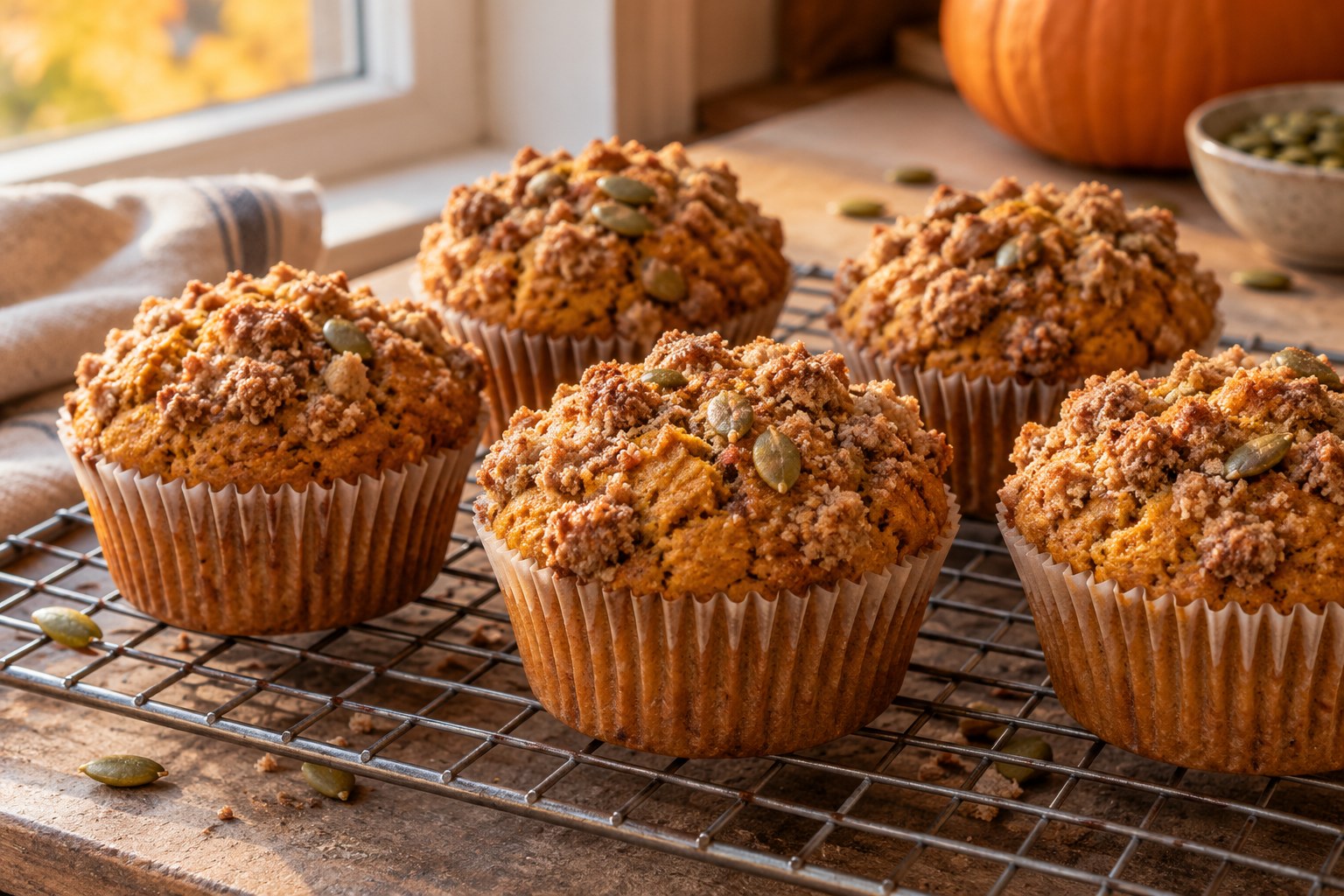
To get neat muffins, weigh the ingredients, distribute the batter evenly, and give the center time to bake through. Gluten-free formulas can need a little cooling time before the crumb stops feeling delicate. Do not change the flour blend or eliminate the oil without expecting a different result; those ingredients affect structure and tenderness.
These muffins are particularly convenient for holiday breakfasts and packed snacks. If the streusel is crisp, avoid trapping steam in a sealed container while the muffins are still hot. Freeze cooled portions for later and reheat only what you need.
Fall cooking idea: Roasted squash, chickpeas, and greens
Cut butternut or another suitable winter squash into even pieces, toss lightly with oil and spices, and roast until tender and browned at the edges. Add chickpeas and a handful of hearty greens, finishing with a lemon-tahini dressing or another dressing you enjoy. For a complete meal, serve over quinoa, barley, rice, or couscous. Crunchy pumpkin seeds are a good garnish when appropriate for the diners.
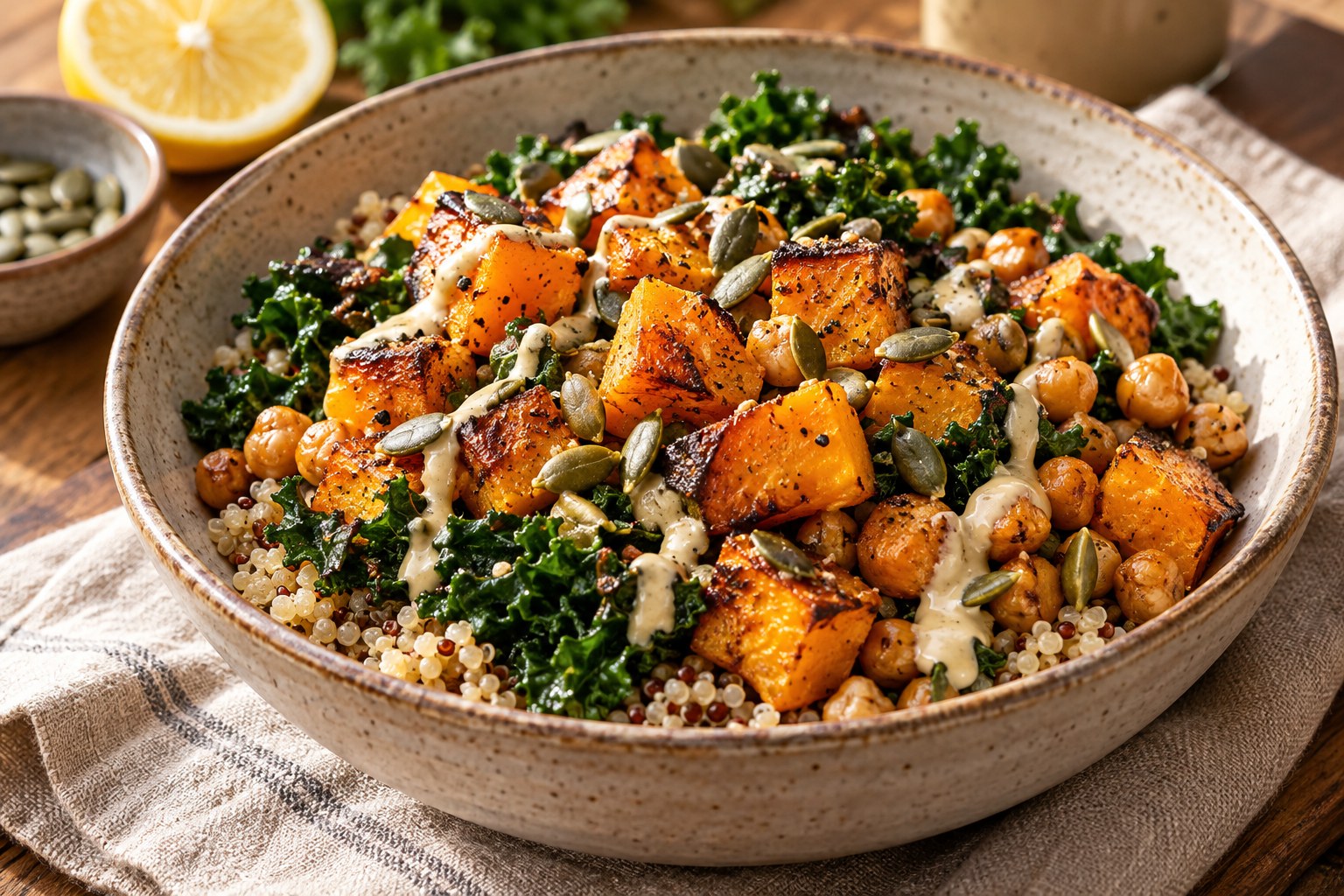
Roasting concentrates flavor by evaporating some moisture and encouraging browning. Crowding a pan limits that effect, so divide vegetables between two pans if necessary. A little acidity at the end can brighten a dish that otherwise tastes very sweet or earthy.
Fall dessert and make-ahead ideas
Apples hold up in crisps, cakes, and baked oatmeal, but varieties differ: some retain distinct pieces while others soften quickly. Use a tart, firm apple when you want contrast; use a softer apple when you want a saucier filling. Pears are delicious in spice cakes and roasted desserts but can be fragile when very ripe. For party baking, portion desserts in advance and keep garnishes separate until serving.
The most useful fall habit is to prepare components rather than assembling everything too early. Roast squash for soup and grain bowls, wash kale for later, and bake muffins for the freezer. A single shopping trip can support several meals without making the same dish repeatedly.
Winter vegan recipes: Pantry comforts, roots, and make-ahead meals
Cold-weather cooking rewards slow-developed flavors and sturdy ingredients. Potatoes, onions, cabbage, carrots, parsnips, beets, and properly stored squash can form the base of many meals. Frozen vegetables and fruit deserve a place in the winter kitchen too: freezing allows a summer harvest to contribute color and flavor when the local growing season is quiet.
Winter main dish: Vegan lentil shepherd’s pie
The Vegan Shepherd’s Pie is a particularly useful winter recipe because its published ingredients are plant-based: lentils, mushrooms, onion, carrots, celery, peas, vegetable stock, and a mashed-potato topping made with olive oil and unsweetened plant milk. It is suitable for family dinners and organized meal preparation without relying on a meat substitute.
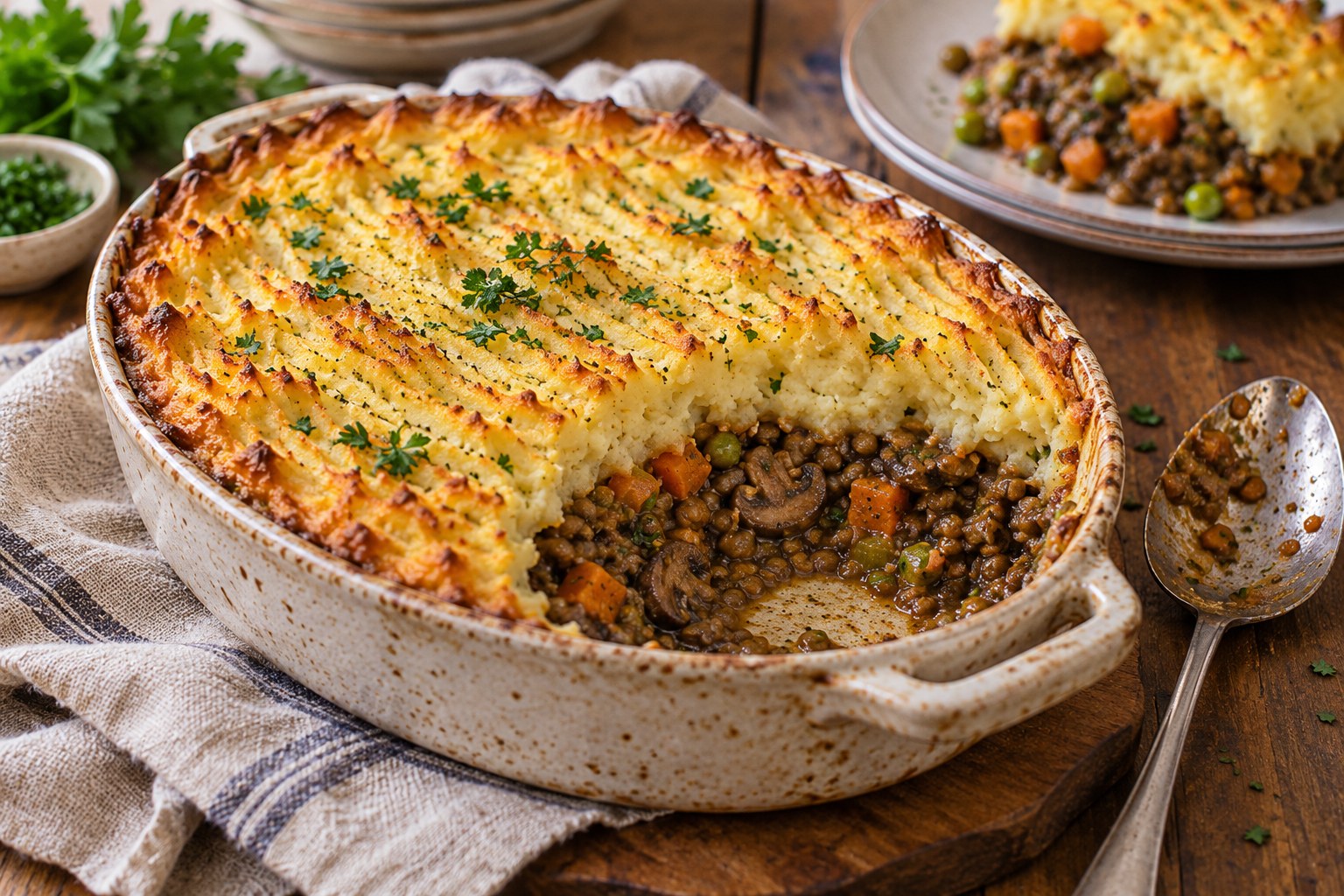
The secret to a sliceable shepherd’s pie is managing liquid. The filling should be saucy but not soupy before you spread the mashed potatoes over it. If the filling is too wet, the finished casserole may be hard to portion; if too dry, it can feel heavy. Allow a baked casserole to rest a little before serving so bubbling filling settles. The exact cooking steps and quantities belong to the linked recipe.
Make this for an evening when you want leftovers, and pair it with a crisp cabbage salad or another vegetable that adds brightness. For lunch, reheat a portion thoroughly rather than repeatedly warming the entire dish.
More winter comfort ideas
Start with a basic soup format: sauté aromatics, add lentils or beans and diced root vegetables, cover with stock, then simmer until tender. Cabbage and kale can go in toward the end depending on the texture you want. Blend a portion for body without needing dairy cream. Add lemon juice, vinegar, or a spoonful of mustard at the end if the flavors seem flat.
For a savory baked side, Vegan Cheesy Garlic Biscuits are another verified plant-based option. Their ingredients include vegan butter, plant milk, and dairy-free cheddar-style cheese. They can accompany soup or a vegetable stew. The texture depends on keeping the fat cold, mixing gently, and baking soon after preparing the dough.
Winter dessert: Chocolate avocado mousse
The Vegan Chocolate Avocado Mousse is a dessert you can prepare throughout the year because it does not rely on locally harvested fresh summer fruit. It combines avocado, cocoa, maple syrup, coconut milk, vanilla, and coconut oil. The published preparation time is 15 minutes, not the five-minute promise made by the original article.
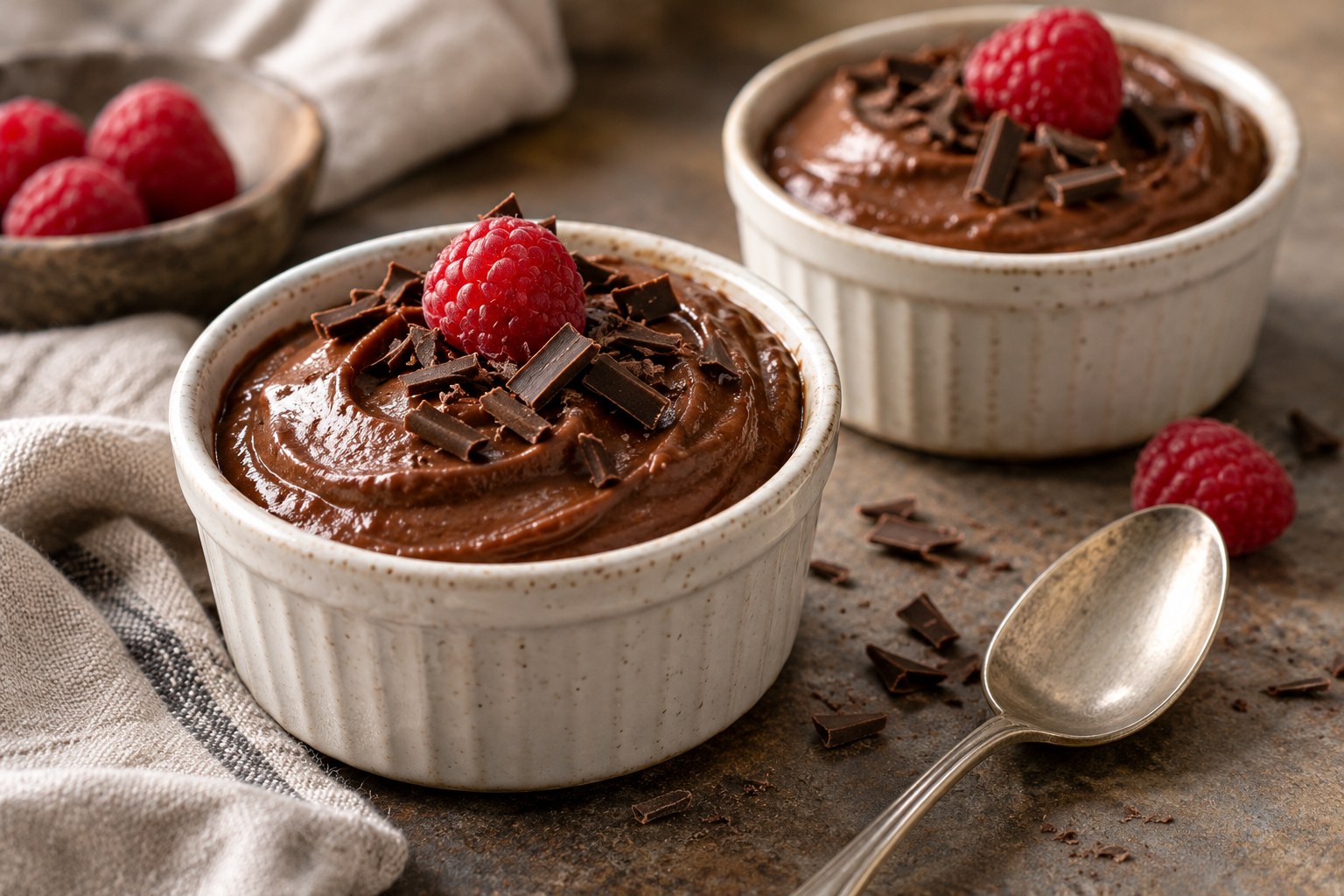
Use properly ripe avocados for a smoother blend and taste before serving: the balance of cocoa bitterness and sweetness matters. Chill as directed so the mixture firms up. A few berries or a small amount of shaved dairy-free chocolate provide a simple garnish. Check the chocolate label if keeping the dessert strictly vegan.
Winter baking with stored and frozen fruit
Apples in cold storage can still be useful in loaves and crumbles. Frozen berries can work in muffins, quick breads, and cooked sauces; the right method depends on the recipe. When added frozen, berries may require baking adjustments because they cool the batter. For a cooked compote, thawing first may be entirely reasonable. Avoid a blanket instruction that all frozen fruit should always be thawed or never be thawed.
Winter is also an opportunity to bake with carrots, dates, citrus, nuts, and warming spices. The goal is variety: a loaf one week, a fruit-topped dessert the next, and a savory pastry with vegetables after that. Year-round pantry ingredients can make a seasonal menu feel generous rather than limited.
Five verified What’s Baking? recipes to try first
If you would rather follow a specific recipe than improvise, these five published recipes have been checked against their ingredient lists in the What’s Baking? Recipes collection. The links go to existing recipes, not hypothetical future articles.
- Spring-inspired baking: Vegan Lemon Blueberry Loaf combines lemon and blueberries in an egg-free loaf. Use fresh or frozen berries as the recipe permits; the seasonal mood does not depend on spring-grown local blueberries.
- Summer zucchini baking: Vegan Zucchini Oat Bread uses grated zucchini, oats, flaxseed, plant milk, and oil. It makes good use of abundant squash without relying on eggs.
- Autumn breakfast: Pumpkin Spice Muffins (GF/V) make plain pumpkin purée and warm spices the main attractions. The recipe contains oil and vegan-butter streusel; do not describe it as oil-free.
- Winter comfort: Vegan Shepherd’s Pie uses lentils and vegetables beneath a plant-milk mashed-potato topping. Cook the filling to the consistency stated in the recipe before assembling.
- Any season: Vegan Chocolate Avocado Mousse is a simple, chilled, cocoa-rich dessert. Allow time for both preparation and chilling instead of promising an instant result.
All five suit a plant-based editorial collection. However, vegan does not mean allergen-free: oats, nuts, soy, wheat, and coconut may be relevant to some diners, and individual packaged ingredients can have different allergen warnings. Always use the exact linked recipe and inspect product labels for the people you are serving.
A flexible seven-day seasonal vegan meal plan
Use this as a planning framework rather than a rigid prescribed diet. The meals are ideas, and serving sizes should reflect your household's needs. Replace the featured produce as the season changes, while keeping convenient beans, grains, and other staples available.
- Monday: A grain bowl with seasonal roasted vegetables, chickpeas, fresh herbs, and a tangy dressing. Roast extra vegetables for later.
- Tuesday: A lentil or bean soup with onions, carrots, greens, and a slice of Vegan Cheesy Garlic Biscuits if you want to bake.
- Wednesday: A quick skillet with summer tomatoes and corn, spring peas, autumn squash, or winter cabbage—whichever suits your market that week. Serve with rice or noodles.
- Thursday: Leftover roasted vegetables folded into a warm grain salad or stuffed into a wrap with hummus. Keep prepared perishable ingredients chilled until needed.
- Friday: Vegan Shepherd’s Pie for a make-ahead dinner, or a lighter vegetable-and-bean pasta in warm weather.
- Saturday: A breakfast bake: Vegan Zucchini Oat Bread in summer, Pumpkin Spice Muffins in autumn, or a Vegan Lemon Blueberry Loaf for a bright weekend brunch.
- Sunday: A simple dessert and a little preparation for the next week. Vegan Strawberry Shortcake is excellent when ripe strawberries are plentiful; Vegan Chocolate Avocado Mousse works when fruit options are limited.
A useful shopping strategy is to choose two vegetables, one fruit, one protein-rich staple, and one grain as the core of the week, then supplement from your pantry. This keeps the plan flexible and prevents a list of beautiful, unrelated ingredients from turning into food waste. If fresh produce is expensive, swap one choice for frozen or canned produce without feeling you have failed the seasonal theme.
Seasonal vegan baking tips that actually change the result
Adjust for moisture when baking with fruit and vegetables
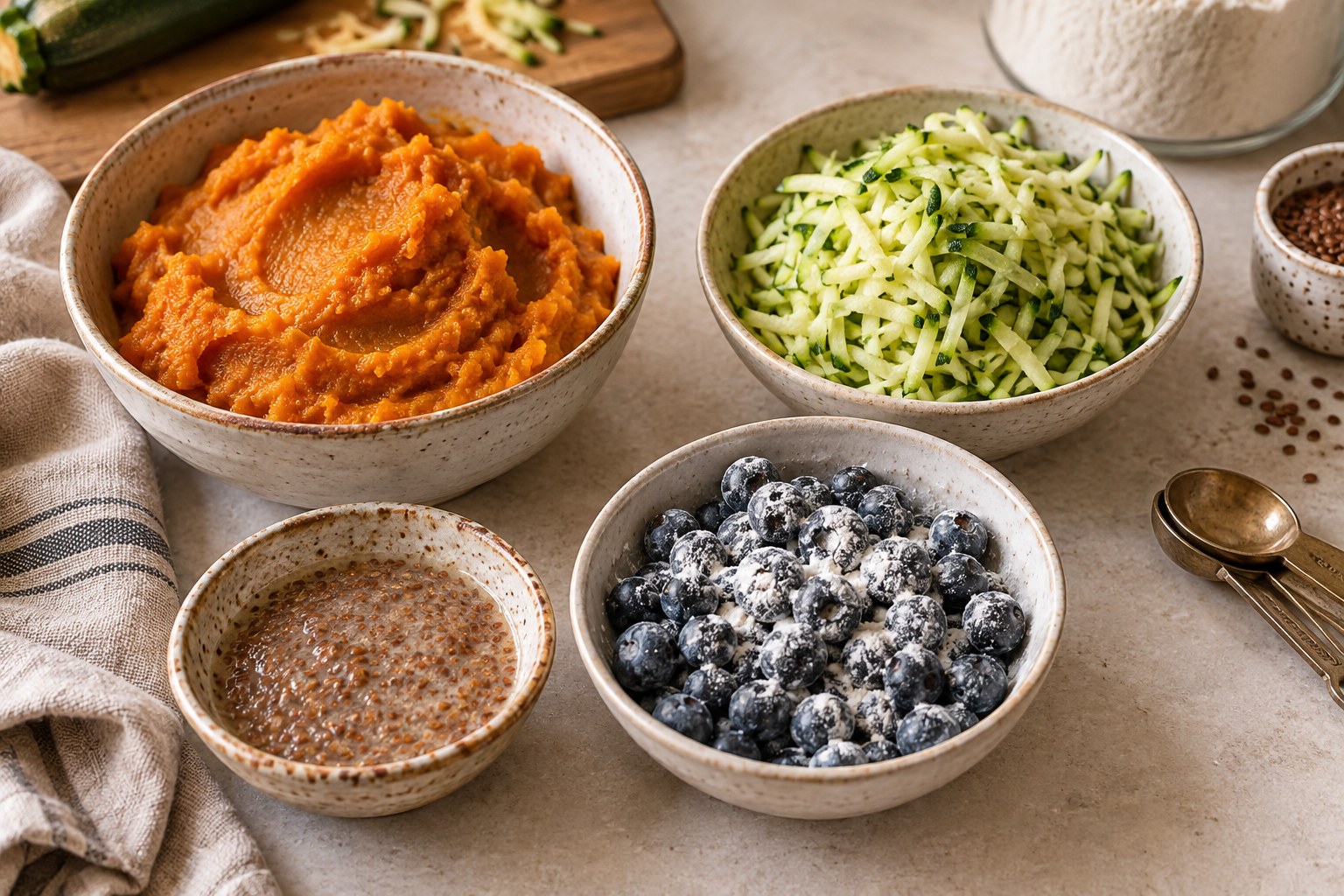
Pumpkin purée, bananas, grated zucchini, berries, and applesauce do not behave identically in batter. Pumpkin purée is thick, banana adds sweetness and starch, and zucchini carries significant water. Fresh berries may burst during baking, while frozen berries can lower batter temperature and sometimes release color. Follow a developed formula rather than swapping equal volumes of every fruit or vegetable. If improvising, change one variable at a time and record the result.
Match the spice level to the produce
Cinnamon and ginger complement pumpkin and apples, but a heavy spice mixture can hide delicate pear or berry flavor. Lemon zest can lift rich batter, while a little salt makes sweetness taste more complete. In savory meals, roasting brings out some of a vegetable's natural sweetness, so acid and herbs are often better finishing choices than more sugar. Taste dressings and cooked fillings before final assembly when safe to do so.
Plan the bake around temperature and texture
Cold vegan butter is useful for flaky biscuits and pastry. A room-temperature firm vegan butter may be better in a cookie recipe designed for creaming. Hot melted coconut oil can make an otherwise cool mixture behave differently. Similarly, a loaf that seems damp when cut straight from the oven may simply need more cooling time. Ingredient temperature, mixing technique, and cooling are more reliable tools than guessing that all vegan baking needs extra leavening.
Keep photographs honest
A seasonal editorial photograph should show the actual ingredient or finished dish it describes. A lemon-and-blueberry loaf should not be illustrated with an unrelated wheat-and-dairy lemon cake; a vegan zucchini article should not feature a cheese-covered dish unless clearly identified as an adaptation. Use one strong hero image and a few useful supporting images—ingredient close-ups, an important preparation step, and a final serving idea. Add descriptive alt text that accurately identifies the scene rather than stuffing keywords into it.
How to shop for seasonal produce without wasting money
Start by checking what looks good and what is reasonably priced. Seasonal displays in supermarkets can mix locally harvested items with imported ones. If you want to support local growers, read origin labels and ask market vendors where the produce was grown. The availability of a particular crop can shift by weeks due to weather and variety, especially in northern climates.
Buy delicate produce such as leafy greens and ripe berries in amounts you will use soon. Buy sturdier vegetables such as carrots, squash, onions, and cabbage for meals later in the week. If a bag of imperfect-looking produce is discounted, it may still work beautifully for a soup or cooked sauce; inspect it for spoilage and use it promptly. Frozen vegetables can be just as useful in stews, casseroles, and muffin batter when suitable for the recipe.
Have a backup plan for each expensive ingredient. Frozen peas can replace fresh peas in a quick skillet; canned tomatoes may be preferable to pale winter tomatoes in a cooked sauce; frozen berries can make an excellent compote when fresh ones lack flavor. These substitutions support consistency, not compromise.
Storing and freezing seasonal plant-based meals safely
Good storage is part of good seasonal cooking. Health Canada's food guidance recommends refrigerating perishable leftovers promptly and keeping the refrigerator at 4°C (40°F) or colder. Its guidance generally lists cooked dishes with vegetables at three to four days in the refrigerator, though some categories, including soups, have shorter recommendations. Divide large quantities into shallow containers for faster cooling, label the date, and freeze portions you do not expect to eat soon. Do not leave perishable meals at room temperature for extended periods simply because they contain no meat or dairy.
Fresh produce needs different storage conditions. Keep leafy greens refrigerated and avoid trapping excess moisture; store mushrooms in a paper bag in the fridge; remove leafy tops from carrots, radishes, and beets to slow deterioration. Some produce, such as unripe tomatoes and many whole winter squashes, can be held outside the refrigerator under suitable conditions. Cut fruit and vegetables need prompt refrigeration. Health Canada's produce storage guide offers practical examples.
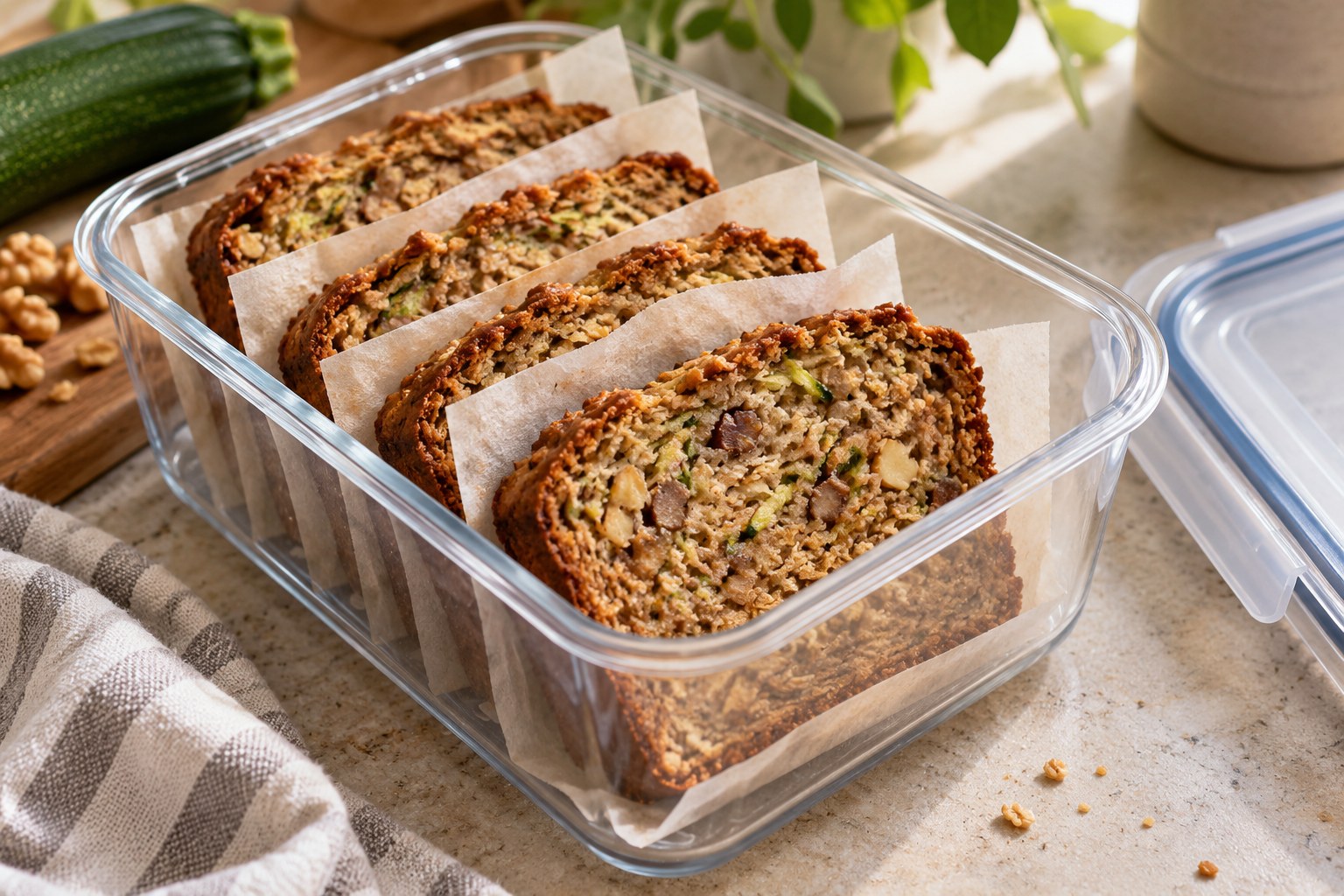
For baking, cool muffins and loaves completely before freezing. Wrap portions well to avoid drying and freezer odors. Remove only the amount needed, thaw or reheat according to the recipe, and avoid storing moist cakes with delicate garnishes attached when they would become soggy. Fruit dessert components are often easier to store separately: freeze the baked base and add a fresh or chilled topping just before serving.
Frequently asked questions about seasonal vegan recipes
Can I cook seasonally if I live somewhere with a long winter?
Yes. In colder regions, seasonal meals often combine stored roots and squash, greenhouse produce, imported fruit, canned tomatoes, dried beans, and frozen vegetables. If your aim is primarily to use locally harvested foods, preserving summer and fall produce can extend their usefulness. A seasonal approach should make cooking easier, not require impossible shopping rules.
Are frozen vegetables and berries less suitable for baking?
Not automatically. Frozen berries can work well in many muffins, loaves, and cooked fillings. Some recipes specifically tell you not to thaw them before adding to batter; others use thawed fruit for sauce. Vegetables such as frozen peas and spinach are convenient for casseroles and soups, although excess water should sometimes be drained. Follow the recipe's instructions instead of applying a universal rule.
What is the easiest seasonal vegan baking project for beginners?
A quick bread or muffin designed to be vegan is usually approachable because it does not depend on whipping eggs into a fragile foam. Start with Vegan Zucchini Oat Bread in summer or Pumpkin Spice Muffins in autumn. Measure ingredients accurately and resist making several substitutions on the first attempt.
How can I tell whether a recipe is really vegan?
Read the full ingredient list, including toppings, coatings, chocolate, pastry ingredients, and packaged sauces. A recipe with vegetables or a title containing “healthy” is not necessarily vegan. Eggs, Parmesan, dairy butter, milk powder, honey, and gelatin are examples of ingredients that require attention. The original version of this article linked to a zucchini recipe containing egg and Parmesan; that recipe is not included here as a vegan recommendation.
Can seasonal vegan cooking be affordable?
It can, especially when you build meals around beans, lentils, grains, sturdy vegetables, and competitively priced produce. But local or seasonal products are not always the cheapest option in every store. Compare unit prices, plan to use leftovers safely, and keep a frozen or canned alternative available so you do not overspend on a single ingredient.
Is a vegan recipe automatically gluten-free or allergy-friendly?
No. Vegan food avoids animal-derived ingredients, but it can contain wheat, soy, nuts, sesame, and other allergens. A recipe labeled gluten-free also depends on appropriate ingredient sourcing and avoiding cross-contact where necessary. Check the individual recipe, product labels, and the needs of your guests before making dietary claims.
Which seasonal foods photograph especially well?
Choose dishes with identifiable seasonal ingredients and a naturally appealing texture: asparagus with fresh herbs, zucchini quick bread with a visible crumb, pumpkin muffins beside a cut pumpkin or a small bowl of purée, a lentil pie with a spoonful revealing its filling, and a lemon loaf with real blueberries. Natural window light, minimal props, and accurate portions often look more credible than crowded or exaggerated food styling.
Final thoughts: Let the season guide the menu
Seasonal vegan cooking is a simple habit with generous possibilities. Notice what is fresh, appealing, and affordable; keep beans, grains, seasonings, and baking essentials ready; and choose a recipe that lets the ingredients shine. Spring can feel bright and herbaceous, summer fresh and fruit-forward, fall roasted and spiced, and winter soothing and substantial.
Start with one dependable dish and learn how to vary it. A loaf, a vegetable skillet, a hearty pie, or an easy dessert may become a seasonal tradition in your home. Explore more ideas in our plant-based recipes collection, and return to this guide whenever you need a new way to cook or bake with what the market offers.
IN PICTURES
From the baking notebook
FROM THE RECIPE BOX




