On this page
A good cocktail-inspired cake should taste like a thoughtful dessert first. The spirit, citrus, coffee or fruit that inspired it should bring a recognizable layer of flavour without leaving the sponge soggy or the frosting harsh. The most memorable versions borrow an entire flavour profile—bitterness, acidity, sweetness, fragrance and finishing salt—rather than simply pouring alcohol into ordinary cake batter.
This guide explores five cakes from the What’s Baking? recipe collection: Paloma Cocktail Cake, Raspberry Champagne Sheet Cake, Tiramisu Sheet Cake, Coca-Cola Sheet Cake and Classic Margarita Cocktail Cake. Four of the published recipes include alcohol. The Coca-Cola cake does not, and belongs here as an alcohol-free cocktail-inspired contrast, not as a boozy dessert. That distinction matters when planning a party and when giving guests accurate information.
You'll learn how to choose among the cakes, what each published recipe actually contains, how citrus and spirits affect texture, ways to balance glazes and frostings, and how to stage a dessert table without last-minute chaos. The linked individual recipe cards provide measurements and baking methods; this article is a companion for understanding their design and getting more reliable results.
The five cakes at a glance
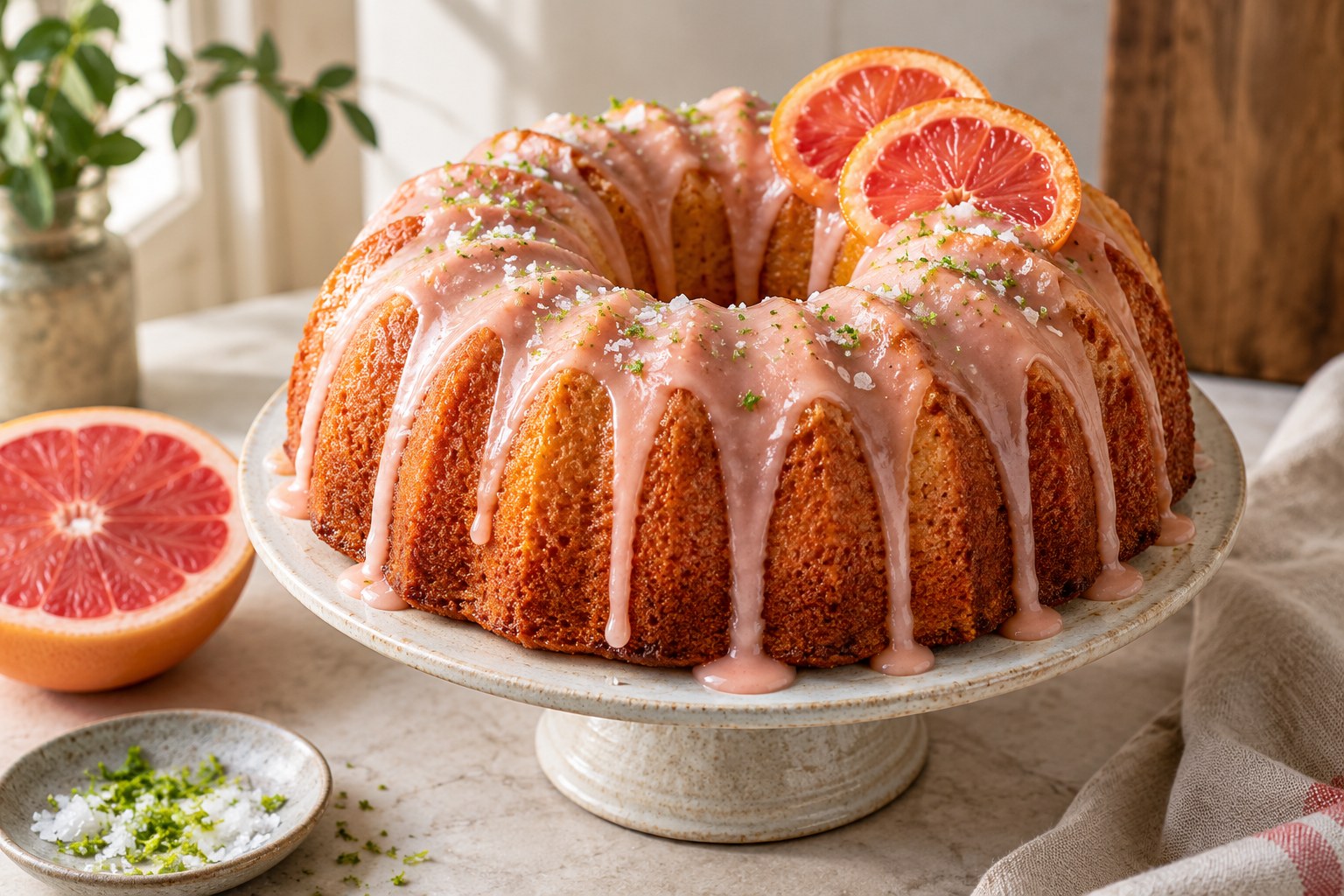
Paloma Cocktail Cake: A tequila, grapefruit and lime bundt cake finished with a grapefruit-tequila glaze and a touch of salt. It suits bakers who enjoy tart citrus and a showpiece shape.
Raspberry Champagne Sheet Cake: A rich butter cake made with sparkling wine, a raspberry filling and a champagne-reduction buttercream. This is a celebratory option with separate components that reward advance planning.
Tiramisu Sheet Cake: A vanilla cake soaked with coffee and Marsala wine or dark rum, then finished with mascarpone and cream frosting. It is the choice for coffee lovers and needs appropriate refrigeration.
Coca-Cola Sheet Cake: A chocolate-cola cake with a warm cola-cocoa frosting. Its published ingredient list contains no alcohol. It offers a nostalgic, crowd-friendly alternative when you want a themed dessert without spirits.
Classic Margarita Cocktail Cake: A lime-and-tequila bundt cake with tequila-lime glaze and a salt-sugar-lime finishing mixture. The sharper citrus profile makes it a good choice for a summer celebration.
Use these profiles to select a recipe based on the occasion and guest list, not just which cocktail name sounds exciting. A buttercream sheet cake is easier to portion for a crowd; a bundt cake can make an elegant centrepiece but needs particularly careful pan preparation.
What makes a cocktail-inspired cake work?
A mixed drink balances several sensations at once. Sweetness makes sharp or bitter components pleasant, acid adds freshness, aromatic ingredients provide personality, and dilution keeps a drink drinkable. Cake has different constraints: flour needs hydration, the crumb needs structure, fat needs to emulsify and the bake needs enough time to set. A cocktail cannot simply be poured into a standard sponge and expected to behave like water.
Alcohol changes the flavour and liquid balance of a batter. Fruit juice adds water, acid and sugars. A liqueur may add sugar as well as alcohol, while sparkling wine contributes acidity and fruit notes that can become subtle after heating. The icing and finishing soak often carry a cocktail impression more clearly than the baked crumb. That is why several What’s Baking? cakes use an alcohol-containing element after baking as well as in the batter.
Think in layers. The cake itself should be tender and pleasant without the topping. A filling or syrup should introduce a specific note, not saturate every crumb. Frosting should offer a contrasting texture. Garnish should tell the story with useful flavours—zest, fruit, cocoa or a controlled hint of salt—rather than relying on decorations that look impressive but interfere with slicing.
Before baking: alcohol, guests and food safety
Never assume alcohol disappears completely during baking. The amount remaining depends on the recipe, quantity, temperature, surface area and length of cooking. Alcohol added to a soak, glaze or frosting after baking may remain especially relevant. Reducing wine or simmering a spirit does not make it reliably alcohol-free, and a tasting spoon cannot confirm its final concentration.
Label alcohol-containing desserts clearly and tell guests when the cake contains tequila, champagne, Marsala or rum. Make a separate, genuinely alcohol-free dessert when guests avoid alcohol for personal, medical, religious or other reasons; simply warming the original recipe is not a dependable substitute. The Coca-Cola Sheet Cake is a useful option as written because the published ingredients contain no alcoholic beverage. Still check packaged ingredients and guest allergies.
Follow safe handling practices with buttercream, mascarpone and cream. Keep dairy-rich cakes chilled as the recipe directs; do not assume that a splash of alcohol makes frosting shelf-stable. If serving outdoors, limit time out of refrigeration, particularly in hot weather. Keep serving knives clean and label cakes so ingredients and allergens are not confused. All five cakes contain wheat and dairy in their published formulas, and the classic recipes use eggs; they are not vegan or gluten-free without significant, separately tested modifications.
1. Paloma Cocktail Cake: Tequila, grapefruit and lime
The Paloma Cocktail Cake Recipe uses unsalted butter, sugar, eggs, grapefruit and lime zest, vanilla, tequila blanco, flour, leaveners, pink grapefruit juice and buttermilk in the cake. A separate soak combines grapefruit juice, tequila and sugar. The powdered-sugar glaze also contains fresh grapefruit juice and tequila, with flaky sea salt to complete the sweet-tart character.

This is a bundt cake, which affects both preparation and presentation. A shaped pan produces attractive ridges but also creates opportunities for sticking. Grease the full interior carefully, particularly the corners and narrow channels, and dust appropriately according to the recipe. Allow the cake to cool for the recommended period before inverting it. Trying to remove it while too hot can cause tearing; leaving it indefinitely in some pans can also complicate release.
Why grapefruit needs balance
Grapefruit contributes perfume, acidity and a pleasing hint of bitterness. Pink grapefruit can vary in sweetness, so a cake that tastes balanced with one batch of fruit might taste sharper with another. Zest brings essential oils and aroma without the same amount of liquid. Juice supplies the acidity and freshness but also changes the wet-ingredient balance. Use the published measures rather than improvising extra juice because you like citrus.

The glaze is a powerful flavour lever. Begin with the measured citrus and tequila, then assess whether the icing is thick enough to cling to the cake. Pouring on an overly thin glaze can leave a puddle on the serving plate. A too-thick glaze can be difficult to distribute. Work gradually within the recipe's stated quantity range and allow the finish to set before moving the cake.
The salted finish
Salt is part of the Paloma inspiration, but it should not dominate a sweet cake. A light, even scattering of flaky salt provides contrast. Keep decorative citrus slices thin or offer them alongside, rather than piling heavy garnishes onto a delicate glaze. If candied grapefruit is used, check that it has cooled and drained adequately so its syrup does not melt the finish.
Serving and planning
A Paloma bundt cake can stand alone as a centrepiece for an adult summer gathering. Pair it with plain coffee, tea or a non-alcoholic grapefruit drink so the dessert retains the focus. Slice with a clean serrated knife and wipe between cuts if the glaze pulls. Identify both the alcohol and citrus components when serving.
2. Raspberry Champagne Sheet Cake: Fruit, sparkle and frosting
The Raspberry Champagne Sheet Cake Recipe uses butter, sugar, five eggs, vanilla, flour, baking powder, salt and champagne or sparkling wine in the cake. The filling is a cooked raspberry mixture thickened with cornstarch. The buttercream uses butter, powdered sugar and a measured champagne reduction. Fresh raspberries and optional decorative accents complete the presentation.
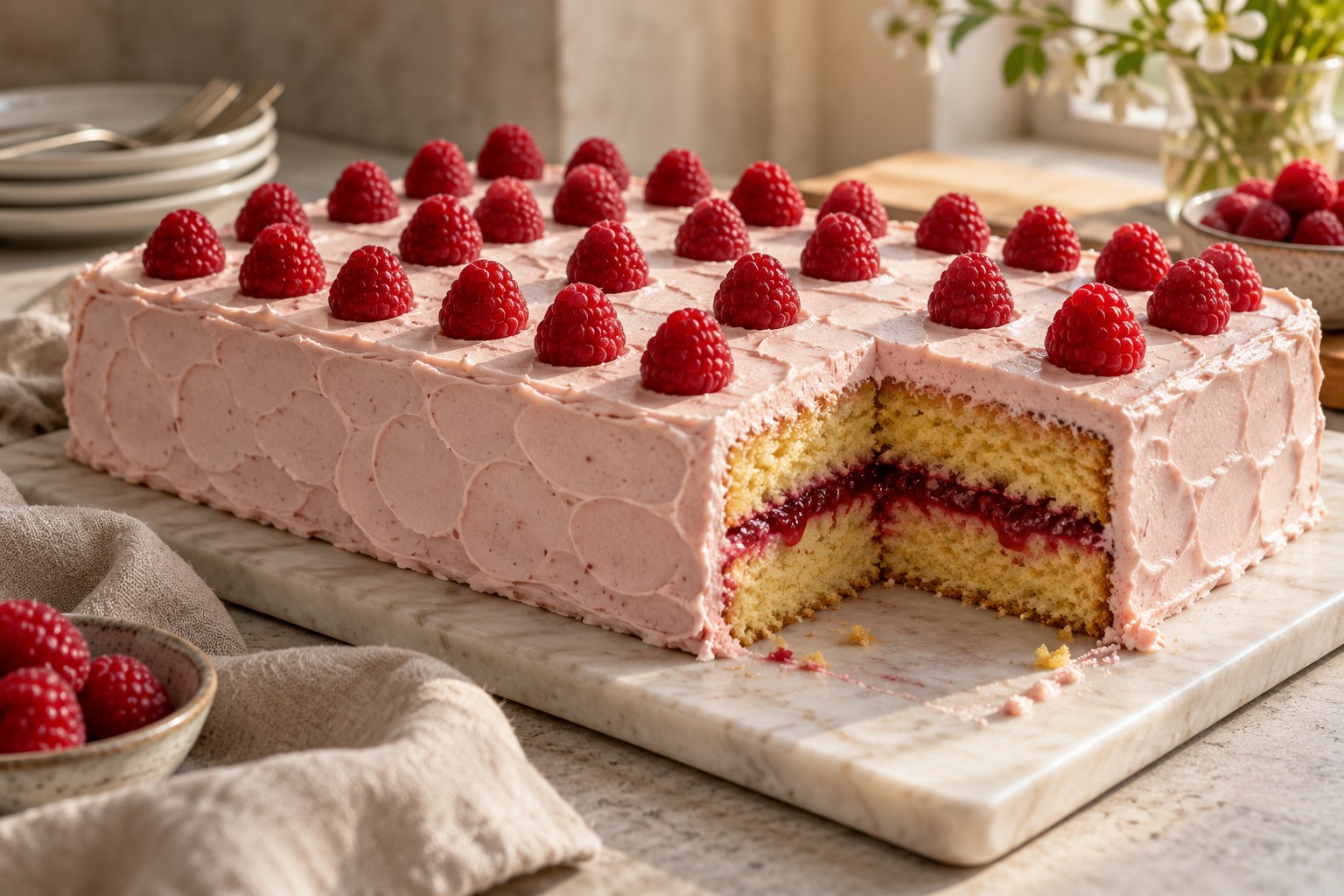
The sheet-cake format makes portioning straightforward. Unlike a tall layer cake, it can be cut into predictable squares and transported in a suitable pan or cake carrier. However, it involves three distinct preparations: batter, fruit filling and buttercream. Give each enough cooling time. Warm raspberry filling or warm champagne reduction can soften or destabilize buttercream.
What does the champagne contribute?
Sparkling wine adds acidity and subtle fruit flavours. It will not necessarily leave a fizzy sensation in a fully baked sponge. The recipe's champagne reduction helps concentrate a recognizable flavour in the buttercream, but it should never be described as verified alcohol-free. A reduction can also become too aggressive if allowed to boil away beyond the stated quantity; the resulting concentrated acidity may overwhelm frosting.
Use a wine that you would find pleasant in a drink, but avoid assuming the most expensive bottle will make the best cake. A balanced sparkling wine is more useful than an extravagant label. Follow the volume on the recipe card and bring the wine to the temperature recommended for mixing so the batter emulsifies predictably.
Cook the raspberry filling properly
Raspberry filling is delicious because it brings brightness to a sweet butter cake. Cornstarch must hydrate and heat sufficiently to thicken. Stir steadily while it cooks, then cool it fully before assembling. A filling that is too thin can spread into the frosting or cause slippery layers. A filling cooked so far that it becomes gummy is less pleasant to slice.
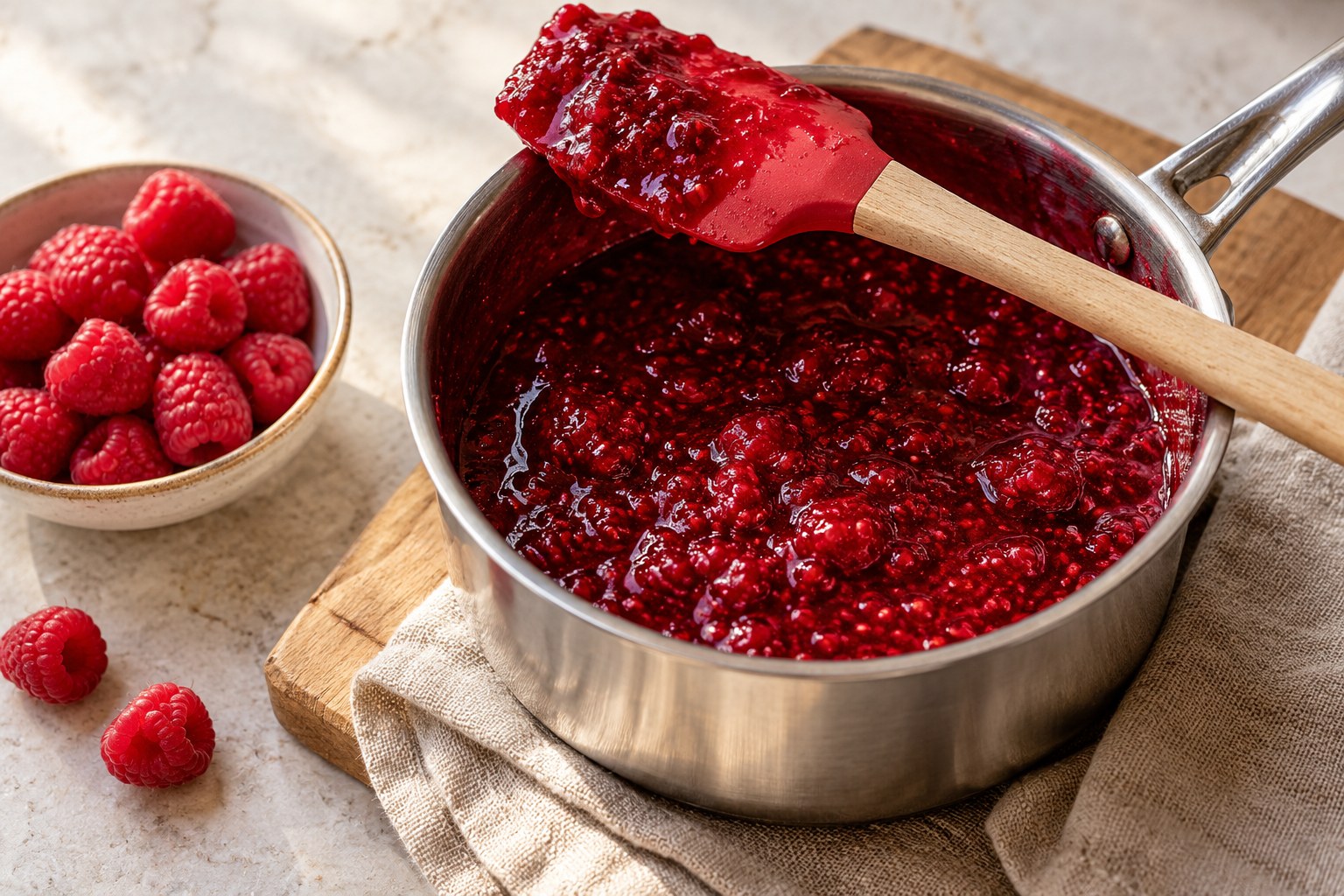
Taste the berries before making the filling. Their tartness varies considerably, but avoid casually adding much extra liquid because it can affect the starch ratio. The recipe quantities are your tested starting point. If you prefer fewer seeds, straining is a potential adaptation but may change yield; plan for that rather than promising an identical outcome.
Buttercream texture and assembly
Beat the butter until smooth, incorporate sugar gradually, and add cooled champagne reduction in the measured amount. If the mixture looks curdled, check whether the liquid was warm or added too quickly. If it looks greasy, the butter may be too warm. Brief cooling and controlled mixing often improve texture, but severe separation may require restarting a portion rather than adding random extra sugar.

Chill the cake as needed for clean slices, particularly before transporting. Fresh raspberries added as garnish are at their best close to serving, when they are less likely to bleed into the frosting. For a reception, place a small label beside the cake noting the sparkling wine and dairy ingredients.
3. Tiramisu Sheet Cake: Coffee, Marsala and mascarpone
The Tiramisu Sheet Cake Recipe starts with an enriched vanilla cake made from flour, butter, sugar, eggs and buttermilk. Its soak contains strong brewed coffee, sugar and Marsala wine or dark rum, and the frosting combines mascarpone, powdered sugar, heavy cream and vanilla. Cocoa powder finishes the top, with optional grated chocolate.

This cake borrows the familiar contrasts of tiramisu without claiming to be a traditional tiramisu. A baked sheet cake behaves differently from layers of coffee-soaked ladyfingers. The goal is to distribute enough coffee mixture to make the flavour noticeable while leaving the baked structure intact.
Coffee strength matters
Prepare coffee that tastes assertive but pleasant, then cool it before making the soak. Very weak coffee may disappear beneath the mascarpone frosting; overly bitter coffee may dominate. The stated quantity of Marsala or rum is part of the published recipe, not an optional alcohol-free version unless the recipe specifically says so. For guests avoiding alcohol, choose a different recipe designed without it.
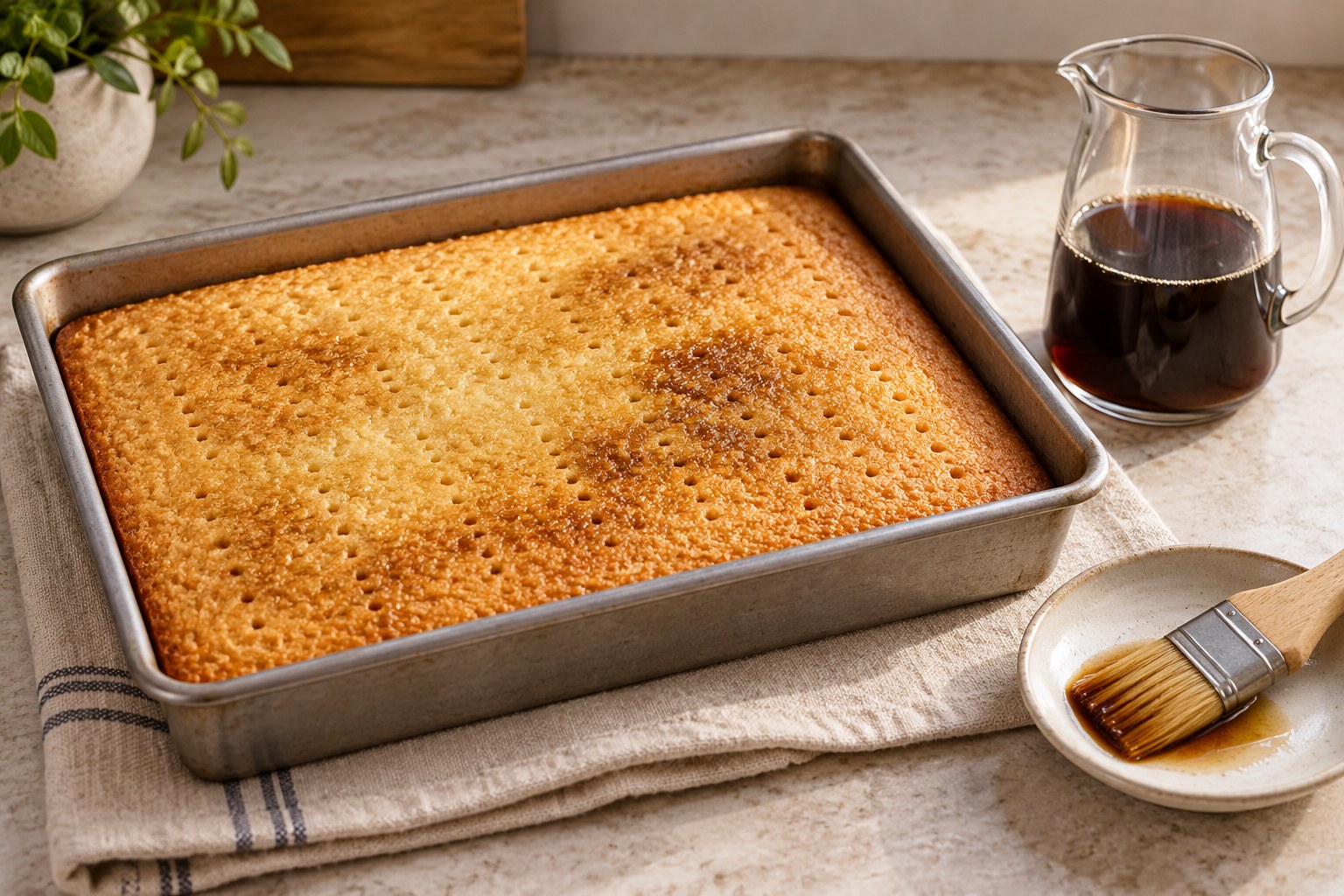
Use a spoon or pastry brush to distribute the soak slowly and evenly. Pouring all the liquid into one area can turn a section gummy while leaving the edges dry. If the cake is still warm, consult the recipe instructions for when the soak should be applied, as absorption changes with temperature. A methodical approach makes cleaner slices and a more consistent flavour.
Keep mascarpone frosting cool
Mascarpone is rich and can split when overworked or combined with ingredients at unsuitable temperatures. Beat only as much as needed for a smooth mixture and keep the cream cold as directed by the recipe. Do not leave the assembled cake at room temperature for an extended buffet service. It contains perishable dairy even if the coffee soak also contains alcohol.
For presentation, dust cocoa through a fine sieve just before serving if you want a clean finish. Cocoa can absorb moisture from the frosting and darken over time, which is not a safety issue by itself but changes the visual effect. A clean, restrained top often looks more elegant than an elaborate assortment of garnishes.
A practical make-ahead approach
Bake the cake layer ahead and cool completely. Prepare the coffee mixture and mascarpone frosting according to the recipe, then assemble with enough time for the flavours to settle. Keep the cake chilled until serving. For transport, use a rigid box or lidded pan and avoid stacking other items over a soft frosted top. A tiramisu-inspired dessert is a good choice when guests love coffee, but it is not the best unattended cake for a hot outdoor picnic.
4. Coca-Cola Sheet Cake: The alcohol-free alternative
The Coca-Cola Sheet Cake Recipe is a chocolate-cola cake made with sugar, flour, cocoa, baking soda, butter, Coca-Cola, buttermilk, eggs and vanilla. The warm frosting contains butter, cocoa, cola, icing sugar and vanilla, with optional chopped pecans or walnuts. It is not an alcoholic cake as published. It sits in this article as an example of borrowing a recognisable drink flavour without including spirits.
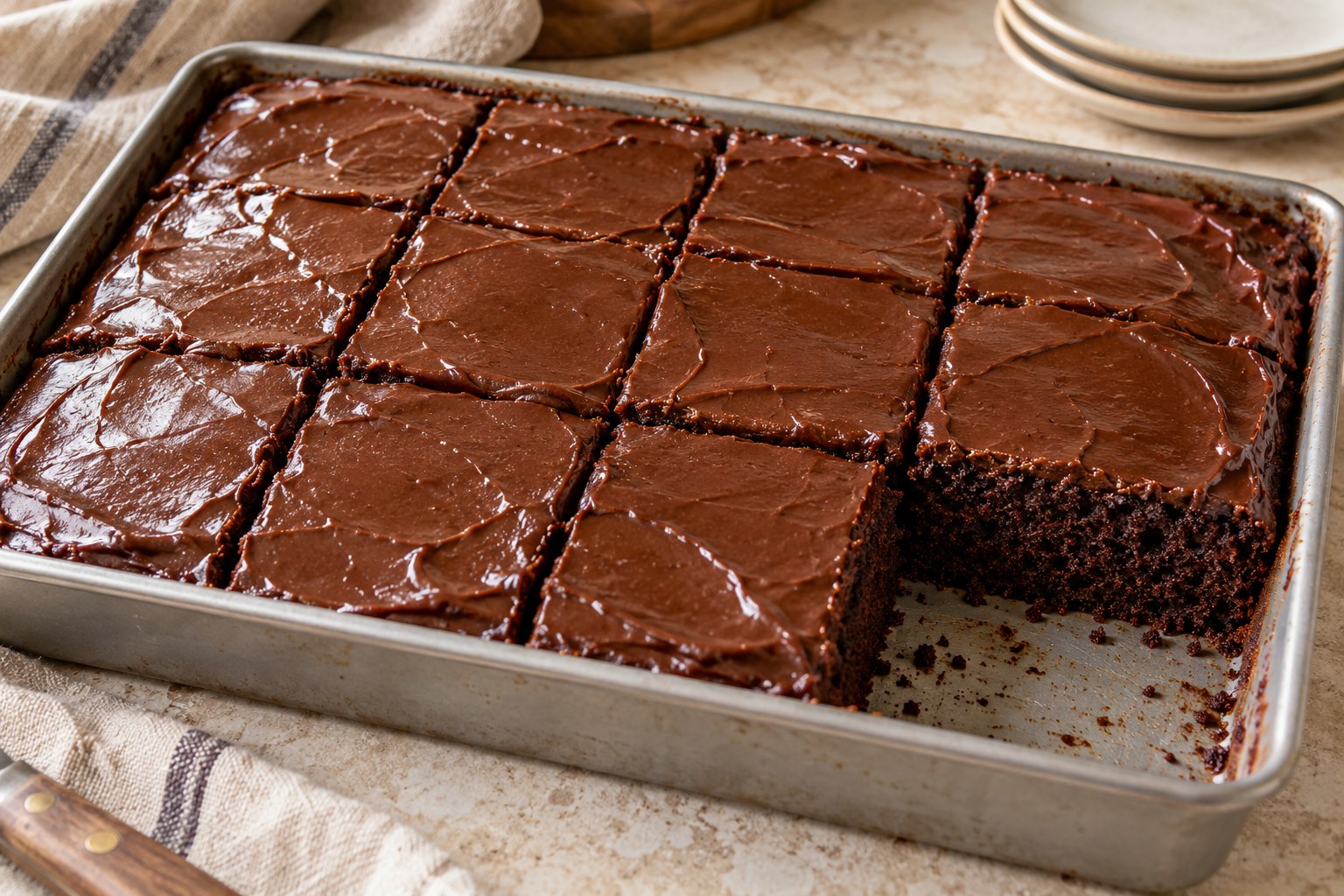
That distinction is useful for hosts. You can serve it beside cocktail-inspired bakes as the clearly labelled alcohol-free option, while still considering its wheat, eggs, dairy and optional nut allergens. Guests who avoid alcohol should not have to guess whether a cola cake secretly contains whiskey because it appears in a story about boozy desserts.
Why cola works with chocolate
Cola brings sweetness, acidity and aromatic notes that complement cocoa. In a hot frosting, it also supplies liquid. These effects are subtle; the finished cake should still taste like a balanced chocolate dessert rather than an uncooked fizzy drink. Use regular cola if that is what the recipe specifies instead of assuming diet cola will produce the same sweetness or structure.
The recipe melts butter with cola before mixing the batter. Heat those components as directed without overreducing them. Excess evaporation changes the amount of liquid entering the batter. Similarly, avoid adding extra soda in pursuit of a stronger cola flavour: additional liquid can alter structure, and excessive sweetness can overwhelm cocoa.
Working with the warm frosting
Warm, pourable frosting is part of the sheet-cake experience. Time its preparation to the stage of the cake specified in the recipe. If the frosting cools too far before pouring, it can set in uneven streaks; if overheated, it may be too fluid and run off the edges. Add chopped nuts only after confirming they are suitable for your guests and the recipe's serving plan.
This is a practical make-ahead cake for a casual gathering because it travels well in a pan, can be portioned into squares and does not require delicate piped decoration. If serving it alongside alcohol-containing cakes, use separate serving utensils and signs to prevent mix-ups.
5. Classic Margarita Cocktail Cake: Lime, tequila and salt
The Classic Margarita Cocktail Cake Recipe uses butter, sugar, eggs, flour, baking powder, milk, tequila blanco, fresh lime juice, lime zest and vanilla. The icing combines powdered sugar with lime juice and tequila. Its finishing mixture is flaky salt, lime zest and sugar—an echo of a margarita glass rim.

This is another bundt cake, so the same careful pan preparation applies. Unlike a traditional margarita, the cake does not require an exact replica of the drink's strength. It needs controlled lime flavour and enough structure to rise cleanly. The recipe specifies tequila both in the batter and the glaze, so the final dessert should be labelled as containing alcohol.
Lime zest is different from lime juice
Zest contributes intense aroma with relatively little liquid. Juice supplies acidity and moisture. Both have important but different jobs. If you want more lime fragrance without making the batter wetter, working within the published zest amount is a better starting point than freely adding more juice. Do not grate deeply into the white pith, which can introduce unpleasant bitterness.

The tequila in the glaze may be more noticeable than tequila mixed into the baked cake. Measure it; do not add an extra splash at the end simply because the cake is for adults. Too much liquid thins the icing and can make a harsh first impression. Let the glaze reach a pourable but coating consistency before finishing.
The salt-and-sugar edge
The cocktail connection becomes obvious with a restrained lime, sugar and flaky salt garnish. Sprinkle sparingly, particularly if the glaze already contains significant sweetness. A heavy salt rim can turn a bite unpleasant. Fresh lime zest adds fragrance and colour, but grated zest is best prepared near decorating time so it does not dry out.
Margarita cake suits gatherings where guests enjoy sharp citrus flavours. Serve with water, iced tea or coffee to make the cake the focus. If the dessert table includes guests who avoid alcohol, position an accurately labelled nonalcoholic cake nearby rather than describing the Margarita cake as alcohol-free after baking.
How to choose the right cake for your occasion
For an intimate dinner, the Tiramisu Sheet Cake makes an appealing plated dessert because coffee and mascarpone feel familiar after a meal. Choose it when refrigeration and careful transport are available. For a large birthday or office gathering, the Raspberry Champagne Sheet Cake provides straightforward square portions, but remember the buttercream and filling need cooling time.
A Paloma or Margarita bundt cake looks striking without much elaborate decoration. Both require attention to pan release and icing consistency. The Paloma is the more grapefruit-forward choice; the Margarita emphasises lime. Both contain tequila in the published formulas, including after-bake components.
For a mixed guest list with people who avoid alcohol, the Coca-Cola Sheet Cake gives a clearly different option that does not need to mimic a spirit. If a gathering is completely alcohol-free, select recipes formulated without alcohol from the outset instead of trying to cook the alcohol away from a cocktail recipe and treating the result as guaranteed safe.
Plan the selection around kitchen equipment too. A bundt pan, a sheet pan, a mixer and enough refrigerator space may matter more than whether two cakes share a colour theme. For a potluck, a flat cake in a lidded pan may be easier to deliver than a highly glazed ring cake.
The baking science behind adding spirits and acidic juice
A cake rises because air and gases expand while the structure sets. Mechanical creaming, baking powder, baking soda and eggs each contribute to that process depending on the recipe. Flour proteins and starches form a framework as heat changes them. Fats and sugars influence tenderness, moisture and browning. Adding a drink ingredient changes the liquid mixture and sometimes its acidity or sugar concentration.
Alcohol does not perform the same job as water. It affects flavour perception and may change how a batter mixes or bakes. Acidic grapefruit and lime juice also interact with baking soda when present. This does not mean you should redesign the leavening system yourself. The linked recipes were written with specified liquids; changing both the spirit and juice at once may produce a very different cake.
If a batter looks split after eggs or liquid are added, pause and inspect temperature. Ingredients that are too cold can make softened butter clump. A small amount of the recipe's flour may sometimes help an emulsion re-form when the method allows it, but pouring in more alcohol is not a solution. Once the dry ingredients are combined, overmixing can toughen some cakes. Mix to the texture specified in the recipe rather than chasing an imaginary perfect appearance.
Glazes, soaks and frostings: Three different jobs
A glaze is usually a relatively thin icing or coating that sits on the surface. It can carry a strong burst of lime, grapefruit or tequila because it is encountered first. Its thickness determines whether it drapes over a bundt cake attractively or disappears onto the plate.
A soak is designed to enter the baked crumb and add moisture and flavour. It needs measured distribution. Too little may be imperceptible; too much can collapse the structure or create wet patches. The Paloma and Tiramisu recipes use distinct soaks, but the liquids and timing differ, so one method should not be copied blindly into the other.
A frosting is thicker and can provide shape, richness and contrast. Champagne buttercream and mascarpone frosting need different handling. Buttercream depends on butter temperature and proper emulsification; mascarpone frosting has a chilled dairy component that can become unstable when overworked. Avoid treating all toppings as interchangeable because they may need different storage conditions.
For a neat dessert table, use a thin coating where intended and save extra sauce for serving only if the recipe allows it. Heavy layers of icing cannot correct a poorly baked cake. Aim for a tender, flavourful base and a topping that complements it.
Troubleshooting common cocktail-cake problems
The cake tastes too strongly of alcohol
This often comes from unmeasured extra spirit in the glaze or soak rather than the baked crumb. Follow the published amounts and taste the nonalcoholic components before assembly. Do not serve an overly boozy cake to someone who asked for an alcohol-free dessert. If the final flavour is unbalanced, change the plan for the next bake and record measurements rather than making unsafe promises about reheating away the alcohol.
The sponge is dry
Check baking time, pan size and oven temperature. A broad sheet cake can become dry when baked too long, while a bundt may need careful assessment of the thickest section. Use the visual and doneness cues in the linked recipe. Extra soaking is not always the answer; a cake that is structurally overbaked may stay tough even when wet.
The centre is gummy
Too much added liquid, incorrect pan dimensions or underbaking may leave the centre unset. Let the cake finish cooking according to recipe guidance. Avoid adding fruit juice or alcohol beyond the written measure. A gummy middle should not be hidden beneath frosting and presented as fully baked.
The buttercream is grainy or separated
Powdered sugar can clump, and butter temperature matters. Sift where instructed, cool the champagne reduction thoroughly and incorporate it gradually. If the mixture is very warm, chill briefly before reassessing. If it is very cold, allow it to soften modestly. Do not add unmeasured hot liquid in an attempt to smooth it.
The glaze slides off the cake
The cake may be too hot or the glaze too thin. Cool as the recipe directs, and add liquid gradually when mixing icing. A glaze that is thick enough to coat a spoon tends to cling more evenly than one with the consistency of water. Do not overload a single point at the top of the cake.

The fruit filling leaks
Cook the raspberry mixture until it reaches the recipe's thickening stage, cool before assembly and avoid spreading it too close to an unprotected cake edge. If it remains runny, examine measuring and cooking technique rather than compensating by piling on more buttercream.
A realistic two-day baking and serving plan
Two days before: Select the cakes according to guest preferences, allergies and alcohol restrictions. Read all linked recipe cards and confirm ingredient quantities. Check that you have the right pan sizes, mixer attachments, cake carriers and enough refrigerator space. Buy fruit, eggs, dairy, sugar, flour, suitable beverages and decorations. Make signs identifying alcohol and common allergens.
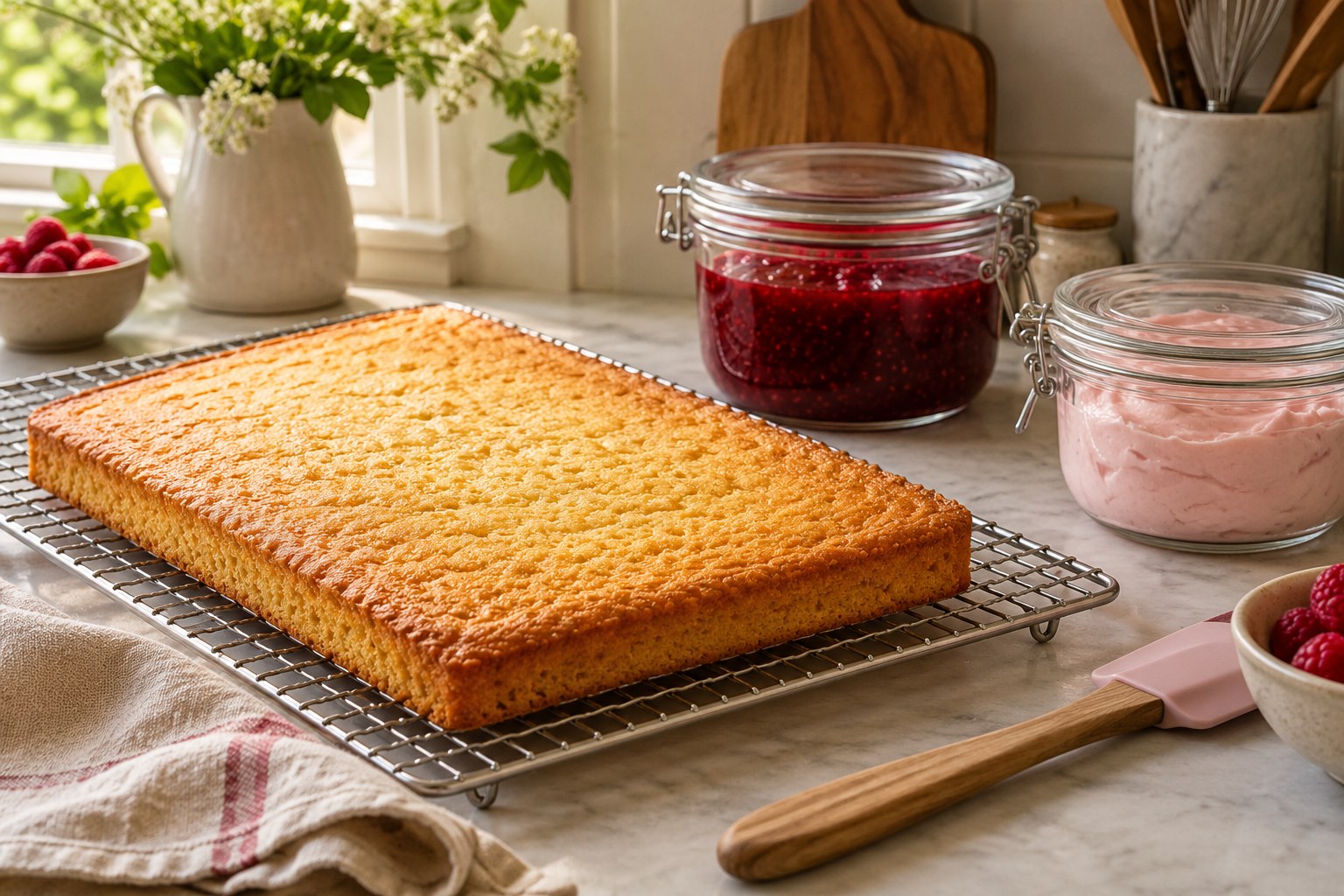
One day before: Bake the cake layers that can be made ahead, following each recipe's cooling and storage directions. Prepare raspberry filling or other components requiring cooling. A cake should be fully cool before wrapping or frosting to prevent condensation and sogginess. Keep perishable preparations refrigerated. Do not leave mascarpone frosting unrefrigerated overnight simply because it contains a wine-based soak elsewhere in the cake.
On serving day: Assemble, soak, glaze or frost at the stage directed by each recipe. Garnish with fresh berries, zest and cocoa close to service when possible. Wipe serving plates and use clean, separate knives. Reconfirm labels and place the alcohol-free cola cake where guests can find it easily. Keep chilled cakes cold until their service window.
A multi-cake dessert table is ambitious. It is perfectly reasonable to make one alcohol-containing cake and one alcohol-free cake instead of all five. Two carefully executed desserts are usually more enjoyable than five rushed bakes.
Presentation ideas that suit the cake rather than fight it
A Paloma bundt cake looks beautiful with a lightly draped grapefruit glaze and a few slim citrus garnishes. A Margarita cake benefits from a restrained scatter of lime zest and salt-sugar mixture, not a heavy crust that falls off during slicing. Let those two cakes have different colour profiles so guests can distinguish them at a glance.
The raspberry Champagne sheet cake can be served in tidy squares, each finished with a raspberry or a tiny amount of decorative garnish. For the tiramisu cake, a simple cocoa dusting with clean edges feels appropriate. Cocoa needs no elaborate piping. The Coca-Cola cake is at its best presented generously in a pan with its glossy chocolate frosting, especially for a casual gathering.
If you want photos for What’s Baking?, photograph the finished cake first in soft indirect light, then show one practical step that helps bakers understand the method. A close-up of raspberry filling reaching the correct consistency or a glaze coating the back of a spoon has more instructional value than several nearly identical glamour shots. Any additional photography should accurately represent the ingredients and appearance of the published recipe.
Frequently asked questions
Does baking with alcohol make a cake alcohol-free?
No. Some alcohol may be lost during cooking, but the amount varies, and alcohol added after baking can remain. Never promise that a baked or reduced-alcohol recipe is safe for someone avoiding alcohol. Choose a tested nonalcoholic recipe instead.
Is the Coca-Cola Sheet Cake a boozy bake?
Not as published on What’s Baking?. It is a chocolate-cola cake with no spirit, liqueur or wine in its ingredient list. It is included as an alcohol-free, drink-inspired option.
Can I swap champagne for sparkling water?
That is an experimental substitution, not the linked Raspberry Champagne Sheet Cake as written. Sparkling water does not provide the same flavour or acidity, and changing the formula could alter the result. Use a tested alcohol-free cake if the requirement is strict.
Can I add more tequila for stronger flavour?
Adding extra tequila can make the batter wetter or the glaze too thin and harsh. Use the written quantities first. More alcohol is not necessarily better flavour or texture.
What is the difference between the Paloma and Margarita cakes?
Both contain tequila. The Paloma emphasises pink grapefruit and lime, while the Margarita focuses on lime and a salt-sugar finish. Their published batters, soaks and glazes differ, so treat them as distinct recipes.
Do I need expensive champagne?
The recipe needs an appropriate sparkling wine, not necessarily the most expensive bottle. Choose something balanced and follow the specified quantity. The baking and buttercream method matter more than prestige.
Does tiramisu sheet cake need refrigeration?
Yes, follow the recipe's chilled storage directions. Its mascarpone and heavy cream frosting are perishable, and the alcohol in the coffee soak does not make it shelf-stable.
Can these cakes be made vegan or gluten-free?
The linked formulas contain wheat, dairy and eggs. Making them vegan or gluten-free would require substitutions that change structure and may need full recipe testing. Do not relabel them based on a single ingredient exchange.
Can I make the glazes the night before?
Sometimes, but their texture can change during storage. The safest approach is to follow each recipe's preparation order, protect perishable components and avoid adding extra liquid just to restore appearance.
How should I label a dessert table?
Use clear names, identify alcohol-containing recipes and note important allergens. Keep a separate alcohol-free option with its own serving utensils. Guests should not have to guess based on the cake's appearance.
Final thoughts: Bake the flavour story, not just the cocktail name
Cocktail-inspired baking works best when every component has a purpose. A grapefruit cake should be bright without being bitter, a champagne cake should balance buttercream with fruit, a tiramisu sheet cake should taste of coffee while remaining sliceable, and a margarita cake should deliver lime fragrance without an overwhelming tequila glaze. A chocolate cola cake can belong at the same celebration without being misrepresented as alcoholic.
Choose the Paloma Cocktail Cake, Raspberry Champagne Sheet Cake, Tiramisu Sheet Cake, Coca-Cola Sheet Cake or Classic Margarita Cocktail Cake based on your equipment, guest list and favourite flavours. Follow the actual recipe card, label alcohol accurately, and give cooling and assembly the same care as baking. A thoughtful dessert makes a stronger impression than an oversized splash of spirits.
IN PICTURES
From the baking notebook
FROM THE RECIPE BOX


