Disclosure: As an Amazon Associate I earn from qualifying purchases. Some links below are tagged affiliate links; purchases may earn us a commission at no additional cost to you.
Editorial method: This is a research-based comparison drawing on maker specifications and practical home-baking requirements. We do not claim to have independently tested these products.
Both parchment paper and silicone mats keep many bakes from sticking, but they differ in cleaning, reuse, heat limits and how cookie bottoms brown. Your best choice depends on whether you value quick cleanup, consistent portioning or reusability.
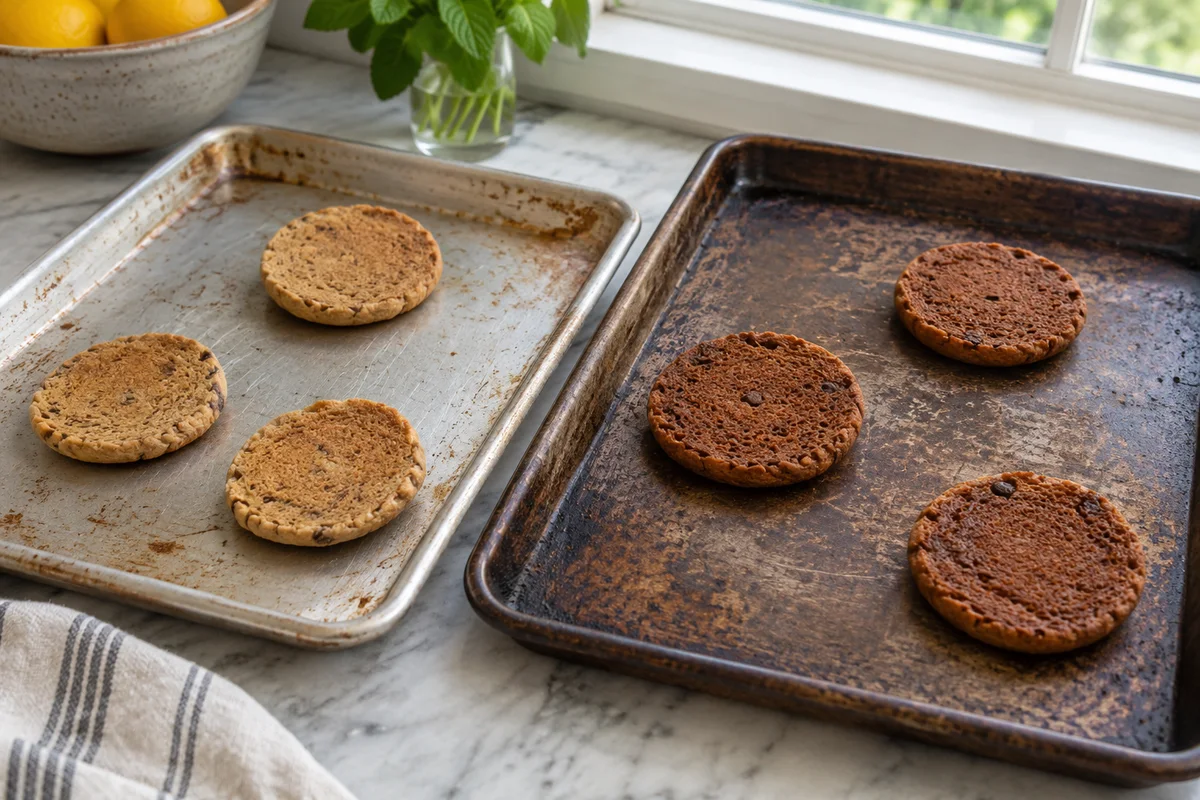
Compare the choices at a glance
These are documented product features and practical use cases, not hands-on test scores. Product dimensions, operating limits and availability should be checked for the exact model before purchasing.
| Option and manufacturer | Documented design | Best fit | Trade-off |
|---|---|---|---|
| Reynolds Kitchens parchment paper | Disposable nonstick baking paper; rated to 425°F by maker | Cookies, quick pan lining and simple cleanup | Recurring waste and ongoing purchase cost |
| Reusable silicone baking mat General equipment format | Flexible reusable nonstick surface; limits vary by maker | Frequent repeat baking with compatible pans | Cleaning, storage and possible differences in cookie spreading |
| Bare uncoated baking sheet General equipment format | No liner; direct contact with a suitable metal baking surface | Recipes intended for unlined pans | More sticking potential and greater cleanup |
Options to compare
Parchment paper
Convenient for lining several pans and lifting finished cookies cleanly. It can be trimmed to fit, but is a consumable and must stay within the paper maker's maximum oven temperature.
Reusable silicone baking mat
A washable surface that can be convenient when you bake on the same tray frequently. The initial cost and drying/storage routine matter, and it should be used only at the maker's stated temperature limit.
Unlined baking sheet
Some recipes specify a bare pan, with or without greasing. Using it instead of parchment or silicone can change spread and browning. Follow the recipe before substituting.
Critical buying checks
Cookie spreading and browning may change
Different surfaces affect friction and heat transfer. Instead of saying one makes objectively better cookies, bake the same dough portions on both and compare edge colour, center texture and release.
Look at cost per actual use
A mat used hundreds of times can be economical, but only if it remains intact and you like washing it. Parchment is inexpensive per sheet and convenient for occasional bakers.
Respect manufacturer limits and handling
Neither a silicone mat nor parchment is meant to be used outside its rated oven temperature or too near exposed heating elements. Do not confuse food-grade silicone mats with direct-flame cookware.
Our practical recommendation
Keep parchment as a flexible default for many home-cookie recipes. A silicone mat is worth adding when you repeatedly bake on identical sheets and value reusability enough to clean and store it.
Write down the actual baking task, recipe size, available storage and any manufacturer operating limitations before ordering. Avoid paying for features that do not improve your recurring baking routine.
Find current options on Amazon.ca
The link below goes to Amazon.ca search results rather than claiming one exact ASIN, price, seller or inventory status. Compare the model details before you purchase.
Search Amazon.ca for Silpat silicone baking mat Reynolds parchment paper roll
Frequently asked questions
Can parchment be reused?
Sometimes for consecutive cookie trays if it remains clean, flat and undamaged and the maker's guidance permits. Discard darkened, brittle or contaminated sheets.
Are silicone mats always nonstick?
They are designed for release but sticky syrups, damage and recipe composition can change cleanup. Follow the maker's use instructions.
Which is better for macarons?
Both are used in different recipes. Consistent piping, oven heat and the particular recipe technique matter more than an unsupported claim of a universal winner.
Manufacturer and technical references
Put your gear to work
From the What's Baking recipe library — recipes to explore alongside your equipment research.


Compare the gear side by side
These related guides cover equipment choices that frequently come up alongside this one.
Keep exploring Baking Gear
Equipment works best as a system. These guides address the next practical choice.